
Business
Why We Shut Down PHRC, PPMC

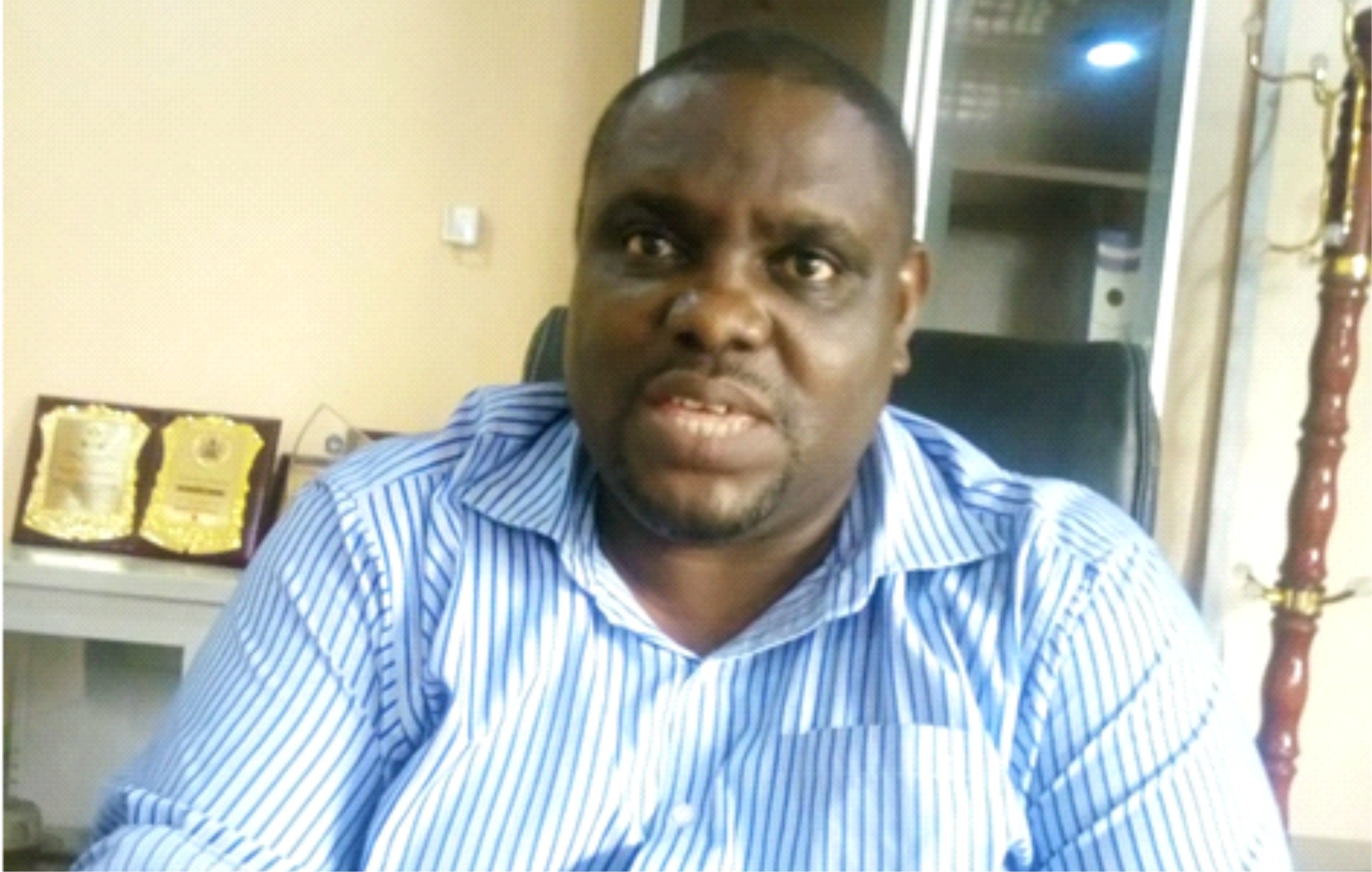
Operations of the Petroleum Downstream Sector in Rivers State got ruffled last week, following a face-off between the Independent Petroleum Marketers Association (IPMAN), the management of the Port Harcourt Refining Company (PHRC) and the Petroleum Products Marketing Company (PPMC).
Problem started when the leadership of IPMAN mobilised its members last Wednesday to stage a peaceful protest at the premises of the PHRC and PPMC in Port Harcourt to register their discontent over perceived institutional breaches and inefficiencies on the part of the companies to discharge their statutory functions.
The protest which commenced in the early hours of Wednesday, last week, shut down the operations of the two federal agencies, as the aggrieved IPMAN members barricaded the entrances to the two companies with placards of varying inscriptions to press home their demands. Some of the placards read thus: “Diversion of our products is a crime,” “Private depots owners steal “PPMC products with the backing of NNPC staff,” “We want products not excuses, “ PHRC, PPMC encouraging illegal bunkering.”
Since then Motorists and other users of petroleum products have been thrown into a state of apprehension and panic over a looming fuel scarcity following the shutdown and the threat of IPMAN and other related organisations to down tool if the PHRC and PPMC failed to heed their demands.
But IPMAN has insisted that its actions as a body was justifiable as it was billed to expose the sharp practices in the sector which have undermined their business concerns and service delivery to the public.
The major bone of contention, according to the IPMAN leadership, is that for over two years now, the PHRC and PPMC have failed to produce AGO(diesel)or DPR(kerosine) thereby making the independent marketers to depend on adulterated diesel (kpoofire) to fuel their haulage trucks before they could load the “imported PMS((Petrol) made available at the deport.”
This tendency, according to the IPMAN leadership, was an indication that PHRC and PPMC were encouraging illegal bunkering.
Rivers State Chairman of lPMAN, Comrade Emmanuel Inimgba, who spoke with The Tide in an exclusive interview prior to the protest, disclosed that the dependence of the independent marketers on adulterated diesel to fuel their trucks in the loading of products was destructive on the engines and also exposed them to health dangers and other associated hazards.
The Rivers IPMAN said petroleum products sent from Lagos and Warri to Port Harcourt were diverted to private depots in Port Harcourt which are mostly owned by PPMC and NNPC management, and thus deny the independent marketers acces to the products at PPMC depot in Port Harcourt.
He said; “For more than two years now we haven’t been loading any products apart from imported PMS, we don’t have access to diesel and kerosene and we are constraint to depend on illegally refined products to power our loading trucks. This has resulted in very high cost of operation on our part and affected the delivery of our services to the public, we are not going to load from those private depots where our products are diverted to until the products are supplied to the right depot.”
Comrade lnimgba who described the operations and services of IPMAN as capital intensive, said most of the independent marketers obtained loan facilities from banks to run their businesses and as such were under tight obligation to pay back the funds.
He regretted the perceived “indifference” of the regulatory agency in the Petroleum industry, i.e the Department of Petroleum Resources (DPR) which according to him seem to gloss over the anomalies in the activities of the downstream sector in Rivers State despite several overtures made by IPMAN and other affected stakeholders to address the rising challenges.
He pointed out that the protest was to expose the; “shoddy deals going on in the down stream sector and to bring to the fore the sad experiences of the independent marketers.”
He called on the DPR to live up to its statutory responsibilities by creating the enabling environment and ensuring transparency in the process, especially in products availability, arbitrary increase in prices of products and renewal operational licenses.
Comrade lnimgba also raised concern over the growing spate of insecurity against the investment of the independent marketers, noting that filling stations have become targets of incessant robbery, especially in the night.
While applauding the Rivers State Governor for his efforts in promoting the security of lives and properties in the state, he appealed to the government to create a special police division to protect the investments of the independent marketers to enable them render services to the public with relative ease.
“ Filling station owners have become endangered species, we can’t sell at night without threats of robbery attack.
The use of POS has helped to an extent but we want the government to come to our aid by creating a special police division to protect our operations. This will go a long way to address the challenges of insecurity we are experiencing,” he stated.
The IPMAN chairman also commented on the state of refineries in the country, particularly the Port Harcourt Refinery which he said was completely dysfunctional. He called on the Federal Government to fix the ailing refineries and make them effective in product delivery.
Apart from revamping the existing refineries, he said the Federal Government should also make real its promise of building modular refineries in the Niger Delta Region so as to give the people of the oil rich region a sense of active participation in the oil and gas industry as well as enhance massive economic growth and expansion in the industry.
He contended that the building of modular refineries in the Niger Delta would address the issues of unemployment and other social vices among the youth.
He said; “when modular refineries are created in the Niger Delta, most youths who engage in illegal bunkering will channel their talents and energies in a more positive way as their technological capacities will be fully developed.”
Comrade Inimgba said that existing policies in the Nigeria oil and gas sector were tailored to the disadvantage of the Niger Delta people. He regretted that despite the enormous contributions of the region to the development of national economy the region still suffered huge development neglects.
He, therefore, called for a review of Nigerias’ petroleum laws to reflect the imperatives of justice by giving the people of the Niger Delta assess to their natural resources for the development of the region.
“I want to correct the erroneous impression that the people of the Niger Delta are not fit to play roles in the oil and gas industry, we have qualified technologists and technocrats in the Niger Delta. We want the Federal Government to allocate oil blocks to indigenes of the Niger Delta, this will give the people a sense of belonging, create direct development impact in the region and correct the imbalances in the oil and gas sector. “
The lPMAN chairman was also irked over the issue of pipeline vandalisation and explosions which had become a recurrent event in the Niger Delta region, resulting in wastages of lives and revenue.
He said IPMAN as a body was totally against pipeline vandalisation which is considered as sabotage, adding that the association has contributed its quota towards addressing the menace, such as constitution of special anti-pipeline vandalisation committee with the mandate to work with relevant stakeholders to address the endemic vice.
He pointed out that the issue of pipeline vandalisation can not be tackled on a shallow bases except the root cause is addressed.
“IPMAN as a body condemns pipeline vandalisation in its entirety, it’s a menace that have brought incalculable losses as people are killed in the process while revenue is lost.These pipelines pass through communities, the government should liase with communities on the surveillance and security of the pipelines. Also, obsolete oil pipelines in the Niger Delta should be replaced to avoid leakages and possible explosion,” he said.
Speaking on the activities of multinationals corporations and International Oil and Gas Companies (IOCS) in the Niger Delta, the oil and gas expert described the modus operandi of most of the companies as “defective and bereft of international best Practices.”
He expressed disappointment over the fact that “ most of the companies operating in the Niger Delta deny the people employment quotas or simply engage them without stipulated employment policies or condition of service and subject them to slave labour and caualisation.”
He also kicked against the relocation of the corporate headquarters of the multinationals from the Niger Delta to Lagos on the excuse of insecurity, saying that such excuses were calculated ploys to slight the region economically.
Taneh Beemene


Nkpemenyie Mcdominic
Reports say that the training is designed to equip youths with practical technical skills for employment in the oil and gas and construction sectors, with emphasis on employability, safety, competence and self reliance.
In attendance at the flag-off ceremony this week, at the Petroleum Training Institute (PTI) Conference Hall, Effurun, were stakeholders, dignitaries, and political representatives, among others.
Dafinone, represented by his Chief of Staff, Adelabu Bodjor, said the initiative reflects a deliberate political investment in human capital development across Delta Central.
He explained that the training focuses on rigging and scaffolding, noting that “both are essential technical competencies required in industrial operations, construction projects, and oil and gas installations”.
Bodjor added, “The programme is intended to reduce dependency among youths by providing job-ready skills capable of supporting long-term economic opportunities and self-sufficiency. The initiative aligns with Senator Dafinone’s broader development agenda, which prioritises practical skill acquisition as a pathway to sustainable empowerment.”
Also addressing the participants, the NCDMB, Felix Omatsola Ogbe, represented by Mr. Teddy Bai, commended Dafinone for sponsoring the programme, describing it as “a timely response to critical manpower gaps in the industry”.
Bai explained that rigging and scaffolding remain safety-sensitive skills required across fabrication yards, offshore platforms, and construction sites, stressing that the programme bridges the gap between certification and practical competence.
He also charged the training consultant, OROH Contractors Limited, to maintain strict standards of professionalism, safety, and discipline, while urging participants to remain committed, focused, and disciplined throughout the exercise.
The Senate Liaison Officer for Sapele Local Government Area, Chief Patrick Akamuvba, , described the programme as a major step in strengthening human capital development in Delta Central.
Akamuvba said scaffolding and rigging skills are in high demand across residential, commercial, and industrial construction projects, noting that the training offers real employment opportunities for beneficiaries
He urged participants to prioritise knowledge and certification over short-term material expectations, stressing that discipline and seriousness would determine their long-term success.
He also cautioned youths against social vices and distractions, advising them to remain focused to maximise the opportunities provided by the programme.
-
News2 days ago
Obuah’s Victory Excites Former Lawmaker as APC Primaries Conclude in Rivers West
-

 Politics4 days ago
APC PRIMARIES: FUBARA’S WITHDRAWAL, HISTORIC SACRIFICE FOR NATIONAL STABILITY ……. GROUP
-

 News4 days ago
Court Sentences Seven To Death Over Murder Of Cleric In Rivers
-
News2 days ago
105 Nigerians Killed In S/Africa In Seven Years
-

 Sports4 days ago
PH Arsenal Community Set For Streets Procession, Saturday
-

 Niger Delta2 days ago
Royal Father Endorses PH Arsenal Community, Pledges To Support
-

 Politics4 days ago
IPAC Flays INEC Over Election Guidelines Judgement
-

 Politics4 days ago
NDC To Adopt Electronic Voting For Future Primaries