
Featured
Fulanisation, Islamisation: Nigeria Under Attack, Okogie Declares …Says Nation Has No Leadership …As Miyetti Allah Denies Plans To Invade S’East

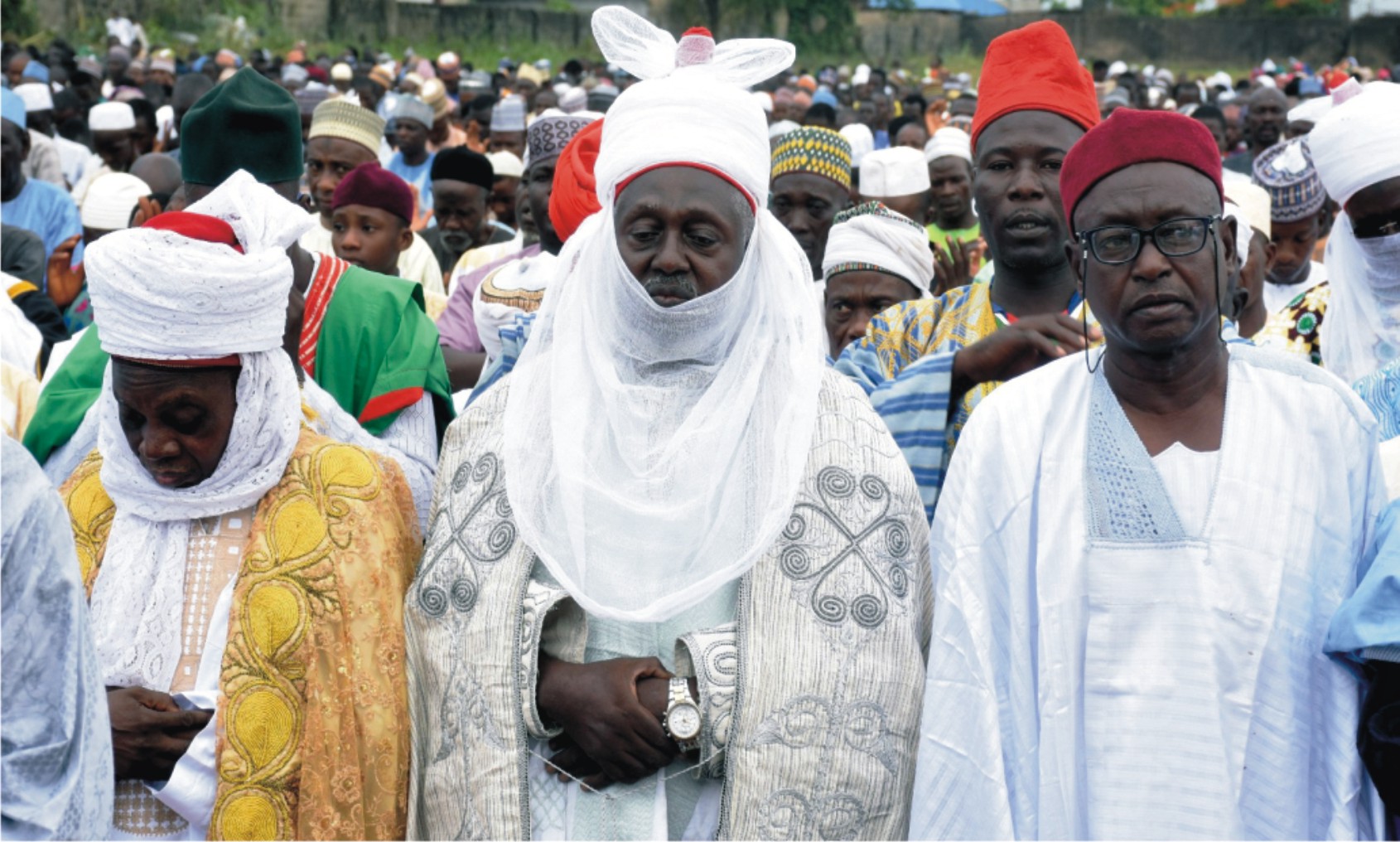
Catholic Archbishop of Lagos Metropolitan, Anthony Cardinal Olubunmi Okogie has asked if there is leadership in Nigeria? And if there is, what type of leadership do we have? This came as he lamented that ‘the security situation in Nigeria has become worse than deplorable. Nigeria is being attacked. Is this how we all will be watching while our country becomes more inhabitable than it has ever been in her history? Is there leadership in this country? If so, what type of leadership do we have?
Okogie in a statement titled: “Nigeria is under attack”, yesterday threw his weight behind former President Olusegun Obasanjo who spoke of “Fulanisation and Islamisation” saying the ex-president was ‘pointing to an open secret and that is: there is a synergy between Boko Haram, herdsmen and ISIS. This synergy, leading to a gradual implementation of the Islamisation agenda of ISIS, is what is being referred to as “Fulanisation and Islamisation”. It is about’ the imposition by ISIS of its own version of Islam. Whoever opposes it, be that person Christian or Muslim or Fulani, is eliminated.
Cardinal Okogie Okogie in a statement said: “On a Monday in September 2015, former finance minister, Chief Olu Falae was on his farm in Ilado near Akure when some armed men came looking for him. At gunpoint, they abducted him and held him until the following Thursday.
“At the age of 77, he was made to walk several kilometres. He was made to sleep in the rain. According to his own account published in some national dailies, every half an hour, his armed abductors threatened: “Baba, we are going to kill you. If you don’t give us money we are going to kill you.”
“By 2018, herdsmen were wreaking havoc in the states of the middle belt of Nigeria. Then, a retired Chief of Army Staff, a veteran of military intervention in Nigerian politics, General Theophilus Danjuma, warned that there was ethnic cleansing in the middle belt. Having lost confidence in the government’s willingness or ability to deal with the situation, General Danjuma called on the people of the middle belt to take responsibility for their own security. The reaction of aides to the President of the Federal Republic was to insult him and call him names he did not deserve to bear.
“Recently, former President Obasanjo added his voice to those of Chief Falae, Gen. Danjuma and many others, voices warning us of heightened insecurity in our country. President Obasanjo spoke of “Fulanisation and Islamisation”. But in what has become a typical reaction from aides to President Buhari, President Obasanjo’s concerns were not addressed. What he received were gratuitous insults from President Buhari’s aides. Nonetheless, it is highly significant that one of President Obasanjo’s most virulent critiques, Professor Wole Soyinka, urged the federal government to address the issues he raised.
“The issue is neither the character nor the political affiliation of those who are speaking. The issue is insecurity and the government’s inability or unwillingness to address the issue. Nigeria in her vastness is within the firm grips of kidnappers, armed robbers, herdsmen, bandits and insurgents.
“Government officials tell us that Boko Haram has been “technically defeated”. But there is a wide abyss between government propaganda and the experience of the citizen. Despite government propaganda, Boko Haram, with frequent and convincing repetition, demonstrates that it has more firepower than the Nigerian military. Our highways are unsafe. A major highway like the Abuja-Kaduna Road has become a theatre of operation for kidnappers. The northwestern states of Zamfara and Katsina have become utterly unsafe. They have been taken over by armed bandits. Yet, all that presidential aides have to offer concerned Nigerians is insolence.
“Shortly after Chief Falae’s abduction, Nigerians woke up to hear of clandestine and illegal importation of arms into Nigeria. There were reports that arrests were made. But Nigerians no longer hear of any judicial process to which these importers are being subjected. The matter appears to have died. Little wonder we now live in a Nigeria saturated with ammunition.
“How on earth can we claim to be living in a democratic polity when presidential aides forget or ignore the fact that the President was put in office by the votes of the people? For if they knew the principles of democracy, they would not be disrespectful to Nigerians who happen to hold views divergent from those of government on how affairs of state are to be handled. One would have thought that, by now, four years since 2015, presidential aides would have grasped the difference between insolence and competence.
“One does not need to hold any brief for former President Obasanjo to know that his concerns on this matter are genuine. One only needs to read carefully the text of his intervention. One need not be his friend or political ally to observe that there are one-sided actions on the part of the government in matters of security. Well-meaning Nigerians express concerns that herdsmen are treated with kid gloves and allowed to get away with murder while some other agitators are called terrorists, proscribed and gunned down. A “technically defeated” Boko Haram continues to hold Leah Sharibu in captivity while the federal government secured the release of her Muslim schoolmates and the release of Zainab Aliyu and Ibrahim Abubakar from death row in Saudi Arabia.
“Obasanjo is pointing to an open secret, and that is: there is a synergy between Boko Haram, herdsmen and ISIS. This synergy, leading to a gradual implementation of the Islamisation agenda of ISIS, is what is being referred to as “Fulanisation and Islamisation”. It is about the imposition by ISIS of its own version of Islam. Whoever opposes it, be that person Christian or Muslim or Fulani, is eliminated.
“The security situation in Nigeria has become worse than deplorable. Nigeria is being attacked. Is this how we all will be watching while our country becomes more inhabitable than it has ever been in her history? Is there leadership in this country? If so, what type of leadership do we have?
“It is the responsibility of the president and his aides to address the situation in ways that are manifestly even-handed. There are fears that some people have taken over this country. We are held hostage on our land. This country is in the hands of invaders, bandits, herdsmen and kidnappers. Nigeria is under attack. Will the President and Commander in Chief show leadership?”
Meanwhile, the South-East branch of Miyeti Allah Cattle Breeders Association of Nigeria (MACBAN), yesterday denied the alleged plan by members of the group to attack the five South-East states over their governors’ alleged refusal to allocate grazing land for herdsmen in the area.
In the alleged report, which was trending in the social media, Miyetti Allah was quoted as warning that since the South-East governors had refused to give them land for grazing, such land would be taken by force by herdsmen.
The Chairman of Miyetti Allah in the zone, Alhaji Gidado Sidikki, who addressed reporters in Awka, yesterday, said there was no iota of truth in the report, adding that the governors in the zone should rather be commended for creating an enabling environment for peaceful coexistence in the zone.
The statement read: “Few days ago, we woke up to a malicious publication in the social media purporting a phantom statement in Abuja entitled ‘South-East will boil any moment from now because of their stubbornness’ ascribed to the leadership of Miyetti Allah Cattle Breeders Association of Nigeria, and erroneously ascribed to me.
“While it is my wish to inform the public that Miyetti Allah Cattle Breeders Association of Nigeria did not make any statement to the effect of the content of the publication either in Abuja or anywhere for that matter, I humbly wish to correctly place my designation as the chairman of South-East zone of the association and not the leader of cattle breeders in Nigeria as I was addressed in the publication.
“Again, I wish to put it on record that the South-East zone of the Miyetti Allah Cattle Breeders Association of Nigeria and her cattle herders, whom I serve, as the zonal chairman, enjoy warm relationship with the governors, governments and people of South-East, Nigeria.
“I wish to state that this warmth has not been completely devoid of flashes of momentary conflicts at few locations. Such instances were, however, promptly addressed by the authorities and warm commonality restored amongst the people”.
“Given the increasing orientation and reorientation of our people and the local people who are our landlords, and given the strong commitment of the state governors towards peaceful relationship across board, one harbours no doubts that the relationship between our herders and their landlords can only be increasingly better as time progresses.
“It is, therefore, my intention, while dispelling the published rumour from the pit of malicious mischief, to share my upbeat spirit with all of us. It is my utmost belief that the sincere and committed understanding we all propagate today will yield us minimal rancour if not rancour free society tomorrow.
“I, therefore, wish to thank the governors of the South-East states of Abia, Anambra, Ebonyi, Enugu and Imo for their wonderful sense of accommodation, as I pledge our continued efforts towards greater harmonious environment for thriving economic activities and better life.”

Featured
Fubara Pledges Support For Corporate Organisations In Rivers …Says PPP Business Model Responsible For NLNG’s Success


Rivers State Governor, Sir Siminalayi Fubara, has pledged the continued support of his administration for the Nigeria Liquified Natural Gas (NLNG) Limited.
Fubara gave the assurance while receiving the new Managing Director and Chief Executive Officer of the NLNG, Mr Adeleye Falade, who paid him a courtesy visit at Government House, Port Harcourt.
He assured that his administration would continue to contribute its own quota in support of the NLNG.
According to him, the success of the organisation is equally the success of the government of Rivers State and the success of the Federal Government.
“Our duty is to make sure that we support whoever is operating in our state. We are the ones here. If we don’t support you and you don’t succeed, we also will not succeed and Mr President will also not succeed.
“So, the success of your establishment is the success of our state, and overall success of Nigeria. So you can count on our support. Wherever you think we need to come in to support you, please do not hesitate to call upon us.
“You just mentioned here that your predecessor left a handover note showcasing the level of support that he got from the state. It is not going to be different in your own case. I can assure you that. I will also ensure that other units of the government will liaise with you when necessary. So even if you can’t get to me, you can always get to them and if there is anything we can do to help your establishment succeed, we will do it for you,” he said.
The governor attributed the success of the NLNG to the Public Private Partnership ( PPP) business model adopted by the Federal Government and the multinational oil companies.
The NLNG is jointly owned by Nigerian National Petroleum Corporation (NNPC) with 49%, Shell Gas B.V. with 25.6%, Total LNG Nigeria Ltd with 15%, and Eni International with 10.4%.
The partnership model allows for shared risks, costs, and expertise in the LNG sector.
The governor noted that the NLNG has not only survived the difficult business environment but has made sustained progress in the nearly three decades of its existence.
According to him, the decision of the Federal Government to allow the multinational oil companies who have the needed expertise to run the establishment while government plays a supervisory role over it has largely been responsible for its success.
“I’m very proud to say that if there is one establishment that has shown resilience, that has survived in the face of all the political issues prevalent in this country, it is the NLNG. And what is the reason? The reason is very simple. Government has no business in business. That is the truth. Leave the business for those people who can operate it. Let the government play its supervisory role to ensure that there is compliance with the laws; ensure that standards are maintained and also ensure that the right people with the needed expertise are at the helm of affairs. That’s all. I think that is the reason why we still record a lot of successes in NLNG,” he said.
In his opening remark, the new NLNG boss, Mr Adeleye Falade, who led other top officials of the company on the visit, expressed appreciation to the governor for granting them audience, and appealed to the State Government to continue to support the organisation.
“We appreciate the opportunity to meet with you and deepen this important relationship.We deeply value the support the Rivers State Government continues to extend in fostering an enabling operating environment for businesses. NLNG remains deliberate in its contribution to Nigeria’s development, and Rivers State, our primary host, continues to be central to that commitment,” he said.
Falade said the company has continued to work with its host communities to strengthen their capacity to identify, prioritise, and deliver sustainable development initiatives that create lasting impact.
According to him, communities including Amadi-ama, Abua, Ekpeye, Okrika, Kalabari, and Emohua have continued to benefit from this model.
He said that beyond community infrastructure, the NLNG has sustained investments in economic empowerment through initiatives such as Vocational Innovation and Business Empowerment Scheme (VIBES) and Micro Small and Medium Enterprise (MSME) schemes.
These, he said, were designed to support small businesses, build capacity, and stimulate local enterprise across the state.
Among officials of the company who accompanied the Managing Director were General Manager, External Relations and Sustainable Development, Dr Sophia Horsfall; Manager, Government Relations, Mr Abdul Umar; Manager, Community Relations, Dr. Yemi Adeyemi; Head of Government Relations, Mr Mike Igoni; Head of Community Liaison and Engagement, Chief Ifeanyi Umeh.
Others are Technical Assistant to Executive Leadership, Mr Hassan Saleh; Senior Media and Publicity Advisor, Mr Emma Nwatu; Government Relations Advisor, Miss Homa Nmegbu; Senior Government Relations Advisor, Mrs Kate Allison, and Audio -Visual Advisor, Mr Dawood Ahmed.
The Federal Government has reassured Nigerians and the international community of the country’s stability following a recent advisory by the United States authorising the departure of non-emergency personnel from its embassy in Abuja.
The Minister of Information and National Orientation, Mohammed Idris, stated this in a statement issued yesterday by his media aide, Rabiu Ibrahim.
According to the minister, public institutions across the country remain fully operational, with no disruption to governance, economic activities, or daily life.
This followed the decision of the United States Mission in Nigeria to suspend visa appointments at its Embassy in Abuja.
The mission’s decision was contained in a post shared on its official X handle, yesterday.
It stated, “U.S. Embassy Abuja is closed for visa appointments. Applicants should check their email for details on rescheduled appointments.”
The mission, however, clarified that visa operations at the U.S. Consulate General in Lagos remain ongoing.
The development comes amid a broader security advisory issued by the United States, which authorised the departure of non-emergency staff from its Abuja embassy and expanded its Nigeria travel blacklist to 23 states.
The State Department issued the authorised departure order on Tuesday, alongside an updated travel advisory that added Plateau, Jigawa, Kwara, Niger and Taraba to its highest warning category, “Do Not Travel.”
While the overall advisory rating for Nigeria remains at Level 3, “Reconsider Travel,” the department warned that some areas face increased risks due to crime, terrorism, unrest, kidnapping and limited healthcare availability.
According to the advisory, Americans are often targeted for kidnapping and robbery, while terrorist attacks continue to pose a threat across multiple locations, including markets, religious centres, hotels and public gatherings.
It also raised concerns about the state of emergency healthcare in the country, noting that hospitals often require immediate cash payments, ambulance services are unreliable and poorly equipped, and blood supply systems are inconsistent.
Medical facilities in Nigeria, the advisory said, generally do not meet United States or European standards, adding that evacuation may be necessary in medical emergencies.
The advisory further urged US citizens in Nigeria to enrol in the Smart Traveller Enrollment Programme, avoid large gatherings, vary their routines and maintain evacuation plans that do not depend on US government assistance.
It also recommended that individuals establish “proof of life” protocols with family members in the event of kidnapping.
The blacklist is divided into regional clusters. Borno, Kogi, Yobe and northern Adamawa remain under the terrorism, crime and kidnapping category, with the State Department warning that terrorist groups continue to plan and carry out attacks, sometimes in collaboration with local gangs.
For Bauchi, Gombe, Kaduna, Kano, Katsina, Sokoto and Zamfara, the advisory points to widespread banditry, communal clashes and kidnapping, while noting that security operations may occur without warning.
In the South-East and Niger Delta, states including Abia, Anambra, Bayelsa, Delta, Enugu, Imo and Rivers (excluding Port Harcourt) are flagged for crime, kidnapping and civil unrest, with armed gangs and violent protests posing significant risks.
The latest update added Plateau, Jigawa, Kwara, Niger and Taraba to the “Do Not Travel” list, citing the spread of insecurity into new regions, particularly in the Middle Belt where farmer-herder conflicts have intensified.
The advisory described the security situation in these newly added states as unstable and unpredictable, with counter-operations by security forces likely to occur without prior notice.
Idris, however, described the US advisory as a routine precaution based on internal protocols, stressing that it does not reflect the overall security situation in the country.
“While we acknowledge isolated security challenges in some areas, there is no general breakdown of law and order, and the vast majority of the country remains stable,” Idris said.
He noted that ongoing security operations have recorded measurable gains across several regions, attributing the progress to coordinated military efforts, intelligence-led interventions, and strengthened inter-agency collaboration.
“Our security agencies remain actively engaged in protecting lives and property, and the results of these efforts are increasingly evident,” he added.
According to the minister, recent operations have disrupted criminal networks, curtailed the activities of armed groups, and improved safety in vulnerable communities.
Idris also maintained that Nigeria remains open for business, travel, and investment, adding that ongoing economic reforms are strengthening investor confidence and enhancing the country’s global standing.
He said, “International partners and investors continue to engage actively with Nigeria, reflecting confidence in the country’s stability and long-term prospects.”
The minister urged foreign governments to ensure that their advisories reflect current realities and ongoing progress in the country.
“We encourage our international partners to continuously engage with Nigerian authorities to obtain a more comprehensive and current understanding of the situation on the ground,” he said.
The Federal Government reiterated its commitment to sustaining security improvements and ensuring the safety of citizens and visitors, assuring that Nigeria remains a safe and welcoming destination.

Rivers State Governor, Sir Siminalayi Fubara, yesterday extended interim relief measures to the people of Bille Kingdom as the government intensifies efforts to address the ongoing environmental degradation affecting the area.
This was contained in a statement by the Head of Information and Public Relations Unit, Office of the Secretary to the State Government, Juliana Masi, yesterday.
The governor, during a working visit to Bille Kingdom in Degema Local Government Area, reassured residents of his deep concern for their health and well-being.
He reiterated his administration’s commitment to finding a lasting solution to the persistent gas emissions observed in the community’s land and water sources since November 2025.
Represented by the Secretary to the State Government, Dagogo Wokoma, the governor announced immediate interventions to address urgent needs.
Some of the relief measures include the provision of potable water and essential medical services through the release of ?100 million as palliative support for the affected community.
According to the SSG, “Governor Fubara remains deeply committed to the welfare of the people of Bille Kingdom. Although unable to attend in person due to pressing state engagements, he is fully aware of the situation and determined to tackle the root cause of the environmental challenge”.
The governor assured residents that the state government would not relent in its efforts to provide a permanent solution to the gas emissions, emphasizing that the current intervention is only a temporary measure to ease the suffering of the people.
He further urged members of the community to remain law-abiding and continue supporting his administration, noting that he has consistently demonstrated a track record of fulfilling his promises.
Earlier, the Chairman, Council of Chief for Bille Kingdom, Chief Bennet Dokubo, expressed joy over the State visit, describing Fubara as a leader who listens to the plight of the people.
He urged the governor to critically look into the gas emission which he described as dangerous to human health.
“If we take you into the river, we notice that the entire environment is bubbling and smelling.
“We most humbly urge you to critically look into this situation. This is something strange we have never experienced before. It is not good for human health,” the monarch stressed.
-
 Editorial1 day ago
Domesticate FG’s Exit Benefit Scheme
-
 News1 day ago
DHQ Confirms Deaths Of Terrorists, Soldiers In Borno Attack
-

 News1 day ago
RSU Unveils Five-Year Strategic Dev Plan …Calls For Collective Commitment To Institutional Excellence
-

 News1 day ago
Tinubu Commissions Bayelsa Gas Turbine, Other Projects Today
-
Rivers1 day ago
Dep Gov Seeks Collaboration, Transparency Between RIVCHPP, PHCMB
-
Nation1 day ago
Rumuji Youth Leader Condemns Protest, Disowns Alleged Government Empowerment Claim
-
 Featured1 day ago
FG Reaffirms Nigeria’s Stability As US Embassy Suspends Visa Appointments In Abuja Office
-
Business1 day ago
Niger Delta Investment Summit Targets $5bn Inflows, 500,000 Jobs