
Politics
2019 Polls: Civil Society Groups Present Reports, Demand Offenders’ Prosecution

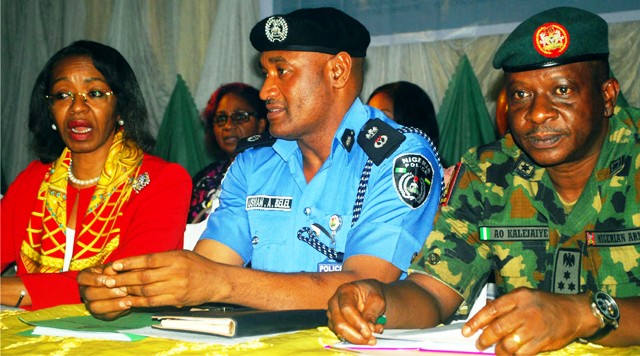
Civil Society Organisations (CSOs) in Abuja have demanded immediate prosecution of all the people involved in electoral malfeasance during the last election even as they called for the signing of a new electoral law to forestall a repeat of pitfalls of 2019 polls.
This is as the leadership of the Independent National Electoral Commission (INEC) has denied claims that the body compromised the 2019 elections, insisting that the blame for whatever shortcomings that might have been discovered in the election should be taken to the doorstep of politicians and mischief makers.
It said that it would soon submit to the National Assembly the report of the last election as required by the constitution.
Both the CSOs and INEC spoke at the presentation of 2019 General Election Report and 2019 General Election Observation Statements. The events were organised by Centre for Transparency Advocacy (CTA) and Nigeria Civil Society Situation Room.
At the two well-attended events include the INEC Chairman, Prof. Mahmood Yakubu, was represented by represented by the Resident Electoral Commissioners in charge of Information, Festus Okoye, Amina Zakari, Mohammed Haruna, May Agbamuvhe-Mbie and Chairman, Inter Party Advisory Council (IPAC), Peter Ameh .
Others were Resident Electoral Commissioner for Akwa Ibom, Mike Igini, his colleagues from Zamfara, Enugu and Osun States.
Describing as unfortunate a situation where months after the general election those who committed diverse electoral offenses were walking the street free, the acting Executive Director of CTA , Ms Faith Nwadishi said the situation was sending a wrong signal to the public.
She said: “Let us state clearly here that the ultimate test of credibility is how the government handles criminality. If people do not see electoral offenders prosecuted and punished, the message would be clear that these persons work for those we have elected and who tomorrow will come seeking our votes again. If the government and the political class continue to act nonchalant, the people will lose confidence in politics and democracy and anarchy and self-help would be the outcomes. That would spell the end of Nigeria as we know it. It is therefore, the duty of the government, INEC and every patriotic citizen to ensure that. We have to work for a better electoral system now by ensuring that the law is upheld and offenders are appropriately punished.
“Her stand was re-echoed by Mike Igini who said the problem with the country’s democracy was the elite whom he said were benefiting from the current situation.”
According to him, “the political elite is the greatest threat to our democracy. They are working to consolidate on their wrongdoings.
“The problem we have is the absence of consequence for offenders. A situation a wrong is allowed, it could be repeated tomorrow. That is the challenge we have on our hands.”
Calling for a concerted action to rebuild credibility in the country’s electoral system , Nwadishi canvassed joining of forces by stakeholders to firm up new laws in that regard.
She said. “We believe the attempt to rebuild electoral credibility must start with the law. The incoming National Assembly must work in collaboration with INEC, civil society organisations and other stakeholders to firm up our electoral laws. We are prepared to make our technical contributions in this regard. Indeed, there is a need to give INEC more powers to reflect the presumed independence of the body. It must as much as possible be put fully in charge of the resources and personnel it needs for elections.”
On security, she said: “While we generally commend members of the security services for helping with maintaining law and order during the election, we cannot overlook the fact that the deployment of the military was unlawful and uncalled for. Our laws do not give soldiers any role to play in our election and our courts up to the highest level have ruled accordingly. Their deployment and brazen partisanship against the opposition was an affront on decency. Of course, we realise that they could only have acted on the orders of their political and civil superiors, but no soldier or commander of military forces is compelled to obey an unlawful order.

Politics
Alleged Coup: Protests Rock N’Assembly As Detained Officers’ Children, Wives Demand Justice


Scores of children and wives of military officers detained over an alleged coup plot yesterday staged a peaceful protest at the National Assembly, demanding a speedy trial and the release of the accused officials.
The protesters who gathered at the entrance of the National Assembly complex, moved in a slow procession while clutching placards with inscriptions such as “Don’t Kill Our Daddies,” “Detention Without Trial is Injustice,” and “Six Months of Torture: Enough Is Enough.”
Amid tears and trembling voices, the children appealed for justice and access to their detained fathers, many of whom they said they had not seen for months.
The appeal was made during a press briefing in Abuja attended by no fewer than 20 wives and several children of the detained officers, including a two-month-old baby.
The families were accompanied by human rights lawyer, Deji Adeyanju and activist Omoyele Sowore.
At the briefing, the families lamented that the officers had been held for over 160 days without trial or contact with their relatives, describing the situation as a violation of their fundamental rights.
Speaking on behalf of the families, Memuna Bashiru said the prolonged detention had thrown their households into uncertainty and emotional distress, noting that while allegations had been widely publicised, families remained in the dark about the fate of their loved ones.
The arrest of the indicted officers was first announced on October 4, 2025, by the then Director of Defense Information, Brigadier General Tukur Gusau, who disclosed that 16 officers were taken into custody for alleged breaches of military regulations and acts of indiscipline.
However, an interim investigation later suggested the existence of a clandestine network of officers, allegedly coordinated by a senior Army officer, which had begun preliminary planning for a coup.
According to the report, the alleged plot involved surveillance of key national assets, including the Presidential Villa, Armed Forces Complex, Niger Barracks in Abuja, and major international airports, with October 25, 2025, cited as the planned date for the operation.
Those reportedly in custody include Brig Gen M. A. Sadiq, Col M. A. Maaji, Lt Col S. Bappah, Lt Col A. A. Hayatu, Lt Col P. Dangnap, Lt Col M. Almakura, Maj A. J. Ibrahim, Maj M. M. Jiddah, Maj M. A. Usman, Maj D. Yusuf, Capt I. Bello, Capt A. A. Yusuf, Lt S. S. Felix, Lt Cdr D. B. Abdullahi, Sqn Ldr S. B. Adamu and Maj I. Dauda.
The alleged plot, according to findings, targeted senior government officials, including President Tinubu and Vice President Kashim Shettima.

In a statement issued yesterday, the party’s National Publicity Secretary, Mr Felix Morka, said the exercise would take place in all wards and designated centres nationwide.
He called on existing members to update their records, while encouraging new entrants to join the party through the digital platform.
“As the electronic membership registration exercise resumes in all wards and designated locations nationwide, we urge existing members to validate their membership while new members are encouraged to register and join the progressive family,” Mr Morka said.
According to him, eligibility for registration is limited to individuals aged 18 and above who possess a valid National Identification Number (NIN).
The party said the initiative is part of efforts to modernise its operations by transitioning to a digital database that would enhance record accuracy and accessibility.
Mr Morka noted that the e-registration would “digitise the party’s membership register, ensure the integrity of records, and enhance efficient access to membership data for planning and management decisions.”
He added that the move is also aimed at promoting internal democracy within the party and strengthening its commitment to democratic innovation.
The APC had previously introduced electronic registration as part of broader reforms to streamline its membership system and improve organisational efficiency.
-
 Editorial3 days ago
Domesticate FG’s Exit Benefit Scheme
-

 News3 days ago
RSU Unveils Five-Year Strategic Dev Plan …Calls For Collective Commitment To Institutional Excellence
-
 News3 days ago
DHQ Confirms Deaths Of Terrorists, Soldiers In Borno Attack
-

 News3 days ago
Tinubu Commissions Bayelsa Gas Turbine, Other Projects Today
-
Business3 days ago
Niger Delta Investment Summit Targets $5bn Inflows, 500,000 Jobs
-
Nation3 days ago
Rumuji Youth Leader Condemns Protest, Disowns Alleged Government Empowerment Claim
-
Rivers3 days ago
Dep Gov Seeks Collaboration, Transparency Between RIVCHPP, PHCMB
-
Sports3 days ago
Full Draw For 2026 U-17 AFCON