
Featured
As 2018 Winds UP: Nigerians Mourn Economy Under Buhari …Say 2019 Still Uncertain

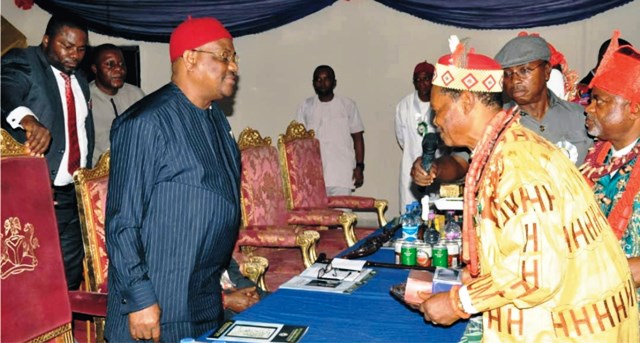
Despite the rise in the Manufacturing Purchasing Managers’ Index (PMI) at 61.1 index points for December 2018, as against 57.9 index points recorded in November, analysts say at the weekend that the outgoing year will not be forgotten in a hurry due to other negative indicators like high unemployment, dearth of credit by banks to critical sectors of the economy and high inflation in the midst of low purchasing power.
Bismarck Rewane, Chief Executive, Financial Derivatives Company’s December Lagos Business School’s publication sees 2019 as a year of “Trepidation and Growing Uncertainties,” adding that “The Nigerian economy may succumb to pressures of an oil price (down by 40%) to $53pb range and a cut in production to 1.67mbpd. The lower oil revenue and a growing deficit will erode the fiscal consolidation policies of the government.
With banking industry fragility and a naira under speculative pressure, 2019 will be a year of technological and investment opportunities but serious political and policy challenges.
The amicable settlement between Nigeria and MTN after an avoidable saga is a good way to end an eruptive year. A listing of MTN is the much needed booster shot the Nigerian stock market badly needs.”
According to the foremost economist, Nigeria’s 2019 election is being greeted with the classical reaction of an economic indifference curve, which is a combination of choices between commodity A and B which gives a consumer the same level of satisfaction or dissatisfaction.
‘Talking to a cross section of young people between the ages of 20 and 30, most respondents were unenthusiastic, indifferent and apathetic. Some considered it an Hobson’s choice. Based on this, we are anticipating voter apathy and a low turnout in the February election,’ he said.
Lagos Chamber of Commerce and Industry, Muda Yusuf, Director-General would like “foreign exchange management framework that reflects the market fundamentals, the acceleration of the economic diversification agenda, normalization of Lagos ports environment, the oil and gas sector reform, especially the petroleum industry bill; better debt management strategy to ease the burden of debt service, reduction in the cost of governance at all levels; improvements in the domestic revenue (particularly independent revenue) to reduce volatilities in government revenues,” in the new year.
President of the Nigerian Employers’ Consultative Association (NECA), Dr Mohammed Yinusa says the implementation of Nigeria’s 2018 budget, benchmarked at $60 per barrel could also suffer should the slump persist in the oil price at the international market persists.
Consequently, Yinusa says, “Nigeria’s economy which is currently stabilising on boost in crude oil price, could be adversely affected as crisis in foreign exchange, primarily sourced from the oil sector was projected to worsen.”
Yusuf believes that the non-passage of the Electoral Act and Petroleum Industry Bill (PIB), are considered as sore points for the economy and polity, adding, the “downstream sector as currently constituted is unstructured and largely uncompetitive.”
In the last quarter of this year, the globa oil industry witnessed steady decline in prices of crude oil prompting several oil producing countries especially OPEC to consider production cuts.
In fact, OPEC, Russia and other producers have agreed to remove 1.2 million barrels per day from the market beginning in January. Consequently, some observers also said price volatility in 2019 may be inevitable considering the conflicting priorities of the three top world producers, namely the US, Saudi Arabia and Russia.
The move follows a more than 30 percent drop in oil prices that saw international benchmark, the Brent crude, fall from more than $86 a barrel to a 13-month low of $57.50 last month.
Apart from the downward movement in the international prices of crude oil in the outgoing year,2018 witnessed a mixed feeling among the stakeholders in the country’s oil and gas industry.
Muda Yusuf said data from the Organisation of Petroleum Exporting Countries (OPEC) shows that oil prices are trending down at $54 p/bl on 22nd December 2018 from its peak of $88p/bl in the month of September and October 2018.
He said this is already below 2019-2021 Medium-Term Expenditure Framework (MTEF) and 2019 budget benchmark of $60p/bl. The declining global oil price will likely distort FG’s economic projections for 2019 as well as impact adversely on its MTEF if the trend is not reversed.
Consequently, Yususf said in 2018, the oil and gas industry was characterized by weak incentive regime to facilitate the penetration of the use of cooking gas in the country as well as high cost of the LG equipment as result of high import tariff. He also said the industry was characterized by the discriminatory VAT imposed on the locally sourced LPG, while imported LPG does not attract VAT.
“Petroleum subsidy debts and non-payment of interest rate and exchange rate differentials to oil marketers is affecting the ability of the oil marketers to meet up with their financial obligations with the banks. This is also having a multiplier effect on the revenue of the banks/lenders. It also has implications for the stability of the banking system and the growth of non-performing loans in the financial system,” he added.
A banker and chieftain of the Peoples Democratic Party (PDP), Dr John Ayuba says the failure of government to provide the much needed enabling environment led to the drought of Foreign Direct Investments (FDIs).
At the home front, Ayuba said the economy did not fare betther as local investors were hounded with harsh and vindictive policies.
According to him, the economy needs a leaders with business acumen and who understands and with a face of business.
Chief executive of Abuja based Muregi Associates, Dr. Husseini Mohammed in his response to inquiry titles his submission “Economic Annus Horriblis.”
As the above indicates, Commenting or writing in assessing the Economic situation of the country in 2018 is not farfetched considering a number of factors, namely, Inflation, Unemployment, Manufacturing, Private Sector Performance and indeed the overall activities of the socioeconomic indicators all proved by and large negative.
Manufacturing sector, which is the engine of economic growth in terms of Capacity utilization, was too low and generally considered unacceptable or unrealistic for any meaningful economic growth. In a way it wouldn’t be out of place to conclude that, the year 2018 is what in Latin we call “Annus Horriblis”.
On the expectations for next year, he said, “we need to be cautious because the current budget of N8.83 Trillion Naira with a production of 2.3 barrel and a benchmark of $60per barrels is already questionable by the current sport market of $53 per barrels and OPEC’S cut in our production to a mere 1.93 barrels.
For the Economy to turn around, we must look inwards in the development of Agriculture and other allied resources with a major emphasis on the small-scale industries as enablers.
Leadership is everything, election is just about a month away, therefore, whoever emerges as the president be it the current leadership or the PDP leadership will have Herculean task in managing the state of affairs of the country.”
Engineer Martin Onovo told our correspondent that the “year, just like the previous years under the current administration, didn’t witness salutary growth because the handlers of the country have no idea of how to pilot it let alone functionalize the nation’s section.
He said the development explains the lingering crisis of confidence between the Minister of State for Petroleum Resources, Ibe Kachikwu and the group managing director of the Nigerian National Petroleum Resources (NNPC),Maikanti Baru, fuel subsidy payment, corruption and all other inherent infractions which ordinarily should have fizzled out given the right leadership.”
On power situation some analysts say despite the recent claim by the country’s Power Minister, Babatunde Fashola, that the current administration has taken power situation to the next level, the Senior Staff Association of Electricity and Allied Companies(SSEAC) and critical stakeholders felt the minister played to the gallery .
National president of the Union, Comrade Chris Okonkwo told newsmen that Nigeria didn’t achieve any substantial growth in the power sector in 2018,adding that the power distribution companies had a field day by imposing estimated billings on customers, denying them prepaid meters and shunning investment in infrastructure that could boost power supply in the country.
A leader of a pressure group organization in Lagos, Comrade Chinedu Bosah corroborated Okonkwo’s position, saying the claim of improved power supply by the current government in 2018 is a mere political gimmick
Consequently, President of the Nigerian Employers’ Consultative Association (NECA), Dr. Yinusa, has recommended that government should see to a logical conclusion its power sector reforms to deliver stable power supply to the populace, while priority should be given to the rehabilitation of deplorable road networks while constructing additional ones across the nation.
He said: “There is the need for close monitoring and regulation of the activities of road concessionaires to ensure optimum benefits from such concessions. The transportation and haulage system is virtually road dependent. This is not good for the economy.
“Development of alternative transport system, particularly the water transport, railway, both intra and interstate, should be accorded high priority.
“We recognise the efforts of government in respect of its rail modernisation programme and recommend that the programme should be accelerated in view of its centrality to the growth of internal trade and industrial competitiveness.”
With the upcoming general elections, he advised Government not to focus solely on politics at the expense of the economy and good governance, but continue to work assiduously to sustain the steady stabilisation of our economy through informed policies to position it for continued growth.
However, on the anti-graft war, the government, according to some analysts was able to change the status quo to an extent, as they all agree that it became obvious that there was a new sherrif in town.
Indeed, one of the landmark strategies initiated by the government was the Whistle-blower policy, which, according to the government, has yielded several recoveries, including, N13.8 billion from tax evaders and N7.8 billion, $378 million, £27,800 in recoveries from public officials targeted by whistleblowers.
It also said the National Economic Council (NEC), under the Chairmanship of Vice President Yemi Osinbajo, approved the audit of key federal revenue generating agencies, which has so far yielded a total sum of N526 billion and $21 billion. The money was underpaid to the Federation Account between 2010 and 2015.
However, while the ruling APC goes to the 2019 polls with some of these achievements, many believe the government may have fallen short of great expectations Nigerians including improving their living standards. But, rather, what they have experienced in the last twelve months was more of despondency and hopelessness

Featured
Fubara Pledges Support For Corporate Organisations In Rivers …Says PPP Business Model Responsible For NLNG’s Success


Rivers State Governor, Sir Siminalayi Fubara, has pledged the continued support of his administration for the Nigeria Liquified Natural Gas (NLNG) Limited.
Fubara gave the assurance while receiving the new Managing Director and Chief Executive Officer of the NLNG, Mr Adeleye Falade, who paid him a courtesy visit at Government House, Port Harcourt.
He assured that his administration would continue to contribute its own quota in support of the NLNG.
According to him, the success of the organisation is equally the success of the government of Rivers State and the success of the Federal Government.
“Our duty is to make sure that we support whoever is operating in our state. We are the ones here. If we don’t support you and you don’t succeed, we also will not succeed and Mr President will also not succeed.
“So, the success of your establishment is the success of our state, and overall success of Nigeria. So you can count on our support. Wherever you think we need to come in to support you, please do not hesitate to call upon us.
“You just mentioned here that your predecessor left a handover note showcasing the level of support that he got from the state. It is not going to be different in your own case. I can assure you that. I will also ensure that other units of the government will liaise with you when necessary. So even if you can’t get to me, you can always get to them and if there is anything we can do to help your establishment succeed, we will do it for you,” he said.
The governor attributed the success of the NLNG to the Public Private Partnership ( PPP) business model adopted by the Federal Government and the multinational oil companies.
The NLNG is jointly owned by Nigerian National Petroleum Corporation (NNPC) with 49%, Shell Gas B.V. with 25.6%, Total LNG Nigeria Ltd with 15%, and Eni International with 10.4%.
The partnership model allows for shared risks, costs, and expertise in the LNG sector.
The governor noted that the NLNG has not only survived the difficult business environment but has made sustained progress in the nearly three decades of its existence.
According to him, the decision of the Federal Government to allow the multinational oil companies who have the needed expertise to run the establishment while government plays a supervisory role over it has largely been responsible for its success.
“I’m very proud to say that if there is one establishment that has shown resilience, that has survived in the face of all the political issues prevalent in this country, it is the NLNG. And what is the reason? The reason is very simple. Government has no business in business. That is the truth. Leave the business for those people who can operate it. Let the government play its supervisory role to ensure that there is compliance with the laws; ensure that standards are maintained and also ensure that the right people with the needed expertise are at the helm of affairs. That’s all. I think that is the reason why we still record a lot of successes in NLNG,” he said.
In his opening remark, the new NLNG boss, Mr Adeleye Falade, who led other top officials of the company on the visit, expressed appreciation to the governor for granting them audience, and appealed to the State Government to continue to support the organisation.
“We appreciate the opportunity to meet with you and deepen this important relationship.We deeply value the support the Rivers State Government continues to extend in fostering an enabling operating environment for businesses. NLNG remains deliberate in its contribution to Nigeria’s development, and Rivers State, our primary host, continues to be central to that commitment,” he said.
Falade said the company has continued to work with its host communities to strengthen their capacity to identify, prioritise, and deliver sustainable development initiatives that create lasting impact.
According to him, communities including Amadi-ama, Abua, Ekpeye, Okrika, Kalabari, and Emohua have continued to benefit from this model.
He said that beyond community infrastructure, the NLNG has sustained investments in economic empowerment through initiatives such as Vocational Innovation and Business Empowerment Scheme (VIBES) and Micro Small and Medium Enterprise (MSME) schemes.
These, he said, were designed to support small businesses, build capacity, and stimulate local enterprise across the state.
Among officials of the company who accompanied the Managing Director were General Manager, External Relations and Sustainable Development, Dr Sophia Horsfall; Manager, Government Relations, Mr Abdul Umar; Manager, Community Relations, Dr. Yemi Adeyemi; Head of Government Relations, Mr Mike Igoni; Head of Community Liaison and Engagement, Chief Ifeanyi Umeh.
Others are Technical Assistant to Executive Leadership, Mr Hassan Saleh; Senior Media and Publicity Advisor, Mr Emma Nwatu; Government Relations Advisor, Miss Homa Nmegbu; Senior Government Relations Advisor, Mrs Kate Allison, and Audio -Visual Advisor, Mr Dawood Ahmed.
The Federal Government has reassured Nigerians and the international community of the country’s stability following a recent advisory by the United States authorising the departure of non-emergency personnel from its embassy in Abuja.
The Minister of Information and National Orientation, Mohammed Idris, stated this in a statement issued yesterday by his media aide, Rabiu Ibrahim.
According to the minister, public institutions across the country remain fully operational, with no disruption to governance, economic activities, or daily life.
This followed the decision of the United States Mission in Nigeria to suspend visa appointments at its Embassy in Abuja.
The mission’s decision was contained in a post shared on its official X handle, yesterday.
It stated, “U.S. Embassy Abuja is closed for visa appointments. Applicants should check their email for details on rescheduled appointments.”
The mission, however, clarified that visa operations at the U.S. Consulate General in Lagos remain ongoing.
The development comes amid a broader security advisory issued by the United States, which authorised the departure of non-emergency staff from its Abuja embassy and expanded its Nigeria travel blacklist to 23 states.
The State Department issued the authorised departure order on Tuesday, alongside an updated travel advisory that added Plateau, Jigawa, Kwara, Niger and Taraba to its highest warning category, “Do Not Travel.”
While the overall advisory rating for Nigeria remains at Level 3, “Reconsider Travel,” the department warned that some areas face increased risks due to crime, terrorism, unrest, kidnapping and limited healthcare availability.
According to the advisory, Americans are often targeted for kidnapping and robbery, while terrorist attacks continue to pose a threat across multiple locations, including markets, religious centres, hotels and public gatherings.
It also raised concerns about the state of emergency healthcare in the country, noting that hospitals often require immediate cash payments, ambulance services are unreliable and poorly equipped, and blood supply systems are inconsistent.
Medical facilities in Nigeria, the advisory said, generally do not meet United States or European standards, adding that evacuation may be necessary in medical emergencies.
The advisory further urged US citizens in Nigeria to enrol in the Smart Traveller Enrollment Programme, avoid large gatherings, vary their routines and maintain evacuation plans that do not depend on US government assistance.
It also recommended that individuals establish “proof of life” protocols with family members in the event of kidnapping.
The blacklist is divided into regional clusters. Borno, Kogi, Yobe and northern Adamawa remain under the terrorism, crime and kidnapping category, with the State Department warning that terrorist groups continue to plan and carry out attacks, sometimes in collaboration with local gangs.
For Bauchi, Gombe, Kaduna, Kano, Katsina, Sokoto and Zamfara, the advisory points to widespread banditry, communal clashes and kidnapping, while noting that security operations may occur without warning.
In the South-East and Niger Delta, states including Abia, Anambra, Bayelsa, Delta, Enugu, Imo and Rivers (excluding Port Harcourt) are flagged for crime, kidnapping and civil unrest, with armed gangs and violent protests posing significant risks.
The latest update added Plateau, Jigawa, Kwara, Niger and Taraba to the “Do Not Travel” list, citing the spread of insecurity into new regions, particularly in the Middle Belt where farmer-herder conflicts have intensified.
The advisory described the security situation in these newly added states as unstable and unpredictable, with counter-operations by security forces likely to occur without prior notice.
Idris, however, described the US advisory as a routine precaution based on internal protocols, stressing that it does not reflect the overall security situation in the country.
“While we acknowledge isolated security challenges in some areas, there is no general breakdown of law and order, and the vast majority of the country remains stable,” Idris said.
He noted that ongoing security operations have recorded measurable gains across several regions, attributing the progress to coordinated military efforts, intelligence-led interventions, and strengthened inter-agency collaboration.
“Our security agencies remain actively engaged in protecting lives and property, and the results of these efforts are increasingly evident,” he added.
According to the minister, recent operations have disrupted criminal networks, curtailed the activities of armed groups, and improved safety in vulnerable communities.
Idris also maintained that Nigeria remains open for business, travel, and investment, adding that ongoing economic reforms are strengthening investor confidence and enhancing the country’s global standing.
He said, “International partners and investors continue to engage actively with Nigeria, reflecting confidence in the country’s stability and long-term prospects.”
The minister urged foreign governments to ensure that their advisories reflect current realities and ongoing progress in the country.
“We encourage our international partners to continuously engage with Nigerian authorities to obtain a more comprehensive and current understanding of the situation on the ground,” he said.
The Federal Government reiterated its commitment to sustaining security improvements and ensuring the safety of citizens and visitors, assuring that Nigeria remains a safe and welcoming destination.

Rivers State Governor, Sir Siminalayi Fubara, yesterday extended interim relief measures to the people of Bille Kingdom as the government intensifies efforts to address the ongoing environmental degradation affecting the area.
This was contained in a statement by the Head of Information and Public Relations Unit, Office of the Secretary to the State Government, Juliana Masi, yesterday.
The governor, during a working visit to Bille Kingdom in Degema Local Government Area, reassured residents of his deep concern for their health and well-being.
He reiterated his administration’s commitment to finding a lasting solution to the persistent gas emissions observed in the community’s land and water sources since November 2025.
Represented by the Secretary to the State Government, Dagogo Wokoma, the governor announced immediate interventions to address urgent needs.
Some of the relief measures include the provision of potable water and essential medical services through the release of ?100 million as palliative support for the affected community.
According to the SSG, “Governor Fubara remains deeply committed to the welfare of the people of Bille Kingdom. Although unable to attend in person due to pressing state engagements, he is fully aware of the situation and determined to tackle the root cause of the environmental challenge”.
The governor assured residents that the state government would not relent in its efforts to provide a permanent solution to the gas emissions, emphasizing that the current intervention is only a temporary measure to ease the suffering of the people.
He further urged members of the community to remain law-abiding and continue supporting his administration, noting that he has consistently demonstrated a track record of fulfilling his promises.
Earlier, the Chairman, Council of Chief for Bille Kingdom, Chief Bennet Dokubo, expressed joy over the State visit, describing Fubara as a leader who listens to the plight of the people.
He urged the governor to critically look into the gas emission which he described as dangerous to human health.
“If we take you into the river, we notice that the entire environment is bubbling and smelling.
“We most humbly urge you to critically look into this situation. This is something strange we have never experienced before. It is not good for human health,” the monarch stressed.
-
 Editorial3 days ago
Domesticate FG’s Exit Benefit Scheme
-

 News2 days ago
RSU Unveils Five-Year Strategic Dev Plan …Calls For Collective Commitment To Institutional Excellence
-

 News3 days ago
DHQ Confirms Deaths Of Terrorists, Soldiers In Borno Attack
-

 News2 days ago
Tinubu Commissions Bayelsa Gas Turbine, Other Projects Today
-
Business3 days ago
Niger Delta Investment Summit Targets $5bn Inflows, 500,000 Jobs
-
Rivers3 days ago
Dep Gov Seeks Collaboration, Transparency Between RIVCHPP, PHCMB
-
Nation2 days ago
Rumuji Youth Leader Condemns Protest, Disowns Alleged Government Empowerment Claim
-
Sports3 days ago
Full Draw For 2026 U-17 AFCON