
Health
NMA Seeks Improved Doctors, Nurses’ Relationship

The Nigeria Medical Association (NMA) has called for the reintroduction of the old good working relationship that existed between medical practitioners and nurses to promote better working relations in the healthcare sector.
The NMA President, Dr Francis Faduyile, made the appeal on Monday when he visited the National Association of Nigerian Nurses and Midwives (NANNM) in Abuja.
Faduyile said that the NMA was prepared for better relation with the nurses and always committed to the restoration of the lost glory between health workers, especially the doctors and nurses relationship.
He said that such collaboration would guarantee better working relationship, quality healthcare service for patients and better working environment.
“It is true that nurses have not had the best of times over the years in the health sector. And that has pushed them to distance themselves from the doctors.
“By this visit, NMA is calling on nurses to return to the lost relationship that has been progressive and beneficial to both of us.
“It is important we ensure harmony within the health sector and better working environment,” he said.
According to him, everybody in the medical profession must key into the new spirit of togetherness and Nigerians must know that health workers are united.
Responding, Mr Abdrafiu Adeniji, the President of NANNM, commended NMA for the visit, while also acknowledging that without harmonious and cordial relationship, the healthcare environment will not develop.
“We should be able to do it in a way that will not hamper the benefit of our patients.
“We are committed to team action and quality healthcare services to the healthcare consumers that we are employed to serve,” he said.
According to him, “we take sincere commitment of each and every one of us, we believe the health sector in Nigeria will be better’’.
Also speaking, Mr Thomas Shettima, the General Secretary of NANNM, said the objective of close collaboration would ensure that patients receive the best service since both nurses and doctors are patients centred.
“We have understood that conflict is not taking us anywhere, but if we work together the sky is our limit,” Shettima said.


The Federal Government has begun a scheme to battle malnutrition in children.
Tagged, “Nutrition 774 Initiative”, the programme was unveiled by Vice President Kashim Shettima as it falls within a framework for the Federal Government’s comprehensive vision for a nationwide nutrition programme to address malnutrition and food insecurity in Nigeria.
The proposed programme, “Nutrition 774 Initiative,” aims to improve nutritional outcomes across all 774 local government areas (LGAs) in the country.
Speaking yesterday during a roundtable with development partners at the Presidential Villa, Abuja, VP Shettima said the initiative aligns with President Bola Ahmed Tinubu’s broader focus on food security and availability across Nigeria.”The priority with which His Excellency, President Bola Ahmed Tinubu, has pursued food availability has gone hand-in-hand with our commitment to eradicating malnutrition.
“Our aspiration as a nation goes beyond the mere abundance of food in our barns and warehouses. We cannot claim victory unless there is certainty that each household across Nigeria has access to the preferred and prescribed diets essential for a healthy life,” the vice president stated.
It would be recalled that the 144th meeting of the National Economic Council (NEC) had in September endorsed the Nutrition 774 programme as a primary platform for combating malnutrition within Nigerian communities.
The council encouraged development partners to provide financial and technical assistance to support this initiative.
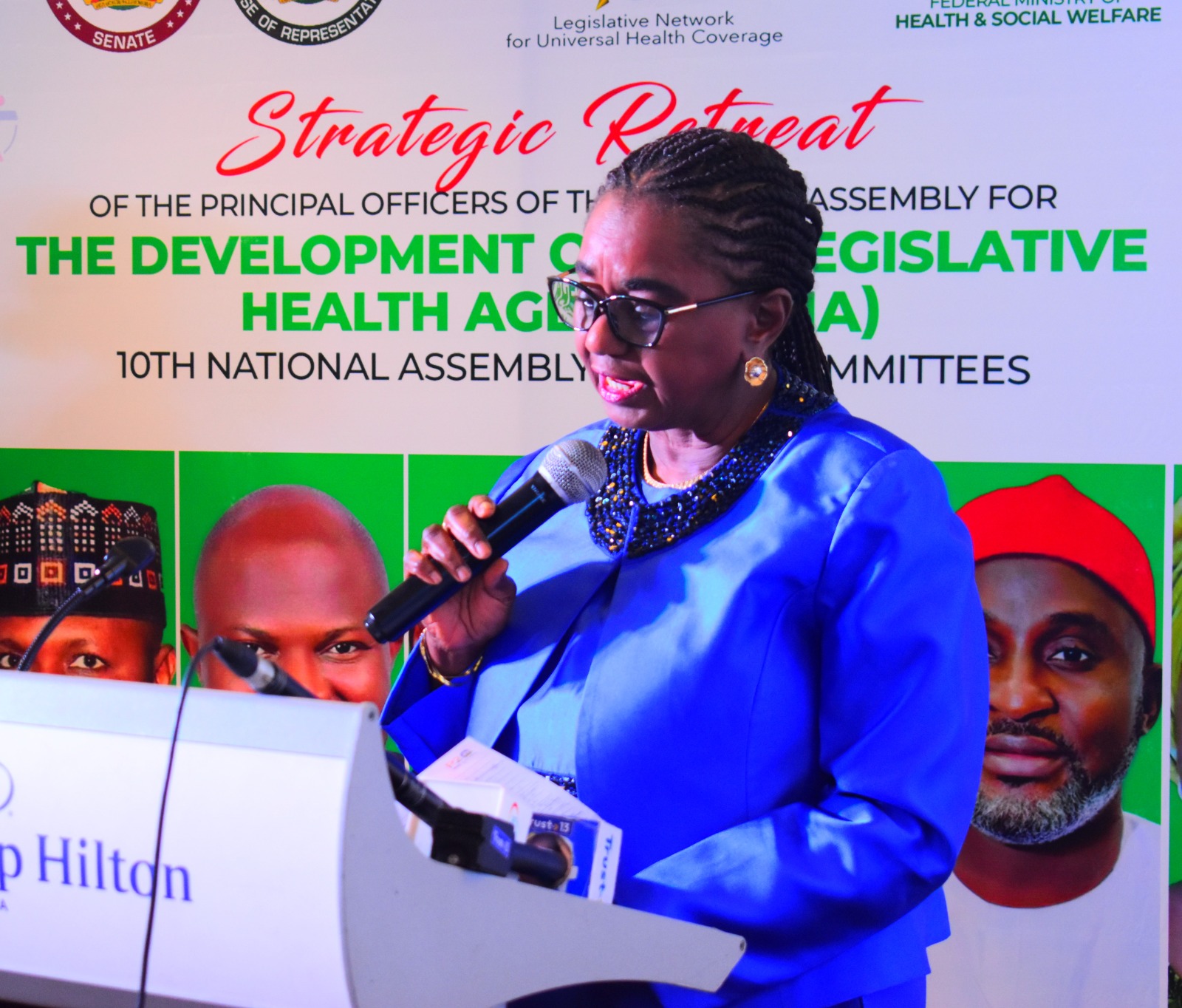
The importance of e-Health devices and digital health solutions in improving Nigeria’s healthcare system has been emphasised by Senator Ipalibo Harry Banigo, Chairman of the Senate Committee on Health, Secondary and Tertiary.
She also stressed that health is a multilayered activity and a multisectoral collaboration that requires legislators to work together to provide legislation, implement policies, and track funds effectively.
Banigo, who represents Rivers West Senatorial District in the National Assembly, made these remarks at the 5th Annual Legislative Summit on Health in Abuja, themed “Improving Legislative Stewardship and Accountability for Universal Health Coverage.”
She highlighted the potential of eHealth devices, especially given Nigeria’s large population and limited healthcare professionals.
“We can develop platforms that can be accessed through simple phones, even in remote villages, to provide health education and interventions,” she said.
“We are not talking about highfalutin things; we are talking about what will impact communities at the grassroots level, particularly pro-poor initiatives that will benefit vulnerable populations.”
Banigo also emphasized the importance of accountability and effective care, encouraging legislators to share knowledge, engage in peer reviews, and exchange information to achieve better health outcomes.
She recalled the cholera outbreak, where basic health education and interventions could have been delivered via mobile phones, preventing preventable deaths.
The 5th Annual Legislative Summit on Health brought together federal and state legislators, the Coordinating Minister of Health and Social Welfare, Prof. Muhammad Pate, the World Health Organisation’s representative in Nigeria, Dr. Walter Mulombo, and other dignitaries.
-
News23 hours ago
Obuah’s Victory Excites Former Lawmaker as APC Primaries Conclude in Rivers West
-

 Politics3 days ago
APC PRIMARIES: FUBARA’S WITHDRAWAL, HISTORIC SACRIFICE FOR NATIONAL STABILITY ……. GROUP
-

 News3 days ago
Court Sentences Seven To Death Over Murder Of Cleric In Rivers
-
News24 hours ago
105 Nigerians Killed In S/Africa In Seven Years
-

 Sports3 days ago
PH Arsenal Community Set For Streets Procession, Saturday
-

 Politics3 days ago
IPAC Flays INEC Over Election Guidelines Judgement
-

 Politics3 days ago
NDC To Adopt Electronic Voting For Future Primaries
-

 Politics3 days ago
Ex-IGP Defects To SDP After APC Primary Fiasco