
Business
Delta Govt Woos Investors …Promises High Return On Investment

The Delta State Governor,
Dr. Ifeanyi Okowa, has assured local and international investors of high return on investment when they tap into the rich business opportunities that abound in the state.
The governor gave this assurance at the weekend in Lagos when he delivered a lecture titled ‘Public Policy & Governance in Delta State: Opportunities And Challenges’ at the ‘dialogue with public policy makers’ programme organised by the Lagos Business School and Nigerian Economic Summit Group.
Okowa, accompanied by top government functionaries, said: “With what we are doing in partnership with the Federal Government and community leaders, peace is gradually returning to the troubled Niger Delta region, and I can assure our prospective investors that we are going to have a lasting and sustainable peace in the region and that a conducive atmosphere awaits prospective investors. There are a lot of business opportunities for investors.”
He noted that the private sector has a lot to offer and is pivotal to the state’s investment drive which seeks to significantly develop the non-oil sectors of the economy such that they will overtake oil and gas as growth drivers.
The governor disclosed that his administration’s vision is to make Delta State the pacesetter in the country by building an enduring legacy of wealth and prosperity for all through public policy imperatives geared at maximising comparative advantages of the state, developing the non-oil sectors of the economy, creating jobs, and accelerating infrastructural development.
“Delta State has an economy size of $24.6 billion based on GDP rebase of 2013, making us the fourth largest economy in the country with multiple urban centres, numbering as many as 12,” he said, adding: “Average poverty rate based on head count is 56%, lower than the national average of 62 per cent; the per capita income is calculated at about N302 or less than $2.00 per day while unemployment/underemployment rate stood at 27.2 per cent in 2014, according to the National Bureau of Statistics.
“In a bid to address the challenges posed by the drop in statutory allocation, the state government developed the Delta State Medium Term Development Plan (DSMTDP) (2016-2019), a policy document that provides the road map to: Drive rapid infrastructural development; ensure and sustain inclusive economic growth and sustainable development; reduce the worrisome high level of youth unemployment, pervasive poverty; and woo the private sector to explore and exploit the economic and business opportunities in Delta State,” he said.
He added that the state’s PPP Model is already yielding results with agreements already signed for the Delta Commercial City Project, Umunede Rest Park, Asaba Integrated Power Project, Warri-Effurun Water Scheme, Agro-Industrial Parks and Housing Projects in the state.
Earlier in a remark, Dr. Chris Ogbechie, who represented the Dean, Lagos Business School, said the school in partnership with the Nigerian Economic Summit Group has a proven track record of engagement with public sector policy makers in proffering solutions to developmental challenges in a growing economy like Nigeria.
Similarly, the Delta State Governor, Dr Ifeanyi Okowa last weekend attended a Business Dinner in Lagos, hosted by renowned economist and eminent Deltan, Prof. Pat Utomi, where he said that his administration would support investments in the agricultural and solid minerals sectors in the state.
Okowa said that as the state moves to reduce its dependence on crude oil, his administration would strengthen the enabling environment for investments to thrive in the agriculture and other sectors.
While commending the international community for their support in attracting investments to the state, he assured that the Asaba Airport upgrade would be ready in December to accommodate bigger aircraft and also attract more airlines into the state.
In his remarks, Prof. Pat Utomi said there were lots of untapped potentials in Delta State, describing the state as the next business destination and urged the international community to consider the numerous business opportunities in the state.
The business dinner was attended by German Consul General, Mr. Ingo Herbert, British Deputy High Commissioner, Ahmed Bashir, South African Consul-General in Lagos, Darkey Ephraim Africa, United States Consular for Commercial Services, UBA Plc Chairman, Mr Tony Elumelu, Managing Director of UBA Plc, Mr Kennedy Uzoka, MD of Rain Oil, Mr. Gabriel Ogbechie, Mr. Henry Okolo and some members of the Delta State Executive Council.


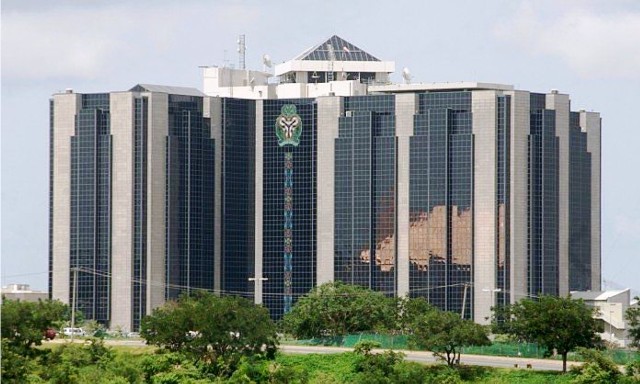
The Central Bank of Nigeria (CBN) has revised its cash withdrawal rules, discontinuing the special authorisation previously permitting individuals to withdraw N5 million and corporates N10 million once monthly, with effect from January 2026.
In a circular released Tuesday, December 2, 2025, and signed by the Director, Financial Policy & Regulation Department, FIRS, Dr. Rita I. Sike, the apex bank explained that previous cash policies had been introduced over the years in response to evolving circumstances.
However, with time, the need has arisen to streamline these provisions to reflect present-day realities.
“These policies, issued over the years in response to evolving circumstances in cash management, sought to reduce cash usage and encourage accelerated adoption of other payment options, particularly electronic payment channels.
“Effective January 1, 2026, individuals will be allowed to withdraw up to N500,000 weekly across all channels, while corporate entities will be limited to N5 million”, it said.
According to the statement, withdrawals above these thresholds would attract excess withdrawal fees of three percent for individuals and five percent for corporates, with the charges shared between the CBN and the financial institutions.
Deposit Money Banks are required to submit monthly reports on cash withdrawals above the specified limits, as well as on cash deposits, to the relevant supervisory departments.
They must also create separate accounts to warehouse processing charges collected on excess withdrawals.
Exemptions and superseding provisions
Revenue-generating accounts of federal, state, and local governments, along with accounts of microfinance banks and primary mortgage banks with commercial and non-interest banks, are exempted from the new withdrawal limits and excess withdrawal fees.
However, exemptions previously granted to embassies, diplomatic missions, and aid-donor agencies have been withdrawn.
The CBN clarified that the circular is without prejudice to the provisions of certain earlier directives but supersedes others, as detailed in its appendices.
-
Business2 days ago
Shippers Council Vows Commitment To Security At Nigerian Ports
-
Business2 days ago
CBN Revises Cash Withdrawal Rules January 2026, Ends Special Authorisation
-

 Business2 days ago
Nigeria Risks Talents Exodus In Oil And Gas Sector – PENGASSAN
-
Business2 days ago
NCDMB, Others Task Youths On Skills Acquisition, Peace
-
 Business2 days ago
FIRS Clarifies New Tax Laws, Debunks Levy Misconceptions
-

 Politics2 days ago
Tinubu Increases Ambassador-nominees to 65, Seeks Senate’s Confirmation
-
Sports2 days ago
Obagi Emerges OML 58 Football Cup Champions
-

 News2 days ago
Tinubu Swears In Christopher Musa As Defence Minister