
Business
Foreign Firms Deprive Africa $11bn Tax Yearly – Oxfam

Oxfam International said in Washington that multinational companies deprive African governments of 11 billion dollars in taxes each year.
It, therefore, challenged G7 leaders to urgently set up a new global body to regulate corporate taxation.
Oxfam International Executive Director, Winnie Byanyima said yesterday that some of the multinational companies legally avoid paying taxes to the African countries, where they generate revenues, by shifting profits overseas to lower tax regimes.
He said by so doing they deprive governments of money they desperately need for development.
Byanyima said Oxfam based its calculation of the tax revenue Africa loses on a UN backed study released in April that estimated 50 billion dollars in illicit funds flow out of the continent each year.
He said much of it through corporate trade mispricing to avoid taxes or in transfers of money obtained corruptly, and this was almost double the official development aid Africa receives each year.
Byanyima said it was necessary for the leaders of the G7, countries to discuss how to support economic growth in Africa during their next meeting in Germany between June 7 and 8.
He said the vital component of their talks should be comprehensive reform of the global tax system.
“It is absurd that there are international organisations for trade, health and football but not for tax.
“An international body similar to the World Trade Organisation could represent all countries’ interests and mediate disputes among taxation regimes,” he said.
Claire Godfrey, Oxfam Senior Adviser and author of the report, said the G7 leaders, were already discussing how to make the global taxation system fairer.
However, developing countries complain that they have no seat at the table in those talks, even though they are the victims of the present system.
She said collecting more taxes would make them less dependent on aid.
Godfrey said tax reform would go a long way towards funding new commitments to improve schooling and healthcare.
“For example, G7-based companies alone avoid about 6 billion dollars a year in taxes due to African governments.
“This is more than three times the amount the Ebola-affected countries of Sierra Leone, Liberia, Guinea and Guinea-Bissau need to plug their funding gaps to deliver free primary healthcare,” she said.
Malcolm Damon, Director of Economic Justice Network for Southern Africa, said one quarter of South Africans go to bed hungry each night and a further 25 per cent were at risk of missing a meal.
He said African governments needed resources to reduce poverty at all levels.
The G7 summit would take place in Bavaria, Germany, and in July world leaders and ministers meet in Addis Ababa to consider how to finance the new development agenda.
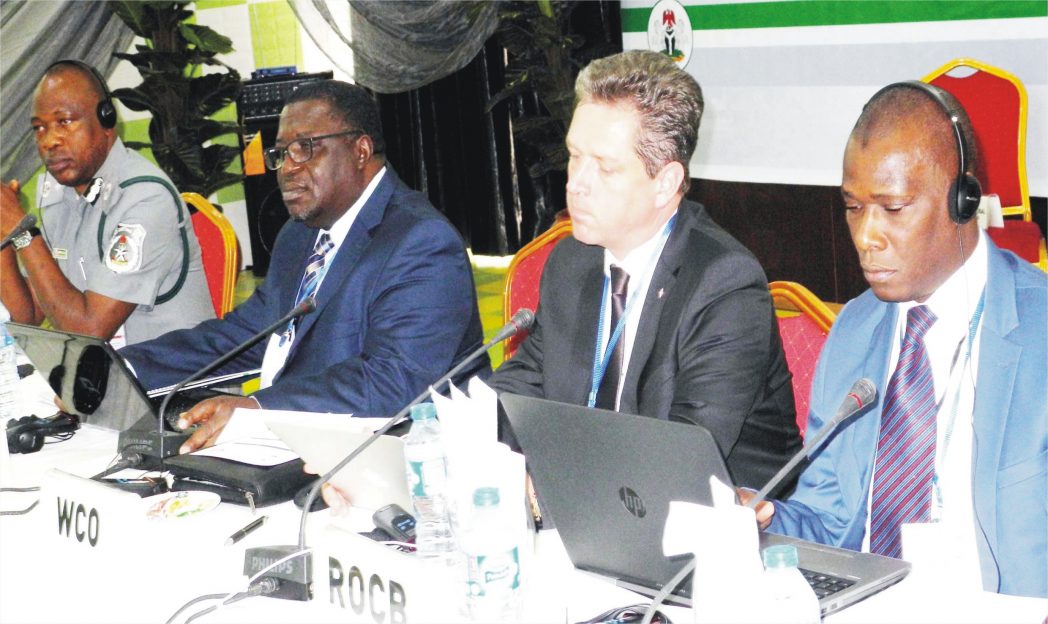
L-R: Representative of Comptroller-General, Nigeria Customs Service, Mr Wale Adeniyi, representative of the Vice Chairman, World Customs Organisation (WCO), Mr Ebenezer Tafili, Regional Development Officer, WCO, Mr Bernard Zbiden and Regional Officer for Capacity Building, Mr Suleiman Sangare, at the 4th meeting of experts of the Conference of Directors-General of Customs in Abuja, recently.


Nkpemenyie Mcdominic
Reports say that the training is designed to equip youths with practical technical skills for employment in the oil and gas and construction sectors, with emphasis on employability, safety, competence and self reliance.
In attendance at the flag-off ceremony this week, at the Petroleum Training Institute (PTI) Conference Hall, Effurun, were stakeholders, dignitaries, and political representatives, among others.
Dafinone, represented by his Chief of Staff, Adelabu Bodjor, said the initiative reflects a deliberate political investment in human capital development across Delta Central.
He explained that the training focuses on rigging and scaffolding, noting that “both are essential technical competencies required in industrial operations, construction projects, and oil and gas installations”.
Bodjor added, “The programme is intended to reduce dependency among youths by providing job-ready skills capable of supporting long-term economic opportunities and self-sufficiency. The initiative aligns with Senator Dafinone’s broader development agenda, which prioritises practical skill acquisition as a pathway to sustainable empowerment.”
Also addressing the participants, the NCDMB, Felix Omatsola Ogbe, represented by Mr. Teddy Bai, commended Dafinone for sponsoring the programme, describing it as “a timely response to critical manpower gaps in the industry”.
Bai explained that rigging and scaffolding remain safety-sensitive skills required across fabrication yards, offshore platforms, and construction sites, stressing that the programme bridges the gap between certification and practical competence.
He also charged the training consultant, OROH Contractors Limited, to maintain strict standards of professionalism, safety, and discipline, while urging participants to remain committed, focused, and disciplined throughout the exercise.
The Senate Liaison Officer for Sapele Local Government Area, Chief Patrick Akamuvba, , described the programme as a major step in strengthening human capital development in Delta Central.
Akamuvba said scaffolding and rigging skills are in high demand across residential, commercial, and industrial construction projects, noting that the training offers real employment opportunities for beneficiaries
He urged participants to prioritise knowledge and certification over short-term material expectations, stressing that discipline and seriousness would determine their long-term success.
He also cautioned youths against social vices and distractions, advising them to remain focused to maximise the opportunities provided by the programme.
-
News18 hours ago
Obuah’s Victory Excites Former Lawmaker as APC Primaries Conclude in Rivers West
-

 Politics3 days ago
APC PRIMARIES: FUBARA’S WITHDRAWAL, HISTORIC SACRIFICE FOR NATIONAL STABILITY ……. GROUP
-

 News3 days ago
Court Sentences Seven To Death Over Murder Of Cleric In Rivers
-
News19 hours ago
105 Nigerians Killed In S/Africa In Seven Years
-

 Sports3 days ago
PH Arsenal Community Set For Streets Procession, Saturday
-

 Politics3 days ago
IPAC Flays INEC Over Election Guidelines Judgement
-

 Politics3 days ago
NDC To Adopt Electronic Voting For Future Primaries
-

 Politics3 days ago
Otu Vows To Recall Indolent, Arrogant Cross River Legislators