
Business
Veterinary Council Calls For Privatisation Of Abattoirs

The President, Veterinary
Council of Nigeria, Prof. Garba Shuaibu, has called on states and local governments to privatise their abattoirs to standardise its operations and curb the filthy nature of the facilities.
Shuaibu made the call over the weekend in Bauchi in an interview with newsmen.
He said the measure would help to stop some unwholesome practices such as the slaughter of pregnant and unhealthy animals.
“We have suggested to the government that the best way to do this is through close monitoring and supervision especially in ensuring that only certified and healthy animals are slaughtered.
“Let government register people who are ready to establish abattoirs, and then government form a regulatory unit to monitor those that have been given licences to operate these abattoirs.
“By so doing, standard will be maintained. But the practice whereby government is involving itself in running of abattoirs is archaic and unproductive because government cannot regulate itself.”
According to him, most abattoirs handled by local governments have been left to rot due to lack of enforcement of standard regulations.
He accused local councils of being only interested in the revenue generated from the facilities rather than ensuring quality and protection of the health of citizens.
Shuaibu said the local councils had over the years failed in providing the required infrastructure to make abattoirs decent
“You find out that most abattoirs are filthy with very dirty environment as most of them lack water to wash the meat and the environment itself.
“We need to also focus on our environment from where the meat we eat comes from, we concentrate only on human health which can be prevented from what we consume.”
The president, who described animals as reservoirs of human diseases, appealed to governments to concentrate on preventive measures to stop diseases from spreading.
“Government will only continue to waste resources by way of sponsoring the development of human health while neglecting the development of animal health.”


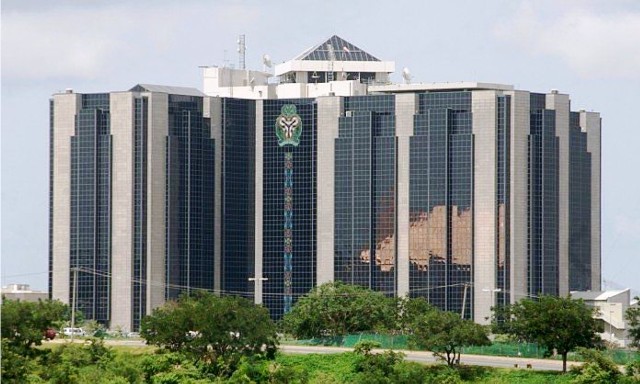
The Central Bank of Nigeria (CBN) has revised its cash withdrawal rules, discontinuing the special authorisation previously permitting individuals to withdraw N5 million and corporates N10 million once monthly, with effect from January 2026.
In a circular released Tuesday, December 2, 2025, and signed by the Director, Financial Policy & Regulation Department, FIRS, Dr. Rita I. Sike, the apex bank explained that previous cash policies had been introduced over the years in response to evolving circumstances.
However, with time, the need has arisen to streamline these provisions to reflect present-day realities.
“These policies, issued over the years in response to evolving circumstances in cash management, sought to reduce cash usage and encourage accelerated adoption of other payment options, particularly electronic payment channels.
“Effective January 1, 2026, individuals will be allowed to withdraw up to N500,000 weekly across all channels, while corporate entities will be limited to N5 million”, it said.
According to the statement, withdrawals above these thresholds would attract excess withdrawal fees of three percent for individuals and five percent for corporates, with the charges shared between the CBN and the financial institutions.
Deposit Money Banks are required to submit monthly reports on cash withdrawals above the specified limits, as well as on cash deposits, to the relevant supervisory departments.
They must also create separate accounts to warehouse processing charges collected on excess withdrawals.
Exemptions and superseding provisions
Revenue-generating accounts of federal, state, and local governments, along with accounts of microfinance banks and primary mortgage banks with commercial and non-interest banks, are exempted from the new withdrawal limits and excess withdrawal fees.
However, exemptions previously granted to embassies, diplomatic missions, and aid-donor agencies have been withdrawn.
The CBN clarified that the circular is without prejudice to the provisions of certain earlier directives but supersedes others, as detailed in its appendices.
-

 Featured4 days ago
Oil & Gas: Rivers Remains The Best Investment Destination – Fubara
-
Nation4 days ago
MOSIEND Calls For RSG, NDDC, Stakeholders’ Intervention In Obolo Nation
-
Nation5 days ago
Hausa Community Lauds Council Boss Over Free Medical Outreach
-
 Nation5 days ago
Ogoni Power Project: HYPREP Moves To Boost Capacity Of Personnel
-
Nation5 days ago
Association Hails Rivers LG Chairmen, Urges Expansion Of Dev Projects
-
Nation5 days ago
Film Festival: Don, Others Urge Govt To Partner RIFF
-
 News4 days ago
NDLEA Arrests Two, Intercepts Illicit Drugs Packaged As Christmas Cookies
-
 News4 days ago
Troops Rescue 12 Abducted Teenage Girls In Borno