
Politics
INEC Harps On Increased Voters Participation

INEC Chairman Attahiru Jega said in Abuja that the commission was determined to ensure increased voter participation in the nation’s electoral process.
Jega said this at a workshop with the theme; “Voter Apathy in Nigeria,” organized by INEC and Friedrich Ebert-Stiftung (FES) Foundation.
He was represented by Prof. Lai Olurode, the INEC National Commissioner in-charge of research.
Jega said that voter turnout in the just concluded general elections provided empirical evidence of the existence of voter apathy in elections.
“We as a commission are determined to enlarge participation in the election process as well as cherish means of aggregating preferences,” he said.
He said that an apathetic citizenry contributed to waste of investments.
Earlier, Mr Thomas Mttig, the Friedrich Ebert-Stiflung (FES) Resident Representative, said that findings from the research carried out by the foundation during the April polls showed that support for democracy and enthusiasm about elections were high.
“But people were discouraged by violence or by electoral fraud,” Mattig said.
He argued that if violence and electoral fraud were reduced, “people will be more emthusiastic to go out and vote, to exercise their right and democracy will be strengthened.”
Also, Mr Adigun Agbaje, the Lead Researcher, said that people in the rural areas displayed more intentions to vote than those in the urban areas.
He said that emphasis was put on the poor performance by politicians for the low voter turnout.
Agbaje said that voter apathy was likely to continue if politicians failed to redeem their promises when they got to office.
The Tide reports that the research report recommended that security issues and the issue of performance by elected officials be addressed.
The workshop presented findings from the field work carried out in the six geo-political zones of the country.
It also served as a platform for key stakeholders and development partners to extend the frontiers of citizenship and widen the scope of participation in elections and governance process.



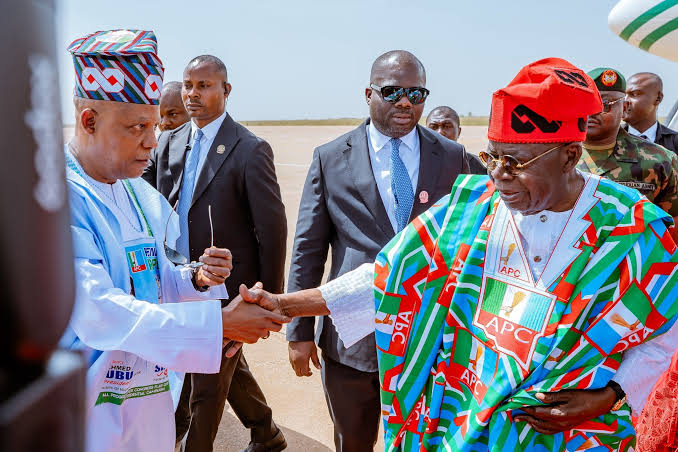
The campaign rally, held at the Kaduna Township Stadium, attracted Vice-President Kashim Shettima, APC governors, party leaders, federal and state lawmakers, political stakeholders and supporters from across the country.
The flag-off marks the beginning of the APC’s drive to secure a second presidential term for President Tinubu, with the party expected to promote its achievements, defend its economic reforms and outline its policy priorities under the proposed Renewed Hope 2.0 agenda.
Kaduna’s selection for the campaign launch underscores the strategic importance of the North-West, a region with a substantial voting population and considerable influence on presidential election outcomes.
The APC faces a significant challenge in Kaduna, where the Peoples Democratic Party’s presidential candidate, Alhaji Atiku Abubakar, defeated President Tinubu in the 2023 election. The rally therefore provides the ruling party an opportunity to strengthen its grassroots structures and regain electoral support in the state.
Addressing supporters, Vice-President Shettima appealed to Northern voters, highlighting President Tinubu’s political relationships with prominent Northern leaders, including Alhaji Abubakar, Mallam Nuhu Ribadu and the late President Muhammadu Buhari.
The Vice-President’s appeal reflects the APC’s determination to consolidate its support in the North as the party intensifies preparations for the presidential contest.
The Renewed Hope 2.0 agenda is expected to feature prominently in the campaign, providing a platform for President Tinubu to explain his administration’s economic policies and outline plans for another term.
However, the President’s record on economic reforms, rising living costs, petrol prices, employment, infrastructure and insecurity is expected to attract considerable scrutiny during the electioneering period.
-

 Education2 days ago
FCE Yola Graduates 3,555 Teachers , Seeks Upgrade to University
-

 Sports1 day ago
Nigerian Trio Target Titles At PFL Africa Finals
-

 Niger Delta2 days ago
Diri Restates Stance On Lagos-Calabar Coastal Highway
-

 Niger Delta2 days ago
C’River, NUJ Pay Tribute To Late Guardian Editor
-

 News2 days ago
NDLEA Recovers Tons Of Illicit Drug Consignments In Nine States
-

 Opinion2 days ago
Checking Voter Apathy In Nigeria’s Electoral Process
-

 Politics1 day ago
2027: DICKSON’S EX-ALLY VOWS TO WORK AGAINST NDC INTEREST IN BAYELSA
-

 Politics1 day ago
2027: GROUP PLEDGES 40,000 SUPPORTERS FOR COALITION CANDIDATES IN RIVERS