
Business
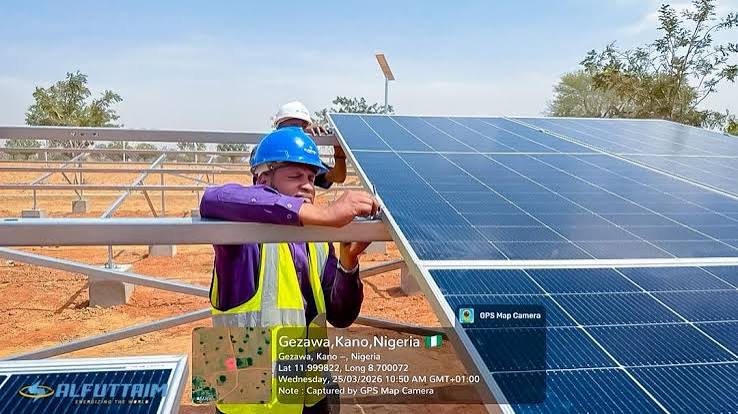
FG, US Firm Partner On Solar-Powered Farm

The Federal Government is set to begin the installation of a 50MW solar power farm project in Kaduna State, Mrs. Bahijjatu Abubakar, the desk officer, Renewable Energy in the Ministry of Environment has said.
She told newsmen in Abuja on Monday that the 50MW solar power farm would be situated between the Nigerian Defence Academy and the international airport in Kaduna.
Abubakar said that Kaduna government was the first to respond to the call by the Federal Ministry of Environment to states to imbibe the use of solar energy.
She said that Kaduna State and the Synergent Powershare Group of investors from the United States of America had signed a Memorandum of Understanding for the implementation of the project.
She added that the solar power investors preferred the northern part of the country for solar power because of intense sun radiation in the area and wind energy in Enugu State, adding that they preferred to invest in energy generated by waves in Lagos, Port Harcourt and Calabar.
The desk officer said that the groundbreaking ceremony for the Kaduna project had been slated for February 19.
According to her, the investors would execute the project without Federal Government’s financial assistance.
The Federal Government would provide incentives such as import duty rebate and power purchase agreement and reasonable feed in tariffs, she said.
“All the government needs to do is to give them the enabling environment and appropriate incentives such as the tax and import duty rebate, power purchase agreement and feedin-tariffs.
“The feed-in-tariffs are very important as they will give the investors the incentives to know how long it will take for them to recover their investment.”
Abubakar said: “This Synergent Group are investors. They do not want one kobo from the Nigerian government. All they want is to ensure that we give them the enabling environment to be able to invest and that is what we have done. That is the reason why we are getting a lot of investors coming into Nigeria in this sector.
“What had happened in the past is that a lot of people want government to put money into this venture and we are saying under this renewable energy programme that government has no business putting money into power generation in renewable energy.”
She added that the ministries of environment and that of power were collaborating to ensure the success of the project, adding that the Nigeria Investment Promotion Commission had also set up a renewable energy desk to attend to investors on daily basis.
Abubakar said that the investors did not only make profits from their investment alone in developing countries, but that they also generated revenue, through carbon credit.
She advised states, local governments and big corporations to be mindful of the need to establish the viability of their projects before executing them.
She called on the states’ ministries of environment to set up renewable energy desks to benefit from the Carbon Credit project.
Carbon Credit is a leader in capturing the benefits of carbon finance to help deploy projects that reduce greenhouse gas emission and commercialise new clean technologies worldwide.



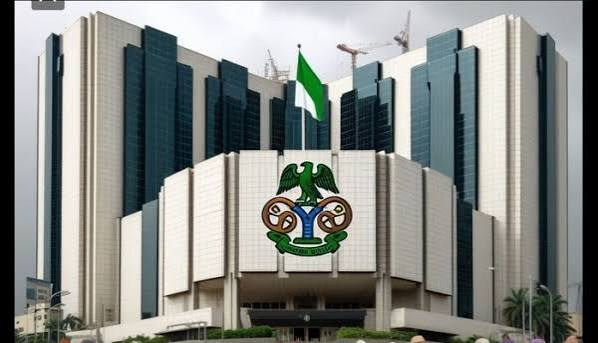
Credit to Nigeria’s private sector rose to N83.26 trillion in June 2026 from N81.04 trillion in May, signifying a positive balance of N2.22 trillion month-on-month.
Year-on-year, the figure represents a nine per cent increase compared with the N76.13 trillion recorded in June 2025. The latest figures come as the CBN continues to balance efforts to control inflation with the need to support economic growth and expand credit to businesses.
The CBN data shows that credit to Nigeria’s private sector increased by approximately 2.74 per cent month-on-month between May and June 2026. Also, the CBN data noted that credit to the government fell slightly to N40.03 trillion from N40.38 trillion. Other assets, net, dropped to N10.76 trillion from N12.63 trillion.
The credit surge signifies sustained growth in lending to businesses and other private-sector borrowers during the month. The rise in private sector credit was recorded alongside an increase in net domestic credit, despite declines in credit to government and other assets.
Further analysis of the report says that compared with June 2025, private sector credit rose by about N7.13 trillion yea-on-year but net domestic credit increased by approximately N1.87 trillion during the month.
The CBN’s relatively tight monetary policy stance notwithstanding, more banks still loaded funds to the private sector within the period. The Monetary Policy Committee (MPC) of the Central Bank of Nigeria (CBN) held its 306th meeting on July 20 and 21.
The Committee reviewed recent developments in the global and domestic economies, assessed emerging risks to the outlook and considered their implications for monetary policy and retained all rates.
The Committee decided to retain the Monetary Policy Rate at 26.5 per cent; the Standing Facilities Corridor around the MPR at +50/-450 basis points and retain the Cash Reserve Requirement (CRR) for Deposit Money Banks at 45.00 per cent, Merchant Banks at 16.00 per cent, and non-TSA public sector deposits at 75.00 per cent.
The MPC decision means that credit extension in the private sector will likely continue to rise because of rising confidence in the sector and calls by stakeholders for banks to invest in the private scetor instead of government securities.

-

 Politics22 hours ago
CHRISTIAN FORUM PASSES CONFIDENCE VOTE ON TINUBU, WIKE, OTHERS
-
 Politics22 hours ago
Tinubu Felicitates Umahi @63, Says Works Minister Outstanding
-
 Politics22 hours ago
Buhari Administration Originated Fake PFIPC, Budget Office Tells Reps
-
 Politics22 hours ago
How I Paved Way For Other Govs To Join APC — Eno
-

 Politics22 hours ago
Speak For Yourself, Otti Tells Uzodimma Over Tinubu’s Reelection Bid
-
 Politics22 hours ago
Votes Will Count In 2027, INEC Assures Nigerians
-

 Business1 day ago
$50m Steel Pipe Facility: NCDMB Lauds Brentex, Assures Industry Patronage
-

 Niger Delta23 hours ago
Community Elects Monarch After 55yrs Interregnum … As King-elect Preaches Unity