
Sports
Africa’s Strongest, Weakest Points In World Cup Participation

If South Africans had wanted an omen in the run-up to yesterday’s opening clash against Mexico, they can take heart from the most tenuous of facts – that every time an African team has contested the World Cup opener, they have not only won it, but also made it to the quarter-finals.
Cameroon in 1990 and Senegal in 2002 are the two major highlights of Africa’s World Cup adventure, but what about the rest?
And what about the lowlights? Here are some of African highs and lows in the Mundial.
TOP 10 HIGHS:
The 1966 boycott: One of the highs was, at the time, a considerable low. With Africa awarded half a place at the World Cup by an intractable FIFA, the continent boycotted the 1966 finals. The drastic protest worked as Africa received its own berth for 1970.
Tunisia 1978: Nearly 50 years after Africa first participated in the World Cup, the continent recorded its first victory as Tunisia beat Mexico 3-1 in Rosario (although the Carthage Eagles haven’t won at the World Cup since).
Algeria 1982: Shocks had already rocked the World Cup but no one expected first-timers Algeria to beat the European champions.
Rabah Madjer opened the scoring, West German captain Karl-Heinz Rummenigge levelled, leaving it to the great Lakdar Belloumi to seal a late victory. “Germany had very good players but we also had a great team, with lots of experience and talent,” says Madjer.
Morocco 1986: The Atlas Lions continued North Africa’s pioneering World Cup role when becoming the first Africans into the second round. “Nobody could believe what we’d done because we were taking on Poland, England and Portugal,” says goalkeeper Badu Zaki, whose team topped the group unbeaten. “I think our performances persuaded FIFA that Africa deserved more places at the World Cup.”
Cameroon 1990: The Indomitable Lions’ Italian adventure is Africa’s proudest World Cup memory – headlined by Roger Milla’s goals and wiggling hips. Sub-Saharan Africa announced it could be a football power when Francois Omam-Biyik’s prodigious leap sunk defending champions Argentina 1-0.
Wins over Romania and Colombia followed and in the quarters, Thomas N’Kono, Cyrille Makanaky and co. were just seven minutes away from beating England. No African side has ever been so close to the semi-finals.
Roger Milla: Milla made his mark in 1990 but furthered a personal milestone when netting against Russia at USA ’94. The forward had reset the oldest goalscorer mark at 42 years – a World Cup record that will surely never be broken.
Nigeria 1994: Packing power and flair, the Super Eagles routed Bulgaria 3-0 – Rashidi Yekini pumping his fists through the net in celebration – while Daniel Amokachi netted a screamer against Greece.
Nigeria were then two minutes from the quarter-finals until ten-man Italy equalised. “It’s a shame we didn’t realise how good we were, as we lacked experience,” says Jay-Jay Okocha. “But 1994 helped us win the 1996 Olympics.”
Nigeria 1998: The Super Eagles are the only African side to twice reach the knock-outs. The highlight here was the 3-2 win over Spain, lit up by Sunday Oliseh’s sweet 25-yard half-volley. Okocha was also in sublime form, dazzling with his tricks and flicks.
Senegal 2002: Lightning struck twice as an unfancied African side defeated the reigning champions 1-0 in the opening game – Senegal’s humbling of former colonialists France inspired by El Hadji Diouf’s thrilling display.
Draws with Denmark and Uruguay, and a knock-out defeat of Sweden, took the Teranga Lions into the quarters, where they lost to Turkey. “The only game we prepared for like people wanted us to – having lunch, staying in your room, looking at the ceiling etc. – was the one we lost because mentally we’d already played the game,” laments midfielder Salif Diao.
FIFA’s Rotation Policy: 15 March 2001 was one of African football’s most momentous days for FIFA, who had decided to rotate the World Cup the year before, chose the continent to start the new system in 2010. Of course, 15 May 2004 is more celebrated in South Africa as that was the day the World Cup hosts won the bid.
THE LOWS:
Zaire 74: This display was a disaster as the African champions played three and lost three (scoring 0, conceding 14). In addition, Mwepu Ilunga showed scant regard for the rules when kicking away an opponents’ free-kick. He’s since claimed he was trying to get sent off in protest at the federation withholding money from the squad. “I knew the rules very well but the referee was lenient and only gave me a yellow.”
Togo 2006: Bonuses have been the bugbear of many African campaigns but the Hawks took things to a new level when becoming the first team to threaten to boycott a World Cup match.
With the FA refusing to pay the agreed amount, the players were set to sit out the Switzerland tie until FIFA guaranteed them funds. Later on, FIFA fined the Togolese FA for behaviour ‘unworthy of a World Cup participant’.
The ‘Shame of Gijon’, Spain 1982: This setback denied Algeria an historic place in the second round. Since they’d already played, group rivals West Germany and Austria knew a narrow German win in their contest would take both sides through.
After the Germans’ early goal, both sides made little attempt to score – sparking public outcry and FIFA to ensure that all final group ties were played simultaneously from then on. “We were tricked out of qualification but the anger has gone now,” says Madjer.
The Big-Name Absences: Africans decry the failure of Liberia’s George Weah, Ghana’s Abedi Pele and Mali’s Salif Keita. On this occasion, many fans were also dismayed by the absence of a team, six-time African champions Egypt, meaning Ahmed Hassan and Mohamed Aboutreika would be sorely missed.
The Quarter-Final Barrier: Despite winning the U17 World Cup, the U20 World Cup and the Olympic Games, Africa has never won the World Cup – nor reached the last four. Can the continent’s first World Cup rewrite history?



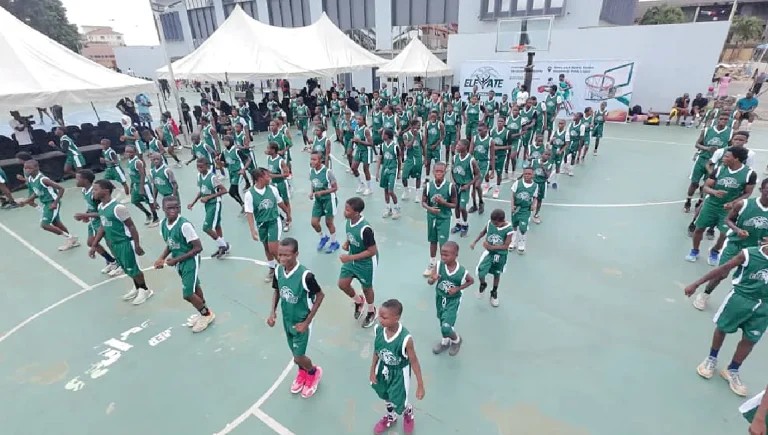
Young basketball players have been urged not to sacrifice their education for sporting ambitions, as stakeholders at the third Elevate Basketball Clinic stressed the need for young athletes to develop both on and off the court.
The call was the thematic preoccupation of the clinic held on Saturday at the Rowe Park Sports Centre, Yaba, Lagos, where hundreds of participants were taken through basic basketball skills and drills.
The third edition of the clinic, organised by Elevate Basketball Academy in partnership with the Lagos State Basketball Association, brought together hundreds of youngsters, mostly under the age of 16.
Founder and sponsor of the clinic, Akinwande Oshodi, said the initiative was designed to use basketball as a vehicle for youth empowerment while helping participants understand the values required to succeed in life.
“The end game is to elevate basketball and it’s about empowering the youth through basketball. It’s not just about the game, it’s about life, helping the students to understand what it takes to be successful,” Oshodi said.
Oshodi, who is Lagos-born but based in the United States, also disclosed plans to establish a foundation focused on basketball and athletics while creating opportunities for educational enrichment.
“This year, we are planning on tracking statistics so we can share with our sponsors what we have been doing over the last three years,” he added.
Oshodi’s mother, Bosede Ode, a sports nurse who worked with the Lagos State Government at Rowe Park, also stressed the importance of combining sporting development with academic pursuits.
“I’m very encouraged that more girls are in sports than what it used to be. I just want to encourage them to focus on not just sports but their education as well,” Ode said.
Ode said her son’s experience had reinforced the importance of education, recalling that an injury prevented him from pursuing basketball professionally but that his education had helped him build a life beyond the sport.
“I always tell my son about the importance of education, he had an injury which prevented him from playing professionally, but with education, that is helping him through life and giving back to the society. When he was small, he played basketball through school and I’ve always encouraged him,” she added.
The message was also reflected in the experience of one of the participants, Abdulkareem Abdulraheem, who attended the clinic for the second consecutive year.
Abdulraheem said the progress he observed among participants compared to last year had motivated him to keep improving, adding that he also makes time for his academics despite training regularly.
“The motivation is high. Last year I saw some people that were learning how to bounce the ball. This year, I’m seeing people play more and that is motivating me to never give up,” he said.
“For me, I train like three times a week and I make enough time for my academics as well, and that is one of the teachings of this clinic.”
Coordinator Gbade Olatona said the initiative was also aimed at using basketball to nurture discipline, leadership and responsible citizenship among young people.
Since its launch in 2024, the initiative has sought to position basketball as more than a competitive sport, using the game as a platform for mentorship, character development and creating opportunities for young people.
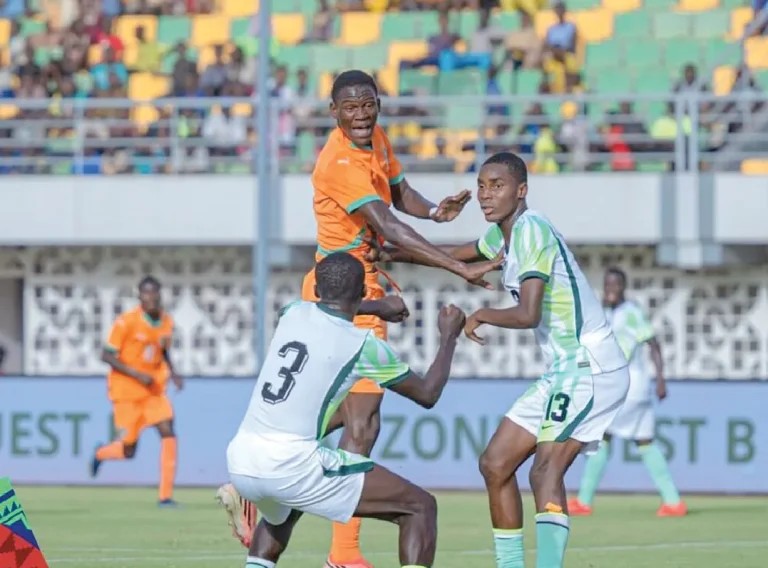
Nigeria’s Golden Eaglets will miss both the 2027 U-17 Africa Cup of Nations and the 2027 FIFA U-17 World Cup after they were eliminated from the 2026 WAFU-B U-17 Championship following a 1-1 draw with Ivory Coast in Ouagadougou on Saturday.
The result in their second Group B match at the Stade du 4 Août left the five-time world champions bottom of the table with a solitary point from two games, ending their hopes of qualification.
The Golden Eaglets needed a victory after losing 2-1 to Niger Republic in their opening match last Wednesday, but they could not find the result required to stay alive in the competition.
Nigeria fell behind in the 16th minute when Alex Fousseni scored for Ivory Coast, leaving head coach Eboboritse Uwejamomere’s side with an uphill task.
The young Nigerians continued to push for an equaliser and were rewarded in the 84th minute, when Abiodun John levelled the scores to set up a tense finish. Despite their late efforts, they could not find a winner.
Niger Republic finished top of Group B with four points, while Ivory Coast took second place with two points.
The failure to progress means Nigeria will miss the U-17 AFCON for the third consecutive edition, having also failed to qualify for the 2025 and 2026 tournaments, both hosted by Morocco. The North African country will also host the 2027 edition.
The disappointment extends to the global stage, as the team will miss the FIFA U-17 World Cup for the fourth consecutive edition. The Golden Eaglets last took part in the tournament in 2019.
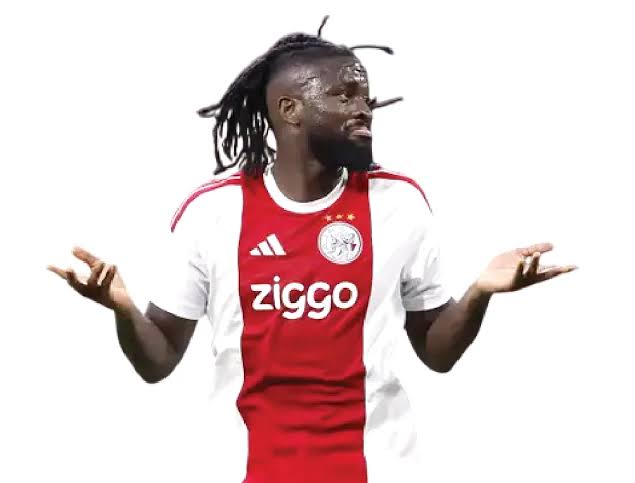
Former Ajax defender Frank de Boer has urged supporters to be patient with Super Eagles striker Tolu Arokodare, saying the forward should simply be allowed to play.
De Boer was speaking about the early excitement around the Nigerian at Ajax. He did not compare Arokodare to Marco van Basten or Patrick Kluivert. He used the two former Ajax strikers as an example of how Dutch fans tend to judge every new forward.
“We are used to comparing a striker to Van Basten and Kluivert, but I have also seen a few times that he is technically gifted and that you can make very good use of him. I have seen some great things. So just let him play,” De Boer told Tidesports source, via Ajax Showtime.
Arokodare joined Ajax from Wolverhampton Wanderers in the summer on a season-long loan with an option to buy, after a difficult spell in the Premier League.
He has scored seven goals and provided two assists in 11 appearances across all competitions, despite starting only six of those games.
The 25-year-old played the full 90 minutes of Ajax’s UEFA Conference League game away to Hajduk Split on Thursday but did not score.
De Boer, who played for Ajax and the Netherlands, also said the club could get more from Arokodare by delivering crosses from the flanks, which would suit his game in the penalty area.
-

 News1 hour ago
NDLEA Recovers Tons Of Illicit Drug Consignments In Nine States
-
 News1 hour ago
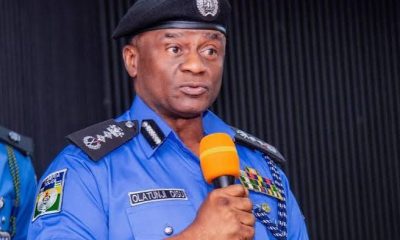
IGP Proposes 200% Gratuity, Pension For Retired Officers
-
 News1 hour ago
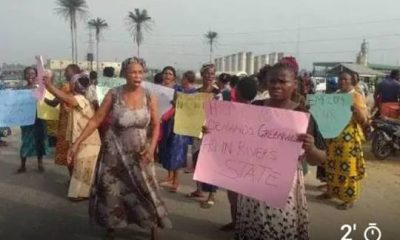
Rivers Community Raises Alarm Over Alleged Security Invasion
-
 News1 hour ago
Ebola: NCDC Approves N100,000 Weekly Payment For Contacts
-
 News1 hour ago
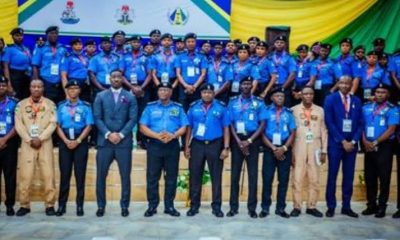
2027 Elections: Police Begin Training Of 10,000 Officers
-
 News58 minutes ago
FG releases N38.93bn to upgrade 166 tertiary institutions
-
 News1 hour ago
Rivers CJ Declines NBA’s Request For Court-Free Days For Law Week Celebration
-
 News1 hour ago
Creek Road Market ‘ll Be Completed By Jan 2027 -Fubara