
News
Wike, Buhari, IBB, Jonathan, Obasanjo, PDP, Others Mourn Shonekan

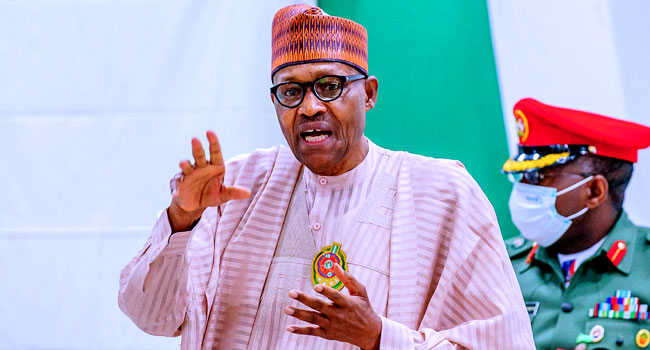
Rivers State Governor, Chief Nyesom Wike; President Muhammadu Buhari; former military President, Gen Ibrahim Babangida; former Presidents, Dr Goodluck Jonathan; and Olusegun Obasanjo, have joined millions of Nigerians at home and in the Diaspora to mourn the demise former head of interim national government, Chief Ernest Shonekan, who passed on the glory, yesterday, after a brief illness at the age of 85.
Speaking in Port Harcourt, Wike said he received the news of the sudden demise of Shonekan, who succeeded the former military Head of State, General Ibrahim Babangida, with shock and great sorrow.
In a message of condolence signed by his Special Assistant (Media), Kelvin Ebiri, the Rivers State governor said Shonekan was a dedicated Nigerian, who was committed to the peace and stability to the country.
Wike noted that Shonekan’s strong credentials as an astute administrator enabled him to steadfastly steer the country through one of its most turbulent times.
“On behalf of the Government and good people of Rivers State, I offer our deepest condolences to the family, relatives of the former chairman, Interim National Government and the people of Nigeria.”
Wike said Nigeria has lost an elder statesman whose wisdom, foresight, and steadfast commitment to the country will always be remembered.
Also speaking, President Muhammadu Buhari said he received with profound sadness the news of the death of a great statesman and former Head of the Interim National Government, Chief Ernest Shonekan.
In a statement, yesterday, the Presidency said, “On behalf of the Federal Government, the President extends deepest condolences to Chief Shonekan’s wife, Margaret, loved ones, as well as the government and people of Ogun State.
“As an internationally-respected statesman, President Buhari affirms that, with courageous wisdom, Chief Shonekan left his flourishing business career to become the Head of Government, at a delicate time when the country needed someone of his calm mien and pedigree to save the ship of state from sinking.
“The President notes that Chief Shonekan demonstrated to all that the love for country and commitment to her development, peace and unity transcend the trappings of office and the transient nature of political power.
“President Buhari believes that Nigeria owes a great debt to Chief Shonekan, the peacemaker, who even at the twilight of his life time never stopped believing and working for a prosperous and democratic country.
“The President prays that the memory of the departed Head of Government will remain a blessing to Nigeria even as he finds perfect peace with Almighty God”, the statement said.
Reacting, the former Head of State, Gen. Ibrahim Babangida (rtd) described ex-Head of the Interim National Government, Chief Ernest Shonekan has “an uncommon patriot,” following the demise of the latter, yesterday, at the age of 85.
In a condolence message personally signed by the retired general and circulated by his media aide, Kassim Afegbua, Babangida expressed shock at the tragic development, saying, “the shocking news of the death of one of Nigeria’s finest brains and patriots came to me this morning with helpless awe.
“I hadn’t the faintest idea that Chief Ernest Shonekan would depart this sinful world too soon, even at 85.
“He was a man, a leader and an uncommon patriot who had a presence of mind and whose understanding of Nigeria was profound and remarkable. It is indeed a personal loss to me.”
According to Babangida, “Chief Ernest Shonekan was one of our cerebral minds during our time in government.
“He was the architect of our principle of free-market economy which helped to open up the system for a robust participation by the private sector.
“The liberalisation of the economy, the investment and boost in the agricultural sector and budget management approach were part of his brainchild. I recollect very vividly how he used to give us tutorials on budget, planning and management of national resources, each time he was invited to our session.
“At each budget year, Chief Shonekan would be invited to critique our budget proposals, and gave us further input to enrich the final budget. He was a man of ideas and ideals. He was prudent and preached so much about fiscal discipline.
“It was, therefore, timely for us to appoint him as Head of the Interim Government to help stabilise the polity at a most trying period of our country’s political evolution. He was a calm personality whose managerial skills were foretold in the way and manner he managed a lot of blue chip companies.
“As Head of the Interim Government, he was able to consult with a broad spectrum of the Nigerian populace in charting a roadmap out of the political impasse at that time. His brilliance and meticulous interrogation of situations helped in large measure to forge ahead during the period. I owe a personal gratitude to him throughout his sojourn on earth as we maintained very robust mutual relationship after his exit from the corridors of power.
“Given the achievements we recorded during our time in government in the area of infrastructure, economy and social rebirth, I owe a word of gratitude to him for his experienced intervention in helping to dissect our policy frameworks each time we called upon him to do so.
“He was an engaging personality whose sense of patriotism was total. He was friendly and sociable. He understood economy and made so many projections that helped us to bail the country out of economic conundrum. We benefited from his immense knowledge, experience and brilliance,” the condolence message read in part.
On his part, ex-President, Dr. Goodluck Jonathan described Shonekan as “an elder statesman, well-loved for his sincerity and sense of purpose.”
He said: “As a leader, Chief Shonekan was well respected because of the enormous goodwill he brought into governance. He was a compassionate and determined administrator, a peacemaker and bridge builder who stepped in to lead the nation at a very difficult time in the history of its political evolution.
“Before he assumed office as the Head of the Interim National Government in 1993, Chief Shonekan had become a boardroom guru, having established himself as a foremost industrialist and one of the leaders of the business world.
“He left enduring legacies, part of which was his considerable effort towards mainstreaming the private sector in the development drive of the nation, especially with the institutionalisation of the Nigerian Economic Summit Group (NESG), which he founded.
“He will be remembered for his great wisdom, peaceful disposition, the goodwill he extended to all as well as his significant contributions to the growth the economy of the nation.”
Also, former President Olusegun Obasanjo said former Head of the Interim National Government, Ernest Shonekan, died at a time when Nigeria was in dire need of his leadership to tackle the challenges facing the nation.
According to his family, Shonekan passed, yesterday morning of natural causes at the age of 85.
Obasanjo said that Shonekan’s contribution to the growth and development of democracy in Nigeria cannot be forgotten in a hurry.
In a condolence letter to Mrs Margaret Shonekan, copy of which was made available to newsmen in Abeokuta by his Special Assistant on Media, Kehinde Akinyemi, Obasanjo said the late business mogul was “a role model and an epitome of the good in the nation’s business firmament of mixed blessings”.
Obasanjo, who received, while currently on international assignment as the High Representative of the African Union for the Horn of Africa, “with great shock, the news of the death of one of the illustrious sons of Africa, a community leader, a distinguished business baron and an exemplary leader in the private sector and, of course, the former Chairman of UAC Nigeria Limited, Chief Ernest Shonekan, with an admixture of joy for a life well spent and sadness for the loss of a beloved man after God’s heart.”
On the political scene, Obasanjo noted that, “Chief Shonekan, as the Interim National Government in Nigeria in1993, though short-lived for the period of three months through the palace coup orchestrated by General Sani Abacha, rendered outstanding service to our country, and we will never forget that.
“It is also worthy of note that as Special Envoy on the Implementation of the Abuja Agreement on Zimbabwe in 2001 under my administration as the President of Nigeria; and Chairman, Infrastructure Concession Regulatory Commission under Yar’Adua’s administration in 2008, he was forthright, dedicated and showed great patriotism in the discharge of his duties.
“He was a unifying force for the nation and his contribution to the growth and development of democracy in Nigeria cannot be forgotten in a hurry. In all situations, he lived nobly and he died in nobility. He was an achiever. Indeed, Chief Shonekan died at a time the country is in dire need of his leadership, wealth of experience and wisdom to tackle the multifaceted challenges facing the nation,” Obasanjo was quoted as having said.
Similarly, former Vice President, Atiku Abubakar described the demise of the former ING boss as saddening and shocking, saying his exit “at a time when the country would need his skills and global connections in finding solutions to many of our intractable challenges is quite saddening.”
He said: “Either as a politician or a boardroom guru, Chief Shonekan possessed a unique set skill of bringing stability to a tumultuous situation.
“That obviously was the consideration that made him become Head of the Interim National Government following the crises that greeted the events after the June 12 Presidential election.
“Although his reign as Head of State was interim, Chief Shonekan’s contribution to the peace and development of Nigeria in those days and later years, remain enduring.
“My condolences go to his immediate family, the people and government of Ogun State and the entire nation for the loss of a man of industry and intellect, who lived a life of service to the country and humanity.
“It is my prayer that God almighty receives his soul in a peaceful repose.”
In the same token, the Peoples Democratic Party (PDP), yesterday, mourned the death of former Head of the defunct Interim National Government, Chief Ernest Shonekan, describing his death as a national tragedy.
This was contained in a statement by the National Publicity Secretary of the party, Debo Ologunagba.
The statement said, Chief Shonekan was a very courageous, humble and patriotic leader; a bridge-builder and an extraordinary statesman, who dedicated his life.
It said Chief Shonekan made immense sacrifices to ensure the unity and stability of Nigeria in the heat of the political crisis that threatened the nation’s corporate existence following the annulment of the June 12, 1993, presidential election.
The statement said, “The late Head of the Interim National Government was an accomplished personality and a visionary leader, whose efforts in applying his vast experience as a consummate lawyer and businessman to reposition our nation, despite the daunting challenges faced by his three-month regime between August and November, 1993 cannot be forgotten.
“Chief Shonekan’s commitment to the entrenchment of democracy was evident in his determination to restore the rule of law and transparency in governance”, the statement said.
He said, even outside office, Shonekan remained committed to the unity, stability and development of our nation.
“Our party grieves that he left the stage at the time the nation needed his wealth of experience and wise counsel the most”, the PDP said.
The PDP commiserated with the Federal Government, the government and people of Ogun State and the Shonekan family.
The party prayed to God to grant the nation and the bereaved family the fortitude to bear the huge national loss.
Further reacting, the governors in the South-West described the death of elder statesman and former Head of the Interim National Government, Chief Ernest Shonekan, as a huge loss to the country.
They said Shonekan was committed to the peace and unity of the country.
The Chairman of the South-West Governors’ Forum and Ondo State Governor, Rotimi Akeredolu said this in Akure, yesterday.
Akeredolu, in a statement signed by his Chief Press Secretary, Richard Olatunde, said the governors “received the news of the death of elder statesman and former Head of the Interim National Government, Chief Ernest Shonekan with a heavy heart”.
The governor noted that the vast experience of the elder statesman was an asset to the country, particularly with the array of challenges confronting the nation.
He said the late Shonekan was committed to the peace and unity of the country and pursued it with vigour and dedication as a patriot.
Akeredolu noted that the service of the former Head of Interim National Government would never be forgotten in the annals of the history of the country.
“Chief Ernest Shonekan was a nationalist per excellence.
“His belief in a united and peaceful Nigeria was unparalleled. He was dedicated to the progress and development of the county. He will be sorely missed.
“His historic and patriotic role in maintaining the unity of the country was one of the many things that endeared him to many.
“He was true, an asset, his counsels were useful for national cohesion and progress”, the governor said.
The chairman prayed to God to grant the deceased eternal rest while commiserating with his wife, the government, and the people of Ogun State.



The National Drug Law Enforcement Agency (NDLEA) has arrested four notorious female drug dealers in Edo, Imo, Kano, and Gombe states.
The Director of Media and Advocacy, NDLEA, Mr Femi Babafemi, made this known in a statement in Abuja, yesterday.
Giving a breakdown, Babafemi said that in Edo, an intense sweep of notorious drug hotspots within Benin City by NDLEA operatives on June 2 led to the arrest of four key traffickers, including three females.
“At Uyosa, Benin City, two female suspects were nabbed with a cocktail of illicit substances, including 176 grams of skunk, 65g of Loud, and 5 grams of Methamphetamine.
“Along Agbor road in Benin City, another female suspect, 21-year-old Anita Abraham, was apprehended with 95 grams of Scottish Loud and 329 grams of regular Loud.
“At Upper Mission, Benin City, a male suspect was arrested with a diverse cache of psychotropic substances consisting of Loud, Colorado, Swinol, and Methamphetamine.
“A swift operation by operatives in Kano State on Thursday, June 4, led to the arrest of a 19-year-old suspect, Saifullahi Lawan at the Kafi area of Madobi, with 40 blocks of skunk weighing a total of 38 kilograms,” NDLEA said.
In a related development, Babafemi said, operatives in Gombe state intercepted a 28-year-old suspect on June 1 near Dantiti Plaza in the Tumfure area of Gombe.
“The suspect was caught with 15,000 capsules of tramadol,” he said.
He said the War Against Drug Abuse (WADA) social advocacy activities by NDLEA Commands and formations equally continued across the country in the past week.
Reacting to the string of successful operations, the NDLEA Chairman, retired, Brig.-Gen. Buba Marwa commended the officers, men and women of the Imo, Edo, Kano, and Gombe commands for their resilience and vigilance.
Marwa also praised their counterparts in all the commands across the country for pursuing a fair balance between their drug supply reduction and drug demand reduction efforts.
He re-emphasised that the agency remains fully committed to dismantling drug supply chains and would continue to target traffickers regardless of age, gender, or concealment methods.

The Nigerian Navy says its operatives under Operation Delta Sentinel have intercepted over 135,000 litres of suspected illegally refined Automotive Gas Oil (AGO) during separate operations in Rivers State waterways.
Director of Information, Navy Captain Abiodun Folorunsho, said the operations were carried out by personnel of the Nigerian Navy Ship (NNS) Pathfinder around the Onne and Abonema axis.
He said the seizures were made during routine patrols aimed at curbing crude oil theft and illegal fuel transportation across creeks in the state.
In one of the operations, naval personnel intercepted a fibre boat at the entrance of Owogono Creek in Ogu-Bolo Local Government Area carrying drums and jerrycans filled with suspected stolen AGO.
According to him, the occupants abandoned the boat and fled into nearby creeks, while the vessel and about 63,000 litres of product were recovered.
In another operation around Abonema in Akuku-Toru Local Government Area, patrol teams intercepted a wooden boat conveying about 72,000 litres of suspected illegally refined AGO concealed in sacks.
The Navy said the products were being transported through waterways for onward distribution before the operation disrupted the movement.
Folorunsho said the recoveries highlight the continued exploitation of creek networks by criminal elements for illegal petroleum product transportation.
He added that all recovered items were handled in line with established procedures on anti-crude oil theft operations.
The Navy reaffirmed its commitment to intelligence-driven operations aimed at dismantling illegal oil networks and protecting Nigeria’s maritime economic assets.

The Permanent Secretary of Rivers State Ministry of Information and Communications, Dr Honour Sirawoo mni, has charged public servants to embrace accountability and prudent management of public resources, stressing that government funds must be utilised responsibly.
Dr. Sirawoo made the assertion during the 41st anniversary of The Rivers State Television (RSTV), in Elelenwo.
He noted that public service demands commitment and sacrifice, urging workers to justify the opportunities entrusted to them through diligengence and productivity.
“All I try to do is to see that we have value for every kobo that we spend and value for our time.
“Government has a social responsibility to provide opportunities, but when you have one, you must guard it through hard work and ensure your presence is justified,” he stated.
The Permanent Secretary further appealed to workers to see themselves as ambassadors of their respective institutions, adding that government remains committed to creating employment opportunities and improving public service delivery.
Also speaking, former Acting Managing Director of the Niger Delta Development Commission (NDDC), Dr (Mrs.) Christiana Atako, praised the station’s professionalism and consistency despite operational challenges.
“We have never been disappointed. In spite of all the challenges RSTV had at that time, they never failed us. They carried our stories very well,” she said.
Dr Atako encouraged staff members to continually improve themselves through training, education and professional development in order to remain competitive in the evolving media industry.
Earlier, Acting General Manager of RSTV, Ambassador Paul Damgbor, described the anniversary celebration as an opportunity to reflect on the station’s journey of over four decades and appreciate those who have contributed to its development.
Pastor Damgbor said that the station had recorded remarkable improvements in recent months through the acquisition of digital cameras, computers as well as upgrades in audio and visual production facilities.
“We have seen great change. We were able to get new brand digital cameras and improve on our audio. We have also provided new computers for key departments, including News, Programmes and the Library,” Damgbor remarked.
He also unveiled a commemorative magazine chronicling the history and achievements of the station, describing it as a valuable reference material for preserving RSTV’s heritage.
The Acting General Manager, however, expressed concern over the theft of critical equipment from the station’s transformer, a development he said had forced the organisation to rely heavily on generator power supply.
The Senior Pastor of Gateway International Church, Pastor George Izunma, who gave a short charge during the event, urged media practitioners to uphold the ethics of journalism and remain committed to accuracy in reporting.
“You are pressmen. You are okay to doubt, but verify,” he advised, stressing the importance of credibility and responsibility in the profession.
He equally highlighted the need to “ask the help of God, sow a seed of help, and step into something as if you have help” stressing the need to move by faith for growth.
Some participants at the event also raised concerns about employment opportunities while commending RSTV’s growth and contributions to public enlightenment in Rivers State.
A major highlight of the celebration was the presentation of an award to the Rivers State Ministry of Information and Communications in recognition of its diligence and service to the people of the state. Dr Honour Sirawoo also received a special award for his contributions to the growth and development of RSTV.
Awards were equally presented to outstanding members of staff of RSTV for exemplary performance and their dedication to duty.
The event also featured the unveiling and launch of the RSTV commemorative magazine as well as a tour of the station’s newly built cafeteria and other facilities.
The celebration marked another milestone in the station’s 41-year history and reaffirmed its commitment to excellence in public broadcasting.
-

 Rivers2 days ago
Police arrest 3 suspects over killing of driver in Rivers
-
Politics2 days ago
I DIDN’T PROMISE YOU TICKETS, AKPABIO TELLS APC SENATORS WHO FAILED PRIMARIES
-

 News2 days ago
FUBARA ASSURES NUT OF SECURITY OF SCHOOLS IN RIVERS
-

 News2 days ago
NDLEA Arrests Four Notorious Female Drug Dealers In Four States
-

 Sports2 days ago
Okpekpe Road Race Gets Mobility Solutions, Fan Engagement
-
Politics2 days ago
Court Dismisses Rivers PDP Members’ Suit Over LG Election Candidates
-
Politics2 days ago
POST PRIMARIES: IKWERRE MONARCHS ADVOCATE ISSUES-BASED POLITICS IN RIVERS
-

 News2 days ago
WORLD FOOD SAFETY DAY: VETERINARIANS TASK GOVT ON MODERN ABATTOIR IN RIVERS