
Featured
Sanwo-Olu Suspends LABSCA GM Over Ikoyi 21-Storey Building Collapse …IGP Assesses Scene As Rescuers Pull Out Nine Alive, 15 Dead, 45 Trapped …LSG To Pay Hospital Bills Of Victims

Lagos State Governor, Babajide Sanwo-Olu, has ordered indefinite suspension of the General Manager of the Lagos State Building Control Agency (LASBCA), Mr.Gbolahan Oki, an architect.
The suspension followed the collapsed of a 21-storey building at Gerrard Road, Ikoyi, last Monday, in which over 15 persons have been confirmed dead, nine rescued alive and several others still trapped and feared dead in the debris.
Sanwo-Olu also set up an independent panel to probe the collapse of the 21-storey building comprising the Nigeria Institute of Architects (NIA), Nigerian Institute of Town Planners (NITP), Nigeria Society of Engineers (NSE), and other professional bodies.
It will independently investigate the remote and immediate causes of the incident and make recommendations on how to prevent future occurrence.
The investigation is not part of the internal probe already being conducted by the government.
The state Commissioner for Information and Strategy, Mr Gbenga Omotoso, announced this in statement, yesterday.
The statement read in part: “Governor Babajide Sanwo-Olu has said the government will surely find out what went wrong and punish those indicted.
“The governor, as a first step, has directed that the General Manager of LASBCA, Mr. Gbolahan Oki, an architect, be suspended from work immediately. The suspension is indefinite.
“More equipment and personnel have been deployed in the site to save more lives.
“Nine persons – all men – have been pulled out of the rubble alive. They have been taken to the hospital. Unfortunately, 15 others were brought out dead – as at 2pm.
“Mr. Sanwo-Olu thanks all first responders and those who have joined the rescue efforts, including construction giants Julius Berger, Chinese Civil Engineering Construction Corporation (CCECC) and the National Emergency Management Agency (NEMA).”
The government also promised the setting up of a help desk at the site for people seeking information about their relations who may have been involved in the incident.
The state government assured the media that the government would be releasing information whenever the need arises to avoid any sensational reporting of the unfortunate incident.
Earlier, the Deputy Governor, Dr Kadri Hamzat, visited the site to encourage rescuers and comfort relations of those trapped in the rubble.
The deputy governor, subsequently, left the site for the Lagos Island General Hospital to see the survivors.
According to Hamzat, “the state government will embark on further foundation and borehole acidic level tests to ascertain the impact on the collapsed building.
“These tests, particularly the borehole acidic level, is important for the entire Gerrard Road and adjoining areas.
“We wish to state that there will be no cover-up in the search for the truth in this incident. If anybody is found to have been indicted, he or she will face the law.
“It is important to restate that all developers and property owners are required to adhere strictly to all Building Codes and Planning Regulations to ensure the safety of lives and property.
“Those who ignore such regulations, breaking seals and defying enforcement, will surely be prosecuted.”
However, the Inspector General of Police, Usman Baba, yesterday, arrived the scene where a building collapsed in the Ikoyi area of Lagos State.
The IGP came in an entourage of police cars and heavy security, to the scene of the incident.
On arrival, he went straight into the compound and addressed the press at the end of the visit.
This comes shortly after the Lagos State governor, had said the government would find out what went wrong and punish those indicted in the 21-storey building that collapsed in Ikoyi, Lagos State, last Monday.
The Lagos State Government further pledged to take over the hospital bills of the injured victims of the Ikoyi building collapse even as it disclosed that three out of the nine rescued victims on admission at the General Hospital Lagos have been discharged.
The Deputy Governor of the state, Dr Obafemi Hamzat, who disclosed this during a visit to General Hospital, Lagos where some of the rescued victims of the Ill-fated incident were on admission said nine people, all male, have so far been rescued from the debris of the building.
He added that three of the rescued victims were treated and discharged on the spot while the remaining six were presently on admission receiving treatment at the Medical Emergency (LASEMS) unit of the General Hospital, Lagos.
While noting that the admitted victims were responding to treatment and doing well, the deputy governor noted that the injuries sustained by those presently on admission were minor injuries that are not life-threatening.
Hamzat, however, explained that some casualties of the collapsed building who were brought into the hospital dead have been deposited at the hospital morgue.
“So, we have six people in here, all-male, and thankfully they are doing well. The doctors have told us their state; they have minor injuries and nothing life-threatening thankfully. They are being treated and of course, as you know, the Lagos State Government is taking full responsibility for their treatment.
“We have their names and we will be getting in touch with their families. Nine people were rescued, six are here now, three people have gone home and as you know, we have 15 dead bodies taken out of the place”.
Hamzat expressed deep sympathy with victims, assuring them of adequate care during the course of their treatment.
Also speaking, the Permanent Secretary, Ministry of Health, Dr Olusegun Ogboye, who accompanied the deputy governor on the visit, assured the rescued victims of quality and optimal health care service at the facility, stressing that trained medical personnel are on the ground to aid their recovery process.
Other top state government officials who joined in the visit include; the Commissioner for Information and Strategy, Mr Gbenga Omotoso; Commissioner for Physical Planning and Urban Development, Dr Idris Salako; and the Permanent Secretary, Ministry of Physical Planning and Urban Development, Mrs Abiola Kosegbe.
The team was received by the Deputy Medical Director of the General Hospital Lagos, Dr Abiola Mafe.
Meanwhile, following recovery of nine bodies from the collapsed 21-storey Ikoyi Towers, on Gerrard Road, Ikoyi, Lagos, over 45 victims are said to be trapped in the rubble as rescue team continued search operation, yesterday.
In the early hours of yesterday, rescue team comprising of: National Emergency Management Agency (NEMA), Lagos State Emergency Management Agency (LASEMA), both Federal and State Fire Services, Police, Neighbourhood Watch, among other rescue team were seen excavating the debris in search of possible survivors and bodies at the scene of the incident.
As early as 6am, families of trapped victims stormed the scene, wailing and praying that their loved ones be rescued alive.
Earlier, while reacting to the collapse building, the General Manager, Lagos State Building Control Agency, LASBCA, Mr Gbolahan Oki, had claimed that the owner of the collapsed 21-storey building, under construction was given approval to construct only 15 floors.
Oki told the newsmen that the owner of the property has been arrested and would face the law because the incident recorded casualties.
According to him: “He got an approval for a 15-storey building and he exceeded his limit. I am on ground here and the materials he used are so inferior and terrible.
“The materials he used, the reinforcement, are so terrible. He got approval for 15 floors but built 21.
“I think he has been locked down. He has been arrested before now,” he said.
But in a petition dated November 2, 2021 to Lagos State Governor, Babajide Sanwo-Olu, a legal practitioner and member, Body of Benchers, Kunle Uthman, Esq, blamed government for the unfortunate incident.
The petition read in part: “In explaining this gory incident, the General Manager Lagos State Building Control Agency said that the approval for the collapsed building was 15 and not 21 floors, and admitted that poor materials were used in construction of that building, hence its collapse.
“This incident is an example of culpability of government officials and its supervisory agency and failure to perform their duties and responsibilities or enforcement of punitive measures in respect of a recalcitrant contractor and owners of private properties.
“Necessarily, it would have taken appreciable time to construct the six additional floors, but the agency responsible to issue stop work order and mark the building itself for demolition chose to ignore the construction of those additional floors and therefore failed in enforcement of extant laws.
“Why was a ‘Stop Order’ not placed on this building and why was there no supervision of quality of materials as explicitly stated in several building control laws and legislation in the state.
“In this particular instance, which has resulted in fatality and deaths, the officials of the Lagos State Government responsible, especially the Lagos State Building Control Agency, are culpable and should be prosecuted immediately, forthwith and without delay.
“This particular incident is a glaring example of officials of the government of Lagos State, compromising their duties and responsibilities for consideration. What is this hype of Centre of Excellence all about, if a 21-storey building in highbrow Ikoyi will collapse as a result of negligence of irresponsible public officials, who earn salaries and whose lifestyles are maintained at the expense of the public?
“We cannot continue like this, as apparently corruption and avarice has become not a social malaise but constitute our DNA. This incident is a ‘shame of a nation’ state, unwarranted, unsolicited, irresponsible, insensitive, unfair, unjust and indeed criminal and even the Federal government should ensure that the global community do not see us as a lawless society, where public officials are allowed to go scot-free, when culpable or negligent in the performance of their duties.
“The general manager of that agency has by his own statement that approval was for 15 and not 21 floors surreptitiously indicted himself and his agency.
“The proper thing to do is to immediately arrest and prosecute him and his cohorts in that agency in a court of law and to conduct integrity tests of all ongoing construction of buildings in Lagos State in excess of 10 floors. A Stitch In Time Saves Nine.”
Some affected families of the victims have visited the scene, yesterday, in search of their loved ones who were trapped in the building.
Some family members who wore mournful look refused to grant interviews to the press but were seen lamenting the situation and putting up calls to their loved ones about the incident.
One of them, a male, from the Sanni family, was seen begging officials at the scene to expedite action on the rescue operation.
He told them that his daughter, 26 years old, Sanni Oyindamola Zainab, a corps member, was attached to the construction company handling the project.
According to him: “Oyin as she is fondly called, was at the site for her official duties on Monday, when the incident occurred.
“The press should wait till my daughter is rescued before directing their questions to me.”
One of the family members, who refused to disclose her identity, said his younger sister, Keji, was trapped in the rubble.
“As at 10pm Monday, Keji was shouting for help and her voice was audible unfortunately, as at 11am on Tuesday, the rescue operation did not reach her exact location. As at now, I don’t know whether she will be rescued.
A worker instructor, simply identified as ‘Papa’ said he brought seven workers to the construction site yesterday “but none of them is yet to be recovered.”
He gave some of the names as: Richards and Joseph.
However, a female official urged ‘Papa’ to carefully compile the names of the missing workers and submit to the appropriate authorities for the needful to be done.















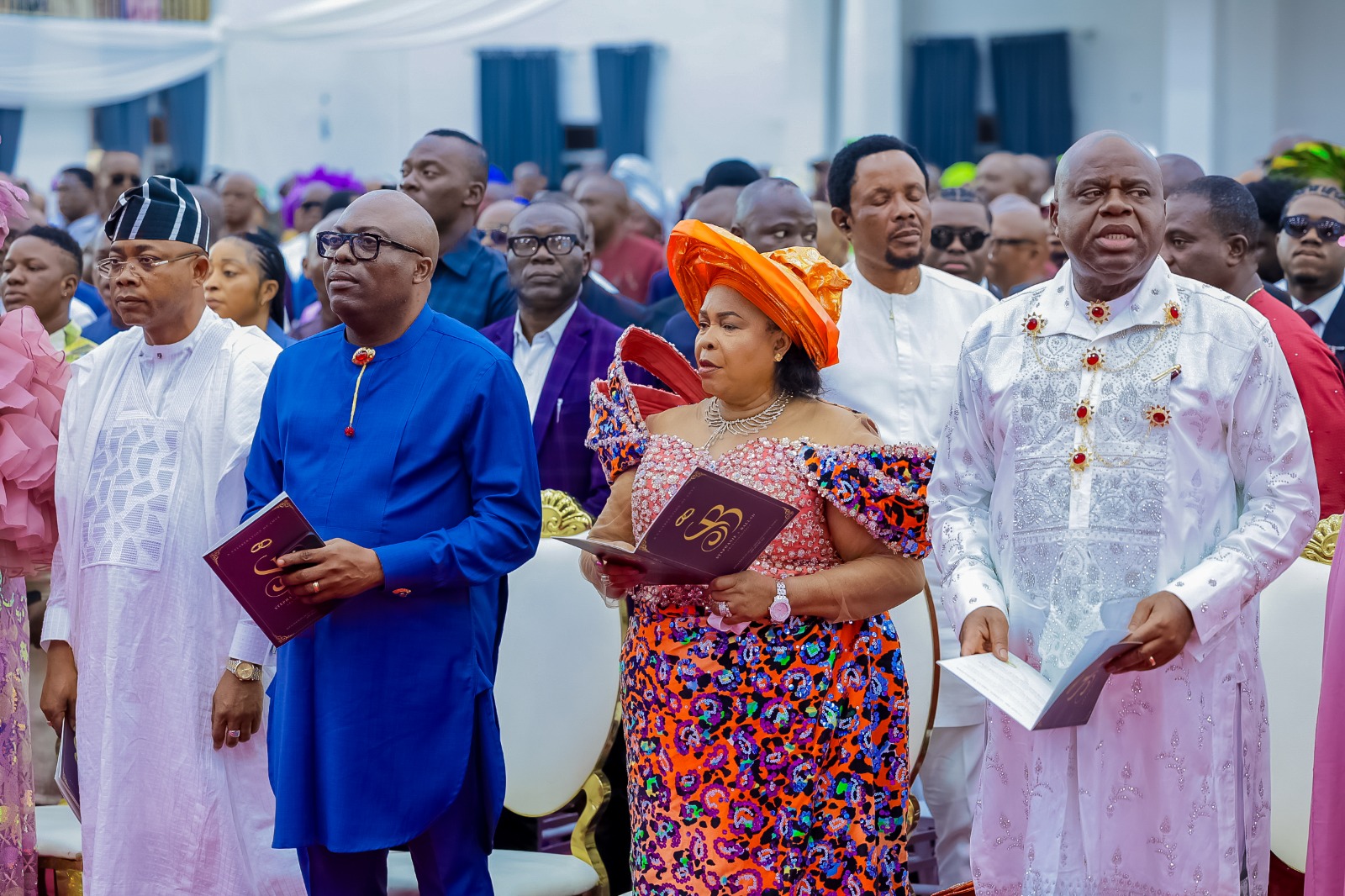
Fubara gave the assurance last Friday at the NYSC permanent orientation camp, Nonwa-Gbam, Tai Local Government Area in the State, during the swearing-in ceremony of 2026 Batch B Stream II orientation course.
Represented by the Permanent Secretary, Cabinet Bureau, Office of the Secretary to the State Government, Dr. Promise Oguzie, the governor said the State Government would remain intentional in providing the necessary support to improve the NYSC scheme and enhance the experiences of corps members deployed to the state.
He charged the corps members to be role models and quality nation-builders in their service to the good people of Rivers State in particular, and Nigeria at large.
“I charge you to be exemplary, dedicated and committed in all you do. Take full advantage of all the camp programmes and activities to enrich yourselves”, he said.
In his welcome address, the State Coordinator of NYSC in Rivers State, Mr. Moses Oleghe, urged corps members to see their deployment to Rivers State as a “veritable opportunity to make meaningful contribution to the growth of the State in particular and Nigeria at large.”
He further charged them to serve with all sense of “integrity, discipline, and the fear of God, especially when they will be engaged as INEC ad-hoc staff that will conduct the 2027 general elections.”
A total of 3,584 corps members composed of 1,421 males and 2,163 females were sworn in by the Chief Judge of Rivers State, who was represented by Justice Godspower Aguma.

The Governor stated this yesterday when he received in audience, the World President of the Seventh Day Adventist Church, Pastor Erton Kohler; his wife, Andriene Marques Kohler; daughter Mariana Marques Kohler and a retinue of ministers of the church at Government House, Port Harcourt.
Fubara who hailed the Seventh Day Adventist Church for its contributions to education and the grooming of future leaders in Nigeria, expressed delight that the Church had over the years, been investing in education at various levels and currently runs two universities in the country.
He commended the church for not only using its institutions to spread the gospel of Christianity but to groom future leaders for the country.
According to him, religion should not be just about defending one’s faith, but also making meaningful impact on the lives of the people.
He said that by floating these educational institutions, the church has demonstrated capacity to support Nigeria in the task of producing not only educated people but a breed of God-fearing leaders.
“Our country is where it is today because we lack the fear of God. If you have the fear of God, there should be a limit to what you can do because you understand the supremacy of God. But when God is not in your equation, you’ll go beyond the line and that is what has brought us to where we are today.
“So, I feel very happy that you are contributing to the development of our future leaders in this country. We need the right people being in the right place; prepared properly with good minds; that is what we need, not just in Nigeria but round the whole world.,” he said.
Governor Fubara further observed that the absence of God-fearing people in high places to take the right decisions that could impact positively on the society, has also given rise to other problems such as social inequality, poverty, corruption and criminality. According to him, Nigeria needs a system where the average parent could afford quality education for their children and a guarantee that upon graduation, the average child will have the capacity to compete favourably with anybody, anywhere in the world.
“If we have a situation where the little money that you’re being paid as wage can also afford you quality healthcare and after working at least for 15-20 years, you have a roof over your head, tell me why you should be involved in any kind of crime? At that point, you’ll feel secured and this attitude of insecurity about the future that leads to all the social vices we have today won’t be there,” he said.
Governor Fubara expressed appreciation to the delegation for the visit and for their prayers for Rivers State, assuring them of his continued support for their programmes in the state.
Leader of the delegation and World President of the Seventh Day Adventist Church, Pastor Erton Kohler said he was in Nigeria for a special conference of the church during which thousands of the church’s ministers will be undergoing an empowerment programme to further equip them for the task of herding their flocks and serving the society.
He expressed gratitude to the Governor for the warm reception accorded his entourage, saying the memory of the visit will linger in his mind for a lifetime.
Kohler disclosed that the Church has over twenty -four million (24,000,000) members and more than 182,000 places of worship, spread across 212 countries of the world.

This reaffirms the lawmakers’ commitment to enacting laws and taking legislative actions geared towards the overall development of the State.
The Assembly gave the approval during its Second Legislative Sitting of the Fourth Session held last Friday.
Speaking on the MTEF document during plenary, the House Speaker, Rt. Hon. Martin Amaewhule, noted that by the provision of Section 10(1)(b) of the Rivers State Fiscal Responsibility Law No. 8 of 2010, the MTEF ought to have been laid before the House in September 2025.
Amaewhule explained that traditionally, the document is expected to be presented four months before the commencement of the next financial year and immediately after the expiration of every three-year fiscal cycle.
He, however, stated that in the interest of the State and its people, the House considered it necessary to deliberate on the document, describing it as a precursor to the 2026 Budget Estimates.
The Speaker expressed concern that the year had already progressed significantly before the presentation of the framework.
During deliberations on the document, members examined the assumptions and projections contained in the MTEF and observed that strict adherence to the outlined fiscal parameters would ultimately serve the interest of Rivers people.
The lawmakers maintained that effective implementation of the framework would promote prudent financial management and enhance developmental planning across the State.
Following the debate and positive consideration by members, the Speaker put the question to the House and members voted overwhelmingly in support of the approval of the MTEF.
Meanwhile, during the same sitting last Friday, the House also received a petition from the Chairman of Obio/Akpor Local Government Council, Dr. Gift Worlu.
The petition was presented by the member representing Obio/Akpor Constituency II, Hon. Emilia Amadi.
According to the petition, concerns were raised over an imminent security breach, threats to lives, destruction of property and alleged forceful takeover of property by some lawless persons within parts of the Local Government Area.
Presenting the petition before the House, Hon. Amadi appealed to the lawmakers to revisit the matter and take necessary steps aimed at safeguarding lives and property in the affected communities.
The House is expected to further deliberate on the petition and consider measures to address the concerns raised in order to sustain peace and security in the area.
King Onunwor
-

 News2 days ago
RSG Targets Nine Million Residents in Mosquito Net Distribution Campaign
-

 Oil & Energy1 day ago
Aiyedatiwa Signs New Electricity Bill
-

 Maritime1 day ago
Marine Minister Commends President Tinubu On NPERA Bill Assent
-

 Oil & Energy1 day ago
NLNG Commissions Research And Innovation Centre In RSU
-

 News2 days ago
KenPoly Holds Eight Convocations, August 29
-

 News2 days ago
RSG Begins Another Phase of Projects Commissioning Today
-

 News2 days ago
RMAFC Completes Revenue Sharing Review, Proposes New Pay
-

 Maritime1 day ago
NAGAFF Petitions IGP Over Alleged Maritime Police Harassment