
Health
Covid-19: ‘People Taking Herbal Concortions Risk Organ Failures’


Rivers State Commissioner for Health, Prof Princewill Chike, has stated that people who prefer to take herbal concoctions as treatment for Covid-19 stand the risk of experiencing various forms of organ failures in the future.
He, therefore, called on the public to protect the vulnerable in society by always observing all Covid-19 protocols.
Making the call recently, when a team of the Presidential Steering Committee on Covid-19, Abuja, paid him a courtesy visit in his office, Chike decried situations in which people proffer alternative herbal solutions to treat Covid-19”.
According to the Commissioner, “research-minded people have it that we will soon have very high incidences of kidney, liver and organ failures because of the level of native concoctions people took within this period in the name of treating Covid-19.
While noting that the medical field is not for mediocres because it deals with life, he stated that the field is rather to empathise with humanity on health-related issues in order to save life.
“It baffles me when I hear people say or argue that there is no covid, meanwhile, the Third Wave is ravaging the country with death rate on the increase. If care is not taken in Nigeria, we may encounter the Fourth Wave of Covid”, the Commissioner said.
Speaking earlier, the leader of the Presidential Steering Committee on Covid-19, Dr Levin Damisah said the purpose of the visit was to engage the State in efforts to enforce the containment measure of Covid-19.
“We do not want to bring lockdown as first yy, knowing that Rivers State is very key to the socio-economic life of this country. So, whatever we need to do to keep the good work going is what we are here for”, he explained.
Damisah expressed worry over the recent data showing that there is so much mortality rate associated with the Delta Variant, which, he said, has recorded over 2,600 deaths in the last two months.
He further noted that the team offers its support for the State to leverage on identifying the challenges facing Covid-19 prevention, containment and mitigation in the State, as well as proffer solutions.
By: Sogbeba Dokubo


The Federal Government has begun a scheme to battle malnutrition in children.
Tagged, “Nutrition 774 Initiative”, the programme was unveiled by Vice President Kashim Shettima as it falls within a framework for the Federal Government’s comprehensive vision for a nationwide nutrition programme to address malnutrition and food insecurity in Nigeria.
The proposed programme, “Nutrition 774 Initiative,” aims to improve nutritional outcomes across all 774 local government areas (LGAs) in the country.
Speaking yesterday during a roundtable with development partners at the Presidential Villa, Abuja, VP Shettima said the initiative aligns with President Bola Ahmed Tinubu’s broader focus on food security and availability across Nigeria.”The priority with which His Excellency, President Bola Ahmed Tinubu, has pursued food availability has gone hand-in-hand with our commitment to eradicating malnutrition.
“Our aspiration as a nation goes beyond the mere abundance of food in our barns and warehouses. We cannot claim victory unless there is certainty that each household across Nigeria has access to the preferred and prescribed diets essential for a healthy life,” the vice president stated.
It would be recalled that the 144th meeting of the National Economic Council (NEC) had in September endorsed the Nutrition 774 programme as a primary platform for combating malnutrition within Nigerian communities.
The council encouraged development partners to provide financial and technical assistance to support this initiative.
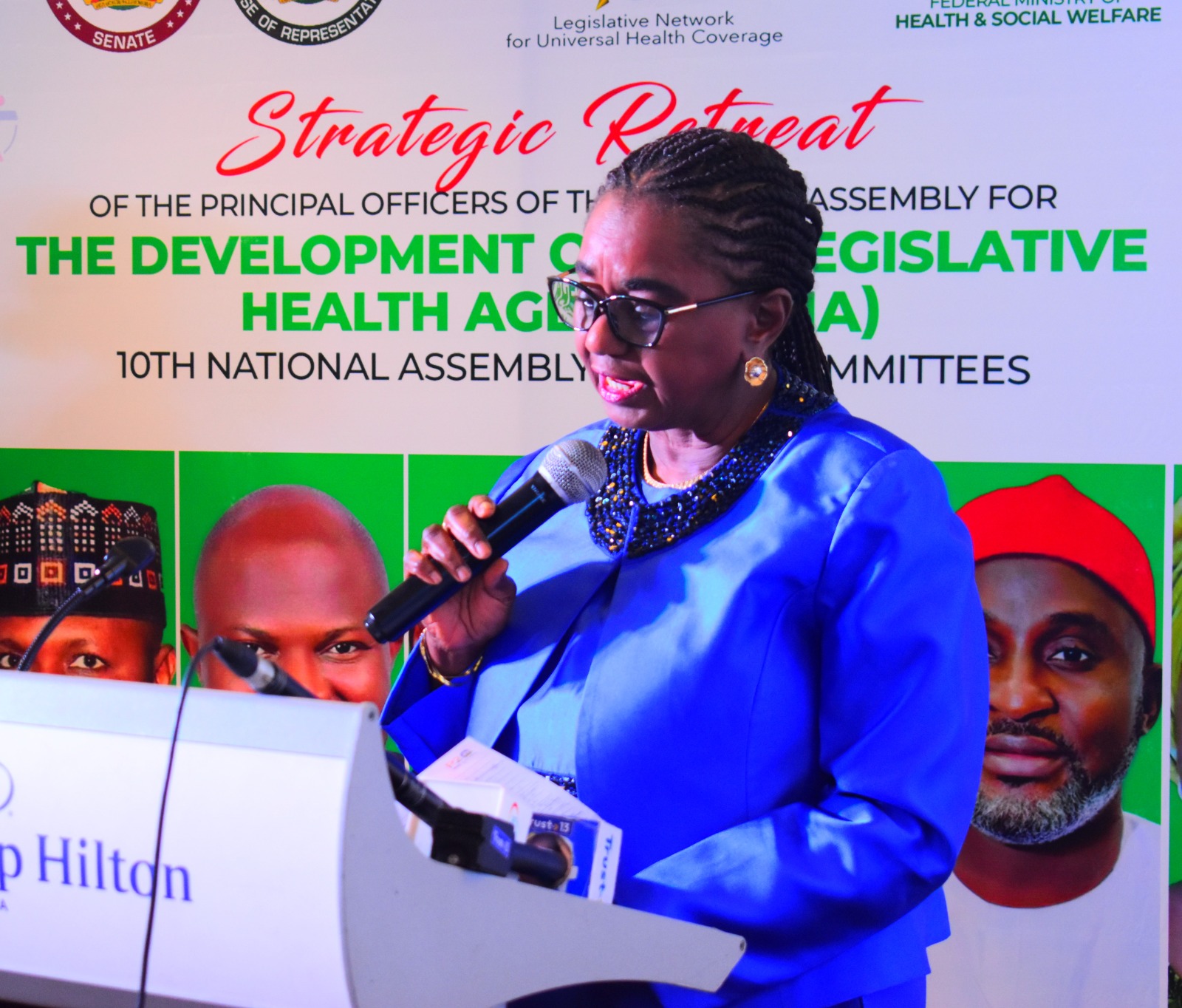
The importance of e-Health devices and digital health solutions in improving Nigeria’s healthcare system has been emphasised by Senator Ipalibo Harry Banigo, Chairman of the Senate Committee on Health, Secondary and Tertiary.
She also stressed that health is a multilayered activity and a multisectoral collaboration that requires legislators to work together to provide legislation, implement policies, and track funds effectively.
Banigo, who represents Rivers West Senatorial District in the National Assembly, made these remarks at the 5th Annual Legislative Summit on Health in Abuja, themed “Improving Legislative Stewardship and Accountability for Universal Health Coverage.”
She highlighted the potential of eHealth devices, especially given Nigeria’s large population and limited healthcare professionals.
“We can develop platforms that can be accessed through simple phones, even in remote villages, to provide health education and interventions,” she said.
“We are not talking about highfalutin things; we are talking about what will impact communities at the grassroots level, particularly pro-poor initiatives that will benefit vulnerable populations.”
Banigo also emphasized the importance of accountability and effective care, encouraging legislators to share knowledge, engage in peer reviews, and exchange information to achieve better health outcomes.
She recalled the cholera outbreak, where basic health education and interventions could have been delivered via mobile phones, preventing preventable deaths.
The 5th Annual Legislative Summit on Health brought together federal and state legislators, the Coordinating Minister of Health and Social Welfare, Prof. Muhammad Pate, the World Health Organisation’s representative in Nigeria, Dr. Walter Mulombo, and other dignitaries.
-
News2 days ago
Obuah’s Victory Excites Former Lawmaker as APC Primaries Conclude in Rivers West
-

 Politics4 days ago
APC PRIMARIES: FUBARA’S WITHDRAWAL, HISTORIC SACRIFICE FOR NATIONAL STABILITY ……. GROUP
-

 News4 days ago
Court Sentences Seven To Death Over Murder Of Cleric In Rivers
-
News2 days ago
105 Nigerians Killed In S/Africa In Seven Years
-

 Sports4 days ago
PH Arsenal Community Set For Streets Procession, Saturday
-

 Niger Delta2 days ago
Royal Father Endorses PH Arsenal Community, Pledges To Support
-

 Politics4 days ago
IPAC Flays INEC Over Election Guidelines Judgement
-

 Politics4 days ago
NDC To Adopt Electronic Voting For Future Primaries