
Featured
Wike Blasts NASS Over Ex-Service Chiefs’ Confirmation …Blames Poor Performance Of NDDC On Presidency, NASS

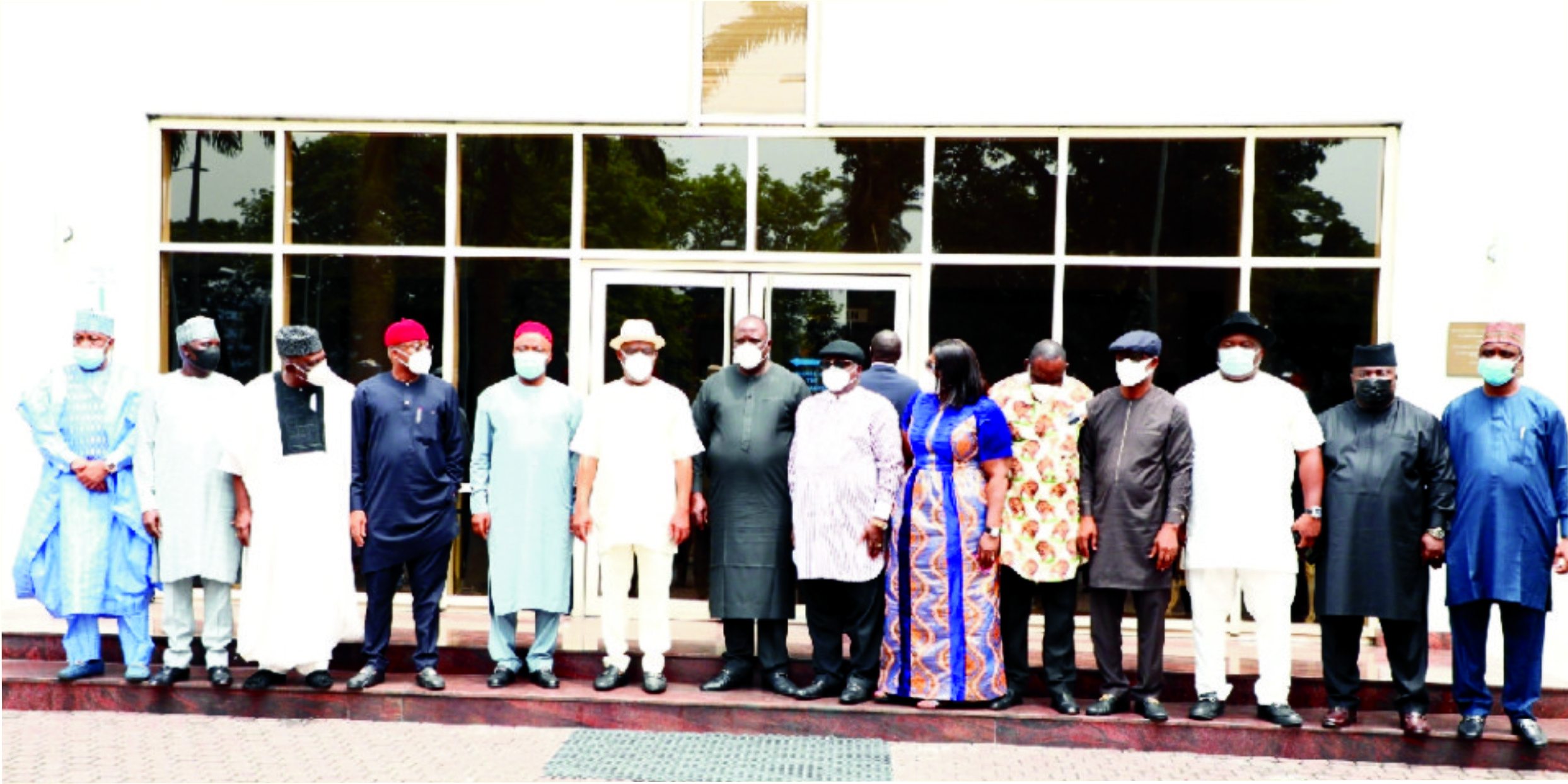
The Rivers State Governor, Chief Nyesom Wike, says Nigerians are disappointed with the National Assembly for confirming sacked service chiefs as ambassadors.
The governor related the disappointment of Nigerians to members of the Senate Committee on Niger Delta, when they paid a courtesy visit to him at Government House, Port Harcourt, last Wednesday.
Wike wondered why senators, who agreed with Nigerians when they decried the poor performance of the service chiefs, would sit to clear them for another appointment.
“Let me use this opportunity to express the dismay of most Nigerians to the Senate. Convey this to the Senate. We must be courageous in whatever we are doing. Everything must not be party affairs. You (senators) sat and discussed that they should dismiss the service chiefs. You said they’re not performing.
“Now, the same people who were not performing, you have confirmed them as ambassadors. What kind of country are we?
“In anything we do, we must remember that there is tomorrow; our conscience is key. It’s not because I want to be loyalists to a party. No. There are things you cannot reconcile at all,” he said.
Speaking about the Niger Delta Development Commission (NDDC), Wike said the commission has abandoned its core mandate; leaving those who canvassed for its establishment disillusioned.
“I don’t like talking about NDDC. It is unfortunate that those who fought for it, if they knew that this is how NDDC will be, I don’t think they would have even asked for it.”
He noted that over the years, various National Assembly committees on NDDC hah failed to provide sufficient direction that would make the commission focus on its core mandate of developing the region.
Wike said some politicians have transformed the NDDC into a cash cow for the prosecution of sinister political agenda.
To buttress this, he accused the commission of spending N10billion to unseat him from office, but added that the scheme failed.
The governor urged the committee’s leadership to prevail on the management of the NDDC to embark on legacy infrastructure projects such as flyovers in the impacted states, and not waste resources on doing 50 or 100-metre roads.
“You, as the Senate Committee chairman, and that of the House Committee, you’re from the region too. You are supervising NDDC; so, why not sit down with them to know the legacy projects they want to carry out this year in the Niger Delta states. Tell them these are projects they must make sure they execute first.
“Rather than do that, you allow them do 50 or 100 meters’ road or a close that leads to someone’s house. What’s their business there?”, he asked.
The governor accused the Presidency, the National Assembly and the ruling party of aiding the gross inefficiency of the NDDC.
“The National Assembly is part of the problem of NDDC. The Presidency is part of the problem of NDDC, and the party in power is part of the problem of NDDC, whichever party it is. They don’t allow NDDC to perform. We too, in Niger Delta, are not allowing them to perform. We are enemies to ourselves.”
He noted how the ruling All Progressives Congress (APC) refused to endorse the amendment of the Electoral Act for fear that they would lose the 2019 General Election when it was the best thing to do for the country.
The governor also expressed displeasure over a senator who overstepped his immunity during plenary to demean a serving governor by calling him a ‘drunk’.
In his speech, Chairman of the Senate Committee on Niger Delta, Senator Peter Nwaoboshi, said they were in Government House, to assure Wike, as the host of NDDC, that the commission would be supervised to perform within its core mandate.
“As a committee, we are aware that you have some reservations with the NDDC based on your state’s previous relationship with them. We have come to assure you that with the people you have seen here, who are patriotic Nigerians, we will make sure that the aspirations and the aims of creating the NDDC would be achieved.
“We will do everything possible within the limits of the Constitution, through our oversight functions, for them to achieve their objectives.”
Nwaoboshi also commended the governor for having done well in providing security in Rivers State with NDDC benefiting from it.
He noted that Wike has become the strongest voice that has continued to speak truth to power at the risk of his political career.
“We say without fear of contradiction that you are the strongest voice in the Niger Delta region. You have always been courageous, even at the risk of your political career, to speak truth to power.”
“You have also advanced the interest of the people of the Niger Delta. That is why anybody visiting Niger Delta will have nothing but to come and see that courageous man that is bestriding the area like a colossus”, Nwaoboshi added.



Governor of Rivers State, Sir Siminalayi Fubara, has reaffirmed the unwavering commitment of his administration to peace, unity, security, and inclusive development as Rivers State marked its 59th anniversary, last Wednesday.
In a goodwill message issued on Wednesday to commemorate the anniversary, Governor Fubara stated that despite the challenges faced over the years, the people of Rivers State have continued to demonstrate resilience, strength, and an enduring spirit of unity that has sustained the state since its creation.
The Governor noted that the strong bond of brotherhood among the various ethnic nationalities of the state, including the Ijaw, Ikwerre, Ogoni, Etche, Ekpeye, Andoni, Kalabari, and others, remains one of Rivers State’s greatest strengths and a critical foundation for peace, stability, and progress.
He further observed that Rivers State has remained a major driver of Nigeria’s economy for decades, not only because of its abundant oil and gas resources, but also because of the exceptional contributions of its people across diverse sectors including academia, jurisprudence, business, entertainment, public service, and sports.
Governor Fubara assured the people that his administration will continue to prioritize policies and programmes that promote peace, protect lives and property, and expand development across all parts of the state. He emphasized that governance must be people centered and impactful, with equal attention given to every Local Government Area of the state.
The Governor also paid tribute to the elders and founding leaders of the state for preserving the spirit of unity and coexistence over the years, while urging the youths to remain hopeful, responsible, and actively committed to building a greater Rivers State through innovation, hard work, and patriotism.
He equally acknowledged the invaluable role of women in strengthening families, communities, and society, describing them as indispensable partners in the continued growth and stability of the state.
Governor Fubara called on all Rivers people to use the occasion of the anniversary as a moment of reflection and renewed commitment to peaceful coexistence, mutual respect, dialogue, and collective progress, stressing that the unity and future of Rivers State must always rise above personal interests and political differences.
Rivers State was created on May 27, 1967, by General Yakubu Gowon.


The Rivers State Government has distributed science equipment and materials to all senior secondary schools across the state to support students during the ongoing West African Examinations Council exams and to strengthen practical learning.
Flagging off the distribution at the Rivers State Senior Secondary Schools Board premises in Port Harcourt, on Monday, the State Commissioner for Education, Dr. Peters Nwagor, said the move demonstrates Governor Siminalayi Fubara’s commitment to improving education standards in the State.
Nwagor said the materials were approved and provided by the state government specifically to boost the teaching and learning of science subjects, describing science education as the foundation for technological advancement, innovation, and national development.
“No society can compete globally without deliberate investment in science and technology,” the Commissioner stated.
He commended the governor for consistently prioritising the education sector by providing tools needed for effective teaching and hands-on learning.
The Commissioner directed principals to ensure that the equipment are used strictly for practical lessons in their schools, warning that any principal or administrator found diverting, hoarding, or selling the materials wil face disciplinary action under public service regulations.
Nwagor also warned against examination malpractice, saying any principal found aiding or encouraging malpractices will be decisively sanctioned.
“We must collectively restore the dignity and credibility of our educational system,” he said.
Also speaking, Chairman, Rivers State Senior Secondary Schools Board, Tony Egwurugwu, urged school heads to make judicious use of the materials for students’ benefit.
He thanked the State Government for providing the resources, and assured that monitoring mechanisms would be put in place to ensure the materials serve their intended purpose.
In his own remarks, a Board Member for Technical Education, Nwisabari Bani Samuel, expressed appreciation to the governor for prioritising education and acknowledged the Commissioner’s role in advancing education development in the State.
He said the distribution covers all senior secondary schools in the State and is intended to improve students’ performance in both internal and external science examinations.
Akujobi Amadi
-
News1 day ago
Obuah’s Victory Excites Former Lawmaker as APC Primaries Conclude in Rivers West
-

 Politics3 days ago
APC PRIMARIES: FUBARA’S WITHDRAWAL, HISTORIC SACRIFICE FOR NATIONAL STABILITY ……. GROUP
-

 News3 days ago
Court Sentences Seven To Death Over Murder Of Cleric In Rivers
-
News1 day ago
105 Nigerians Killed In S/Africa In Seven Years
-

 Sports3 days ago
PH Arsenal Community Set For Streets Procession, Saturday
-

 Politics3 days ago
IPAC Flays INEC Over Election Guidelines Judgement
-

 Politics3 days ago
NDC To Adopt Electronic Voting For Future Primaries
-

 Niger Delta1 day ago
Royal Father Endorses PH Arsenal Community, Pledges To Support