
Featured
$22.7bn Loan Request: CUUP Sues Buhari, AGF, Others

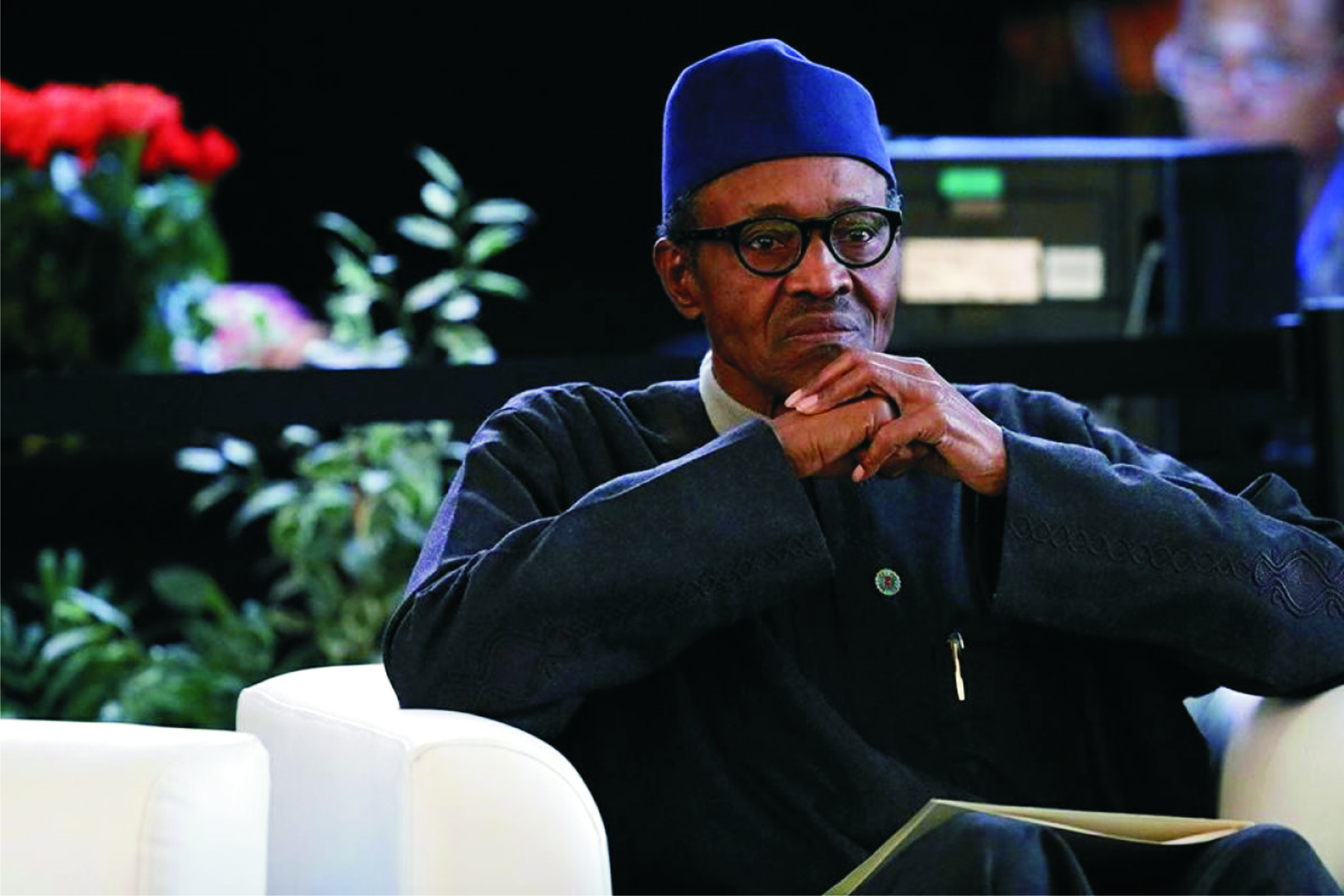
A group of opposition parties – the Coalition of United Political Party (CUPP), has sued the Federal Government, President Muhammadu Buhari and others over move by the government to borrow $22.7billion.
The CUPP, in a suit filed before the Federal High Court, Abuja, through one of its members, Action People’s Party (APP), is praying the court to among others; restrain the Federal Government from further engaging in any form of borrowing.
In the suit filed, yesterday by APP’s lawyer, Chibuzor Ezike, the party particularly wants the court to set aside or nullify any approval for external loan granted the Federal Government by the National Assembly.
Other defendants in the suit, marked: FHC/ABJ/CS/2020 include that Attorney-General of the Federation (AGF), the Minister of Finance and the National Assembly.
Part of the reliefs are: A declaration that it is unlawful and unconstitutional for the National Assembly to offer to undertake any guarantee for the requested external loan made by the President when the terms and conditions of the said loan has not been duly laid before, considered and approved by the NASS as mandatorily stipulated by the law.
The party is equally praying the court to declare as unconstitutional, unlawful and ultra vires the executive powers of the President to borrow external loan and participate in the negotiation and acquisition of any external loan without proper legislative framework by the NASS.
No date has been fixed for the hearing of the suit.
In a statement, yesterday, CUPP’s spokesman, Imo Ugochinyere, said his group has also written to all the lenders to halt the loan request in view of the pending legal action.
He said “The loan request is riddled with project lopsidedness, lack of financial prudence, secrecy, plan to use loan for frivolous projects, over costing of projects, corruption, misapplication and incompetence.
“The Senate leadership has clearly and unambiguously shown it is not on the side of the people and it is not representing the Nigerian people but their selfish interest.
“There unpatriotic stand on national issues and lack of vision has become all the more apparent and have turned the Senate into a chamber filled by political Allelluya boys.
“Fellow Nigerians, the exchange rate of the Dollars due to certain vagaries, including gross mismanagement of our economy is now chasing N400 to a Dollar.
“This means that at this rate, the $22.7billion foreign loan will be the equivalent N9.8trillion.
“This is more than the entire 2019 budget and just a little less than the entire 2020 budget.
“How can a government borrow its entire budget yet citizens are in doubt as to the contents of the loan package,” he said.
However, the Minister of Finance, Mrs. Zainab Ahmed, yesterday, disclosed that the Federal Government has suspended its $22.7billion external borrowing plans due to current realities in the global economic landscape.
Speaking in Abuja, at the 2020 International Conference on the Nigerian Commodities Market, organized by the Securities and Exchange Commission (SEC), Ahmed stated that the government would not go ahead with the borrowing programme even if it secures the approval of the National Assembly.
The finance minister explained that the decision of the government to suspend the borrowing was due to the fact that market indices do not support external borrowings at the moment.
She said, “The parliament is still doing its work on the borrowing plan. One arm of the parliament has completed theirs and the other arm is still working and it is a process that is controlled by the parliament itself, so we are waiting.
“However, we are not going out immediately because the market indication is not in favour of external borrowing at this time. Even if we get approvals we will defer it and watch the market and go out only when the timing is right.”
She explained that the Federal Government was not relenting on its plans to diversify the country’s economy, noting that unfolding events of the past few months, the Coronavirus pandemic and the oil price war, had further reinforced the resolve to diversify the national economy.
She disclosed that the current challenges in the global economy had brought to the fore the need for the country to develop a non-oil attitude to everything.
According to her, the Federal Government planned to prioritize expenditure in favour of major capital expenditures that would have greater impact, and which would create job and visibility and also enhance the ease of doing business in the country.
She noted that expenditures that are not critical must be deferred to a later date when things become more normal.
The minister said, “Several national plans, programmes and projects have been directed at diversifying the production and revenue structures of our economy.




Featured
JUNE 12: Democracy Remains Nigeria’s Strongest Path To Unity, Progress, Says Fubara ….Extols Abiola, Wife


Governor of Rivers State, Sir Siminalayi Fubara, has reaffirmed that democracy remains the most effective system of government for Nigeria, given the country’s rich diversity of ethnic, religious, and cultural identities.
In a goodwill message to Nigerians on the occasion of the 2026 Democracy Day celebration, Governor Fubara said June 12 represents far more than a historic date; as it embodies the enduring struggle, sacrifice, and collective aspiration of Nigerians for freedom, justice, and representative governance.
The Governor extended warm felicitations to Nigerians at home and in the Diaspora, paying tribute to the heroes and heroines of the democratic struggle, particularly Chief MKO Abiola, his wife, Kudirat Abiola, and countless others whose courage and sacrifices helped secure the democratic freedoms Nigerians enjoy today.
According to him, “June 12 is a reminder of the price paid for the democracy we enjoy today. The sacrifices made by Chief MKO Abiola, Kudirat Abiola, and many other patriots who laid the foundation for the democratic journey we continue to enjoy today. Their commitment to the principle that power must ultimately reside with the people remains a source of inspiration for every generation of Nigerians.”
Governor Fubara noted that thirty-three years after the historic June 12, 1993 election, Nigeria’s democratic experiment has continued to evolve despite challenges and setbacks.
“Our democratic journey has not been without difficulties, but the resilience of our institutions and the determination of our people have kept the nation moving forward. The ability to express differing opinions, engage in constructive debate, and peacefully choose leaders through the ballot remains one of the greatest achievements of our nation,” he said.
Governor Fubara stressed that democracy provides the best framework for managing Nigeria’s diversity and transforming it into a source of national strength.
“Nigeria’s diversity should never be seen as a weakness. Properly harnessed, it is our greatest asset. Democracy offers us the opportunity to build consensus, promote inclusion, strengthen national unity, and create the conditions for sustainable development and shared prosperity,” he said.
Governor Fubara commended President Bola Ahmed Tinubu, for his commitment to the Renewed Hope Agenda and ongoing efforts aimed at economic revitalization, strengthening security, and deepening democratic institutions across the country.
He reiterated the readiness of Rivers State to continue partnering with the Federal Government in advancing policies and programmes that improve the lives of citizens through infrastructure development, job creation, enhanced security, quality education, healthcare delivery, and good governance.
The Governor further called on Nigerians, regardless of political affiliation, ethnic background, or religious belief, to use the occasion of Democracy Day to renew their commitment to the Nigerian project and the ideals that underpin democratic governance.
“Democracy must not be viewed merely as a periodic electoral exercise. It must be reflected in our daily commitment to accountability, transparency, tolerance, justice, respect for the rule of law, and responsible leadership. As citizens and leaders, we all share a collective responsibility to strengthen our democracy and build a nation that future generations will be proud to inherit,” he said.
Governor Fubara expressed optimism about Nigeria’s future, urging citizens to remain united, hopeful, and committed to the values of peace, dialogue, and national development.
“Together, we can build a stronger, more inclusive, and more prosperous Nigeria where every citizen has the opportunity to thrive and contribute meaningfully to national progress,” he said.

Governor of Rivers State, Sir Siminalayi Fubara, has reaffirmed the unwavering commitment of his administration to peace, unity, security, and inclusive development as Rivers State marked its 59th anniversary, last Wednesday.
In a goodwill message issued on Wednesday to commemorate the anniversary, Governor Fubara stated that despite the challenges faced over the years, the people of Rivers State have continued to demonstrate resilience, strength, and an enduring spirit of unity that has sustained the state since its creation.
The Governor noted that the strong bond of brotherhood among the various ethnic nationalities of the state, including the Ijaw, Ikwerre, Ogoni, Etche, Ekpeye, Andoni, Kalabari, and others, remains one of Rivers State’s greatest strengths and a critical foundation for peace, stability, and progress.
He further observed that Rivers State has remained a major driver of Nigeria’s economy for decades, not only because of its abundant oil and gas resources, but also because of the exceptional contributions of its people across diverse sectors including academia, jurisprudence, business, entertainment, public service, and sports.
Governor Fubara assured the people that his administration will continue to prioritize policies and programmes that promote peace, protect lives and property, and expand development across all parts of the state. He emphasized that governance must be people centered and impactful, with equal attention given to every Local Government Area of the state.
The Governor also paid tribute to the elders and founding leaders of the state for preserving the spirit of unity and coexistence over the years, while urging the youths to remain hopeful, responsible, and actively committed to building a greater Rivers State through innovation, hard work, and patriotism.
He equally acknowledged the invaluable role of women in strengthening families, communities, and society, describing them as indispensable partners in the continued growth and stability of the state.
Governor Fubara called on all Rivers people to use the occasion of the anniversary as a moment of reflection and renewed commitment to peaceful coexistence, mutual respect, dialogue, and collective progress, stressing that the unity and future of Rivers State must always rise above personal interests and political differences.
Rivers State was created on May 27, 1967, by General Yakubu Gowon.
