
News
Tension In B’Haram, ISWAP As Commanders Turn Against Shekau

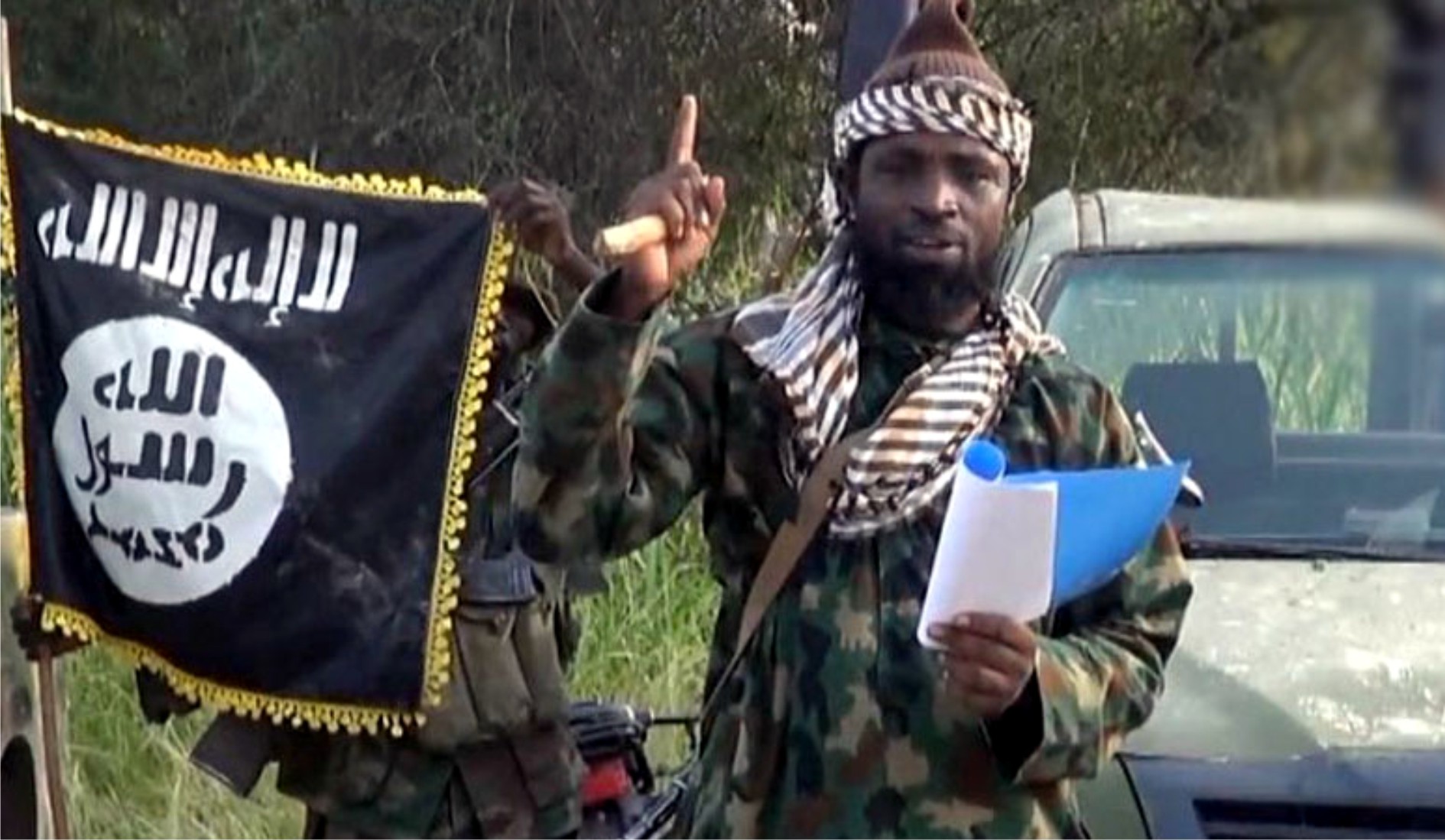
There is brewing tension among the hierarchy of the Boko Haram and the Islamic State in West African Province (ISWAP), the two major terror groups operating in the North-East, it has been reliably gathered.
A reliable source close to some of the repented Boko Haram commanders, said that there is a major plot to execute the Boko Haram leader, Abubakar Shakau, over growing mistrust and struggle for supremacy.
According to the source, who craved anonymity, many of the Boko Haram and ISWAP commanders have been killed as a result of infighting among the insurgents.
It was gathered that fresh crisis hit the terrorists’ camps after the extermination of Muhammad Shuwa, Abu – Mossad Albarnawee and Baa Idirisa on February 9, 2020.
The death of these two top commanders, the source said has deepened the suspicion and distrust in Shekau’s camp.
He disclosed further that most of Shakau’s key commanders and fighters had deserted him and are secretly planning to execute him.
According to the source, “key commanders under the leadership of Mallam Bakura have been constantly planning to kill Shekau because of his high handedness, erratic disposition, mental imbalance and non-adherence to pristine Islamic tenets or the original BHTs’ doctrine and Ideology.
“They further accused him of serial clandestine killings of some terrorists’ commanders that he viewed as threats to his despotic leadership. Also it was revealed that Shekau has uncontrollable mad desire for women including his fellow jihadists’ women and daughters”.
All these the source said have “increasingly alienated him from some of his high profile commanders that are now surreptitiously planning to eliminate him. It is just a matter of time that Shekau will be no more.
The source added that “the latest information from though yet to be confirmed is that Shekau has been eliminated by his detractors who are averse to his inordinate lust for raping women and under aged girls including those married to his fellow jihadists fighters. His penchant for the use of girl-child for suicide bombings has been a great issue of concern in the terrorists’ camp.
“The major point of disagreement between the two camps lies in what a source described as anti-Islamic activities and indiscriminate killing of people whether Moslem or Christians, children or adults, including raping women who are married or unmarried.
“These problems are compounded because of the increasing operational activities of Nigerian troops and the Multinational Joint Task Force in Northern Borno State”.
However, no fewer than eight Boko Haram fighters and their family members, including six women and eight children have surrendered to troops of 152 Task Force Battalion deployed at Banki Town in Bama Council Area of Borno State during clearance operations by troops.
The surrendered terrorists, according to a statement by the Nigerian Army Operations Media Coordinator, Col Aminu Iliyasu, yesterday, include Tija Bo Isa, Ba Amodu Aba Kaka, Modu Zantalami, Malam Zantalami and Bakura Aba Kaka (Boko Haram logistics supplier).
Others were Bulama Modu Zantalami, Abukar Izahi and Bana Katum.
“During preliminary interrogation, the surrendered terrorists regretted their involvement in the dastardly acts of killing and abduction of innocent people as well as attacks on security agencies.
“They equally disclosed that their leadership has been in disarray for the past four months since the renewed offensive actions by the troops against their enclaves leading to high casualties on their foot soldiers amidst serious dislocation of their command structures.
“They further disclosed that many of their erstwhile colleagues are wandering in the forest and willing to give up their unholy adventure but are afraid of being killed by the security agencies. They therefore call on them to take the bold decision and surrender to any Nigerian Army unit closest to them as the safety of their lives are guaranteed”, the statement read in part.
“Troops of 5 Brigade Mobile Strike Team in conjunction with Chief of Army Staff Intervention Battalion II and elements of 145 Battalion (Main) also rescued 126 Boko Haram captives while conducting clearance operations within the Gudumbali general area in Guzamala LGA of Borno State. The rescued victims comprised of 36 adult males, 36 adult females and 54 children.
“In a related development, troops of 707 Special Forces Brigade rescued 17 Boko Haram captives comprising six adult males, six adult females and five children”.
According to the statement, all rescued victims were evacuated and handed over to Internally Displaced Persons Camp officials.
It added further that, “in a separate development on the same day, February 21, 2020, the combined troops of 19 Brigade, 127 and 130 Battalions in conjunction with Army Headquarters Strike Group conducted a massive clearance operation along Mile 4 – Cross Kauwa – Tukul Village – Daban Shata all in Kukawa LGA of Borno State.
“Troops made contact with some marauding Boko Haram criminals along a River Bank at Daban Shata. After a brief encounter, one Boko Haram criminal was neutralized while two others were captured alive by the gallant troops. Additionally, seven AK-47 rifle magazines, two bandoliers, one camel bag, one military waist belt and a sample of receipt were recovered. Preliminary investigation revealed that one of the captured insurgents is the Amir (a high ranking member of Boko Haram) of Daban Shata.
“Relatedly, on the same February 21, 2020, the combined troops of 29 Task Force Brigade, 273 Tank Battalion, 156 Task Force Battalion, Army Super Camp 4 and elements of 7 Division Garrison also conducted a robust clearance operation to Lambuwa, Abbusuri, Bamti, Malumti, Goni-Kanuburi and Sheworam all in Konduga LGA of Borno State. At Lambuwa, troops conducted a snap Cordon and Search Operation and arrested three suspected Boko Haram criminals with one of them bearing the name of Modu Solum (a high profile Boko Haram member and logistics supplier). However, further profiling is ongoing to ascertain the suspects’ real identities”.
Meanwhile, “in a similar vein, on February 23, 2020, troops of 231 Battalion and 331 Artillery Regiment in conjunction with elements of Borno State vigilantes arrested seven notorious Boko Haram/Islamic State’s West Africa Province logistics suppliers at Maina Hari Check Point in Biu LGA of Borno State. The arrested suspects include: Mohammed Abba, Bukar Usman, Chulum Adam, Adam Alhaji Jidda, Ahmed Abba, Jidda Abdullahi and Modu Amadu. The suspects are currently in troops’ custody giving useful information.
“In another development, on February 17, 2020, vigilant troops of 271 Tank Battalion of Operation Lafiya Dole deployed at Jada Check Point in Jada LGA of Adamawa State intercepted 2 Boko Haram Logistics Suppliers namely; Sani Audu and Bana Abba in a Toyota Starlet car conveying large quantities of anti-biotics, sex enhancing and other illicit drugs and a Dane gun (concealed in the vehicle apartment) meant to be supplied to the criminal terrorists”.
Meanwhile, relentless and brutal attacks by the Nigerian military against the Boko Haram insurgents and their ally in the Islamic State in West Africa (ISWAP) have forced the terrorists to change their pattern of an indiscriminate onslaught on Nigerians and to focus on Christians and churches, Minister of Information, Alhaji Lai Mohammed has said.
The minister, who addressed a press conference in Abuja, yesterday, insisted that the unceasing pounding of the terrorists and their allies by the military had forced them to lose territories they once occupied, collected taxes and installing and deposing emirs.
Mohammed said: “Recall that Boko Haram insurgents didn’t use to discriminate between Christians and Muslims when they carried out their attacks in the past. Churches and mosques, Christians and Muslims were attacked without discrimination.



The Rivers State chapter of the All Progressives Congress Christian Leaders Forum has expressed strong confidence in the capacity of All Progressives Congress (All Progressives Congress) candidates in the state to deliver effective governance if elected into office in the coming elections.
The State Coordinator of the forum, Archbishop Lucky Aroh, made this known during a breakfast and thanksgiving meeting held in Port Harcourt, where leaders gathered to pray for the stability of the party and the safety of its candidates ahead of the 2027 general elections.According to him, the meeting was convened to seek divine intervention for peace, unity, and security among APC candidates across Rivers State.
“Today we are praying for APC stability in Rivers State and the security of our candidates that have been elected to contest the 2027 elections. It is a breakfast meeting,” Aroh said.
He further expressed optimism that the party’s candidates would not disappoint the people if entrusted with leadership responsibilities.
“They will not fail when elected into office. We are here as fathers of the land to let them know, and I must tell you the truth that these are the authentic people that will do well in Rivers State,” he added.
Speaking earlier, the National Chairman of the forum, Professor Olanrewaju Abraham, commended the Rivers State chapter for organizing the programme, noting that the national body of the forum believes strongly in the power of prayer.
He stated that political leadership provides an opportunity to influence society positively, including advancing moral and spiritual values, while expressing confidence that APC candidates at all levels would emerge victorious in the upcoming elections.
Also speaking, the Rivers State Women Leader of the APC, Hon. Darling Amadi, praised the forum for its commitment to prayers for peace, stability, and the protection of party candidates.
Represented by the Deputy Women Leader of the party in the state, she described the initiative as commendable and urged other political and support groups within the party to emulate the gesture in promoting unity and stability.
By: John Bibor, Menebe Emmanuel & Fortune Paibi
Prominent businessman and philanthropist, Elder Anthony Osagwe-Ogo, was celebrated in grand style as he marked his 70th birthday anniversary, with distinguished Nigerians, business leaders, and golf enthusiasts gathering to honour his remarkable contributions to society.
The colourful celebration took place at the Port Harcourt Golf Club, where friends, associates, and well-wishers converged to pay tribute to the revered elder statesman.
Chairman of the occasion, High Chief (Dr.) Ikenna Okafor, described the celebrant as a detribalised Nigerian whose generosity, humility, and commitment to humanity have earned him admiration across different communities and backgrounds.
According to Dr. Okafor, Pa Osagwe-Ogo’s impact on society and the development of his community remains unparalleled. He noted that members of the golfing community are proud to be associated with a father figure who consistently promotes the welfare and well-being of those around him.
He further stated that the history and growth of the Port Harcourt Golf Club cannot be told without acknowledging the significant role played by the celebrant, whose wisdom, encouragement, and leadership have helped sustain the club over the years.
“We are here to celebrate a man who has impacted humanity positively, a peace-loving individual and an epitome of hope for the younger generation. We pray to emulate his virtues. Today, we celebrate a bridge-builder, a trailblazer, and an iconic leader whose life continues to inspire many,” Dr. Okafor said.
He expressed delight at the large turnout of guests from various walks of life, describing it as a testament to the respect and affection Pa Osagwe-Ogo commands within and beyond Rivers State.
In his response, the celebrant, Pa Anthony Osagwe-Ogo, expressed profound gratitude to God for preserving his life and granting him the privilege of attaining the milestone age of 70.
He also thanked members of the Port Harcourt Golf Club, family members, friends, and associates for identifying with him during the celebration and for their unwavering support over the years.
The event featured the cutting of the birthday cake, presentation of awards to deserving members of the club, goodwill messages, and moments of celebration among guests.
The ceremony was attended by notable personalities from the business community, the golfing fraternity, and other sectors, all of whom joined in celebrating the life and legacy of the respected elder statesman.
Rivers State Governor, Sir Siminalayi Fubara, and the Permanent Secretary of the Rivers State Ministry of Information and Communications, Dr. Honour Kuru Sirawoo, have been honoured with awards of recognition in connection with the 2026 Democracy Day celebrations held in Port Harcourt.
The awards, which formed part of activities marking Nigeria’s Democracy Day on June 12, were formally presented on Tuesday at the Ministry of Information and Communications in Port Harcourt.
Presenting the awards was Hon. Abdul Hameed Oladipupo Alli, popularly known as “Mr. Nigeria,” Publisher of Asiwaju Trumpet Magazine and Achievers World International Magazine.
Governor Fubara was recognised for his efforts in sustaining peace, stability, and a conducive political atmospherJohn Bibor / Menebe Emmanuel / Fortune Paibie in Rivers State. The organisers noted that his administration has fostered harmony and strengthened civic participation across the state.
Dr. Sirawoo, on the other hand, was honoured for his exemplary administrative leadership and significant contributions to effective information management within the Ministry of Information and Communications.
Representing Dr. Sirawoo at the presentation ceremony, Dr. Christian Davies received the award on his behalf and expressed gratitude for the recognition. He described the honour as a reflection of Dr. Sirawoo’s unwavering commitment to professionalism, excellence, and dedicated public service.
Dr. Davies assured the organisers that the award would be formally conveyed to the Permanent Secretary.
The event also featured the presentation of commemorative publications highlighting major governance and civic milestones in Rivers State, including Easter celebrations, Workers’ Day activities, the Governor’s third anniversary in office, and Democracy Day programmes.
Organisers of the awards commended the Rivers State administration for what they described as sustained peace, political stability, and improved civic engagement, noting that these achievements have contributed significantly to the state’s continued development.
By: Jessica Sambol