
Opinion
Ogoni Clean-Up: Matters Arising

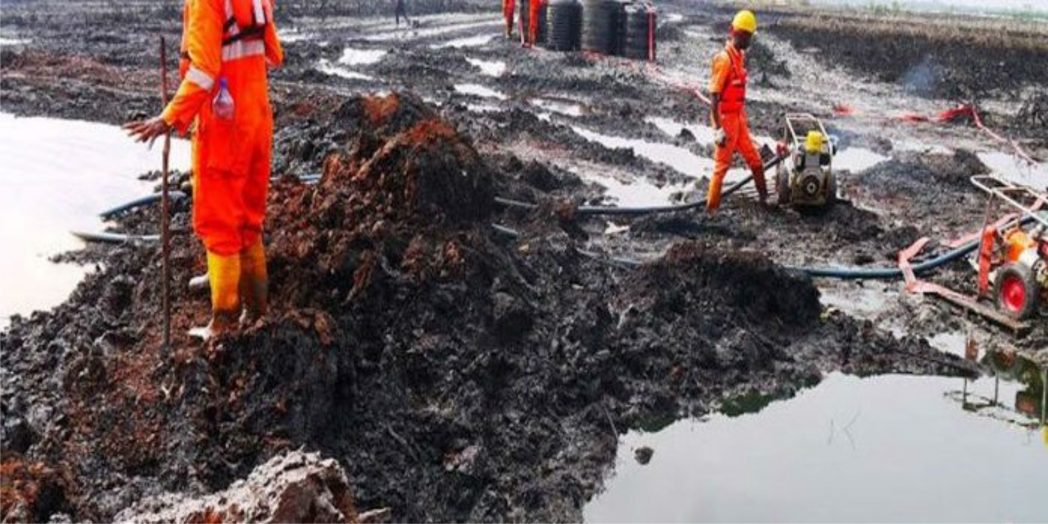
Issues relating to crude oil exploration and its aftermath are not peculiar to Nigeria. There are and will always be matters arising from crude oil exploration and its attendant exploitative consequences. The world over, there have been several occurrences of crude oil spillages which, of course, is unavoidable for as the error factor remains an undetachable human element.
Interestingly, some large-scale oil spillages have inevitably occurred in some oil-bearing nations which comparatively are technologically sophisticated than Nigeria such as Kuwait, Saudi Arabia, Mexico, Iraq and Iran. Though, some of these spillages were alleged to have resulted from human sabotage; for instance, the case of Kuwait, during the Gulf War where retreating Iraqi forces deliberately destroyed oil facilities in January 1991 causing very large scale spillages without justifiable reasons. However, there are instances where spillages have also occurred due to equipment failure.
There are also cases where some spillages have occurred from maritime accidents; for instance, the biggest occurrence was the Gulf of Mexico oil spill and BP oil spill, the Deepwater Horizon oil spill. The accident occurred in April, 2010 as a result of equipment failure. Another was the Ixtoc I Oil Well at the Bay of Campeche, off the Gulf of Mexico, which occurred from the collapse of an oil well operated by the Mexican Petroleum Company, Pemex. It is on record that an estimated 140 million gallons, almost 10,000 to 30,000 barrels of crude oil was spilled into the sea for a period of ten months. The list of mishaps in this regard is intimidating but the fact remains that the management of the aftermaths of these mishaps by these countries has always been resolved amicably and the original status of their ecosystem remediated accordingly.
Here in Nigeria, oil spills occur very frequently though some experts like the Zonal Director, South-South, National Oil Spill Detection and Response Agency (NOSDRA), Mr. Cyrus Nkangwung, have attributed some of these recurrences as a result of human sabotage. According to him, the year 2019 recorded over 295 cases of crude oil spillage in Rivers State alone. This represents an average of 29,012 barrels of crude oil spillage into the environment. This is grossly alarming by all standards. The challenge here is what are the strategies used by other oil producing countries with histories of major oil spills that enables them to effectively tackle the devastative effects and efficiently remediate their environment without the hullabaloos usually associated with the Nigerian situation.
A case readily in sight is the issue of the Ogoni Bill of Rights which, among others, sought the remediation of Ogoniland and to restore its flora and fauna devastated after many decades of oil exploration and exploitation. It is no longer news that by the year 2011, the United Nations Environment Programme (UNEP) released the findings of a painstaking research commissioned by the Federal Government of Nigeria to carry out a comprehensive environmental assessment of oil impacted sites in the region of Ogoniland and to recommend suitable remediation actions based on the findings.
The present administration led by President Muhammadu Buhari GCFR as part of his presidential electioneering campaign in 2015 promised the Ogonis that the UNEP report will be implemented as soon as he was voted into power. In a bid to fulfill that promise, the Vice President, Prof. Yemi Osinbajo, presided over the kickoff of the implementation of the Ogoni clean-up exercise at Bodo in Gokana Local Government Area of Rivers State on the 2nd of June, 2016.
In his flag-off speech, the Vice President promised that the implementation of the project would be done strictly in line with the recommendations of the UNEP report beginning with the provision of potable water for the people. This is because the report states that the underground water has been grossly contaminated with benzene, making it unsafe for consumption especially at Ogale in Eleme Local Government area. The report also states the need to build good health facilities to cater for the people, and also to construct a Center of Excellence, among others. In all these, the Rivers State Government seems to have been consistently sidelined in every ramification.
This scenario paints the picture of a sympathizer crying more than the bereaved. No doubt, the effort of the Federal Government cannot be totally undermined. The question is; is it morally and administratively justified for the government at the center to sideline the State government whose responsibility it is to directly plan and cater for the people at the second tier of governance? Or should this obvious slight on the corporate personality of the Rivers State Government be sacrificed on the altar of loyalty to the ruling political party?
If the Federal Government is sincere to the implementation of the UNEP report on Ogoniland why is it that, to this day, no potable water, health facility or the construction of the Center of Excellence has been provided since 2016 that the programme was flagged off? There is a saying that you can tell a blind man that there is no oil in his soup but you cannot tell him there is no salt and pepper. Every indication points to the fact that the programme is being implemented by the dictates of the ruling political party at the center and not by the recommendations of the UNEP report.
In an attempt to exonerate the Hydrocarbon Pollution and Remediation Project (HYPREP), its co-ordinator, Dr. Marvin Dekil, in his goodwill message to the leadership of the Movement for the Survival of Ogoni People (MOSOP) on the celebration of Ogoni Day held on the 4th of January, 2020, said “in my solidarity message to the Movement for the Survival of Ogoni People (MOSOP) to mark the 2019 Ogoni Day celebration, I promised that remediation contractors were to be mobilized to sites later that January and I am happy to announce to you that that promise was kept and today remediation contractors are working on 21 lots across the four local government areas of Ogoniland. In spite of the communal and environmental factors that stood in our way, work has progressed appreciably”.
Dekil went on to say “We have taken a step further since the UNEP report narrows the provision of potable water to only impacted communities by signing a Memorandum of Understanding (MOU) with the Rivers State Ministry of Water Resources and Rural Development to rehabilitate moribund state water facilities in Ogoniland in an effort to expand access to potable water”.
On the issue of providing health facilities for the people, the Project Coordinator said “In like manner, we have also reached an understanding with the State Ministry of Health to use its facilities in the health impact study as recommended by the UNEP report.
“In the incoming days, we shall launch our third medical mission to Ogoniland for the people, especially those who, for lack of funds, have lived with their health challenges for too long. The mission will cater to general health services and surgeries both minor and major”.
Recently, the Executive Governor of Rivers State, Chief Nyesom Wike CON, GSSRS, POS Africa, bared his mind on the matter while playing host to the Minister of Environment, Dr Mohammed Mahmoud Abubakar, at Government House, Port Harcourt. He pointed at the unnecessary politicization of the programme as the reason for its failure and advised the Federal Government to, as a matter of urgency, reverse its alienation of the State government and include relevant stakeholders if it is serious with implementing the programme.
Governor Wike further advised the Federal Government to stop engaging incompetent contractors in the name of party loyalists and endeavour to adopt an all-inclusive dialogue with relevant stakeholders to move the programme forward.
The time has come for the Federal Government to take a bold step toward reversing the present lopsided implementation of the clean-up programme and include the State government and other stakeholders to ensure the overall success of the scheme. It is not out of place for the Federal Government to also take a look at other models used in other oil producing countries where there have been occurrences of oil spills and successful remediation and, if possible, adopt relevant sections that can form a better template for the Nigerian situation.
Time has also come for HYPREP to show more seriousness and commitment to the implementation of the programme. Potable water, health facilities and building the Center of Excellence meant for the people of Ogoni as recommended by UNEP should be moved from the planning stage to the stage of actualization. No more promises but actions.
Godam is of the Rivers State Ministry of Information and Communications.
Eric Godam




-
News4 days ago
Rivers Court Jails Man Seven Years For Defiling Minor …Directs N5 Million Upkeep For Victim
-
News4 days ago
Alleged Coup Plot: DSS Docks Five For Hiding Sylva’s Whereabouts
-
 Politics4 days ago
Atiku Names Kenneth Okonkwo As Spokesperson
-
Niger Delta4 days ago
24 Nigerian Universities Make 2026 THE Rankings … 4 S’South Versitieis Pull Through
-
 News4 days ago
FG To Replace NYSC Khaki With Adire
-
News4 days ago
BOI Unveils Maiden Impact Report, Disburses N644.9bn In 2025
-

 News3 days ago
Fubara Seeks Full Resolution Of Bille Gas Leakage …Pledges Upgrade Of Community Health Centre
-
Women4 days ago
NAWOJ Seeks Partnership With Hotel Presidential On Summit