
Featured
Mass Protest Rocks S’ East Over S’Court’s Sack Of Ihedioha …As PDP Begins Nationwide Protest, Today …Says S’Court Destroying Nigeria’s Democracy

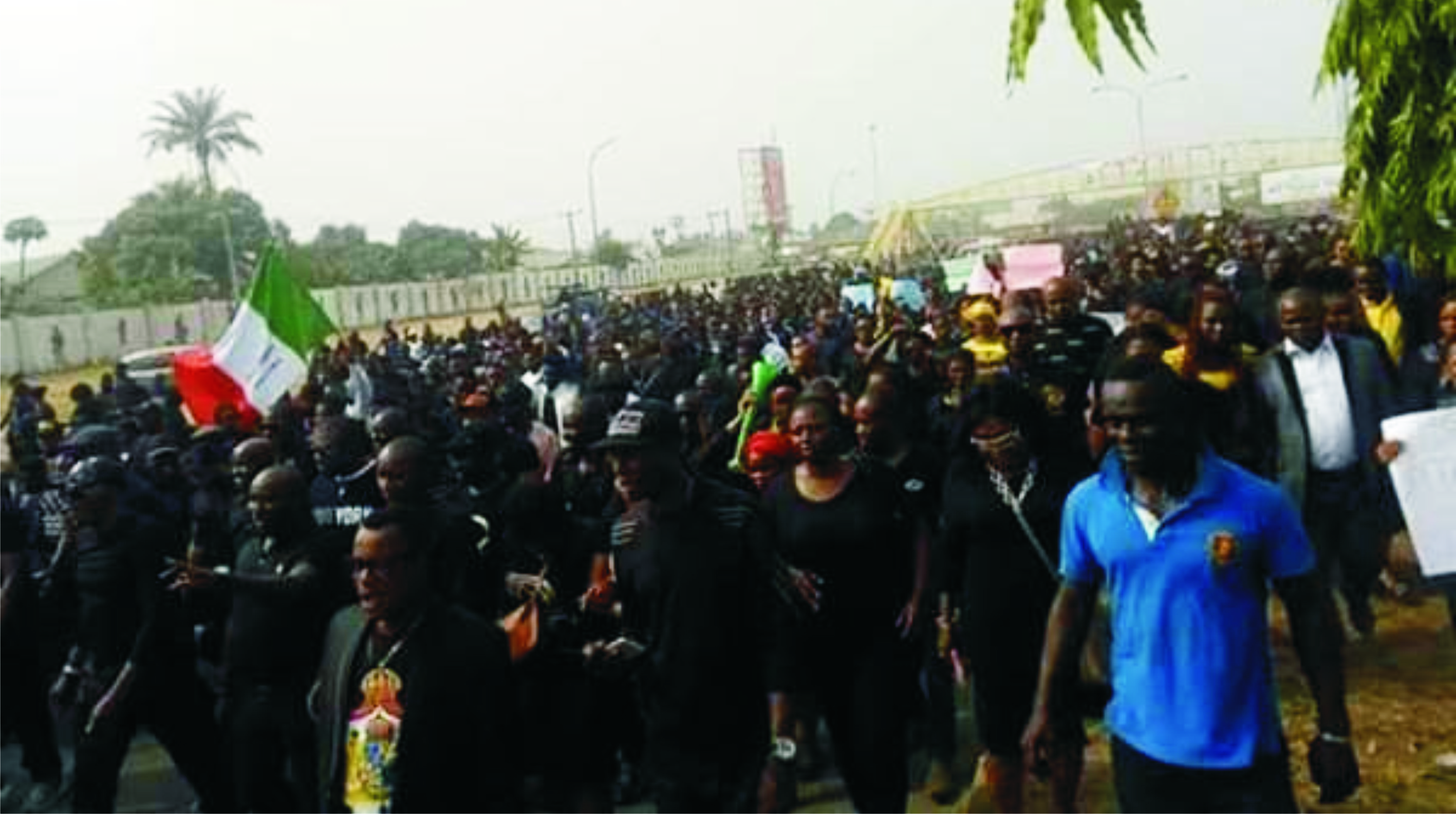
The Peoples Democratic Party (PDP) members in Imo, Abia and Anambra states, yesterday, shut down Owerri, Umuahia and Awka, the states’ capitals, in protest over the removal of Emeka Ihedioha by the Supreme Court and the declaration of Senator Hope Uzodinma as the duly elected governor of the state.
This is even as security operatives, including policemen and army officers took over the nooks and crannies of the states to maintain law and order.
Adorned in black attires, the PDP members in Imo paraded the state capital, calling on the apex court as well as the jurists that presided on the Tuesday’s verdict which sacked Ihedioha, to revisit their judgment.
The dissatisfied party members said that the protest would persist if the apex court refused to revisit the matter.
A member of the House of Representatives, Hon Henry Nwawuba, who spoke to journalists, said the Supreme Court jurists had murdered democracy in the state with their judgment.
Nwawuba, who represents Mbaitoli/Ikedduru Federal Constituency of Imo State, said that the apex court had done grave injustice to the people of the state.
He said, “I am a Lawmaker and I believe that the Supreme Court must redeem the Judiciary. Since the judgment was delivered, the state has become a graveyard (and) this is unlike what was happening when PDP was holding sway”.
Nwawuba, who was first elected into the House of Representatives in 2015, said that the state had become a graveside since the Supreme Court delivered the judgment.
“How the Supreme Court justices gave victory to a candidate who came fourth in an election remains a mystery to many of us. We call on them to revisit the Imo case and do justice. “
Also, the PDP Women Leader in the state, Maria Mbakwe, who burst into tears while speaking to journalists, said that women in the state are devastated with the verdict.
She said, “I have never seen this kind of injustice since over 50 years I have been in Imo State. Imo women in the market and all over the state are crying. We are begging the Supreme Court justices to revisit the matter. We know that they are human beings and they can make a mistake.”
However, the Nigeria Police Force, Imo State Command said it barricaded Owerri, the state capital, to forestall possible clash between the members of the People Democratic Party and those of the All Progressives Congress, an action which caused traffic gridlock in the state.
The police spokesperson in the state, Orlando Ikeokwu, told our correspondent that the police were being “proactive instead of being reactive.”
Ikeokwu said that the inasmuch as the PDP had the right to embark on a peaceful protest, the police did not want them to clash with APC members.
He said, “We barricaded the town because we don’t want protesting PDP members to clash with APC members or for hoodlums to hijack the protest. We are being proactive instead of being reactive. The police do not want any bloodshed.
“The PDP members have the right under the law to protest peacefully but we do not want anybody to hijack it or threaten the peace of the state,” adding that the situation could turn worse should APC members also take to the streets.
Meanwhile, the Peoples Democratic Party in Imo State, yesterday, said that the Supreme Court was destroying the country’s democracy with its Tuesday judgment which sacked Emeka Ihedioha and declared Hope Uzodinma of the All Progressives Congress as the duly elected governor of the state.
The PDP Publicity Secretary in the state, Damian Opara, said that the justices of the apex court had “ ridiculed and annihilated democracy “ by sacking Ihedioha from office.
Describing the judgment as “ provocative “ and at variance with the tenets of the law, the PDP spokesperson said that the jurists arbitrarily awarded votes to Uzodinma, when the APC did not win a single seat at the state’s House of Assembly when the elections held the same day.
Describing the judgment as “infamous”, the main opposition party said that it did not agree with the verdict of the Supreme Court justice as it concerned the state’s governorship debacle.
It, therefore, urged its supporting members to remain law-abiding, saying that the apex court increased the valid votes in favour of the APC.
He said “ In the wake of the infamous judgment of the Supreme Court on the Imo State gubernatorial election petition, the State Executive Council of THE State’s chapter of the Peoples Democratic Party met and thoroughly examined the atrocious judgment that removed Rt. Hon. Emeka Ihedioha as Governor and Hon. Gerrald Irona as Deputy Governor of Imo State.
“Arising from the meeting on Friday, January 17th, 2019, the party described as unbelievable, ridiculous and annihilation of democracy, the decision of the apex court to void the lawful election of its candidate, His Excellency Rt. Hon. Emeka Ihedioha, who polled 276,404 votes and awarded victory to Sen. Hope Uzodimma of the APC, with just 96,458 votes.
“The party in the state finds it difficult to understand how the Supreme Court arrived at its verdict, even to the point that the seven panellists who sat on the petition gave a unanimous judgment.
“The party noted that It is on record that the Total Accredited Votes as declared by INEC stood at 823,743, with Total Votes cast and Total Votes cancelled amounting to 739,485 and 25, 130 respectively, while Total Valid Votes remained 714,355.
“The Supreme Court increased the Total Valid Votes to 950,952 which accounts for 127, 209 votes in excess of Total Accredited Votes of 823,743.
“The apex court unilaterally manufactured votes from 388 units where INEC rightly did not turn in results for obvious reasons such as violence and electoral malpractice and awarded the same to Senator Hope Uzodinma/APC.
“It is shocking that the Supreme Court by its judgment said that all the votes from the alleged 388 polling units were for the APC alone, in an election that was contested by over 60 candidates.
“Even where the Supreme Court awarded all extra 127, 209 accredited votes it manufactured to Senator Hope Uzodinma/APC, it was not enough to make him the winner of the March 9 election. It will be 223,657 votes, still less than Ihedioha and PDP’s votes of 276,494, with a difference of 42,747 votes.
“The party further questioned the rationale of the Supreme Court in declaring Senator Uzodinma winner of a gubernatorial election that simultaneously held with that of the State Assembly [both having one accreditation] in which the APC did not win any of the 27 available seats in the Imo State House of Assembly whereas PDP won 13, AA won 8, and APGA won 6.
“The PDP Imo State Chapter, therefore, resolved that it does not agree with the judgment, as it is unfair, unjust and provocative.
“However, the Party advised her teeming supporters to remain law-abiding in the face of this adversity and extreme provocation.
“The Party in the state also urged its members to be united, resilient and be more committed to the party in this trying moment.”
Similarly, the Peoples Democratic Party (PDP), Abia State chapter, has asked the Supreme Court to reverse its January 14, 2020 judgment which sacked Emeka Ihedioha from office and declared Senator Hope Uzodinma, as the elected governor of Imo state.
The party described the Judgment as an attempt to destroy democracy, stressing that it believes that the Supreme Court can reverse the erroneous verdict for the sake of posterity.
The Chairman of Abia PDP, Chief Johnson Onuigbo, who stated this while addressing PDP faithful during a protest march over the judgment, in Umuahia, yesterday, explained that the PDP national office had mandated state chapters of the party to organise demonstrations to register their disgust at the pronouncement of the apex court.
The party faithful, who marched through Ikot Ekpene, School and Bende roads to the PDP secretariat at St. Finbarrs Road, also displayed placards which read; “We cherish democracy passionately, Judiciary, please don’t truncate it”. “Can a government that doesn’t obey the rule of law allow justice to thrive?”, “Judiciary, stop being cowed by Gen. Muhammadu Buhari, “President Buhari, leave judiciary alone”, amongst others.
Onuigbo told journalists that the Supreme Court appeared to have acted under pressure which was why they postponed the initial judgment from 13th to 14th January.
In the same vein, the Peoples Democratic Party (PDP) in Anambra State, yesterday, protested the judgment of the Supreme Court of January 14th, which sacked it’s candidate for the 2019 Imo Governorship election, Rt Hon Emeka Ihedioha for Senator Hope Uzodinma of All Progressives Congress (APC).
Members of the party in their thousands who thronged the Anambra State Judiciary complex, led by the state chairman, Mr Ndubuisi Nwobu, called President Muhammadu Buhari to quickly wade in, while also urging the judges of the Supreme Court to reverse themselves, describing the judgment as a travesty of Justice.
Nwobu, who addressed journalists at the complex said, “We request that the Judiciary should act as an independent arm of government.
“PDP in Anambra wish to state clearly their unreserved rejection of the Supreme Court Judgment delivered on January 14, 2020 with respect to the Governorship election of Imo State.
“They want to foist Hope Uzodinma on the people of Imo State. There is no way a panel of seven judges, no matter how erudite can sit and decide the fate of the entire Imo people, after the people have made their choice.
“There have been instances where the Supreme Court reversed itself, so we are calling to question that judgment and asking the judges to accept their mistakes and remedy it urgently. That is what we urge the Supreme Court to do and not to ever make such a mistake,” Nwobu said.
Also, the former governorship candidate of the party in the state in 2017, Mr Oseloka Obaze speaking on the court being the Apex court in the land said the judges are not infallible, and should be able to accept their mistakes.
“The only thing that is impossible is to live forever. The judges that passed this judgment are not infallible and the things (judgment) they did is not right and they must find the courage to reverse themselves.”
Members of the party who dressed in all black and numbering over 3,000 carried placards with different inscriptions against the Supreme Court to protest the recent judgment.
Meanwhile, the National Secretariat of the Peoples’ Democratic Party (PDP) has directed its chapters across the country to begin a nationwide protest, today, against the judgment of the Supreme Court in the specific case between Rt Hon Emeka Ihedioha and Senator Hope Uzodinma of the All Progressives Congress (APC).
A notice by the party, last Friday, directed all stakeholders to commence the protest from 7am in all the states, and the Federal Capital Territory (FCT), Abuja.
In the same vein, the former governor of Imo State, Emeka Ihedioha has said the Supreme Court judgment nullifying his election has placed the nation’s democracy on trial.
Ihedioha stated this, last Saturday, while playing host to the National Working Committee (NWC), of the Peoples Democratic Party, which paid him a solidarity visit in his Abuja residence.
Decked in light green attire with a trademark green cap to match, Ihedioha was full of life and betrayed no sign of anyone battling psychological pain.
Addressing newsmen, the former House of Representatives deputy speaker said the event of last week has thrown up more questions than answers, noting that in the fullness of time, truth would win.
He said: “I believe that that event will define obviously our democracy. I am certain that the judiciary and electoral system are well aware that they are on trial.
“We are as shocked as yourselves; it (judgment) was never anticipated. All legal pundits and democratic watchers never imagined and anticipated it, so for us, it remains a mystery. But we take solace in the Book of Ecclesiastics 3:1 that to everything, there is a season and time for every purpose under heaven.
“And what is fundamental about this is that the facts of the matter as relates to Imo State governorship election is that the foundation of our democratic processes, the elections in Imo were closely monitored, well advertised and everybody in Nigeria followed it through. The results were very clear, the electoral umpire still have the results, and the Independent National Electoral Commission, INEC has stated clearly that the results in question and the figures are not summing up.
“It is not about Emeka Ihedioha, it is not about Imo state. It is about the future of our country and democracy. It’s about what do we do tomorrow. Do you go into an electoral process without having an idea?
“It has to be resolved one way or the other. I am calm and we are calm, and that is why you see in Imo, there is calmness. The calmness is coming out of shock; it is coming out of belief. It is coming out of the fact that people are saying let us still see, can this be possible? We are waiting for answers and I believe there will be answers”.
And despite the loss of the plum seat, Ihedioha said his faith in God remains strong and unwavering.
“We are faithful believers in God and God does not sleep. This will make history in many ways and so this is a historical process, historical action, and I am sure there will be historical answers at the end of the day”, he added.
He chided those who have rolled out the drums in celebration, saying, “this is not the time to celebrate, I pity anyone who is celebrating that sad event. If anyone is celebrating, that person is not a student of democracy.”
Earlier in his remarks, PDP National Chairman, Prince Uche Secondus, charged eminent Nigerians to speak up on the Imo Supreme Court judgement, saying what happened was too dangerous for silence.
“Very eminent people are not speaking out. Today, it is at the door of Imo, tomorrow it will be at the door of another person. So, people must speak out. The truth is what we are seeking,” Secondus added.














Rivers State, Sir Siminalayi Fubara, has assured members of the National Youth Service Corps (NYSC) of his administration’s commitment to supporting and strengthening the scheme in the State.
Fubara gave the assurance last Friday at the NYSC permanent orientation camp, Nonwa-Gbam, Tai Local Government Area in the State, during the swearing-in ceremony of 2026 Batch B Stream II orientation course.
Represented by the Permanent Secretary, Cabinet Bureau, Office of the Secretary to the State Government, Dr. Promise Oguzie, the governor said the State Government would remain intentional in providing the necessary support to improve the NYSC scheme and enhance the experiences of corps members deployed to the state.
He charged the corps members to be role models and quality nation-builders in their service to the good people of Rivers State in particular, and Nigeria at large.
“I charge you to be exemplary, dedicated and committed in all you do. Take full advantage of all the camp programmes and activities to enrich yourselves”, he said.
In his welcome address, the State Coordinator of NYSC in Rivers State, Mr. Moses Oleghe, urged corps members to see their deployment to Rivers State as a “veritable opportunity to make meaningful contribution to the growth of the State in particular and Nigeria at large.”
He further charged them to serve with all sense of “integrity, discipline, and the fear of God, especially when they will be engaged as INEC ad-hoc staff that will conduct the 2027 general elections.”
A total of 3,584 corps members composed of 1,421 males and 2,163 females were sworn in by the Chief Judge of Rivers State, who was represented by Justice Godspower Aguma.

Governor of Rivers State, Sir Siminalayi Fubara, says Nigeria needs God-fearing leaders for the nation to move in the right direction and make meaningful progress.
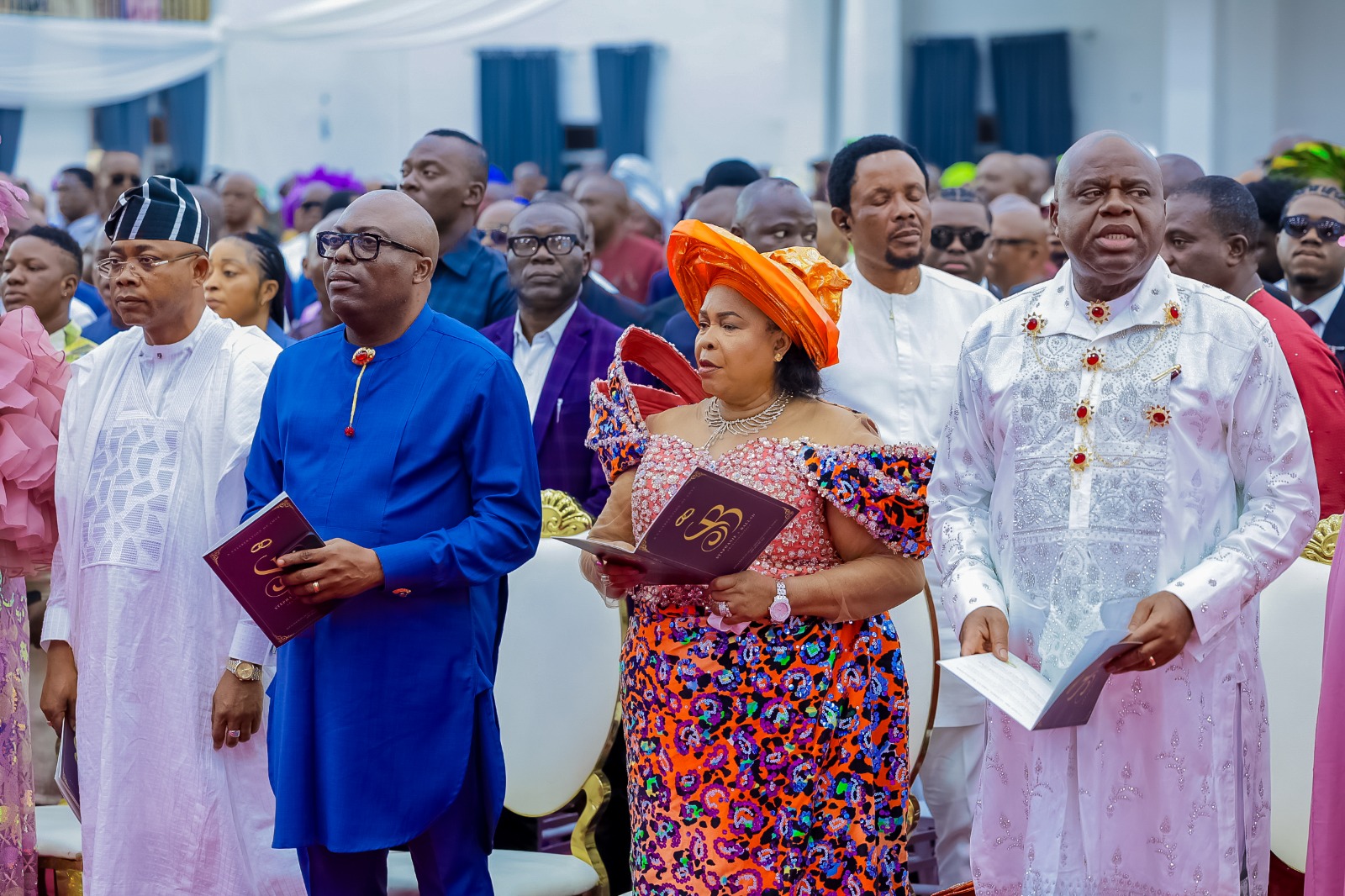
The Governor stated this yesterday when he received in audience, the World President of the Seventh Day Adventist Church, Pastor Erton Kohler; his wife, Andriene Marques Kohler; daughter Mariana Marques Kohler and a retinue of ministers of the church at Government House, Port Harcourt.
Fubara who hailed the Seventh Day Adventist Church for its contributions to education and the grooming of future leaders in Nigeria, expressed delight that the Church had over the years, been investing in education at various levels and currently runs two universities in the country.
He commended the church for not only using its institutions to spread the gospel of Christianity but to groom future leaders for the country.
According to him, religion should not be just about defending one’s faith, but also making meaningful impact on the lives of the people.
He said that by floating these educational institutions, the church has demonstrated capacity to support Nigeria in the task of producing not only educated people but a breed of God-fearing leaders.
“Our country is where it is today because we lack the fear of God. If you have the fear of God, there should be a limit to what you can do because you understand the supremacy of God. But when God is not in your equation, you’ll go beyond the line and that is what has brought us to where we are today.
“So, I feel very happy that you are contributing to the development of our future leaders in this country. We need the right people being in the right place; prepared properly with good minds; that is what we need, not just in Nigeria but round the whole world.,” he said.
Governor Fubara further observed that the absence of God-fearing people in high places to take the right decisions that could impact positively on the society, has also given rise to other problems such as social inequality, poverty, corruption and criminality. According to him, Nigeria needs a system where the average parent could afford quality education for their children and a guarantee that upon graduation, the average child will have the capacity to compete favourably with anybody, anywhere in the world.
“If we have a situation where the little money that you’re being paid as wage can also afford you quality healthcare and after working at least for 15-20 years, you have a roof over your head, tell me why you should be involved in any kind of crime? At that point, you’ll feel secured and this attitude of insecurity about the future that leads to all the social vices we have today won’t be there,” he said.
Governor Fubara expressed appreciation to the delegation for the visit and for their prayers for Rivers State, assuring them of his continued support for their programmes in the state.
Leader of the delegation and World President of the Seventh Day Adventist Church, Pastor Erton Kohler said he was in Nigeria for a special conference of the church during which thousands of the church’s ministers will be undergoing an empowerment programme to further equip them for the task of herding their flocks and serving the society.
He expressed gratitude to the Governor for the warm reception accorded his entourage, saying the memory of the visit will linger in his mind for a lifetime.
Kohler disclosed that the Church has over twenty -four million (24,000,000) members and more than 182,000 places of worship, spread across 212 countries of the world.

The Rivers State House of Assembly has approved the 2026–2028 Medium Term Expenditure Framework (MTEF) submitted by Governor Siminalayi Fubara.
This reaffirms the lawmakers’ commitment to enacting laws and taking legislative actions geared towards the overall development of the State.
The Assembly gave the approval during its Second Legislative Sitting of the Fourth Session held last Friday.
Speaking on the MTEF document during plenary, the House Speaker, Rt. Hon. Martin Amaewhule, noted that by the provision of Section 10(1)(b) of the Rivers State Fiscal Responsibility Law No. 8 of 2010, the MTEF ought to have been laid before the House in September 2025.
Amaewhule explained that traditionally, the document is expected to be presented four months before the commencement of the next financial year and immediately after the expiration of every three-year fiscal cycle.
He, however, stated that in the interest of the State and its people, the House considered it necessary to deliberate on the document, describing it as a precursor to the 2026 Budget Estimates.
The Speaker expressed concern that the year had already progressed significantly before the presentation of the framework.
During deliberations on the document, members examined the assumptions and projections contained in the MTEF and observed that strict adherence to the outlined fiscal parameters would ultimately serve the interest of Rivers people.
The lawmakers maintained that effective implementation of the framework would promote prudent financial management and enhance developmental planning across the State.
Following the debate and positive consideration by members, the Speaker put the question to the House and members voted overwhelmingly in support of the approval of the MTEF.
Meanwhile, during the same sitting last Friday, the House also received a petition from the Chairman of Obio/Akpor Local Government Council, Dr. Gift Worlu.
The petition was presented by the member representing Obio/Akpor Constituency II, Hon. Emilia Amadi.
According to the petition, concerns were raised over an imminent security breach, threats to lives, destruction of property and alleged forceful takeover of property by some lawless persons within parts of the Local Government Area.
Presenting the petition before the House, Hon. Amadi appealed to the lawmakers to revisit the matter and take necessary steps aimed at safeguarding lives and property in the affected communities.
The House is expected to further deliberate on the petition and consider measures to address the concerns raised in order to sustain peace and security in the area.
King Onunwor
-

 News2 days ago
RSG Targets Nine Million Residents in Mosquito Net Distribution Campaign
-

 Oil & Energy1 day ago
Aiyedatiwa Signs New Electricity Bill
-

 Oil & Energy1 day ago
NLNG Commissions Research And Innovation Centre In RSU
-

 Maritime1 day ago
Marine Minister Commends President Tinubu On NPERA Bill Assent
-

 News2 days ago
KenPoly Holds Eight Convocations, August 29
-

 News2 days ago
RSG Begins Another Phase of Projects Commissioning Today
-

 News2 days ago
RMAFC Completes Revenue Sharing Review, Proposes New Pay
-

 Maritime1 day ago
NAGAFF Petitions IGP Over Alleged Maritime Police Harassment