Connect with us

Maritime

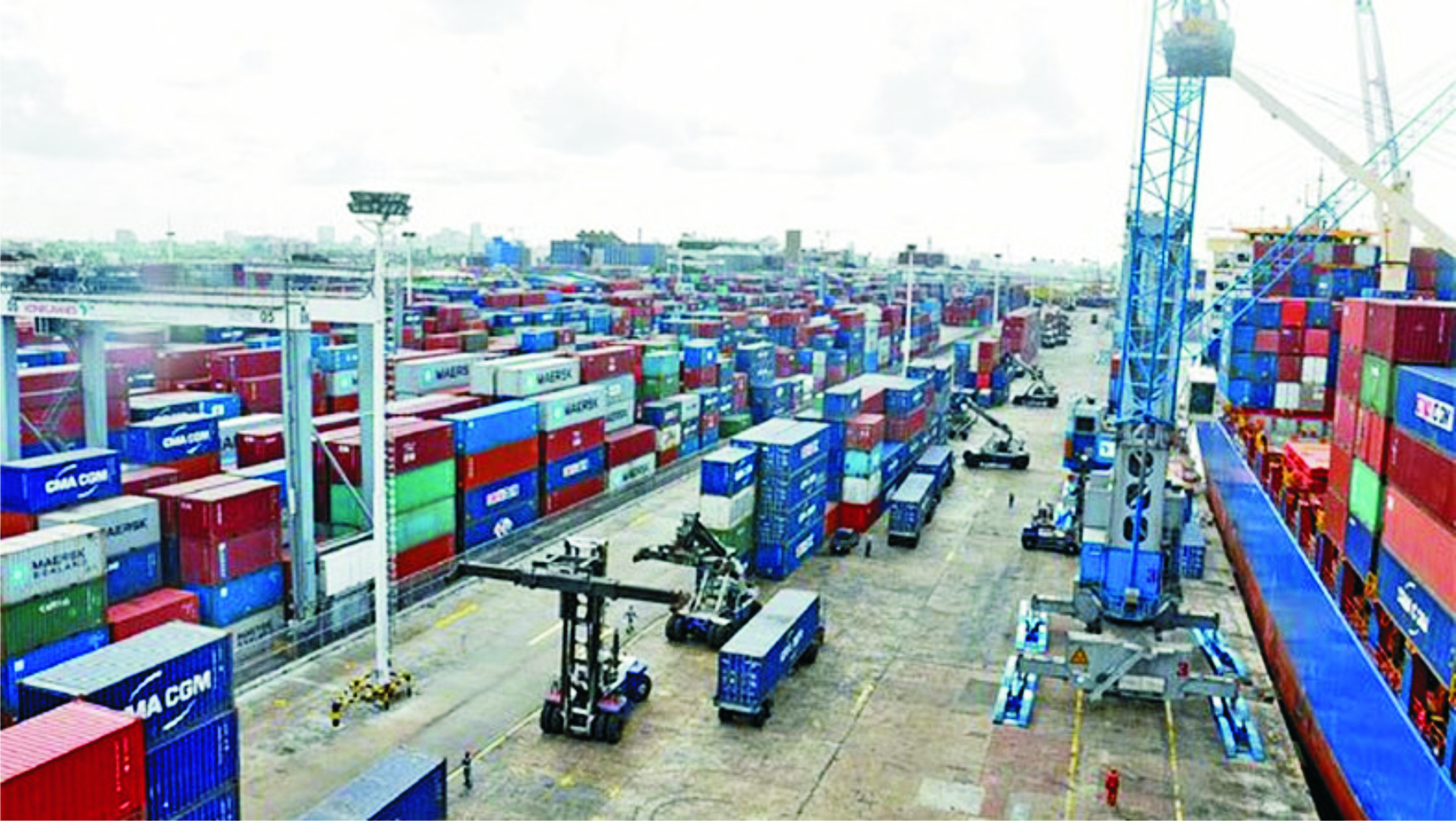
Rivers Port Is Safe For Investors

Published

on

The  Federal House of Representatives Committee on Ports and Harbours says the  Nigerian Ports Authority (NPA), Rivers Port Complex, Port Harcourt, is safe and secure for investors to do business .Chairman of the Committee,  Hon Datti Garaba Muhammad, stated this in Port Harcourt last Tuesday during an interactive session  with the management of the port at its Basket House complex.
The House Committee was in the port for a familiarisation visit and oversight function of the port and its terminal operators.
Muhammad noted that Rivers Port Complex was booming with maritime activities, thereby accruing high revenue to the Federal Government.
He said that for the past six months, there was no longer the issue of pirate attacks on sea in the port complex.
“ Rivers Port Complex is now safer for investors to do business as there is no longer attack on vessels for over six months now,” he said.
The Chairman noted that the improved security networks in the port had increased container traffic and attracted more ship owners and importers to the port.
He told the management of the port led by its Port Manager, Engr. Yunusa Ibrahim Anji, that the Federal Government was working tirelessly to revamp the port to attract more investors.
The chairman said that its oversight  functions include overseeing the NPA and the terminal operators doing business in the various ports across the nation.
He said: “We are here to oversee the port, we have visited NPA headquarters, Tin Can Island, Apapa Port, Onne Port and some terminal operators to ascertain the level of compliance”.
On lack of tugboats for the port to carry out effective operations, the committee said the Federal Government would look into the absence of such boats and approve the purchase of tugboats to enhance the port operations.
Muhammad said the committee wanted Rivers Port to  be revamped and bounce back to maritime activities as it is done in the past.
Earlier in his welcome address, the Port Manager, Rivers Port Complex, Engr. Yunusa Ibrahim Anji, said that container traffic had improved in the port compared to 2018 port statistics.
The manager said in 2019, its traffic was 1870,379 while in 2018, its level of traffic was 1723,169.
He told the committee that since his assumption, there has been no problem of attacks on sea going vessels in the ports.
On the security, the manager said the port secured the service of the Nigerian Navy and the marine police to patrol the port waterways to curb any act of insecurity within the complex.
He mentioned lack of tugboats, pilot cutters, accommodation for the pilots and legal issue with BUA terminal operators as some of challenges at the port.


By: Chinedu Wosu

Continue Reading

Maritime

Oyetola Woos Investors With Nigeria’s Seabed Resources, Marine Biotechnology 

Published

on

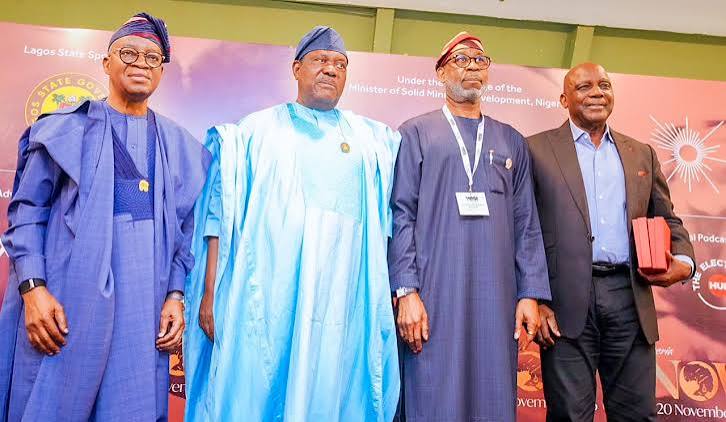
The Minister of Marine and Blue Economy, Dr Adegboyega Oyetola, has invited global investors to explore Nigeria’s largely untapped seabed mineral resources and emerging marine industries, including deep-sea mining, marine renewable energy, biotechnology and desalination.
Speaking at the “Nigeria Now” Global Investors Expo in Abuja on Thursday, Oyetola said Nigeria’s Exclusive Economic Zone (EEZ) holds significant deposits of polymetallic nodules, heavy mineral sands and rare earth elements, which are vital to global technology, manufacturing and clean-energy supply chains.
He urged investors to explore opportunities in oceanographic surveys, geological mapping, mineral exploration, processing and value addition, assuring them that the Federal Government was developing regulatory safeguards for responsible resource exploitation.
Oyetola disclosed that his ministry was collaborating with the Federal Ministry of Solid Minerals Development and other stakeholders to establish transparent regulatory frameworks for deep-sea and shelf-mineral exploitation in line with international ocean governance standards.
He said investors adopting low-impact extraction technologies could gain early-mover advantages through joint-venture exploration, refining and mineral-based industries.
Beyond seabed mining, the minister highlighted marine renewable energy, biotechnology and desalination as promising sectors for investment, with opportunities in offshore energy, pharmaceutical and industrial research, and alternative water supply systems for coastal communities and industries.
He said these opportunities were supported by ongoing reforms in port modernisation, maritime security, shipping, fisheries, aquaculture and coastal infrastructure.
Oyetola added that Nigeria’s 853-kilometre coastline, extensive inland waterways and strategic Gulf of Guinea location position the country to attract long-term investment and become a regional maritime hub.
He reaffirmed the Federal Government’s commitment to partnering with investors to convert marine resources into jobs, industrial growth, trade expansion and sustainable prosperity under President Bola Ahmed Tinubu’s Renewed Hope Agenda.
The expo was attended by the Secretary to the Government of the Federation, Senator George Akume; Minister of Solid Minerals Development, Dele Alake; and other dignitaries.
By: Nkpemenyie Mcdominic, Lagos
Continue Reading

Maritime

South-South Governors Urges To Shake Off Collective Lethargic To Embrace Blue Economy

Published

on

Governors of the South -South states of Nigeria are said to be too lethargic in their approach towards harnessing the blue economy potential in their respective states.
They are therefore urged to shake off their collective lethargic and embrace the kernel of the blue economy,which , is said , to bea sure path to regional economic growth and development
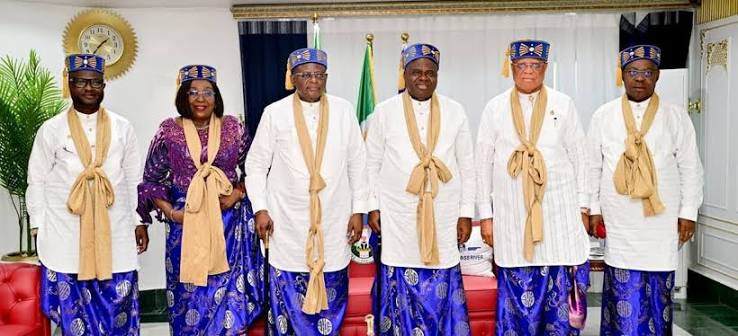
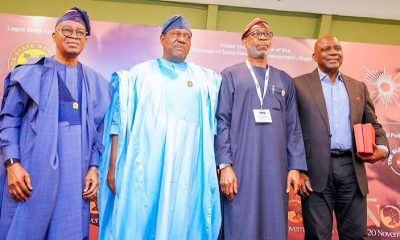
Dr.Charles Okerefe ,a former  lecturer at the Maritime University,Okerenkoko,Delta state, gave this advice in a lecture he delivered at the 20th anniversary of the South -South International (TSSI) Magazine in Lagos.
The topic of his lecture, which was one of the two lectures delivered at the anniversary chaired by Assistant Comptroller General of Customs Charles Edike (rtd), was Harnessing Marine and Blue Economy Potentials as New Catalyst for Developing the South-South Region of Nigeria.
Dr. Jide Johnson, a senior lecturer at the Nigerian Institute of Journalism, Ogba, delivered the second lecture entitled Leadership, Power & Service: The Leadership Conundrum of Nigeria’s 4th Republic.
Dr. Charles Okerefe, advised the South-South state governors to be proactive, pointing out to them that their states have no reason to be poor despite being naturally blessed with abundant Marine and Blue Economy potentials of fisheries and aquaculture, biotechnology, renewable energy, coastal tourism and hospitality, dredging, ship building and repair, etc, but for bad governance.
He listed challenges restricting the development of the Blue Economy in Nigeria and South-South Region as follows:
1. Inadequate Awareness about the Blue Economy concept.
2. Pollution and indiscriminate dumping of wastes.
3. Weak Policy frameworks and Governance.
4. Exclusion of local communities in decision making.
5. Inadequate funding and investment.
6. Over fishing and unsustainable ocean practices.
7. Phenomenon of climate change and rising sea levels.
8. Research limitations and Data gaps.
According to him, “despite the very robust potentials that are inherent in the Blue Economy, a myriad of challenges still abound. Such challenges need to be promptly addressed in order to achieve the threshold of acceptable success,” said Okerefe.
To address these challenges, Okerefe called on the South-South governors to do the followings:
1. Develop a coordinated regional investment Blueprint for the Blue Economy-
2. Invest in human capital development on Blue Economy.
3. Create an enabling policy climate for private investors/entrepreneurs to thrive in the marine business.
4. Issuance of Blue Bonds- Restoration of coral reefs, mangroves and Marine Protected Areas (MPAs). E.g. of Seychelles’ $15M Blue Bond.
5. Develop regional clusters for Aquaculture and Fish Ports.
6. Develop a regional strategy to tackle climate change.
7. Utilize marine resources to drive power and energy- use of turbines, ocean and tidal waves.
8. Create a blueprint for Integrated transport, road, rail, inland waterways and Pipelines.
According to him, “without any doubt whatsoever, the South-South region of Nigeria has for centuries borne the brunt of inhuman mercantile activities, beginning from the era of slave trade to the current spectacle of oil exploitation and environmental degradation.Yet, that same region holds enormous potentials for economic growth and development within the ambits of the Blue Economy.
By: Nkpemenyie Mcdominic, Lagos
Continue Reading

Maritime

Nigeria, Russia Customs Sign MOU To Trade Facilitations

Published

on

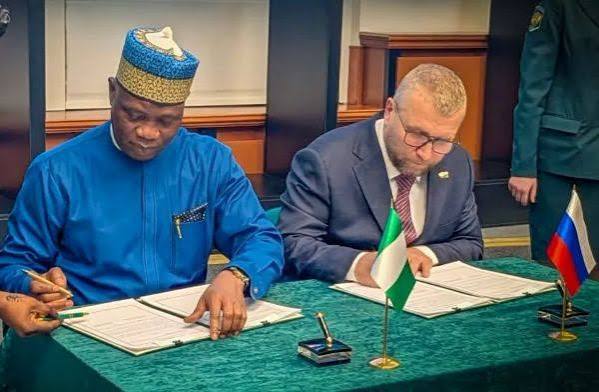
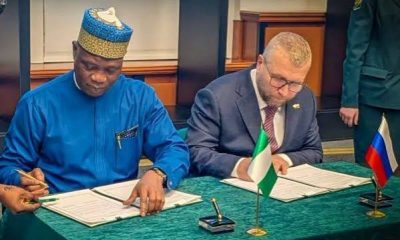
The Nigeria Customs Service (NCS) and the Federal Customs Service of the Russian Federation have taken a significant step toward strengthening bilateral customs cooperation after signing an Agreement on Cooperation and Mutual Assistance in Customs Matters (CMAA) in Moscow.
The agreement establishes a framework for closer collaboration in trade facilitation, information exchange, customs enforcement, financial integrity and capacity development, while opening new opportunities for the two administrations to deepen operational cooperation.
The Comptroller-General of Customs, Adewale Adeniyi, who led the Nigerian delegation, described the agreement as a strategic instrument to safeguard economic integrity, secure supply chains and strengthen trade governance.
He said the engagement marked the culmination of months of technical consultations, legal reviews, and constructive discussions between both administrations, reflecting a shared commitment to modernising customs operations and responding more effectively to emerging challenges in international trade.
CGC Adeniyi explained that the new legislative framework has accelerated the Service’s transformation, particularly through the adoption of digital systems that have significantly automated customs processes.
 According to him, declarations, payments and the submission of supporting documents are increasingly conducted electronically, enabling the Service to improve operational efficiency while facilitating legitimate trade.
He emphasised that revenue generation and trade facilitation are not competing objectives, noting that a NCS approach aligns with the World Customs Organisation’s SAFE Framework of Standards.
On implementing the agreement, CGC Adeniyi identified exchanging experience between the two countries’ Authorised Economic Operator (AEO) programmes as an important area of cooperation.
He explained that both administrations had been encouraged to undertake structured exchanges to understand their respective programme frameworks, operational procedures and implementation experiences, with the longer-term objective of advancing mutual recognition and acceptance.
 Such an arrangement, when developed, would strengthen the confidence accorded to traders compliant  and potentially improve the efficiency of cargo movement between the two countries.
During bilateral discussions with the Head of the Federal Customs Service of Russia, Mr Valery Pikalyov, CGC Adeniyi highlighted the similarities in the reform journeys of both administrations, explaining that the Service had evolved considerably from its colonial origins into a modern customs administration.
He recalled that the Service’s law remained largely unchanged for several years, until the introduction of the Nigeria Customs Service Act 2023, which provided a stronger legal foundation for institutional reforms, technological advancement and private-sector partnerships.
The discussions also examined the prospect of sharing customs statistics and trade data for analytical purposes. CGC Adeniyi highlighted Nigeria’s participation in the World Customs Organisation’s data initiative, stating that the NCS was the only customs administration to submit its trade data to the WCO data project.
He noted that access to reliable customs data and structured information exchange would support comparative analysis, improve understanding of bilateral trade patterns and strengthen evidence-based customs administration.
In his response, Mr Pikalyov explained that the Federal Customs Service of Russia is statutorily authorised to collect, process, compile and provide customs statistics derived from customs declarations.
 He noted that Russia already exchanges customs statistics with foreign customs administrations under existing agreements, allowing both sides to analyse trade flows, identify discrepancies and monitor developments in bilateral commerce.
He indicated that the Russian side was prepared to explore a dedicated arrangement with the NCS to exchange statistical data, subject to the relevant framework and procedures.
The Russian side further noted that Nigeria had become one of the first sub-Saharan African countries, alongside Ethiopia and Namibia, to conclude a customs cooperation agreement with the Federal Customs Service.
The engagement took place within the framework of the Third Russia–Africa Summit, providing an opportunity to advance customs collaboration as part of the broader relationship between the two countries.
With the agreement now signed, the NCS is positioned to deepen institutional cooperation with its Russian counterpart, strengthen customs intelligence and information exchange, promote compliant trade and contribute to more secure and efficient international supply chains.
The CMAA provides for four principal areas of cooperation: streamlined customs procedures to facilitate legitimate trade; secure information exchange to prevent, detect, investigate and suppress customs offences; financial integrity measures targeting illicit financial flows, grey-market importations and tax evasion; and stronger border security through cooperation against counterfeit goods, narcotic drugs, psychotropic substances and other prohibited or hazardous materials.
By: Nkpemenyie Mcdominic, Lagos
Continue Reading

Trending