
Featured
Southern, Middle Belt Leaders Reject NLTP, Waterways Bill …In Nigeria, Cattle Compete For Space With Humans -Ortom …Senate To Break PIGB Jinx In 2020, Lawan Assures

The Southern, Middle Belt Leaders Forum (SMBLF), has expressed concern over the inability of the Federal Government to mobilise national consensus to confront the monumental tragedies bedevilling the country.
SMBLF noted that instead the Federal Government has busied itself with policies that are divisive and smack of domination and conquest of sections of the country by a section.
Arising from its meeting in Abuja against the state of general insecurity consuming human lives on daily basis, the leaders explained that the country’s leadership has failed in mobilising national consensus to confront the monumental tragedies confronting the country.
In a joint statement issued at the end of the meeting by Yinka Odumakin, Prof Chigozie Ogbu, Senator Bassey Henshaw and Dr Isuwa Dogo, for the South-West, South-East, South-South and Middle Belt, respectively, SMBLF rejected the National Livestock (cattle) Transformation Plan(NLTP), Rural and Urban Grazing Areas (RUGA) settlement, saying, “Meeting restates the rejection of SMBLF to the use of the collective resources of Nigerians to convert herdsmen, majority of whom are non-Nigerians, from nomadic to sedentary lifestyles while doing their private business that has nothing to do with the rest of us beyond being their market. It is akin to government making budgetary allocations for Coca-Cola to produce drinks to sell to Nigerians.”
Apart from the plan not making any economic sense for the country, SMBLF said there are other fundamental problems it raises.
“There is the issue of citizenship, which Bauchi Governor, Bala Mohammed, exposed that Fulanis from all over Africa are going to benefit from the scheme.
“The Fulani man is a global or African person. He moves from Gambia to Senegal and his nationality is Fulani…So, we cannot just close our border and say the Fulani man is just a Nigerian.
“Why are we closing our border with Benin Republic where there are many people of Yoruba origin there? Are Igbos who are aborigines in Haiti to come to Nigeria without consular services? What is the contribution of those Fulani imports to the development of Nigeria to come and live on our resources when our citizens are the poorest on earth? Why is it difficult to apply common sense in our inter-ethnic relations in Nigeria?”, the meeting asked.
SMBLF noted, “The above shows clearly that NLTP will only escalate the clashes between the indigenous communities and cattle settlers as experiences in Southern and Middle Belt areas of Nigeria have shown that the Fulani imports do not assimilate into the ways of lives of Nigerians in those parts of the country where they reside. They live apart from the locals and set up communities with alien culture that disrupts the cultural flow of the indigenes.
“The subterfuge of the whole deal is exposed in that while government officials deceive Nigerians that the plan will stop open grazing for ranching, option 1 in it provides for the establishment of corridors for migrant cattle with feeding and watering points along the routes. This is as stark as the lie that “livestock” includes other sources of meat. The entire plan is about cattle and herdsmen.”
SMBLF said it does not accept the policy and asked the Federal Government to allow those who are in cattle business establish ranches on their own under the guidelines and laws of the host state.
The meeting observed that the Waterways Bill is another conquest agenda in sync with NLTP, adding that it is the vexatious Executive Bill titled “A Bill for An Act to Establish a Regulatory Framework for the Water Resources Sector in Nigeria, Provide for the Equitable and Sustainable Redevelopment, Management, Use and Conservation of Nigeria’s Surface Water and Groundwater Resources and for Related Matter”.
It said the bill seeks to abrogate all existing laws and institutions governing the management and control of water resources nationwide and replace them with new ones in a manner that gives the President, through the Minister of Water Resources, the power to control the nation’s rivers (especially those that pass through more than one state), lakes and underground water.
It added, according to it, “All surface water and groundwater wherever it occurs, is a resource common to all people, the use of which is subject to statutory control. There shall be no private ownership of water but the right to use water in accordance with the provisions of this Act.”
It explained, “The Waterways Bill is another land-grabbing move like RUGA by ethnic supremacists who are working against the unity of the country. Major rivers in Nigeria can be made available, by federal law if the bill is passed, to Fulani pastoralists and there is nothing the indigenous people within such vicinities can do about it.
“The police and the security agencies will be handy to enforce it and it will be another white farmers versus the African landowners’ scenario in Southern Africa during the apartheid season.
“It is a recipe for unending armed conflicts. It also means the Federal Government can, wherever it identifies a large body of underground water (aquifers), decide to open a “Federal” water scheme, and no one can stop Fulani cattle owners from taking over such places.
“The “all people” in the bill also means that pastoralists from any part of Africa, as explained by Bauchi governor, can come and settle along the lush waterways of the Middle Belt and Southern protected by Nigeria’s federal law to the detriment of indigenes who have for centuries depended on their natural resources for their livelihood.”
The meeting called on all lawmakers from the South and Middle Belt to resist the bill as SMBLF shall be keenly interested in developments around it.
Meanwhile, the Benue State Governor, Samuel Ortom, has called on the British Government to lend its support to the entrenchment of ranching in Nigeria as the official method of animal husbandry, saying the nomadic system has become archaic and should be discarded.
He spoke, yesterday, at the Benue Peoples House, Makurdi, during a courtesy call on him by the British High Commissioner to Nigeria, Mrs. Catriona Laing.
The governor stated that while ranching is being practised in developed countries, animals, especially cattle, compete for space on roads, schools and airports in Nigeria, a scenario he described as hostile to development.
He said attacks on Benue communities by militia herdsmen had inflicted deep pains on people and government of the state with thousands displaced and infrastructure destroyed, stressing that 60 percent of those who were staying in eight Internally Displaced Persons (IDPs) camps were children while 30 per cent were women.
Ortom stated that he was happy because the entire country had keyed into ranching which people of the state adopted earlier as a lasting solution to farmers and herders crisis, pointing out that what the state is still grappling with is reconstruction of the destroyed infrastructure and the rehabilitation of the traumatised IDPs.
The governor told the British envoy that his administration places high premium on women empowerment as well as provision of employment opportunities for youths.
In her response, Laing had earlier said she was in the state to get first hand information on the farmers and herders crisis and how the British government could intervene to ensure lasting peace in the state.
She stated that the British parliament had been following the development closely including alleged persecution of Christians in the country, saying Britain would also assist in exploring the agricultural potentials of Benue State and others along the riverine areas.
Also, Senate President Ahmad Lawan has said the Senate would pass the Petroleum Industry Bill (PIB) before the end of 2020.
The Bill is meant to overhaul the petroleum industry, entrench efficiency and transparency in the upstream and downstream sectors, bring operations in line with international standards.
It also seeks to increase government revenue from oil and lay down a strengthened legal and regulatory framework for the Nigerian oil industry.
But efforts to reform the nation’s petroleum industry in the last two decades have not yielded result.
Lawan spoke about the bill while inaugurating the 70 Standing Committees of the Senate at plenary in Abuja.
The Senate President urged security-related committees of the Senate to ensure the overall review of the nation’s security in “architecture and structure” to curb the rising security challenges in the land.
He also urged the Ministries, Departments and Agencies (MDAs) of the Federal Government to cooperate with committees of the National Assembly to accomplish their tasks.
Lawan said: “Our petroleum industry is almost stagnant; it has for long be in need of profound reform. Our oil and gas-related committees are, therefore, expected to work hard to take the lead in our determination to reform this vital sector.
“It is the desire, indeed the design of this Senate that the PIB is passed before the end of 2020.”
The Senate President regretted that the nation’s security agencies had continued to perform below desired standards in providing tight security for all citizens.
He said: “As security is a fundamental responsibility of government, no amount of investment is too much.”
Lawan stressed that senators expected total cooperation of the Executive arm of government to enable them discharge their legislative duties.
“The Senate expects the honourable ministers and heads of agencies of government to be forthcoming and responsive to the engagement requests of our committees.
“Our committees will undertake regular oversights with a view to ensuring that government programmes and projects are properly executed for the benefit of our citizens,” he said.
Lawan explained that as standing committees are the engine rooms of the legislature so are the MDAs to the Executive.
“This is why there is need for cooperation, consultation, partnership and synergy between the two arms of government.
“The MDAs are hereby called upon to harness the opportunity of the existence of the committees in the execution of their mandates. We must have a unity of purpose,” he said.
Lawan said the inauguration of Senate’s standing committees, yesterday, was to make the senators fully ready to perform their functions.
Also yesterday, the Senate directed its committees on National Planning, Non-Governmental Organisations (NGOs) and the Diaspora to come up with a legal framework to regulate the inflow of aids into the country.
It regretted that 60 per cent of foreign aids were usually lost to transaction costs, wastage and capital flight to the donor countries through the implementing contractors.
The resolution followed the adoption of the prayers of a motion, titled: “The need to make development aids more effective to work for Nigerians,” sponsored by Senator Yahaya Oloriegbe.
The Senate also directed the National Planning Commission to develop a policy framework that would create mechanisms for the development, cooperation and aid effectiveness in Nigeria.
It also mandated all its relevant standing committees – that oversee Ministries, Departments and Agencies (MDAs) – who are beneficiaries of development aids/grants to request for, analyze and consider such aid/grants in the appropriation of funds for the MDAs’ activities.
The Senate advised State Planning Commissions and Houses of Assembly to domesticate and implement Federal policies and laws that would enable the states to achieve aids effectiveness.
Senate President Ahmad Lawan thanked his colleagues for their interventions.
The Senate President described the issue of aids as an important item that would be part of the legislative agenda of the Ninth Senate.
He said: “Let me say this is one of those very important items to form our legislative agenda because aids to Nigeria, particularly, should not be treated like it is treated elsewhere in other countries that are less than Nigeria.
“We must be able to know exactly what the aids are coming for, and then streamline them with our national developmental objectives.
“So, the chairman of Diaspora and NGOs, you have the task of engaging the National Planning Commission together, of course, with the chairman of the Committee on National Planning to ensure that we know what the processes and procedures are and the regulations and guidelines.
“If we are not satisfied, then we have to come up with a legal framework that will ensure that if there are any aids to us as a country, our people benefit from the aids.”
In his lead debate, Senator Ibrahim Yahaya Oloriegbe, who represents Kwara Central, urged the Senate to know that Nigeria, a developing country, receives aids from bilateral developed countries and multilateral organisations.
The senator noted that the aids cover health, education and water, among others.
He urged the Senate to note that Nigeria is not an aid-dependent country “as the donor support to the country is about five per cent of the national budget. However, in real monetary terms, this is a large amount”.
Most senators supported the motion.
The four prayers in the motion were unanimously approved when Lawan put them to voice vote.
Also, the Senate received report of its ad hoc committee on the Ninth Senate Legislative Agenda.
Committee Chairman Adamu Aliero (Kebbi Central) presented the report.
The consideration and adoption of the report will take place, today.
“This is to enable Senators time to read and digest the report for effective contributions during its debate,” said Lawan.
The Senate President, on assumption of office, pledged to design a legislative agenda that would ensure effective performance of senators.
Aliero listed many areas that would ensure youth empowerment, reduce youth unemployment, boost poverty alleviation to ensure that 100 million Nigerians are lifted out of poverty in the next four years, as part of the plank of the agenda, among others.
The senator representing Kebbi Central said the Senate would also work to further block revenue leakages, back anti-corruption agenda of the Federal Government and make procurement processes less cumbersome.
He said the Open National Assembly policy would ensure that its budget always remains in the public glare.
“By throwing open the budget of the National Assembly, Nigerians will know that we have nothing to hide,” Aliero said.
Nneka Amaechi-Nnadi, Abuja














Rivers State, Sir Siminalayi Fubara, has assured members of the National Youth Service Corps (NYSC) of his administration’s commitment to supporting and strengthening the scheme in the State.
Fubara gave the assurance last Friday at the NYSC permanent orientation camp, Nonwa-Gbam, Tai Local Government Area in the State, during the swearing-in ceremony of 2026 Batch B Stream II orientation course.
Represented by the Permanent Secretary, Cabinet Bureau, Office of the Secretary to the State Government, Dr. Promise Oguzie, the governor said the State Government would remain intentional in providing the necessary support to improve the NYSC scheme and enhance the experiences of corps members deployed to the state.
He charged the corps members to be role models and quality nation-builders in their service to the good people of Rivers State in particular, and Nigeria at large.
“I charge you to be exemplary, dedicated and committed in all you do. Take full advantage of all the camp programmes and activities to enrich yourselves”, he said.
In his welcome address, the State Coordinator of NYSC in Rivers State, Mr. Moses Oleghe, urged corps members to see their deployment to Rivers State as a “veritable opportunity to make meaningful contribution to the growth of the State in particular and Nigeria at large.”
He further charged them to serve with all sense of “integrity, discipline, and the fear of God, especially when they will be engaged as INEC ad-hoc staff that will conduct the 2027 general elections.”
A total of 3,584 corps members composed of 1,421 males and 2,163 females were sworn in by the Chief Judge of Rivers State, who was represented by Justice Godspower Aguma.

Governor of Rivers State, Sir Siminalayi Fubara, says Nigeria needs God-fearing leaders for the nation to move in the right direction and make meaningful progress.
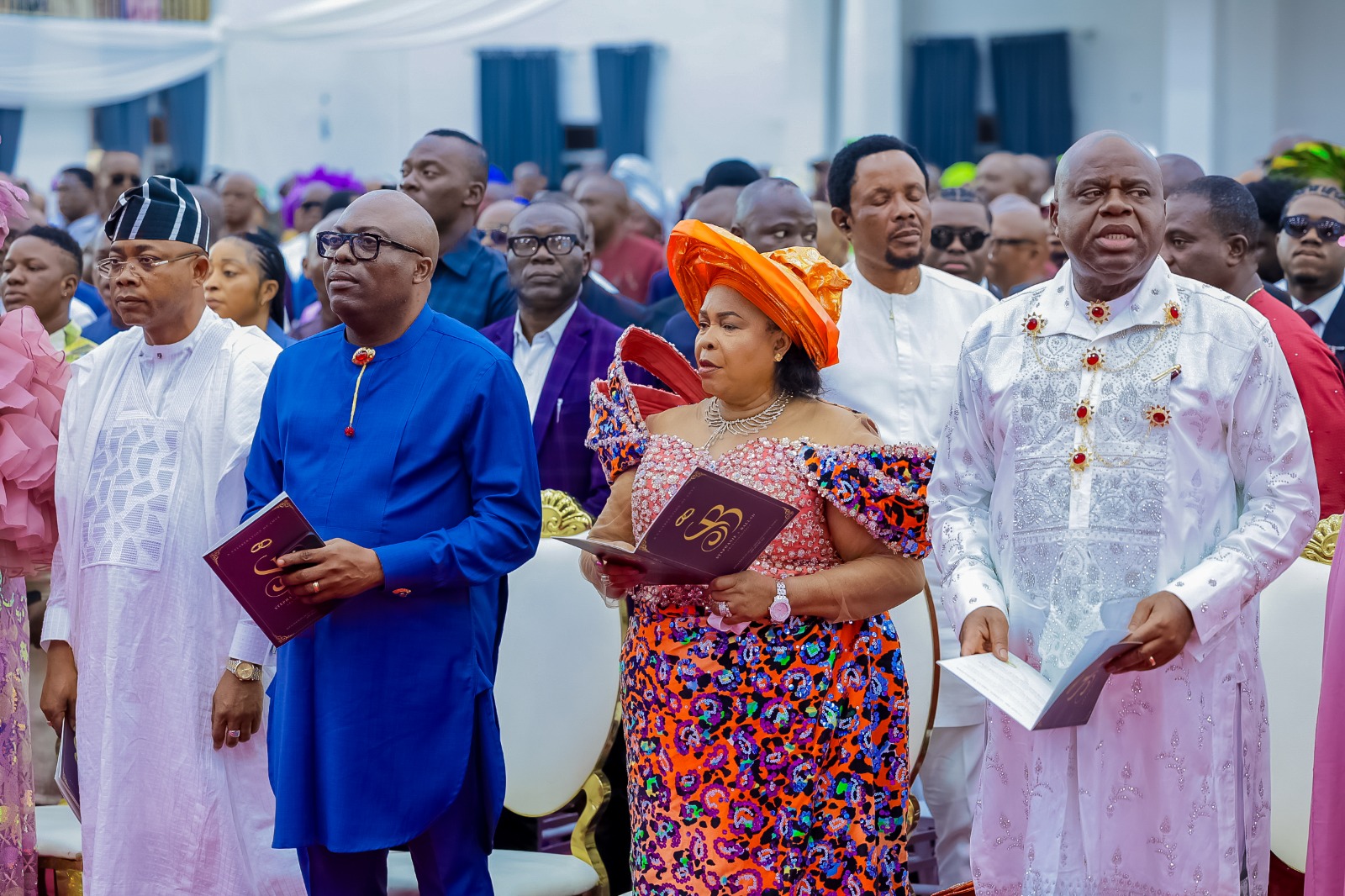
The Governor stated this yesterday when he received in audience, the World President of the Seventh Day Adventist Church, Pastor Erton Kohler; his wife, Andriene Marques Kohler; daughter Mariana Marques Kohler and a retinue of ministers of the church at Government House, Port Harcourt.
Fubara who hailed the Seventh Day Adventist Church for its contributions to education and the grooming of future leaders in Nigeria, expressed delight that the Church had over the years, been investing in education at various levels and currently runs two universities in the country.
He commended the church for not only using its institutions to spread the gospel of Christianity but to groom future leaders for the country.
According to him, religion should not be just about defending one’s faith, but also making meaningful impact on the lives of the people.
He said that by floating these educational institutions, the church has demonstrated capacity to support Nigeria in the task of producing not only educated people but a breed of God-fearing leaders.
“Our country is where it is today because we lack the fear of God. If you have the fear of God, there should be a limit to what you can do because you understand the supremacy of God. But when God is not in your equation, you’ll go beyond the line and that is what has brought us to where we are today.
“So, I feel very happy that you are contributing to the development of our future leaders in this country. We need the right people being in the right place; prepared properly with good minds; that is what we need, not just in Nigeria but round the whole world.,” he said.
Governor Fubara further observed that the absence of God-fearing people in high places to take the right decisions that could impact positively on the society, has also given rise to other problems such as social inequality, poverty, corruption and criminality. According to him, Nigeria needs a system where the average parent could afford quality education for their children and a guarantee that upon graduation, the average child will have the capacity to compete favourably with anybody, anywhere in the world.
“If we have a situation where the little money that you’re being paid as wage can also afford you quality healthcare and after working at least for 15-20 years, you have a roof over your head, tell me why you should be involved in any kind of crime? At that point, you’ll feel secured and this attitude of insecurity about the future that leads to all the social vices we have today won’t be there,” he said.
Governor Fubara expressed appreciation to the delegation for the visit and for their prayers for Rivers State, assuring them of his continued support for their programmes in the state.
Leader of the delegation and World President of the Seventh Day Adventist Church, Pastor Erton Kohler said he was in Nigeria for a special conference of the church during which thousands of the church’s ministers will be undergoing an empowerment programme to further equip them for the task of herding their flocks and serving the society.
He expressed gratitude to the Governor for the warm reception accorded his entourage, saying the memory of the visit will linger in his mind for a lifetime.
Kohler disclosed that the Church has over twenty -four million (24,000,000) members and more than 182,000 places of worship, spread across 212 countries of the world.

The Rivers State House of Assembly has approved the 2026–2028 Medium Term Expenditure Framework (MTEF) submitted by Governor Siminalayi Fubara.
This reaffirms the lawmakers’ commitment to enacting laws and taking legislative actions geared towards the overall development of the State.
The Assembly gave the approval during its Second Legislative Sitting of the Fourth Session held last Friday.
Speaking on the MTEF document during plenary, the House Speaker, Rt. Hon. Martin Amaewhule, noted that by the provision of Section 10(1)(b) of the Rivers State Fiscal Responsibility Law No. 8 of 2010, the MTEF ought to have been laid before the House in September 2025.
Amaewhule explained that traditionally, the document is expected to be presented four months before the commencement of the next financial year and immediately after the expiration of every three-year fiscal cycle.
He, however, stated that in the interest of the State and its people, the House considered it necessary to deliberate on the document, describing it as a precursor to the 2026 Budget Estimates.
The Speaker expressed concern that the year had already progressed significantly before the presentation of the framework.
During deliberations on the document, members examined the assumptions and projections contained in the MTEF and observed that strict adherence to the outlined fiscal parameters would ultimately serve the interest of Rivers people.
The lawmakers maintained that effective implementation of the framework would promote prudent financial management and enhance developmental planning across the State.
Following the debate and positive consideration by members, the Speaker put the question to the House and members voted overwhelmingly in support of the approval of the MTEF.
Meanwhile, during the same sitting last Friday, the House also received a petition from the Chairman of Obio/Akpor Local Government Council, Dr. Gift Worlu.
The petition was presented by the member representing Obio/Akpor Constituency II, Hon. Emilia Amadi.
According to the petition, concerns were raised over an imminent security breach, threats to lives, destruction of property and alleged forceful takeover of property by some lawless persons within parts of the Local Government Area.
Presenting the petition before the House, Hon. Amadi appealed to the lawmakers to revisit the matter and take necessary steps aimed at safeguarding lives and property in the affected communities.
The House is expected to further deliberate on the petition and consider measures to address the concerns raised in order to sustain peace and security in the area.
King Onunwor
-

 News2 days ago
RSG Targets Nine Million Residents in Mosquito Net Distribution Campaign
-

 Oil & Energy2 days ago
Aiyedatiwa Signs New Electricity Bill
-

 Oil & Energy2 days ago
NLNG Commissions Research And Innovation Centre In RSU
-

 Maritime2 days ago
Marine Minister Commends President Tinubu On NPERA Bill Assent
-

 News2 days ago
KenPoly Holds Eight Convocations, August 29
-

 News2 days ago
RSG Begins Another Phase of Projects Commissioning Today
-

 News2 days ago
RMAFC Completes Revenue Sharing Review, Proposes New Pay
-

 Maritime2 days ago
NAGAFF Petitions IGP Over Alleged Maritime Police Harassment