
Opinion
Sanitary Conditions In Barracks


There was a news item in The Tide newspaper, Monday August 12, 2019 (P.16), titled “Police Barracks, Rat Holes, Slums with Stinking Gutters” – CACOL. The theme was that the Centre for Anti-Corruption and Open Leadership (CACOL) had taken the National Assembly and the Executive arm of government in charge of the Police Trust Fund (PTF) to task on the present state of police barracks across the country. To lament the fact that the resilience of police officers could pass for rat holes and slums, as CACOL did, is a serious indictment not only on the Nigeria Police as an institution, but also on the collective sense of decency of all Nigerians.
Executive Chairman of CACOL, Debo Adeniran, who decried the deplorable condition of police barracks nation wide, also added that the Nigeria Police is rated among the top five worst police organizations in the world. Such sad verdict was passed by World Internal Security and Police Index; and so, this is not a matter of personal or local prejudice, but an assessment of a responsible global agency in 2016/7.
To add that “police barracks across the country are gradually trudging towards danger” and that in 2017 “our force was rated one of the top five worst police organizations in the world” portrays a sad situation. It would not require the passage of a Police Trust Fund (PTF) law before an improvement in the sanitary conditions of police barracks can be brought about.
Perhaps the sad conditions of the barracks may not be confined to the police alone; because, other members of the Nigerian armed forces that live in barracks, share similar experiences. Perhaps the current economic conditions which Nigerians are passing through may account for why poultry and other animal farms have become common features of barracks life. Cattle also graze in some barracks whose owners are men of power that lesser mortals dare not complain against, even when the cattle destroy the means of livelihood of neighbouring mortals.
Presence of various categories and sizes of livestock in barracks constitutes a part of the sad conditions of barracks life, especially with the smell of cow dungs adding to the plight. In that case, who would complain against who, since everybody else is a nuisance in one way or another to his neighbour. The result of this sad situation in the country is that personal animosities brew in the barracks, in spite of the old culture of “esprit de corps”.
With reference to the police specifically, there are factors which would be of interest to the public. The merger of local authority police (in Western and Northern Nigeria with regular Nigeria Police, which the Nigeria Civil War facilitated or necessitated, definitely diluted the quality and standard of the police. Added to this was the disengagement of highly trained professional personnel of Eastern Nigeria origin from the police, ostensibly because they were in the Biafra enclave during the civil war.
No matter the shenanigans and whatever that may be said to the contrary, the sad treatment given to police officers of Eastern Nigeria origin after the civil war, contributed greatly towards the current unenviable image of the Nigeria police. Another factor which accounts for the current plight of the police is the fact that politics and political postings have destroyed the old level of discipline in the police. There are junior officers attached to politicians, as well as senior officers whose promotions were merely political, whose status are beyond their salary structure. How would such political officers inspire or expect discipline from others?
A situation where some non-commissioned officers are richer than their superior officers, and can, through their connections, wield more power than such officers, then who is in a position to instruct or command the other? That is the current situation in the police across the country, making it difficult for discipline to thrive in the force. Add to this situation the fact that there are several graduates in the police, some of who have not been properly placed according to their academic qualifications. One of such officers had to quit the job and is currently a vice-chancellor of a federal university. Others are having a last laugh!
Therefore, the issue of sanitary conditions in the barracks goes far beyond physical sanitation. Morale and motivation are also quite low among the personnel, arising from the distortions and lapses which have been hinted lightly above. There are constables who cannot take orders from their superior officers; neither would such superior officers place an earring constable on orderly room. People who know their mutual secrets and merely play some hide-and-seek games, rarely have the moral courage to call their colleagues to order, even when serious issues are at stake. Living in a glass house indeed!
In the past, barracks inspection used to be a regular and serious activity whose purposes included ensuring good personal hygiene and sanitation in all living quarters. But in a situation where the wife of a divisional police officer or the station officer, runs a livestock farm or a canteen/beer parlour in the barracks, then can there be an effective barracks inspection? In a situation where some fantastically rich junior officers can operate a soft-loans business, patronized by their superior officers who can go “broke” before the month ends, can discipline be enforced without fear or favour?
The situations in all public-sector organizations and institutions, barracks and campuses included, are such that demand comprehensive but gradual remedy including public inquiry. Not only issues of poor and inequitable remunerations and reward system are involved, but unhealthy outward situations depict fundamental inward conditions that must be addressed. Let’s thank the Centre for Anti-Corruption and Open Leadership (CACOL) for raising the issue of rot in the barracks. Not only police barracks are involved. You can find ostrich in some barracks!
Dr. Amirize is a retired lecturer from the Rivers State University, PH.
Bright Amirize




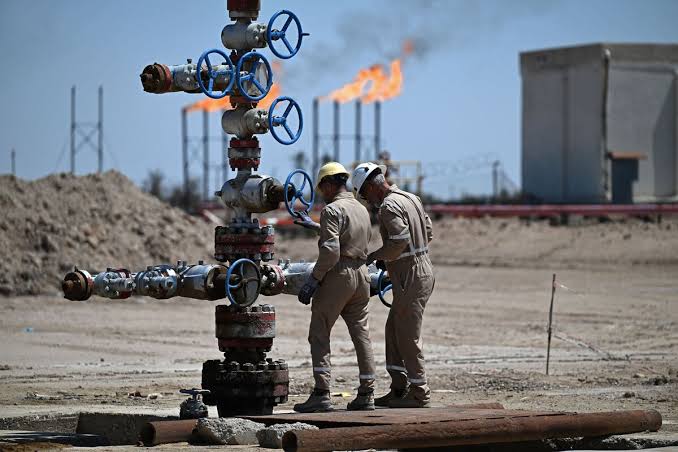
Quote: “No oil vessel, commercial contract or operational deadline is worth the loss of innocent lives; where environmental grievances are ignored and dialogue gives way to confrontation, the entire society pays a price that no compensation can adequately erase.”

Quote:”The value of wealth is
Will and gifts are subjects
A Will is an important legal
Where documentation is
This does not mean every
Properly completed lifetime
Property owners must also
My appeal is simple: let us
-

 Education2 days ago
FCE Yola Graduates 3,555 Teachers , Seeks Upgrade to University
-

 Sports2 days ago
Nigerian Trio Target Titles At PFL Africa Finals
-

 Niger Delta2 days ago
Diri Restates Stance On Lagos-Calabar Coastal Highway
-

 Niger Delta2 days ago
C’River, NUJ Pay Tribute To Late Guardian Editor
-

 News2 days ago
NDLEA Recovers Tons Of Illicit Drug Consignments In Nine States
-

 Opinion2 days ago
Checking Voter Apathy In Nigeria’s Electoral Process
-

 Politics2 days ago
2027: DICKSON’S EX-ALLY VOWS TO WORK AGAINST NDC INTEREST IN BAYELSA
-

 Politics2 days ago
2027: GROUP PLEDGES 40,000 SUPPORTERS FOR COALITION CANDIDATES IN RIVERS