
News
Mass Killings Making Nigeria Irrelevant, Buhari Admits

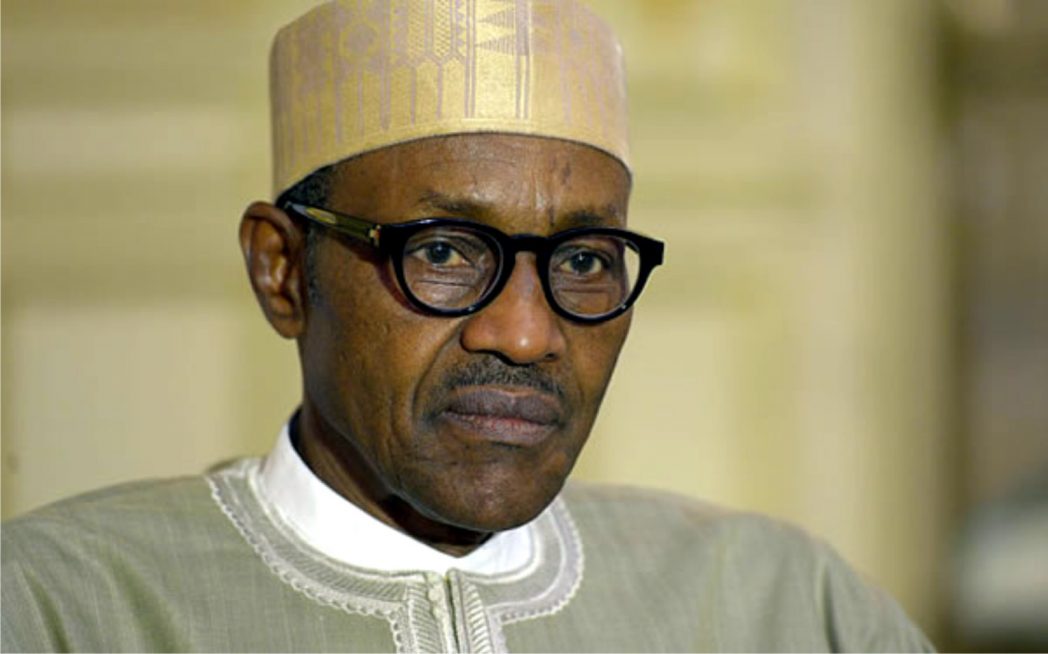
President Muhammadu Buhari on yesterday said his government will take “strongest measures” possible to punish perpetrators of the latest killings in Kaduna state.
During a visit to the state, Mr Buhari expressed sadness at the loss of lives and property in Kasuwan Magani and the unrest around Kaduna metropolis, demanding an end to wanton killings.
More than 55 people have been killed in the state in the last one week in ethno-religious violence.
‘‘If in the past, they got away scot-free, we shall now hold everyone to account for these latest killings,’’ Mr Buhari said during at a meeting with senior government officials, security chiefs, traditional rulers, religious, political and community leaders at the Musa Yar’Adua Sports Complex.
‘‘It is unacceptable that criminal elements can visit on citizens the wanton killings recorded in the Kasuwan Magani incident of 18th October 2018 and the unrest around Kaduna metropolis a few days later. This must stop,’’ he said.
Mr Buhari has been criticised for his handling of recurring conflicts that have claimed thousands of lives across the country in the last three years.
Perpetrators of such attacks are hardly punished amidst rising levels of violence.
On Tuesday, Mr. Buhari said he will be firmer.
‘‘The Nigerian police are in the frontline of securing communities. For the judiciary, unless the investigations are credible and rapidly done, there is nothing they can do. From now on the Nigeria Police, you better watch it, I am going to watch you closely,’’ he said.
He appealed to community leaders to be closer to their people and not to shield those who are planning to wreak havoc on the community from law enforcement agencies.
Commiserating with the government and people of Kaduna State, and families who lost loved ones in the attacks, the president paid tribute to the late Agom Adara, Maiwada Galadima, eulogising the traditional ruler of Adara chiefdom for serving his community and Kaduna state with dedication.
Mr Galadima was killed by kidnappers last Friday after they abducted him.
Mr Buhari appealed to all who call Kaduna home to do their best to uphold peace in their respective communities, warning that chaos does not help.
‘‘Violence shatters and divides people and stifles the prospect of any community that succumbs to its tragic logic,” he said.
‘‘The Federal Government commends the efforts of the Kaduna State Government in responding to and managing the crisis. More Federal Security assets are being provided at the request of the Kaduna State Government to help uphold and keep the peace.
‘‘The Federal Government will continue to work to ensure that more security assets are recruited and deployed across the country to protect all citizens going about their lawful business and to reinforce the authority of the government,’’ he said.
President Buhari also welcomed the decision of the Kaduna State Government and its local governments to build and provide facilities for the take-off of more police divisions and civil defence offices in the state.
‘‘On their part, citizens also have a duty to be law-abiding in their conduct and within their communities. There is a need to avoid violence as a tool of negotiation or obtaining advantage, and learn to listen to each other and commit to resolving differences through peaceful means.
‘‘Kaduna, once the home of the Premier and home of the New Nigerian must not earn itself a new name – home of violence. The Federal Security Agencies will hunt and prosecute all those who sponsored these acts of violence,’’ he said.
Mr Buhari said his administration would continue to do its best to develop human capital and address poverty and inequality in all parts of the country.
‘‘Providing decent education and health are my priority goals. I am delighted with the successful collaboration between federal institutions like the Bank of Industry and the Kaduna State Government to provide vocational and entrepreneurship skills, and low-interest credit to expand economic opportunities,’’ he said.
Mr Buhari said mass killings in Nigeria had become of less significance to the rest of the world, because they seemed to be too rampant.
He cited the killing of Saudi journalist, Jamal Khashoggi, inside the Saudi consulate in Istanbul, Turkey, and how the tragedy drew the attention of the global community, whereas dozens died in Nigeria and nobody seemed to care.
‘‘I observed that more than 75 people were killed in Kaduna alone and I haven’t seen anything about it,” he said.
‘‘It means we are pushing ourselves as a nation and a people towards irrelevance, seen by the world itself,’’ he said.



The Rivers State chapter of the Senior Citizens Forum has urged the Rivers State Government to domesticate the National Law on Senior Citizens’ Act 2017, as well as implement the National Policy on Ageing.
This was contained in a communique made available to The Tide during the Forum’s courtesy call on the Acting General Manager of The Rivers State Newspaper Corporation, Mrs Stella Gbaraba, in Port Harcourt, recently.
The communique contains the outcome of a meeting by the Forum in Port Harcourt, last Friday.
The communique titled, “The Silver Vote: Ensuring Inclusive and Dignified Participation for Senior Citizens in the Electoral Process”, urged the state government to provide a centre for the care of senior citizens in the State.
According to the Forum, the proposed centre must be properly equipped with health, recreational office, boarding facilities and everything that concerns the happiness and total wellbeing of senior citizens in the State.
It said the proposal should also be replicated at the local government levels.
The Forum acknowledged the commitment of the Rivers State Government to strengthening social protection for elderly citizens in the state through the payment of #200,000 for 500 elderly citizens above 65 years and above in December 2025.
“We advocate for the sustainability of the scheme and an increase in the number of beneficiaries as our Rivers State Senior Citizens Forum is ever willing and ready to partner with the Rivers State Ministry of Social Welfare in carrying the laudable scheme across the 23 LGAs of Rivers State.
“We appealed for the inclusion of persons aged 60 years and above in this scheme,” the communique read in part.
The Forum further requested for the provision of monthly allowances to senior citizens in the State to cater for their needs like medication and other social needs, as well as the establishment of retirement homes for them as being done in some advanced climes.
The senior citizens also demanded that polling units should be made more accessible to them, while Authorities should train polling officials to serve the elderly with patience and respect.
According to the Forum, the Independent National Electoral Commission (INEC) and Rivers State Independent Electoral Commission (RSIEC) should ensure the provisions of ramps with sitting and shaded standard waiting areas for the elderly while priorities are given to the elderly for timely accreditation and voting.
“We recommend that the Rivers State Independent Electoral Commission and Independent National Electoral Commission should integrate Senior citizens into the Electoral Support Programme as resource persons to train the polling Adhoc Staff of the Electoral Process,” the communique stated.
The Forum, however, appreciated the security agencies for maintaining law and order in the State.
“We particularly thank the General Officer Commanding -GOC 6 Div Nigerian Army and the Commissioner of Police, Rivers State Command for participating in our citizens open forum.
“We wish this cordial relationship between the senior citizens and uniformed personnel will be sustained,” the Forum said.
The senior citizens, however, condemned the raging insecurity in the country and called on the government, security agencies, politicians, traditional rulers community leaders , youths, women, parents and the entire Nigerians to do more towards ensuring a safe and peaceful society.
The delegation was led by the Queen of Ogoniland and President, Rivers State Senior Citizens’ Forum, HRM Queen Georgiana Tenalo, and Secretary, Rivers State Senior Citizens’ Forum, Chief Joseph B Otudor.
The delegation had earlier visited the Permanent Secretary, Rivers State Ministry of Information and Communications, Dr Honour Sirawoo.
John Bibor,/Boubai Samuel/Membere Kurotamunoye/Ezekiel Wisdom
The Federal Competition and Consumer Protection Commission (FCCPC) has raised concerns over what it described as possible consumer exploitation in Nigeria’s downstream petroleum sector following the failure of fuel prices to decline significantly despite a sharp drop in global crude oil prices.
The commission said its ongoing market surveillance showed that local refiners, depot operators, marketers and filling station owners had implemented only marginal reductions in fuel prices, a development it said was not commensurate with the steep decline in international crude oil prices.
In a statement issued yesterday by the FCCPC’s Director of Corporate Affairs, Ondaje Ijagwu, the commission said a review of prevailing gantry and retail prices suggested that consumers were yet to fully benefit from the easing in global oil prices.
The statement read, “The Federal Competition and Consumer Protection Commission has expressed concern over findings from an ongoing surveillance of the downstream petroleum market suggesting undue exploitation of consumers.
“A review of the gantry prices of local refiners, marketers, depot operators and retail outlet operators revealed token reductions in prices that are not commensurate with the steep fall in crude prices in the global market.”
The Executive Vice Chairman and Chief Executive Officer of the FCCPC, Tunji Bello, said the commission was concerned by what appeared to be a one-sided response to changes in crude oil prices.
According to him, operators in the downstream sector often move swiftly to raise pump prices whenever crude oil prices increase but are reluctant to pass on the benefits to consumers when prices fall.
Bello said, “To be clear, the Commission does not regulate or approve petroleum prices in a deregulated downstream market. Our responsibility under the Federal Competition and Consumer Protection Act, 2018, is to promote competitive markets, prevent anti-competitive conduct, and protect consumers from unfair, deceptive and exploitative business practices.
“We are concerned that while dealers often respond swiftly by hiking pump prices whenever crude prices rise, it is curious that it is taking forever for consumers to benefit significantly when crude prices fall. Competitive markets must work fairly in both directions.”
The commission’s concerns come amid a sharp reversal in global oil prices following a ceasefire agreement between the United States and Iran and the reopening of the Strait of Hormuz, a major global oil shipping route.
The Tide reports that the price of petrol has remained high even as crude oil prices fell to about $73 per barrel last Wednesday, their lowest level since the US-Iran conflict began in February.
Crude oil prices, which had climbed to about $120 per barrel in April amid fears of supply disruptions arising from the Middle East crisis, have since fallen to around $73 per barrel, returning to levels last seen in February.
The earlier surge in crude prices triggered immediate increases in local fuel prices, with petrol selling for between N1,350 and N1,500 per litre in several parts of the country, while diesel prices climbed to about N2,000 per litre.
In February, however, petrol sold for between N800 and N900 per litre.
Despite the significant decline in crude oil prices, the commission noted that petrol is still being sold at an average of about N1,200 per litre across the country, while some local refiners currently have gantry prices ranging from N1,025 to N1,075 per litre.
Although the FCCPC acknowledged that domestic fuel prices are influenced by several commercial factors, including foreign exchange fluctuations, logistics costs, financing expenses, refining costs and distribution charges, it maintained that competitive market forces should ordinarily have led to more substantial reductions in pump prices.
Bello said, “Market liberalisation does not diminish businesses’ obligations to compete fairly or consumers’ right to fair treatment. Where credible evidence indicates conduct that undermines competition, exploits consumers or otherwise contravenes the Federal Competition and Consumer Protection Act, the Commission will investigate and take appropriate enforcement action.”
He urged Nigerians to continue reporting suspected cases of anti-competitive conduct, price manipulation and other unfair market practices through the commission’s complaint channels.
The FCCPC’s concerns are likely to reignite debate over the effectiveness of the deregulated petroleum market, with many consumers and industry stakeholders questioning why reductions in international crude oil prices have not translated into proportionate declines at the pumps.
Since the removal of fuel subsidy and the full deregulation of the downstream sector, fuel prices in Nigeria have become increasingly tied to movements in global crude oil prices and exchange rate fluctuations.
However, consumer groups have repeatedly accused marketers of implementing price increases almost immediately while delaying price reductions whenever market conditions improve.
The FCCPC said its warning signalled possible regulatory scrutiny of pricing practices in the sector as pressure mounts on operators to ensure that the gains from lower crude oil prices are passed on to consumers.
The All Progressives Congress (APC) has disowned the purported official list of successful candidates from its recently-held primaries in circulation, describing it as fake and unauthorised.
The party’s National Publicity Secretary, Mr Felix Morka, in a statement yesterday in Abuja, said the party had not released any official list of winners of its primaries.
“The APC hereby informs the general public that it has not released the official list of successful candidates from its recently-conducted primaries,” he said.
Morka called on members, stakeholders and the general public to disregard any publication or report announcing the outcome of the primaries.
According to him, successful candidates will be duly notified through the party’s official channels and certificates of return will thereafter be issued in accordance with established procedures.
The APC spokesperson urged the public to rely only on official communications from the party.
The Independent National Electoral Commission (INEC) has opened its window for political parties to upload the names of candidates emerging from primaries ahead of the 2027 general elections.
While APC said the original list of its successful candidates at the primaries had not been officially made public, sources within the party confirmed that internal collation and verification processes are already ongoing pending the release of the list to the public.
-

 Sports48 minutes ago
Keves Football Competition Opens Registration, Increases Prize Money
-
Nation53 minutes ago
Self Help Africa programme expands water access for 320,000 Nigerians
-
Nation56 minutes ago
Conservation foundation advancing climate-smart agriculture, forest restoration in Bayelsa
-
Sports26 minutes ago
Nwabali Prepares To Join Saudi Club
-
Nation56 minutes ago
Lagos Residents Stranded As Floods Cut Off Ajah, Mafoluku Communities
-
Nation51 minutes ago
REAN, SON synergise to curb fake renewable energy product
-
Business19 minutes ago
Navy Nabs 13 Black Sand Miners In Bayelsa –Impound Two Boats
-
Sports33 minutes ago
LSG Sets Up Sub- Committees For EKO 2026 National Intermediate Games