
Business
Buhari Calls For Review Of Revenue Template …As FG, States,LGAs Share N821.9bn

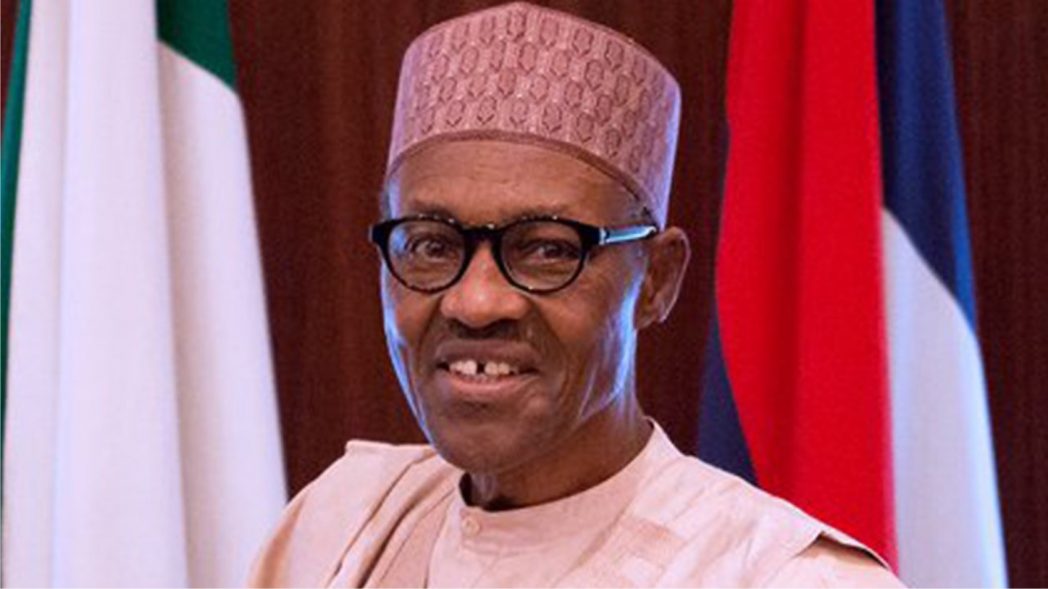
President Muhammadu Buhari has ordered the review of the revenue reporting template between the NNPC and the Federation Account Allocation Committee (FAAC).
The Minister of Finance, Mrs Kemi Adeosun conveyed the President’s directive on Friday while giving a breakdown on how N821.9 billion revenue generated in June was shared among the three tiers of government.
“As you are aware, in the last couple of FAAC meetings, the accounts presented by NNPC were not acceptable by the states and so Mr President asked to be briefed on the issue.
“Based on that briefing, Mr President asked for further information to be provided by both the Ministry of Finance and the NNPC.
“Last Thursday, he held a meeting with myself, the Chief of Staff, the Minister of State for Petroleum and the NNPC team.
“Mr President gave some certain directives, one which relates to FAAC, is the need to revise the template.
“It was ascertained that the reporting template between the NNPC and FAAC was not providing the right level of assurance around the figures.
“It is for this reason that he has directed that a new template be generated jointly between the Ministry of Finance, the office of the Accountant-General, NNPC and RMAFC,” she said
Adeosun said Buhari also directed that henceforth, before FAAC meetings, a team from the Ministry of Finance and the NNPC should go through the figures and agree before presenting it to FAAC members.
Giving a breakdown of the allocation for the month of June, Adeosun said that after deductions for cost of collections, the Federal Government received N283.54 billion.
Adeosun said in accordance with the revenue sharing formula, the 36 states governments received N143.81 billion, while the Local Government Councils received an allocation of N110.87 billion.
In addition, she announced that N37.4 billion representing 13 per cent of the mineral revenue generated in the month of June, was also shared among the oil producing states.
To this end, Adeosun said the nation generated N393.17 billion as mineral revenue and N294.17 billion as non-mineral revenue in February.
She said that in the spirit of saving for a rainy day, N100 billion was transfered to the Excess Crude Account, making the balance 2.27 billion dollars.
Meanwhile, the Chairman, Commissioners for Finance Forum, Mr Mahmoud Yunusa, said the state governments agreed with the decision of President Buhari to review the revenue reporting template of the NNPC.
He said that the committee would closely monitor the development to ensure that it achieves the desired effect.
Earlier, the Institute of Chartered Accountants of Nigeria (ICAN) introduced the Accountability Index to the representatives of federal, states and local government authorities.
The ICAN President, Mr Razaq Jaiyeola told FAAC members that the Accountability Index was an initiative of the Institute to ensure prudent management of public funds by the three tiers of government.
He said that the index would focus on policy based fiscal forecasting and budget, scrutiny and audit, budget credibility and management of assets and debts.
In summary, Jaiyeola said that the initiative would improve quality of governance in the country and tackle corruption in the public sector.


Nkpemenyie Mcdominic
Reports say that the training is designed to equip youths with practical technical skills for employment in the oil and gas and construction sectors, with emphasis on employability, safety, competence and self reliance.
In attendance at the flag-off ceremony this week, at the Petroleum Training Institute (PTI) Conference Hall, Effurun, were stakeholders, dignitaries, and political representatives, among others.
Dafinone, represented by his Chief of Staff, Adelabu Bodjor, said the initiative reflects a deliberate political investment in human capital development across Delta Central.
He explained that the training focuses on rigging and scaffolding, noting that “both are essential technical competencies required in industrial operations, construction projects, and oil and gas installations”.
Bodjor added, “The programme is intended to reduce dependency among youths by providing job-ready skills capable of supporting long-term economic opportunities and self-sufficiency. The initiative aligns with Senator Dafinone’s broader development agenda, which prioritises practical skill acquisition as a pathway to sustainable empowerment.”
Also addressing the participants, the NCDMB, Felix Omatsola Ogbe, represented by Mr. Teddy Bai, commended Dafinone for sponsoring the programme, describing it as “a timely response to critical manpower gaps in the industry”.
Bai explained that rigging and scaffolding remain safety-sensitive skills required across fabrication yards, offshore platforms, and construction sites, stressing that the programme bridges the gap between certification and practical competence.
He also charged the training consultant, OROH Contractors Limited, to maintain strict standards of professionalism, safety, and discipline, while urging participants to remain committed, focused, and disciplined throughout the exercise.
The Senate Liaison Officer for Sapele Local Government Area, Chief Patrick Akamuvba, , described the programme as a major step in strengthening human capital development in Delta Central.
Akamuvba said scaffolding and rigging skills are in high demand across residential, commercial, and industrial construction projects, noting that the training offers real employment opportunities for beneficiaries
He urged participants to prioritise knowledge and certification over short-term material expectations, stressing that discipline and seriousness would determine their long-term success.
He also cautioned youths against social vices and distractions, advising them to remain focused to maximise the opportunities provided by the programme.
-
News1 day ago
Obuah’s Victory Excites Former Lawmaker as APC Primaries Conclude in Rivers West
-

 Politics3 days ago
APC PRIMARIES: FUBARA’S WITHDRAWAL, HISTORIC SACRIFICE FOR NATIONAL STABILITY ……. GROUP
-

 News3 days ago
Court Sentences Seven To Death Over Murder Of Cleric In Rivers
-
News1 day ago
105 Nigerians Killed In S/Africa In Seven Years
-

 Sports3 days ago
PH Arsenal Community Set For Streets Procession, Saturday
-

 Politics3 days ago
IPAC Flays INEC Over Election Guidelines Judgement
-

 Politics3 days ago
NDC To Adopt Electronic Voting For Future Primaries
-

 Politics3 days ago
Ex-IGP Defects To SDP After APC Primary Fiasco