
Business
Nigeria’s Oil Rigs To Increase In Two Years

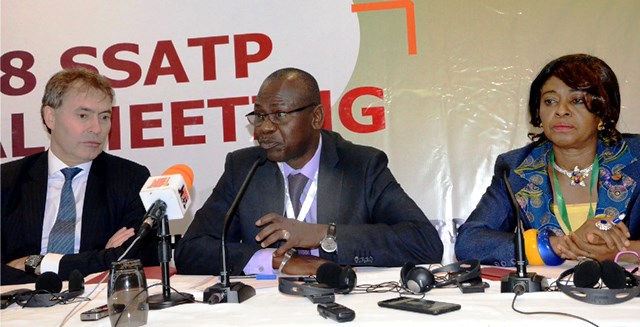
The Federal Government says the number of upstream oil rigs will increase in Nigeria from 5 to 21 within two years even as it expressed optimism that crude oil would remain useful for a long period of time despite the use and introduction of electric cars in some parts of the country.
The Minister of State for Petroleum Resources, Dr Emmanuel Ibe Kachukwu, who stated this at the opening of the 2018 Nigerian Oil and Gas Summit in Abuja, said the oil sector is at the critical stage of its life.
Kachukwu urged Nigerians to dismiss rumours that oil is about to go out of stock, assuring that oil demand will continue to increase.
According to him, the reality is that, more oil is found on daily bases and there is more to believe that and feel that oil will be here for a long time.
He however expressed worries that performance within the oil sector will differ because the prices will fustrate.
The minister said it was time for Nigeria to sustain and firm up regional adherence to it’s kind of crude considering the rise in the sale of oil in the United States of America, adding that this has heightened crude oil competition to the international market.
Kachukwu informed that Nigeria had been increasing its crude barrels, adding that the country had 36.18 billion barrels of proven reserves of crude oil and condensate as at the first quarter of 2018
“The current production level is between 2 million and 2.15 million barrels per day and this means we have relatively established a production baseline that is stable.
The stability in the Niger Delta region has helped the region to continue to pose as a potential danger area to production, adding that the country has about 46 exploration and production (E&P) companies producing from over 180fields as at last year and 55.6 per cent of the production comes from joint venture portfolio.
According to him, ‘about 35 percent comes from production sharing contracts while six per cent from sole risks and 3 per cent from marginal fields..
In his address at the event, the Group Managing Director of the Nigeria National Petroleum Company, (NNPC),Maikanta Baru, said there was plan to increase investment in the oil sector, adding that NNPC is seeking more funds to develop oil projects in the country.
Baru said, to spur the much needed investment, the government has issued an updated oil and gas policy and initiated the process for enacting a new Petroleum Industry Governance Bill that provides clarity to government institutions and their industries.
According to him, we are planning to be in the capital market to raise more funds for new oil and gas projects.
He disclosed that the firm had signed financing agreement of about $2.5billion for different projects, stressing that NNPC outlook is to grow the country’s crude production to 3 million barrels per day.
Ike Wigodo back from Abuja


Nkpemenyie Mcdominic
Reports say that the training is designed to equip youths with practical technical skills for employment in the oil and gas and construction sectors, with emphasis on employability, safety, competence and self reliance.
In attendance at the flag-off ceremony this week, at the Petroleum Training Institute (PTI) Conference Hall, Effurun, were stakeholders, dignitaries, and political representatives, among others.
Dafinone, represented by his Chief of Staff, Adelabu Bodjor, said the initiative reflects a deliberate political investment in human capital development across Delta Central.
He explained that the training focuses on rigging and scaffolding, noting that “both are essential technical competencies required in industrial operations, construction projects, and oil and gas installations”.
Bodjor added, “The programme is intended to reduce dependency among youths by providing job-ready skills capable of supporting long-term economic opportunities and self-sufficiency. The initiative aligns with Senator Dafinone’s broader development agenda, which prioritises practical skill acquisition as a pathway to sustainable empowerment.”
Also addressing the participants, the NCDMB, Felix Omatsola Ogbe, represented by Mr. Teddy Bai, commended Dafinone for sponsoring the programme, describing it as “a timely response to critical manpower gaps in the industry”.
Bai explained that rigging and scaffolding remain safety-sensitive skills required across fabrication yards, offshore platforms, and construction sites, stressing that the programme bridges the gap between certification and practical competence.
He also charged the training consultant, OROH Contractors Limited, to maintain strict standards of professionalism, safety, and discipline, while urging participants to remain committed, focused, and disciplined throughout the exercise.
The Senate Liaison Officer for Sapele Local Government Area, Chief Patrick Akamuvba, , described the programme as a major step in strengthening human capital development in Delta Central.
Akamuvba said scaffolding and rigging skills are in high demand across residential, commercial, and industrial construction projects, noting that the training offers real employment opportunities for beneficiaries
He urged participants to prioritise knowledge and certification over short-term material expectations, stressing that discipline and seriousness would determine their long-term success.
He also cautioned youths against social vices and distractions, advising them to remain focused to maximise the opportunities provided by the programme.
-
News20 hours ago
Obuah’s Victory Excites Former Lawmaker as APC Primaries Conclude in Rivers West
-

 Politics3 days ago
APC PRIMARIES: FUBARA’S WITHDRAWAL, HISTORIC SACRIFICE FOR NATIONAL STABILITY ……. GROUP
-

 News3 days ago
Court Sentences Seven To Death Over Murder Of Cleric In Rivers
-
News21 hours ago
105 Nigerians Killed In S/Africa In Seven Years
-

 Sports3 days ago
PH Arsenal Community Set For Streets Procession, Saturday
-

 Politics3 days ago
IPAC Flays INEC Over Election Guidelines Judgement
-

 Politics3 days ago
NDC To Adopt Electronic Voting For Future Primaries
-

 Politics3 days ago
Ex-IGP Defects To SDP After APC Primary Fiasco