
Featured
Bloody May Day In Nigeria; As Suicide Bombers Kill 73 In Adamawa …Herdsmen Kill 10 In Benue …NLC Blasts Buhari Over Silence To Killings …Nigerians ’ll Drive APC Out Of Power, 2019 -Adeniran

At least 73 people were reported killed in twin suicide bombings in Mubi, Adamawa State, yesterday, two local residents who attended funerals of the victims told newsmen that suicide bombers struck at a mosque and a market in a twin attack bearing the hallmarks of Islamist insurgents Boko Haram.
One, Muhammad Hamidu, said: “I took part in the burial of 68 people. More bodies were being brought by families of the victims.” Another, Abdullahi Labaran, said: “We left 73 freshly dug graves where each victim was buried.”
The blasts, said to have been carried out by young boys, happened shortly after 1:00 pm in Mubi, some 200 kilometres (125 miles) from the Adamawa State capital, Yola.
Imam Garki, from the National Emergency Management Agency (NEMA), said a joint assessment with the police and Red Cross found that 26 people were killed and 56 were injured, 11 of them critically.
They were transferred to the Federal Medical Centre in Yola for treatment. But a medical source at the Mubi General Hospital said they had received 37 bodies, while a rescue worker involved in the relief operation said he counted 42 dead and 68 injured.
“These I saw with my own eyes. We were counting as they were being taken,” said Sani Kakale. Two local residents who attended funerals for the victims said the death toll was much higher — and could climb further.
“Before I left the cemetery I took part in the burial of 68 people. More bodies were being brought by families of the victims,” said Muhammad Hamidu.
“I think this is the worst attack Mubi has ever witnessed. The human loss is unimaginable.”
Abdullahi Labaran added: “We left 73 freshly dug graves where each victim was buried. There are still unclaimed bodies at the hospital. – US support – Conflicting death tolls are not unusual in Nigeria.
The authorities have also previously played down casualty figures. Suspicion for the attack immediately fell on Boko Haram, the jihadist group whose quest to establish a hardline Islamic state in northeast Nigeria has left at least 20,000 dead since 2009. Mubi has been repeatedly targeted in attacks blamed on Boko Haram since it was briefly overrun by the militants in late 2014.
Nigeria’s government and military have long maintained that the Islamic State group affiliate is a spent force and on the verge of defeat. But there has been no let-up in attacks in the northeast, particularly in Borno state, adjacent to Adamawa, which has been the epicentre of the violence.
Last Thursday, at least four people were killed when suicide bombers and fighters attempted to storm the Borno state capital, Maiduguri, raising fresh questions about security.
Nigerian President Muhammadu Buhari has been in the United States this week and met his US counterpart Donald Trump, who pledged more support in the fight against Boko Haram. Nigeria has bought a dozen A-29 Super Tucano light fighter aircraft in a $496-million (413-million-euro) deal.
Trump indicated a further order for attack helicopters was also in the pipeline. “These new aircraft will improve Nigeria’s ability to target terrorists and protect civilians,” Trump told a joint news conference with Buhari in Washington on Monday.
The sale of the aircraft was previously blocked by the Obama administration after the Nigerian airforce mistakenly bombed a camp for people displaced by Boko Haram, killing 112. US military officials in Abuja have recently questioned Nigerian tactics faced with guerilla tactics from Boko Haram.
“How they think in terms of combat, in my opinion, is still thinking of things as conventional warfare,” Lieutenant-Colonel Sean McClure, the US defence attaché in Abuja, told AFP last month. – Chaotic scenes – In Mubi, local volunteer Habu Saleh, who was involved in the rescue effort, described the aftermath of the bombing as “chaos”.
Health workers from the hospital mobilised to attend to the victims, despite being on strike over pay and conditions. Abdullahi Labaran said the first bomber mingled with worshippers who had gathered for prayers at the mosque at the edge of the market.
He detonated his explosives “five minutes before the prayer started”, he added. The second bomber blew himself up among the crowds of worshippers, traders and shoppers as they fled the first explosion.
On November 21, 2017 at least 50 people were killed when a suicide bomber blew himself up in a mosque during early morning prayers in the Unguwar Shuwa area of Mubi.
In October 2012, at least 40 people were killed in an attack on student housing in Mubi that was widely blamed on Boko Haram.
In June 2014, at least 40 football supporters, including women and children, died in a bomb attack after a match in the Kabang area of the town.
In another development, no fewer than 10 persons have been killed and several others injured after suspected herdsmen attacked Tse Iortyer, near Yelewata community in Guma LGA of Benue State.
Our correspondent gathered that the gunmen, who invaded the village around 8pm yesterday, also set many houses on fire.
Our correspondent gathered that over 15 persons were injured in the attack, while several others are still missing.
Meanwhile, the Nigeria Labour Congress (NLC) has slammed the federal government over its cold attitude towards the killings in the country by rampaging herdsmen.
NLC President, Ayuba Wabba, who stated this, yesterday, at the 2018 May Day lecture, in Abuja, said the ongoing killings by herdsmen called for question whether the administration of President Muhammadu Buhari actually cared for its people.
According to him, protection of life and property remained the primary responsibility of any government.
He added that no excuse, whatsoever, should be given by the government, for the carnage going on, especially in Benue, Taraba, Nasarawa and Zamfara states.
“Workers and Nigerians, at large, need to feel that there is actually a government in charge of their security; because the way Nigerian citizens are being killed by the day it is worrisome, and calls for question, whether there is, indeed, a government that actually cares for its people. So, we call on them to do the job they are meant to do, in the first place,” Wabba said.
Also, former Minister of Education and one-time Nigerian Ambassador to Germany, Professor Tunde Adeniran has said the 2019 general elections will provide Nigerians of voting age the opportunity to vote out President Muhammadu Buhari who is seeking a second term in office on the platform of the All Progressives Congress (APC).
Adeniran, a chieftain of the Social Democratic Party (SDP) stated this yesterday in an exclusive chat with newsmen in Abuja. The Professor of Political Science while condemning the APC-led administration’s handling of the mindless killings in parts of the country noted that the people would revolt with their votes come 2019 even as he noted that many Nigerians have lost faith in government’s ability to protect their lives and property.
According to him, “There is no doubt that President Buhari has let the nation down in the handling of the security challenges of the nation under his watch. He has exacerbated and compounded the security situation in the country in the last three years. Whatever his government does or does not do, as well as their actions or inactions and bad policies, are bound to have consequences. I see 2019 election as his terminal date as the election will provide opportunity for the people to drive his government out of power and install a credible alternative.”
Adeniran who until a few weeks ago, was a stalwart of the Peoples Democratic Party (PDP), further questioned the political will of incumbent administration to rise above primordial tendencies in the search for solutions to the security threats pervading the land.
He said: “The spate of mindless killings in the country, which is not in any way abating, will largely, contribute to the defeat of this administration because the people of Nigeria have totally lost faith, trust and confidence in the APC to provide security of lives and property, which is the primary responsibility of government.
“It is rather unfortunate that President Buhari has demonstrated very low capacity in providing the essential leadership that could hold Nigeria together. He has clearly shown that he is not the father of all parts of Nigeria as he is expected to be, and cannot provide security for all citizens. It has been seen so far that he lacks innovative ideas that can grow our economy. He has by all these and many more given the electorate enough reason for him to be roundly rejected in the coming election.”
And regardless of the manner of conduct of the polls, the SDP chieftains insisted that there will be no way for the continuation of the Buhari Presidency beyond 2019.
“No matter what he does to circumvent the electoral process, he will certainly be shown the way out in 2019 because he can no longer be trusted. There is the widespread fear that with him as President any further than 2019, the country will definitely go under. But God will not allow that to happen to us, because Nigeria is God’s own country,” he added.



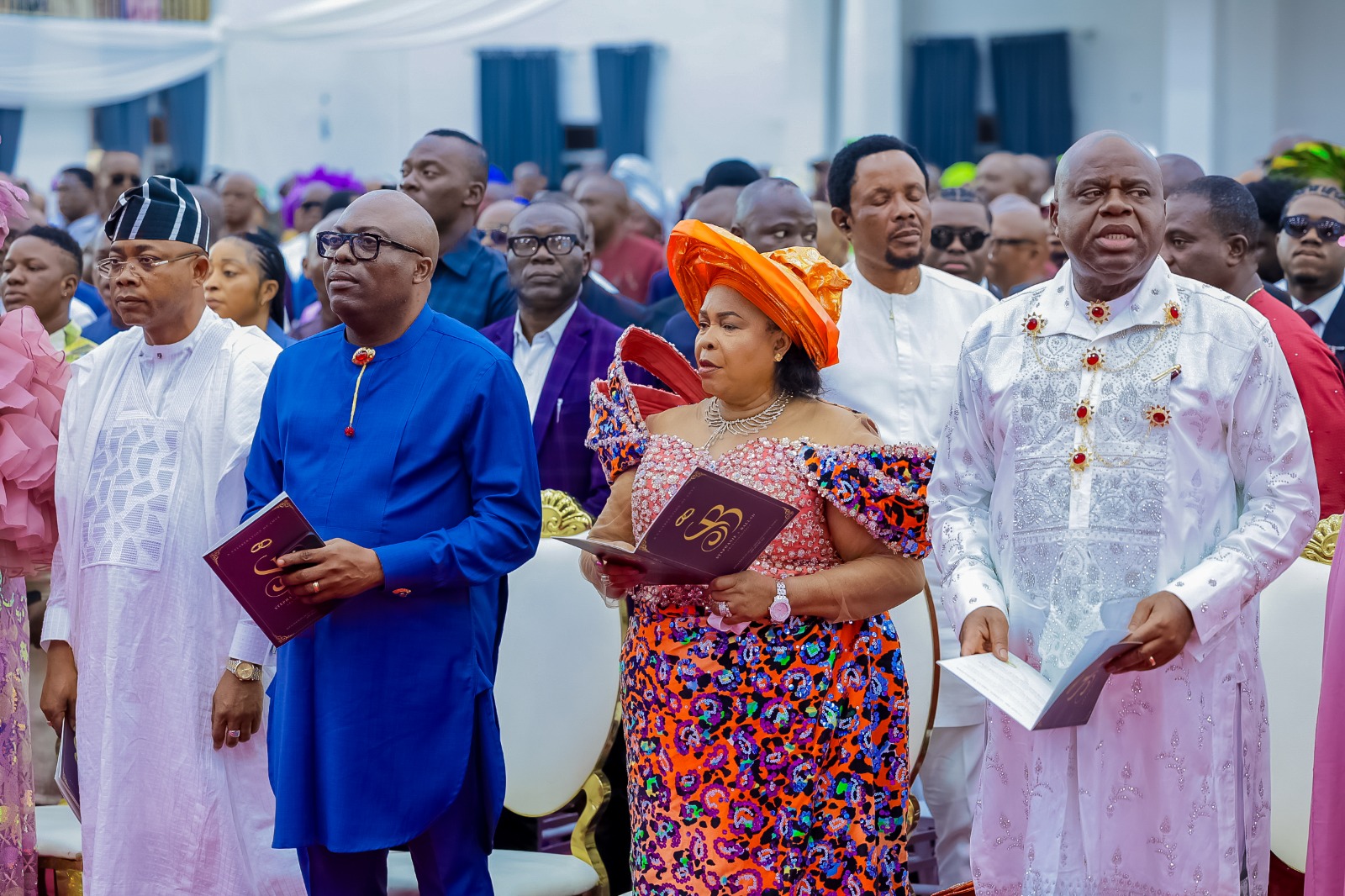
Rivers State, Sir Siminalayi Fubara, has assured members of the National Youth Service Corps (NYSC) of his administration’s commitment to supporting and strengthening the scheme in the State.
Fubara gave the assurance last Friday at the NYSC permanent orientation camp, Nonwa-Gbam, Tai Local Government Area in the State, during the swearing-in ceremony of 2026 Batch B Stream II orientation course.
Represented by the Permanent Secretary, Cabinet Bureau, Office of the Secretary to the State Government, Dr. Promise Oguzie, the governor said the State Government would remain intentional in providing the necessary support to improve the NYSC scheme and enhance the experiences of corps members deployed to the state.
He charged the corps members to be role models and quality nation-builders in their service to the good people of Rivers State in particular, and Nigeria at large.
“I charge you to be exemplary, dedicated and committed in all you do. Take full advantage of all the camp programmes and activities to enrich yourselves”, he said.
In his welcome address, the State Coordinator of NYSC in Rivers State, Mr. Moses Oleghe, urged corps members to see their deployment to Rivers State as a “veritable opportunity to make meaningful contribution to the growth of the State in particular and Nigeria at large.”
He further charged them to serve with all sense of “integrity, discipline, and the fear of God, especially when they will be engaged as INEC ad-hoc staff that will conduct the 2027 general elections.”
A total of 3,584 corps members composed of 1,421 males and 2,163 females were sworn in by the Chief Judge of Rivers State, who was represented by Justice Godspower Aguma.

Governor of Rivers State, Sir Siminalayi Fubara, says Nigeria needs God-fearing leaders for the nation to move in the right direction and make meaningful progress.
The Governor stated this yesterday when he received in audience, the World President of the Seventh Day Adventist Church, Pastor Erton Kohler; his wife, Andriene Marques Kohler; daughter Mariana Marques Kohler and a retinue of ministers of the church at Government House, Port Harcourt.
Fubara who hailed the Seventh Day Adventist Church for its contributions to education and the grooming of future leaders in Nigeria, expressed delight that the Church had over the years, been investing in education at various levels and currently runs two universities in the country.
He commended the church for not only using its institutions to spread the gospel of Christianity but to groom future leaders for the country.
According to him, religion should not be just about defending one’s faith, but also making meaningful impact on the lives of the people.
He said that by floating these educational institutions, the church has demonstrated capacity to support Nigeria in the task of producing not only educated people but a breed of God-fearing leaders.
“Our country is where it is today because we lack the fear of God. If you have the fear of God, there should be a limit to what you can do because you understand the supremacy of God. But when God is not in your equation, you’ll go beyond the line and that is what has brought us to where we are today.
“So, I feel very happy that you are contributing to the development of our future leaders in this country. We need the right people being in the right place; prepared properly with good minds; that is what we need, not just in Nigeria but round the whole world.,” he said.
Governor Fubara further observed that the absence of God-fearing people in high places to take the right decisions that could impact positively on the society, has also given rise to other problems such as social inequality, poverty, corruption and criminality. According to him, Nigeria needs a system where the average parent could afford quality education for their children and a guarantee that upon graduation, the average child will have the capacity to compete favourably with anybody, anywhere in the world.
“If we have a situation where the little money that you’re being paid as wage can also afford you quality healthcare and after working at least for 15-20 years, you have a roof over your head, tell me why you should be involved in any kind of crime? At that point, you’ll feel secured and this attitude of insecurity about the future that leads to all the social vices we have today won’t be there,” he said.
Governor Fubara expressed appreciation to the delegation for the visit and for their prayers for Rivers State, assuring them of his continued support for their programmes in the state.
Leader of the delegation and World President of the Seventh Day Adventist Church, Pastor Erton Kohler said he was in Nigeria for a special conference of the church during which thousands of the church’s ministers will be undergoing an empowerment programme to further equip them for the task of herding their flocks and serving the society.
He expressed gratitude to the Governor for the warm reception accorded his entourage, saying the memory of the visit will linger in his mind for a lifetime.
Kohler disclosed that the Church has over twenty -four million (24,000,000) members and more than 182,000 places of worship, spread across 212 countries of the world.

The Rivers State House of Assembly has approved the 2026–2028 Medium Term Expenditure Framework (MTEF) submitted by Governor Siminalayi Fubara.
This reaffirms the lawmakers’ commitment to enacting laws and taking legislative actions geared towards the overall development of the State.
The Assembly gave the approval during its Second Legislative Sitting of the Fourth Session held last Friday.
Speaking on the MTEF document during plenary, the House Speaker, Rt. Hon. Martin Amaewhule, noted that by the provision of Section 10(1)(b) of the Rivers State Fiscal Responsibility Law No. 8 of 2010, the MTEF ought to have been laid before the House in September 2025.
Amaewhule explained that traditionally, the document is expected to be presented four months before the commencement of the next financial year and immediately after the expiration of every three-year fiscal cycle.
He, however, stated that in the interest of the State and its people, the House considered it necessary to deliberate on the document, describing it as a precursor to the 2026 Budget Estimates.
The Speaker expressed concern that the year had already progressed significantly before the presentation of the framework.
During deliberations on the document, members examined the assumptions and projections contained in the MTEF and observed that strict adherence to the outlined fiscal parameters would ultimately serve the interest of Rivers people.
The lawmakers maintained that effective implementation of the framework would promote prudent financial management and enhance developmental planning across the State.
Following the debate and positive consideration by members, the Speaker put the question to the House and members voted overwhelmingly in support of the approval of the MTEF.
Meanwhile, during the same sitting last Friday, the House also received a petition from the Chairman of Obio/Akpor Local Government Council, Dr. Gift Worlu.
The petition was presented by the member representing Obio/Akpor Constituency II, Hon. Emilia Amadi.
According to the petition, concerns were raised over an imminent security breach, threats to lives, destruction of property and alleged forceful takeover of property by some lawless persons within parts of the Local Government Area.
Presenting the petition before the House, Hon. Amadi appealed to the lawmakers to revisit the matter and take necessary steps aimed at safeguarding lives and property in the affected communities.
The House is expected to further deliberate on the petition and consider measures to address the concerns raised in order to sustain peace and security in the area.
King Onunwor
-

 News3 days ago
RSG Targets Nine Million Residents in Mosquito Net Distribution Campaign
-

 Oil & Energy3 days ago
Aiyedatiwa Signs New Electricity Bill
-

 Oil & Energy3 days ago
NLNG Commissions Research And Innovation Centre In RSU
-

 Maritime3 days ago
Marine Minister Commends President Tinubu On NPERA Bill Assent
-

 News3 days ago
KenPoly Holds Eight Convocations, August 29
-

 News3 days ago
RSG Begins Another Phase of Projects Commissioning Today
-

 News3 days ago
RMAFC Completes Revenue Sharing Review, Proposes New Pay
-

 Maritime3 days ago
NAGAFF Petitions IGP Over Alleged Maritime Police Harassment