
Business
Bayelsa, NAOC To Partner On Agric Dev

Following the numerous agricultural programmes initiated by the Nigerian Agip Oil Company (NAOC) towards boosting food production in the Niger Delta region, the Bayelsa State Government has expressed willingness to collaborate with the multinational, with a view to enhancing agricultural development in the state.
The Governor who was represented by the Deputy Governor, John Jonah, disclosed this during the 21st Farmers Day celebration of NAOC – Green River Project (GRP), with the theme “GRP actively leading the fortune of the Nigeria Delta”, held at Igbogene, Bayelsa State, last Saturday.
The governor commended NAOC for diversifying their operation from oil to the soil, also embarking on agricultural value-chain that has boosted food security in its host states.
He said that the State has embarked on laudable agricultural initiatives, which include cassava farm at Oloibiri, fish farm, rice farm at Peremabiri among others, adding that the State government is prepared to partner NAOC to boost the agricultural potentials of the State.
In his speech, NAOC’s General Manager district, Marco Rotondi, expressed the need for Nigeria to diversify its economy to agriculture, saying that it is on this premise that the initiative is focused on making it attractive and accessible, as well as encourage the youths and women to embrace modern and mechanized agriculture.
The Vice Chairman/Managing Director, NAOC, Massimo Insulla, stated that for the past 30 years GRP had been a prime source of employment and improvement of the standard of living for the respective host communities and had served as a veritable tool for sustainable development and food sufficiency.
The farmers’ day celebration had offered the platform to individual farmers, farmers’ co-operative society and Agro-Allied organizations not only to showcase their products, produce and services, also to interact with other agriculture stakeholders, he said.
The Chairman, NAOC/AENR/NAE, Umberto Carrara expressed gratitude that the objective of the scheme to introduce and expose host communities to modern technique of farming had been achieved.
The Vice Chancellor, Federal University, Otuoke, Prof. Seth Accra-Jaja, noted that the GRP initiative is capable of leading Nigeria’s agricultural development.
He said that the University has embarked on agricultural programmes, such as incentive share lending, growth enhancement scheme, agric resilience scheme and field alternative scheme, among others.
The Group General Manager, National Petroleum Investment Management Services (NAPIMS) represented by Folanke Jolayemi, pledge the support of NAPIMS to the NAOC joint venture GRP in its lead to encourage agricultural best practices in modern farming and improvement of the livelihood of the people.
The Chief Executive Officer, Oando Energy Resources, Pade Durotonye, said the event is geared towards creating awareness on the importance of agriculture in spearheading the socio-economic development and economic diversification of the country.
He posited that the GRP have successfully sensitized community-based farmers on the importance of agriculture through the introduction of high yielding planting materials, fisheries activities and formation of co-operative societies and how to access micro-credit scheme.
Award of excellent and certificate of merit was presented to deserving GRP farmers.
Highlight of the occasion was display of cultural troupes and performance of the dance floor King, Timaya.
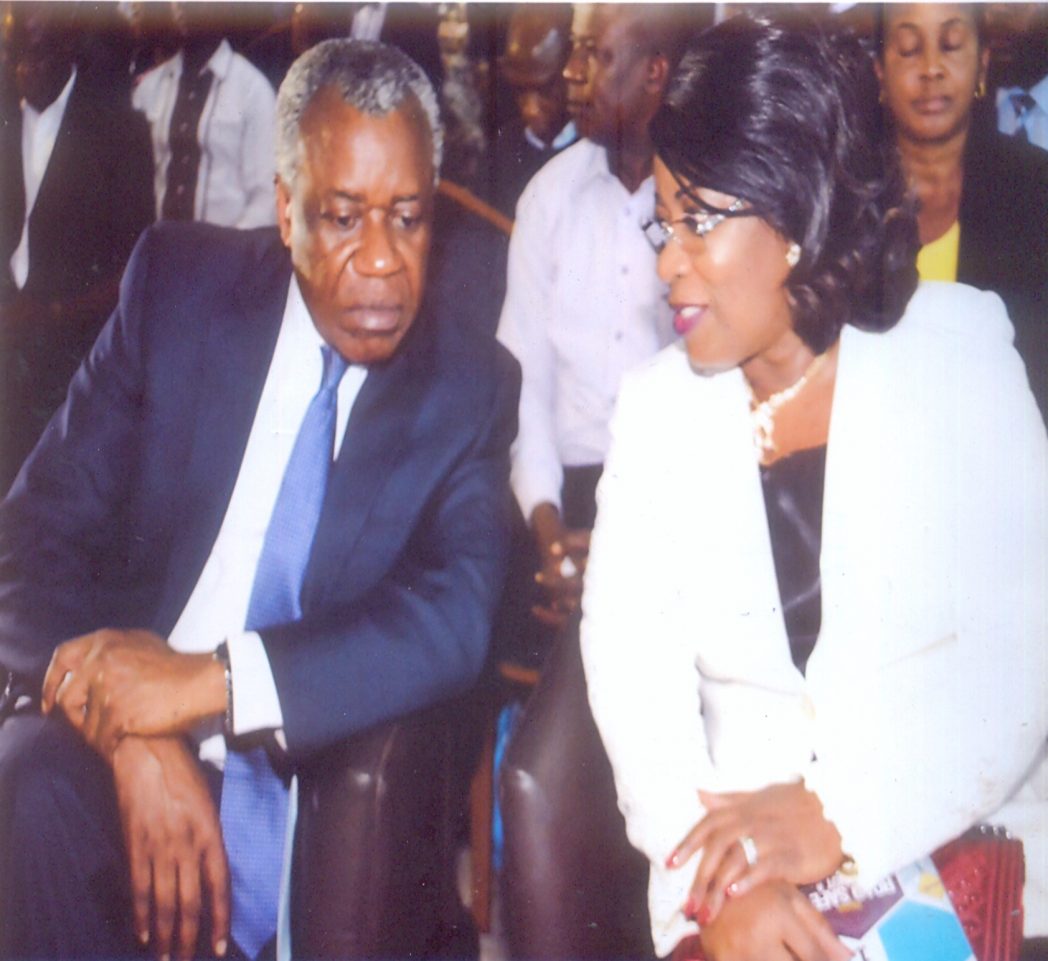
Executive Chairman, Rivers State Internal Revenue Service, Mr. T. Adoage Norteh, with Managing Director, Lulu-Briggs Foundation, Dr. (Mrs) Seinye Luku-Briggs, during the induction ceremony of honorary special marshalls of the Federal Road Safety Corps (FRSC) in Port Harcourt, last Saturday.


Nkpemenyie Mcdominic
Reports say that the training is designed to equip youths with practical technical skills for employment in the oil and gas and construction sectors, with emphasis on employability, safety, competence and self reliance.
In attendance at the flag-off ceremony this week, at the Petroleum Training Institute (PTI) Conference Hall, Effurun, were stakeholders, dignitaries, and political representatives, among others.
Dafinone, represented by his Chief of Staff, Adelabu Bodjor, said the initiative reflects a deliberate political investment in human capital development across Delta Central.
He explained that the training focuses on rigging and scaffolding, noting that “both are essential technical competencies required in industrial operations, construction projects, and oil and gas installations”.
Bodjor added, “The programme is intended to reduce dependency among youths by providing job-ready skills capable of supporting long-term economic opportunities and self-sufficiency. The initiative aligns with Senator Dafinone’s broader development agenda, which prioritises practical skill acquisition as a pathway to sustainable empowerment.”
Also addressing the participants, the NCDMB, Felix Omatsola Ogbe, represented by Mr. Teddy Bai, commended Dafinone for sponsoring the programme, describing it as “a timely response to critical manpower gaps in the industry”.
Bai explained that rigging and scaffolding remain safety-sensitive skills required across fabrication yards, offshore platforms, and construction sites, stressing that the programme bridges the gap between certification and practical competence.
He also charged the training consultant, OROH Contractors Limited, to maintain strict standards of professionalism, safety, and discipline, while urging participants to remain committed, focused, and disciplined throughout the exercise.
The Senate Liaison Officer for Sapele Local Government Area, Chief Patrick Akamuvba, , described the programme as a major step in strengthening human capital development in Delta Central.
Akamuvba said scaffolding and rigging skills are in high demand across residential, commercial, and industrial construction projects, noting that the training offers real employment opportunities for beneficiaries
He urged participants to prioritise knowledge and certification over short-term material expectations, stressing that discipline and seriousness would determine their long-term success.
He also cautioned youths against social vices and distractions, advising them to remain focused to maximise the opportunities provided by the programme.
-
News1 day ago
Obuah’s Victory Excites Former Lawmaker as APC Primaries Conclude in Rivers West
-

 Politics3 days ago
APC PRIMARIES: FUBARA’S WITHDRAWAL, HISTORIC SACRIFICE FOR NATIONAL STABILITY ……. GROUP
-

 News4 days ago
Court Sentences Seven To Death Over Murder Of Cleric In Rivers
-
News2 days ago
105 Nigerians Killed In S/Africa In Seven Years
-

 Sports3 days ago
PH Arsenal Community Set For Streets Procession, Saturday
-

 Politics3 days ago
IPAC Flays INEC Over Election Guidelines Judgement
-

 Politics3 days ago
NDC To Adopt Electronic Voting For Future Primaries
-

 Niger Delta1 day ago
Royal Father Endorses PH Arsenal Community, Pledges To Support