
News
Sagay, Others Blast Buhari’s Anti-Graft War

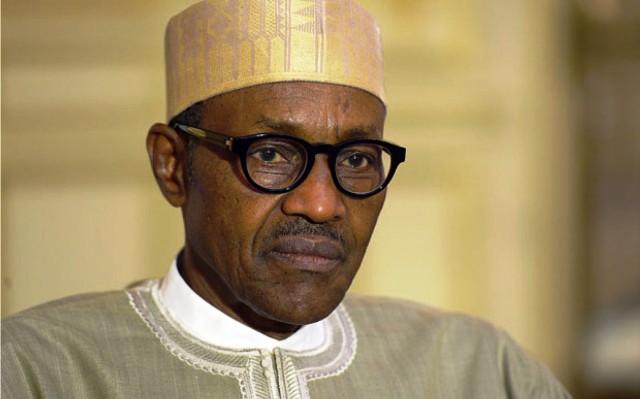
Two prominent members of the Presidential Advisory Committee Against Corruption (PACAC) in Abuja, last weekend, picked holes in government’s handling of the anti-corruption war.
Speaking in Abuja at a programme organised by the National Association of Seadogs (the Pirates Confraternity), the Chairman of the panel, Prof Itse Sagay (SAN), and member, Prof Femi Odekunle, attributed recent setbacks suffered by the administration in the prosecution of corruption cases to the fraudulent activities of compromised elements in the judiciary and legislature, and a lack of diligence on the part of some senior government officials.
The event titled, ‘Feast of Barracuda’, had ‘Critical Review of the Anti-Corruption War in Nigeria: Strategies, Challenges and Prospects’, as its theme.
The Chairman of the committee, Prof. Itse Sagay, said the president and his team must come up with new ideas to fight corruption.
He said the judiciary was concentrating more on technicalities rather than the spirit of the law and justice.
Sagay said, “The Federal Government, particularly the president and vice president, who were elected into office principally to eliminate corruption, must go back to their drawing board, search and scan the constitution and other laws to draw the requisite irresistible power to deal firmly with this terrible scourge of our times – otherwise, we are all dead.”
The senior advocate said the National Judicial Council (NJC) was not equipped to look into corruption cases against judges.
He said the primary duty of the NJC was to address judicial misdemeanour.
The PACAC chairman said before 1999, Nigeria had many incorruptible judges like Justice Kayode Eso, Justice Chukwudifu Oputa, Justice Mohammed Bello, Justice Chike Idigbe, Justice Adetunji Adefarasin, Justice Mason Begho, and others
Sagay, however, said corruption pervaded the judicial system after the return to democracy in 1999, when judges started hearing election petition cases.
He noted that many senior advocates had corrupted and compromised judges to the extent that some of the advocates now pay the school fees of children of judges.
Sagay added, “Today, some judges actually solicit for money. They don’t even wait to be offered money. One of the judges that have been asked by the NJC to go back to work is a constant solicitor of money. He writes to counsel, ‘my mother died, yesterday, I need money to bury her.’
“Two months later, ‘my daughter is getting married next month, I need money to organise a wedding’. Another month, the same judge will write, ‘my uncle has just been made a chief and I need to make a contribution, send money.’
“This is written to lawyers and the lawyers gladly contribute. In fact, there is a long list of lawyers now who have to go to the EFCC, at least, once a month to explain why they had to send so much money to the account of one judge or the other who demanded money.
“Some lawyers do it out of a sense of obligation while some lawyers do it for consideration of future favours. It just shows you how (low) our judges have sunk.”
Sagay said his committee had drafted a bill for the ‘Forfeiture of Assets and Properties, procured by unlawful activity (proceeds of crimes)’ which will empower courts to order forfeiture of properties by a person without the person being convicted.
The senior advocate said he had advised anti-graft agencies to use non-conviction based assets recovery system to fight graft in some peculiar cases.
He said in such a situation, anybody who was found in possession of huge sums of money, whose source he or she could not explain, would be made to explain themselves in court.
The PACAC chairman added, “If you are seen to be living beyond your means of livelihood, the anti-graft agencies could apply for temporary forfeiture of funds and properties and you would then be made to appear in court to explain yourself.
“That bill is already before the National Assembly but we are not even waiting for it to be passed. A part of the EFCC Act empowers the agency to do this.
Also speaking, Odekunle, in particular, questioned the commitment of the Attorney-General of the Federation, Abubakar Malami (SAN), to the anti-graft war and also raised a doubt about the integrity of the Chairman of the Code of Conduct Tribunal, Mr. Danladi Umar, who discharged and acquitted Senate President, Dr Bukola Saraki of all 18 charges levelled against him, last Wednesday.
The professor of criminology also questioned the resolve of the Chief Justice of Nigeria, Justice Walter Onnoghen, to help the Federal Government in the fight against corruption.
While exploring the theme of the event, Odekunle, raised eight salient questions which he said members of the public must answer in order to put the recent failures of the anti-graft war in proper perspective.
He asked, “Does the Presidency realise that routine crime prevention and methodology, instruments and processes are not adequate in fighting corruption in this country? That is, does the Presidency realise that fighting corruption must be a ‘rofo rofo’ fight? That it is not a question of due process, long process, fair hearing and all those that will give you technical justice instead of real justice?
“It is said that he who comes to equity must come with clean hands. In this regard, I ask, what were the details and the resolution of the EFCC matter on Danladi Umar’s bribery case? I don’t know, I’m just asking. Does the DSS possess any information about Danladi Umar on the use or abuse of hard drugs?
“Is there any record that Danladi Umar had been driving and crashing his car under the influence? These are questions that I don’t know the answers to but I want you to investigate.
“Is the Attorney-General of the Federation, who is to lead the anti-corruption fight, going by the way things have been going in the past two years, as committed as others who could have done the job better?
“I have no answers but I believe if they are answered, it will give us an insight into the cause of our current dilemma in the fight against corruption.”
Odekunle urged the Federal Government to use unconventional methods in the fight against corruption, saying it would never win if it continued to use what he described as conventional methods.
He said since the corrupt elite controlled the judiciary and the legislature, this group of people would continue to protect its own.
Odekunle added, “So, all this ‘arrangee’ between the judiciary, the legislators, and people are saying, ‘We don’t want the APC to be destroyed, Saraki is our own, let us settle our own, party supremacy is better’, we must moderate that.”



The Rivers State chapter of the All Progressives Congress Christian Leaders Forum has expressed strong confidence in the capacity of All Progressives Congress (All Progressives Congress) candidates in the state to deliver effective governance if elected into office in the coming elections.
The State Coordinator of the forum, Archbishop Lucky Aroh, made this known during a breakfast and thanksgiving meeting held in Port Harcourt, where leaders gathered to pray for the stability of the party and the safety of its candidates ahead of the 2027 general elections.According to him, the meeting was convened to seek divine intervention for peace, unity, and security among APC candidates across Rivers State.
“Today we are praying for APC stability in Rivers State and the security of our candidates that have been elected to contest the 2027 elections. It is a breakfast meeting,” Aroh said.
He further expressed optimism that the party’s candidates would not disappoint the people if entrusted with leadership responsibilities.
“They will not fail when elected into office. We are here as fathers of the land to let them know, and I must tell you the truth that these are the authentic people that will do well in Rivers State,” he added.
Speaking earlier, the National Chairman of the forum, Professor Olanrewaju Abraham, commended the Rivers State chapter for organizing the programme, noting that the national body of the forum believes strongly in the power of prayer.
He stated that political leadership provides an opportunity to influence society positively, including advancing moral and spiritual values, while expressing confidence that APC candidates at all levels would emerge victorious in the upcoming elections.
Also speaking, the Rivers State Women Leader of the APC, Hon. Darling Amadi, praised the forum for its commitment to prayers for peace, stability, and the protection of party candidates.
Represented by the Deputy Women Leader of the party in the state, she described the initiative as commendable and urged other political and support groups within the party to emulate the gesture in promoting unity and stability.
By: John Bibor, Menebe Emmanuel & Fortune Paibi
Prominent businessman and philanthropist, Elder Anthony Osagwe-Ogo, was celebrated in grand style as he marked his 70th birthday anniversary, with distinguished Nigerians, business leaders, and golf enthusiasts gathering to honour his remarkable contributions to society.
The colourful celebration took place at the Port Harcourt Golf Club, where friends, associates, and well-wishers converged to pay tribute to the revered elder statesman.
Chairman of the occasion, High Chief (Dr.) Ikenna Okafor, described the celebrant as a detribalised Nigerian whose generosity, humility, and commitment to humanity have earned him admiration across different communities and backgrounds.
According to Dr. Okafor, Pa Osagwe-Ogo’s impact on society and the development of his community remains unparalleled. He noted that members of the golfing community are proud to be associated with a father figure who consistently promotes the welfare and well-being of those around him.
He further stated that the history and growth of the Port Harcourt Golf Club cannot be told without acknowledging the significant role played by the celebrant, whose wisdom, encouragement, and leadership have helped sustain the club over the years.
“We are here to celebrate a man who has impacted humanity positively, a peace-loving individual and an epitome of hope for the younger generation. We pray to emulate his virtues. Today, we celebrate a bridge-builder, a trailblazer, and an iconic leader whose life continues to inspire many,” Dr. Okafor said.
He expressed delight at the large turnout of guests from various walks of life, describing it as a testament to the respect and affection Pa Osagwe-Ogo commands within and beyond Rivers State.
In his response, the celebrant, Pa Anthony Osagwe-Ogo, expressed profound gratitude to God for preserving his life and granting him the privilege of attaining the milestone age of 70.
He also thanked members of the Port Harcourt Golf Club, family members, friends, and associates for identifying with him during the celebration and for their unwavering support over the years.
The event featured the cutting of the birthday cake, presentation of awards to deserving members of the club, goodwill messages, and moments of celebration among guests.
The ceremony was attended by notable personalities from the business community, the golfing fraternity, and other sectors, all of whom joined in celebrating the life and legacy of the respected elder statesman.
Rivers State Governor, Sir Siminalayi Fubara, and the Permanent Secretary of the Rivers State Ministry of Information and Communications, Dr. Honour Kuru Sirawoo, have been honoured with awards of recognition in connection with the 2026 Democracy Day celebrations held in Port Harcourt.
The awards, which formed part of activities marking Nigeria’s Democracy Day on June 12, were formally presented on Tuesday at the Ministry of Information and Communications in Port Harcourt.
Presenting the awards was Hon. Abdul Hameed Oladipupo Alli, popularly known as “Mr. Nigeria,” Publisher of Asiwaju Trumpet Magazine and Achievers World International Magazine.
Governor Fubara was recognised for his efforts in sustaining peace, stability, and a conducive political atmospherJohn Bibor / Menebe Emmanuel / Fortune Paibie in Rivers State. The organisers noted that his administration has fostered harmony and strengthened civic participation across the state.
Dr. Sirawoo, on the other hand, was honoured for his exemplary administrative leadership and significant contributions to effective information management within the Ministry of Information and Communications.
Representing Dr. Sirawoo at the presentation ceremony, Dr. Christian Davies received the award on his behalf and expressed gratitude for the recognition. He described the honour as a reflection of Dr. Sirawoo’s unwavering commitment to professionalism, excellence, and dedicated public service.
Dr. Davies assured the organisers that the award would be formally conveyed to the Permanent Secretary.
The event also featured the presentation of commemorative publications highlighting major governance and civic milestones in Rivers State, including Easter celebrations, Workers’ Day activities, the Governor’s third anniversary in office, and Democracy Day programmes.
Organisers of the awards commended the Rivers State administration for what they described as sustained peace, political stability, and improved civic engagement, noting that these achievements have contributed significantly to the state’s continued development.
By: Jessica Sambol