
Nation
THE STATES
FCT
Most Nigerians observed last Monday, that democracy has proved to be the best system of government that has come to stay in Nigeria.
They spoke with newsmen across the country, although some expressed mixed feelings about the performance of democracy in the last 18 years.
For instance, Prof. Chika Aliyu, an economist, commended the Federal Government on the Economic Growth and Recovery Plan (ERGP), as President Muhammadu Buhari marked second year in office.
Aliyu, a lecturer at the Usman Dan Fadio University, Sokoto, said the government did very well by coming up with the plan to take the country out of recession.
According to him, the ERGP aims at making significant progress to achieve structural economic change with a more diversified and inclusive economy in five key areas by 2020.
Kaduna
The Christian Association of Nigeria (CAN), in Jema’a Local Government of Kaduna State, has advised youths to insist on participating in electoral processes that determine Nigeria’s leaders.
“Youths must be fully involved in the electoral process, they must obtain voter’s cards and ensure they voted, so as to have a say in who governs them,” Mr Joel Adegboyega, Chairman, youth wing of the body, said in Kafanchan last Monday.
Adegboyega, who expressed optimism that youth participation would guarantee good governance, spoke during a stakeholders’ meeting on security and governance, organized by CAN.
He stressed the need for youths to also register and be members of political parties through which they could contest leadership positions.
“The continuous voter’s registration exercise is in full swing. It is an opportunity for us to be part of politics. We should not just be spectators and analysts,” he declared.
Katsina
The Da’awah Committee in Katsina State, an Islamic group, said it had educated 300 persons who recently embraced Islam on good conduct, brotherhood and tolerance.
The Chairman of the committee, Sheikh Salisu Bakori told newsmen last Tuesday in Bakori that, during the three-day seminar, the converts were sensitised on Islamic law, good neighbourliness and support to the needy.
According to him, most of the converts were from the 27 local government areas of Katsina State and some from Kudan, Giwa and Hunkuyi Local Government Areas in Kaduna State.
Bakori, said apart from the religious teachings, the 300 converts also had various sessions on skills acquisition, to empower them to be self reliant.
He noted that, poverty had been a major cause of restiveness, as such it was important to encourage all Muslims to learn trades so as to earn decent living.
Kogi
The Kogi State government says it has completed payment of salary to 95 per cent of its workers that were cleared in the just concluded staff screening and verification.
The state governor, Alhaji Yahaya Bello, made the assertion last Monday in Lokoja, in a statement issued to mark this year’s democracy day celebration.
” I can confirm that people are still getting payment alerts as we do our best to meet the May 31 Time line which we set for ourselves to complete all payments,” the governor said.
Bello, said that government was deploying integrated staff and payroll automation solutions to consolidate the gains from the screening in line with the ongoing civil service and pension reforms.
With the conclusion of the exercise, he assured workers and pensioners of prompt payment of salary and pensions.
Kwara
Traditional rulers from Kwara South Senatorial District last Monday, said the country made substantial progress in the last two years of its democratic governance.
The traditional rulers made this known, in their separate messages to mark the Democracy Day in their palaces in Omu-Aran, Egosi and Rore.
The traditional rulers are the Olomu of Omu-Aran, Oba Charles Ibitoye, Elegosi of Egosi, Daniel Dada and Onirore of Rore, Oba Ezekiel Oyewole.
Ibitoye of Omu-Arab community, said that the nation’s achievements through sustainable democratic transition could not be over emphasised.
Lagos
Government must amend the laws against Gender-Based Violence(GBV), in the country to make them more effective and quickly bring culprits to book.
Mrs Ibiduni Alakija-Ladapo, the Deputy -Director, Occupational Health Department, Ministry of Health, Lagos State, made the appeal in an interview with newsmen last Monday in Lagos.
Alakija-Ladapo, a consultant on child, adolescent and women’s health, said that, such an amendment would help to reduce gender-based violence against girls and women.
She said that violence against these groups was deeply ingrained in cultures around the world.
If there were laws against its practice in Nigeria, the issue would have been a thing of the past by now, Alakija-Ladipo said.
Nasarawa
Governor Umaru Al-Makura of Nasarawa State, has warned politicians in the state to desist from acts capable of breaching the peace in the state or face the wrath of the law.
Al-Makura, gave the warning last Monday in Lafia, during an interactive session with the All Progressives Congress (APC) stakeholders, including political appointees and legislators across the state.
He noted that, the state belonged to all citizens and that it behoves on all to work towards its growth and development rather than engage in acts capable of causing disharmony.
“No politician should take this administration for granted or mistake our diplomatic posture for weakness as government is ready to deal with mischief makers in whatever form they exhibit their tendencies,” he said.
He charged politicians to play by the rule and avoid hate speeches and campaign of acrimony, thereby, overheating the polity.
Ogun
Two persons were confirmed dead in a road accident involving a blue Toyota Corolla car and a Toyota picnic bus at Olodo area, on Abeokuta/Ibadan Expressway in Ogun.
Mr Babatunde Akinbiyi, the Public Relations Officer (PRO), Traffic Compliance and Enforcement Agency (TRACE), in Ogun State, confirmed the accident to newsmen in Abeokuta last Tuesday.
Akinbiyi, explained that the accident occurred on Monday evening due to wrong overtaking by the driver of the Toyota Corolla car.
He stated that the two vehicles had three occupants each, saying that the dead were the drivers of both vehicles.
Akinbiyi said, “The accident involved a Toyota Corolla car with registration number KSF 846 EF and a Toyota picnic bus with registration number RLG 61 AA.
“The driver of the Toyota Corolla car tried to overtake the Toyota picnic space bus, which resulted in collision that led to the crash.
“The vehicles had three passengers each when the accident occurred, three male and three female but the drivers of both vehicles died in the accident.”
Ondo
Some politicians in the South West have called for the protection of the country’s democracy, saying it has come to stay.
Mrs Morenike Alaka, the new Caretaker Chairperson, Okitipupa Local Government Area of Ondo State urged politicians to protect the nascent democracy.
She gave this advice in an interview with newsmen last Monday in Okitipupa while reflecting on the Democracy Day celebration.
“Our politicians have a huge task of protecting our nascent democracy, because we do not have any other place than Nigeria.
She urged all Nigerians to continue to pray for the leaders to enable them pilot the affairs of the country to the expected heights.Oyo
Oyo
The Director-General of the NYSC, Brig-Gen. Sule Kazaure, on Monday visited the 2017 Batch A Stream 1 corps members at their camp in Iseyin, Oyo State.
Report that, the visit was in continuation of the director general’s working tour of NYSC orientation camps nationwide.
Kazaure, who interacted with the corps members, also assessed the ongoing construction of hostels in the camp.
He urged the corps members to add value to their lives through the four cardinal programmes of the NYSC, especially its skills acquisition programmes in order to be self reliant.
Kazaure also advised them to accept the culture and tradition of their host communities.
He called on the corps members to avoid unnecessary journeys and night parties while shunning indecent dressing and corruption.
Kazaure also urged the corps members to comply with the rules and regulations put in place throughout the service year, adding that, those faithful would be rewarded.
Sokoto
Sokoto State Government, said it inherited twenty eight road projects worth N33 billion, from its predecessor, the State Deputy Governor, Alhaji Ahmed Aliyu said, last Monday.
Reports that Aliyu, who also oversees the Ministry of Works, disclosed this in Sokoto, at a news briefing to mark Governor Aminu Tambuwal two years in office.
He said that, the administration had inherited twenty eight road projects worth about N33 billion, from its predecessor.
Aliyu enumerated them to include the 445-kilometres Balle-Kurdulla-Niger republic road, awarded at N 4.5 billion and has reached 69 per cent completion.
Others include the 52-kilometres Gidan Sale-Tidibale-Maillalle road, awarded at N2.9 billion, which has reached 81 per cent completion, among others.

Nation
Ogoni Mangrove Wetlands Gain International Recognition As Ramsar Site
The Hydrocarbon Pollution Remediation Project (HYPREP) has announced that the mangrove wetlands in Ogoniland have been officially designated a Ramsar Site of International Importance by the Secretariat of the Ramsar Convention on Wetlands.
The designation, according to HYPREP, underscores the global ecological significance of Ogoniland’s mangrove wetlands and highlights ongoing restoration efforts aimed at addressing environmental degradation in the area.
In a press statement issued by the Project Coordinator of HYPREP, Prof Nenibarini Zabbey, the recognition was described as a major milestone for the agency, the people of Ogoni and other stakeholders working towards environmental restoration in the region.
Zabbey explained that the mangrove wetlands, which cover more than 31,700 hectares, consist of islands, tidal creeks, mudflats and mangrove forests that support a wide range of biodiversity. The ecosystem provides habitat for several species including fin fish, shellfish, crustaceans, crocodiles, turtles and the endangered grey parrot.
He noted that beyond biodiversity conservation, the wetland also provides essential ecosystem services such as fisheries production, flood control, water purification and carbon storage. According to him, the international recognition will further support local livelihoods, promote ecotourism and bring global attention to the region.
The HYPREP coordinator disclosed that the designation followed a meticulous process that began in 2024 when the project submitted a memorandum to the National Council on Environment seeking support for the recognition of the Ogoni wetlands as a Ramsar site.
Following the council’s review and approval, the Honourable Minister of Environment and Chairman of HYPREP’s Governing Council, Balarabe Abbas Lawal, formally wrote to the Ramsar Convention Secretariat requesting international recognition of the wetlands.
After a comprehensive ecological assessment, the Ramsar Secretariat granted the designation, officially recognising the Ogoniland wetlands as one of the world’s sites of international importance.
Zabbey said the recognition would strengthen ongoing environmental restoration efforts in the area and encourage stronger conservation measures and sustainable management of the wetlands for the benefit of present and future generations.
He added that the designation also fulfils a key recommendation of the United Nations Environment Programme (UNEP) Environmental Assessment Report on Ogoniland, marking another significant step in the implementation of the report’s recommendations.
The HYPREP project coordinator reaffirmed the agency’s commitment to restoring the Ogoni environment through the remediation of oil-polluted land, shorelines and mangrove ecosystems.
He also called for collective responsibility and stakeholder support to sustain the progress of the Ogoni cleanup programme and facilitate the development of a comprehensive and sustainable management plan for the Ogoni mangrove wetlands.
Nation
Perm Sec Explains Success Of FGM Elimination Programme In Rivers
The Permanent Secretary, Rivers State Ministry of Social Welfare and Rehabilitation, Mrs Lauretta Davies-Dimkpa, has attributed the successes of the 12-day programme organised for adolescent girls aimed at eliminating Female Genital Mutilation(FGM) in some parts of the State to the ability of the respective stakeholders to take ownership of the programme.
Mrs Davies-Dimkpa, who dropped the hint in an interview at the end of the programme in Elele-Alimini Community in Emohua Local Government Area on Saturday, said the event had a buy-in component, an ownership mentality, whereby facilitators, staff, and everyone involved took ownership of the project.
She explained that the Rivers State Ministry of Social Welfare and Rehabilitation, in collaboration with the United Nations Children’s Fund (UNICEF) and the United Nations Population Fund (UNFPA) had packaged a series of training sessions for adolescent girls aimed at ending the practice of Female Genital Mutilation (FGM) in some communities across the State.
According to her, the initiative was designed to educate young girls on the harmful effects of the practice and empower them to become advocates against it within their communities.
She noted that the programme, which lasted for several weeks, targeted adolescent girls from different local government areas where the practice is still prevalent, stressing that
data collected by UNICEF and the Ministry revealed that Female Genital Mutilation is still practised in some parts of the State, prompting the need for intensified sensitisation and community engagement.
Mrs Davies-Dimkpa explained that the programme adopted a “train-the-trainer” approach where adolescent girls were educated on the dangers of the practice and encouraged to share the knowledge with their peers, families and communities.
“This is a programme by the Rivers State Ministry of Social Welfare and Rehabilitation with support from UNICEF and UNFPA to train adolescent girls towards ending Female Genital Mutilation, which is still practised in some local government areas,” she said.
She further explained that each participating local government area had a three-day training session, with the exercise running for a total of 12 days.
The local government areas, where the programme took place, she noted, included Ahoada West, Abua-Odual, and Emohua, adding that the initiative is part of broader efforts by the state government and development partners to eliminate harmful traditional practices and protect the rights and wellbeing of girls.
She revealed that prior to the training of the adolescent girls, the Ministry and its partners had also engaged community facilitators, including older women and men, to sensitise them on the dangers associated with Female Genital Mutilation.
According to her, the involvement of community leaders and adults is essential in addressing the cultural and social factors that sustain the practice.
Speaking on the response of the participants, the permanent secretary expressed satisfaction with the level of engagement and enthusiasm shown by the girls throughout the training sessions.
She noted that many of the participants said they were learning about the harmful effects of Female Genital Mutilation for the first time.
“The girls are between the ages of 12 and 17 and from the interactions we had with them, they were very excited. Some of them are hearing these things for the first time and never knew that the practice is harmful,” she said.
She expressed optimism that the knowledge gained from the training would enable the girls to serve as advocates for change within their communities.
She added that the Rivers State Government, alongside its partners, would continue to intensify efforts and expand community-based interventions aimed at ending the practice across the State.
Meanwhile, the participants for Emohua Local Government Area were drawn from Elele-Alimini, Egbeda, Rumuji, Ibaa, Rumuekpe, Rumuakunde, Eligbarada, and Ogbakiri Communities.
The participants,who spoke in separate interviews described the training as eye-opening, noting that it helped them better understand issues surrounding adolescent health, personal hygiene, reproductive health, and the harmful consequences of Female Genital Mutilation.
Favour Azukwu from Rumuekpe community, said the programme provided a deeper understanding of the dangers associated with the practice, particularly its impact on the health and wellbeing of girls and women.
She explained that the training sessions exposed participants to the medical, social and psychological effects of Female Genital Mutilation, including severe bleeding, infections and complications during childbirth.
She revealed that she personally experienced the practice at the age of 12 and suffered heavy bleeding afterwards, an experience that has strengthened her determination to advocate for its eradication.
According to her, many communities still practise Female Genital Mutilation because it is perceived as a cultural tradition, despite the dangers associated with it.
“I do not support Female Genital Mutilation because there are many dangers involved. I experienced severe bleeding when it was done to me as a child.
Another participant, Glory Ken, a 16-year-old secondary school student from Rumuji community, said the programme broadened her understanding of several important topics affecting adolescents.
She explained that beyond the discussion on Female Genital Mutilation, the training also focused on issues such as personal hygiene, reproductive health, peer education, and self-care.
According to her, the sessions helped participants understand the importance of making informed health decisions and supporting one another as peer educators.
“I learned about many things that affect young people in society and how to take care of myself. I also learned that Female Genital Mutilation is harmful to our health. The message I am taking back to my community is that this practice should stop,” she said.
Also speaking, Goodness Kenjika Nyeche described the programme as very impactful.
She noted that the training equipped participants with the skills and confidence to educate others about the harmful effects of Female Genital Mutilation.
She said she plans to organise sensitisation among adolescents in her community, particularly girls between the ages of 10 and 19, to ensure they understand the dangers associated with the practice.
“I learned many things from this programme and I feel very good about it. I will educate other young girls in my community and help them understand why Female Genital Mutilation should not continue,” she said.
For Queen Dike from Ibaa community, the programme helped clarify misconceptions surrounding the practice.
She explained that in some communities, the practice is still referred to as circumcision and is viewed as part of cultural identity.
She said the training helped participants understand that Female Genital Mutilation involves the cutting or removal of parts of the female genital organs and that it has serious health consequences.
She stressed that awareness and education are key to ending the practice, especially among communities that continue to uphold it as tradition.
“I think the programme is very helpful because many people still believe it is part of culture. More awareness is needed so people can understand why it should stop,” she said.
Another participant, MyJoy Echika Amadi, said the programme provided critical information about adolescent health and the dangers associated with Female Genital Mutilation.
She described the initiative as enlightening and said it encouraged young people to become advocates for change in their communities.
According to her, participants were encouraged to use various platforms such as churches, peer groups, schools and community gatherings to spread awareness about the harmful effects of the practice.
“This programme has enlightened us about the dangers of Female Genital Mutilation. I will do my best to create awareness in my community and encourage people to stop the practice,” she said.
Many of the participants emphasised that the knowledge gained during the programme has empowered them to challenge harmful traditions and promote healthier practices among young people.
They also called on the Rivers State Government, development partners and civil society organisations to sustain the sensitisation campaigns and extend the training to more communities across the State.
According to them, empowering young people with the right information will play a critical role in eliminating Female Genital Mutilation and protecting the rights, health and dignity of girls in Rivers State.
The participants expressed appreciation to the Rivers State Ministry of Social Welfare and Rehabilitation, UNICEF and UNFPA for organising the programme and for investing in the wellbeing and future of adolescent girls in the State.
Nation
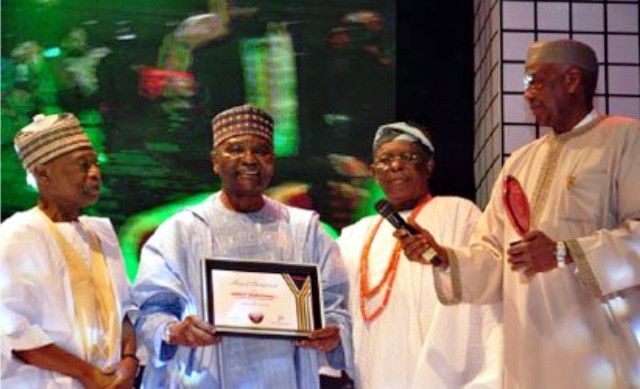
UNIZIK Honours Business Mogul, Ezekwe, For Philanthropism
-
News5 days agoDon Savours Inaugural Lecture Presentation, Commends VC
-
News14 hours agoPolice Arrest Nigerian, Two Others For Kidnapping In Edo
-
Nation16 hours agoPerm Sec Explains Success Of FGM Elimination Programme In Rivers
-
Business4 hours agoNigeria, AFC sign $1.3 billion deal to build alumina refinery
-
News14 hours agoNDLEA Arrests Ex-Councillor With 40kg Skunk, Recovers Drugs In Diapers
-
Rivers4 hours agoLGSC Boss Commits To Better Service Delivery
-
News14 hours agoArmy Foils Cattle Rustling, Kills Terrorists In Benue …Rescues Two Kidnapped Bank Staff
-
Nation16 hours agoOgoni Mangrove Wetlands Gain International Recognition As Ramsar Site
