
Featured
MEND Issues Two-Week Ultimatum To FG

The Movement for the Emancipation of the Niger Delta (MEND), has given President Muhammadu Buhari’s administration two weeks to open talks with its “Reach out to ‘Aaron Team’” or face dire consequences.
MEND also responded to a recent piece titled: ‘President Buhari Sharpens Focus On Niger Delta’, authored by Senior Special Assistant to the President on Media and Publicity, Garba Shehu.
Garba had lambasted the Niger Delta Avengers for “killing soldiers and policemen, kidnapping and killing of oil company workers, and asking oil companies to stop operations and pack out of the Niger Delta region”.
In the piece, Shehu had alluded to the fact that: “they blow up oil pipelines, power and other infrastructure. They attack and kill prominent individuals,
ransacking homes up and down the coastal areas, including lately, Lagos and Ogun states. All these for what?”
But in a swift reaction, yesterday, MEND, denied that Niger Delta militants were behind the killings and attacks on some coastal communities in Lagos and Ogun.
The statement, made available to The Tide via email, called on Buhari to act fast in addressing issues it had earlier raised, and listed names of those the government must negotiate with.
It also warned that: “If we don’t hear from the Federal Government, MEND shall safely assume that it is truly not sincere about dialogue on the Niger Delta question, and responds only to the threat of violence or industrial action”.
The statement reads in full: “The attention of the Movement for the Emancipation of the Niger Delta (MEND) has been drawn to an article titled: ‘President Buhari Sharpens Focus On Niger Delta,” written by Mr. Garba Shehu, the Senior Special Assistant to the President on Media and Publicity.
“We have carefully studied and analysed the article. We wholeheartedly applaud and welcome President Buhari’s sharpened focus on the Niger Delta, even though, in our estimation, Mr. Shehu’s article ironically did more to obtuse the focus.
“Shehu’s piece was unfortunately marred by sweeping assumptions; hasty generalization; illogicality and poor analysis of the Niger Delta question and, above all, the article merely provided lame excuses for government’s inability to proffer sustainable solutions to the Niger Delta crisis.
“It would tactless of Shehu to arrive at a conclusion in his article that, Niger Delta militants were behind the killings of prominent individuals and attacks on some coastal communities in Lagos and Ogun states. This casual but hasty generalization from a Presidential spokesperson is, to say the least, steeply divisive and capable of sparking a tribal war of unimaginable consequences between the Ijaws (whose youth are perceived to constitute a large number of the rank and file of Niger Delta militants) and the Yorubas.
“Quite apart from the fact that none of the Niger Delta Avengers operatives have so far, been arrested by security agencies to establish Shehu’s sweeping assumption, the comment by Shehu is regrettable and infra dig his office.
“Going forward, three salient issues which clearly reveal the seeming inability of President Buhari’s government to find sustainable solutions to the Niger Delta crisis can be distilled from Shehu’s article.
“Firstly, he made heavy weather about the Punch newspaper editorial of July 1, 2016, as a basis to justify government’s reluctance to negotiate with the NDA and other militant groups. Thereafter, he cited National Security Adviser (NSA), General Babagana Monguno’s alleged encounter with about 14 different militant groups who were all “claiming leadership to the renewed onslaught on the nation’s economic jugular vein.”
“Secondly, Shehu revealed in his article, the reluctance of government to take “the strongest possible military action” against the NDA and other militant groups while appealing to elders and traditional rulers from the Niger Delta region such as HRH King Alfred Diette-Spiff, the Amanyanabo of Twon-Brass in Bayelsa State to beg the militants to ceasefire.
“Thereafter, Shehu informed that President Buhari would take action (presumably, military action) after receiving reports from Minister of State for Petroleum, Dr. Ibe Kachikwu, who was interfacing with stakeholders; Special Adviser on Niger Delta/Co-ordinator, Presidential Amnesty Programme, Brigadier General Paul Boroh (rtd); and the new management of the Niger Delta Development Commission (NDDC).
“Thirdly, Shehu, in his article, bemoaned the proliferation of solutions to the Niger Delta crisis while asking rhetorical questions, to wit: “How many of those agreements, joint statements, ceasefires and peace declarations do we have on record so far? Why haven’t they given us peace? What is wrong with those agreements that they don’t last?”
“Shehu failed to proffer answers to his own questions. He also failed to apportion blame on successive governments and the International Oil Companies (IOCs) who have repeatedly reneged on agreements entered with the people of the Niger Delta.
“For instance, Shehu needs to be reminded that government and the IOCs are owing the NDDC billions of Naira in withheld funds. But that is a discussion for another day.
“There is a marked distinction between negotiation with criminals and fraudsters who force concessions from government using the strategy of attacks on oil installations, on the one hand; and dialogue with genuine militant groups such as MEND, who are committed to meaningfully engage government on the vexed Niger Delta question, on the other hand. While the former engage in militancy for their own personal aggrandizement; the latter are patriots who are fighting a just cause and are equally desirous of peace, stability and development of the Niger Delta region for the common good.
“As unfolding events in Nigeria have since revealed, the major challenge of President Buhari’s government lies in its inability to distinguish between NEGOTIATION (emphasis supplied) with criminal elements such as the Avengers, who are sabotaging the nation’s economy and whose demands range from the mundane to the outright ridiculous, on the one hand; and DIALOGUE (emphasis supplied) on the Niger Delta question with a serious-minded group such as MEND, on the other hand.
“The way and manner criminal gangs such as the Avengers hold government to ransom and force concessions; is the same way and manner pressure groups such as PENGASSAN, NUPENG or even the National Association of Resident Doctors (NARD) oftentimes held government to ransom, regardless of the risks posed by their actions to the national economy and to the lives of ordinary Nigerians. The only difference here is that Avengers ups the ante with their senseless and unprovoked attacks on oil installations. Willy-nilly government must negotiate with them even though their belligerent and bellicose conducts may be inimical to the national interest.
“The government is, therefore, at liberty to negotiate with arm-twisting unions and criminal groups like the Avengers so long as such negotiations were done in the national interest. After all, even in the United States and other Western countries, professional negotiators were often engaged by those governments to negotiate with criminals who may have held innocent citizens hostage; while at the same time, placing snipers on standby to take out the threat to national security whenever the opportunity presented itself.
“MEND is, therefore, not opposed to government’s plan to negotiate with the recalcitrant Avengers through the office of the NSA. However, government must not delude itself into thinking that negotiation with the Avengers was tied to the resolution of the Niger Delta question. Negotiation with NDA is merely a temporary respite, as another opportunistic group is lurking in the shadows. But dialogue and resolution of the Niger Delta question is a sustainable solution for all stakeholders.
“MEND has repeatedly reiterated that the Niger Delta struggle was beyond attacks on oil installations. In fact, destruction of oil and gas pipelines is an elementary course in guerilla warfare which can be carried out by any militant group. MEND, therefore stopped attacks on oil installations more than two years ago when the group unilaterally declared a ceasefire of hostilities on May 30, 2014, against Nigeria’s key economic and strategic interests. Since then, the group had relentlessly sought to engage government in a sincere DIALOGUE (emphasis supplied) on the release of Prisoners of Conscience, including Henry and Charles Okah, as well as addressing the root issues bedevilling the Niger Delta region, without success.
“On January 6, 2015, when MEND realised that former President Goodluck Jonathan – an indigene of the Niger Delta – was not interested in dialogue, on the Niger Delta question, the group endorsed Muhammadu Buhari as its candidate in the 2015 Presidential election; in the earnest belief that President Buhari would sincerely welcome dialogue on the Niger Delta question. MEND, therefore, calls on President Buhari to refrain from being deceived by the recent visit of King Alfred Diette-Spiff to the Presidential Villa under the pretext of a hurriedly formed Niger Delta Dialogue and Contact Group (NDDCG).
“Throughout the 6-year tragic rein of former President Goodluck Jonathan, King Diette-Spiff said or did nothing on record to draw the attention of the former President to the resolution of the Niger Delta question. He and other elders and elites of the region, including Chief Edwin Clark, certain ex- militants, tribal assemblies such as the Ijaw Youth Council (IYC) as well as a coterie of so-called Niger Delta activists; embarrassingly kept mute and turned a blind eye during the 6 years of colossal waste, unmitigated corruption, monumental fraud in the unsustainable amnesty programme, environmental decay and neglect, infrastructural stagnation such as the wicked and criminal abandonment of the East-West Road project, among others.
“Regardless of the fact that there is a consensus of opinion that the Federal Government is not sincere about the kind of dialogue advocated by MEND, the group has nevertheless, named an Aaron Team comprised of Henry Odein Ajumogobia, SAN (Rivers) – team leader; Bismark Jemide Rewane (Delta) – awaiting re-confirmation; Senator Florence Ita-Giwa (Cross River); High Chief Government Ekpemupolo (Delta) – awaiting confirmation; Ledum Mitee, Esq. (Rivers); Lawson Omokhodion (Edo); Ibanga Isine (Akwa Ibom); Senator Adolphus Wabara (Abia); Alfred Isename (Edo); and Timipa Jenkins Okponipere, Esq. (Bayelsa) as team secretary.
“For the avoidance of doubt, the MEND Aaron Team shall not dialogue with the NSA given that the office of the NSA lacks executive power; that the root issues surrounding the Niger Delta question are on the exclusive legislative list; and that the proposed dialogue is not an interrogatory session.
“We, therefore, hope that the Federal Government shall reach out to “Aaron Team Leader”, Odein Ajumogobia to signal its intention to commence the dialogue. If after two (2) weeks from the date of publication of this Right of Reply, we don’t hear from the Federal Government, MEND shall safely assume that government is truly not sincere about dialogue on the Niger Delta question and responds only to the threat of violence or industrial action,” it added.
Susan Serekara-Nwikhana



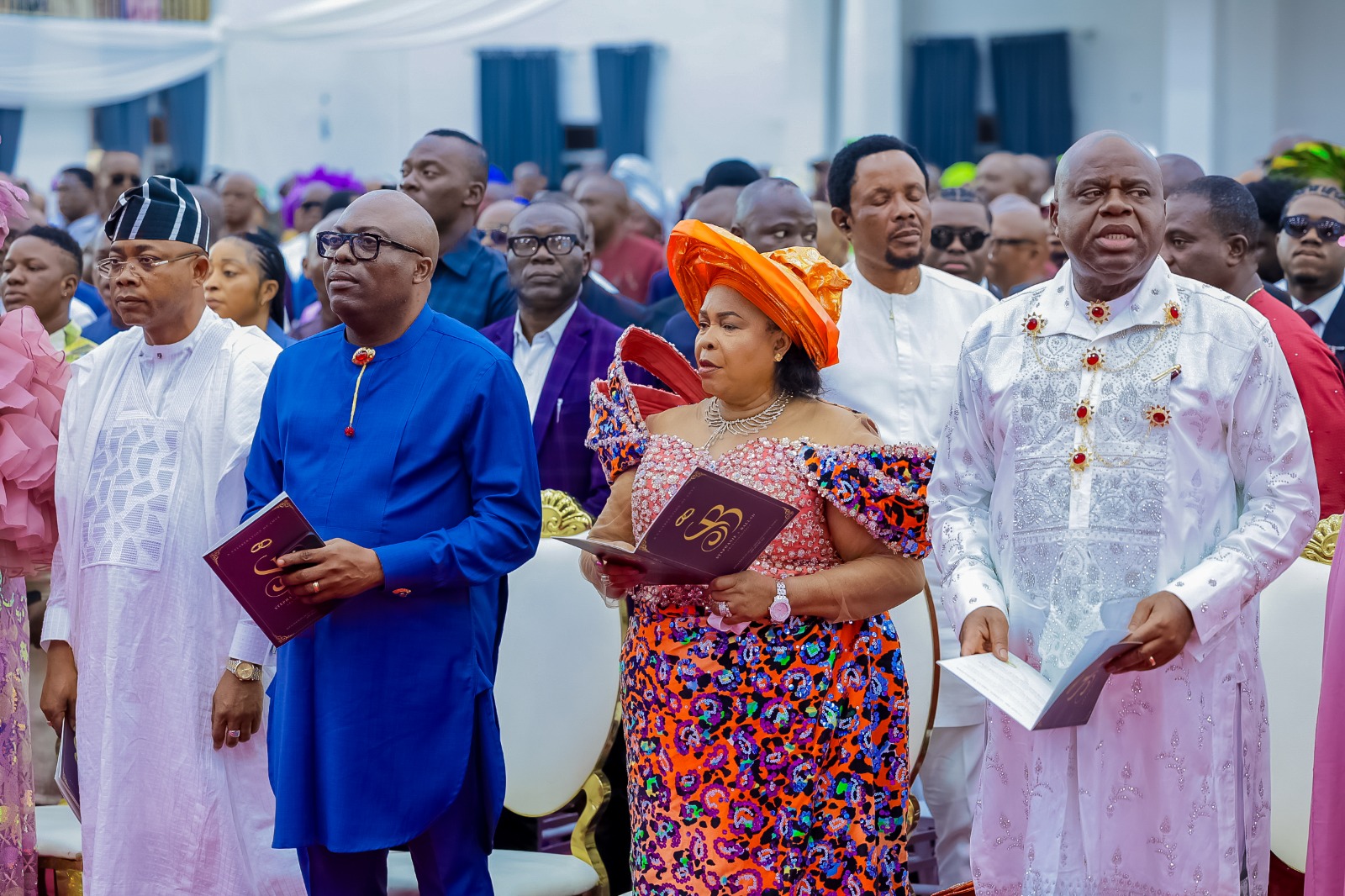
Rivers State, Sir Siminalayi Fubara, has assured members of the National Youth Service Corps (NYSC) of his administration’s commitment to supporting and strengthening the scheme in the State.
Fubara gave the assurance last Friday at the NYSC permanent orientation camp, Nonwa-Gbam, Tai Local Government Area in the State, during the swearing-in ceremony of 2026 Batch B Stream II orientation course.
Represented by the Permanent Secretary, Cabinet Bureau, Office of the Secretary to the State Government, Dr. Promise Oguzie, the governor said the State Government would remain intentional in providing the necessary support to improve the NYSC scheme and enhance the experiences of corps members deployed to the state.
He charged the corps members to be role models and quality nation-builders in their service to the good people of Rivers State in particular, and Nigeria at large.
“I charge you to be exemplary, dedicated and committed in all you do. Take full advantage of all the camp programmes and activities to enrich yourselves”, he said.
In his welcome address, the State Coordinator of NYSC in Rivers State, Mr. Moses Oleghe, urged corps members to see their deployment to Rivers State as a “veritable opportunity to make meaningful contribution to the growth of the State in particular and Nigeria at large.”
He further charged them to serve with all sense of “integrity, discipline, and the fear of God, especially when they will be engaged as INEC ad-hoc staff that will conduct the 2027 general elections.”
A total of 3,584 corps members composed of 1,421 males and 2,163 females were sworn in by the Chief Judge of Rivers State, who was represented by Justice Godspower Aguma.

Governor of Rivers State, Sir Siminalayi Fubara, says Nigeria needs God-fearing leaders for the nation to move in the right direction and make meaningful progress.
The Governor stated this yesterday when he received in audience, the World President of the Seventh Day Adventist Church, Pastor Erton Kohler; his wife, Andriene Marques Kohler; daughter Mariana Marques Kohler and a retinue of ministers of the church at Government House, Port Harcourt.
Fubara who hailed the Seventh Day Adventist Church for its contributions to education and the grooming of future leaders in Nigeria, expressed delight that the Church had over the years, been investing in education at various levels and currently runs two universities in the country.
He commended the church for not only using its institutions to spread the gospel of Christianity but to groom future leaders for the country.
According to him, religion should not be just about defending one’s faith, but also making meaningful impact on the lives of the people.
He said that by floating these educational institutions, the church has demonstrated capacity to support Nigeria in the task of producing not only educated people but a breed of God-fearing leaders.
“Our country is where it is today because we lack the fear of God. If you have the fear of God, there should be a limit to what you can do because you understand the supremacy of God. But when God is not in your equation, you’ll go beyond the line and that is what has brought us to where we are today.
“So, I feel very happy that you are contributing to the development of our future leaders in this country. We need the right people being in the right place; prepared properly with good minds; that is what we need, not just in Nigeria but round the whole world.,” he said.
Governor Fubara further observed that the absence of God-fearing people in high places to take the right decisions that could impact positively on the society, has also given rise to other problems such as social inequality, poverty, corruption and criminality. According to him, Nigeria needs a system where the average parent could afford quality education for their children and a guarantee that upon graduation, the average child will have the capacity to compete favourably with anybody, anywhere in the world.
“If we have a situation where the little money that you’re being paid as wage can also afford you quality healthcare and after working at least for 15-20 years, you have a roof over your head, tell me why you should be involved in any kind of crime? At that point, you’ll feel secured and this attitude of insecurity about the future that leads to all the social vices we have today won’t be there,” he said.
Governor Fubara expressed appreciation to the delegation for the visit and for their prayers for Rivers State, assuring them of his continued support for their programmes in the state.
Leader of the delegation and World President of the Seventh Day Adventist Church, Pastor Erton Kohler said he was in Nigeria for a special conference of the church during which thousands of the church’s ministers will be undergoing an empowerment programme to further equip them for the task of herding their flocks and serving the society.
He expressed gratitude to the Governor for the warm reception accorded his entourage, saying the memory of the visit will linger in his mind for a lifetime.
Kohler disclosed that the Church has over twenty -four million (24,000,000) members and more than 182,000 places of worship, spread across 212 countries of the world.

The Rivers State House of Assembly has approved the 2026–2028 Medium Term Expenditure Framework (MTEF) submitted by Governor Siminalayi Fubara.
This reaffirms the lawmakers’ commitment to enacting laws and taking legislative actions geared towards the overall development of the State.
The Assembly gave the approval during its Second Legislative Sitting of the Fourth Session held last Friday.
Speaking on the MTEF document during plenary, the House Speaker, Rt. Hon. Martin Amaewhule, noted that by the provision of Section 10(1)(b) of the Rivers State Fiscal Responsibility Law No. 8 of 2010, the MTEF ought to have been laid before the House in September 2025.
Amaewhule explained that traditionally, the document is expected to be presented four months before the commencement of the next financial year and immediately after the expiration of every three-year fiscal cycle.
He, however, stated that in the interest of the State and its people, the House considered it necessary to deliberate on the document, describing it as a precursor to the 2026 Budget Estimates.
The Speaker expressed concern that the year had already progressed significantly before the presentation of the framework.
During deliberations on the document, members examined the assumptions and projections contained in the MTEF and observed that strict adherence to the outlined fiscal parameters would ultimately serve the interest of Rivers people.
The lawmakers maintained that effective implementation of the framework would promote prudent financial management and enhance developmental planning across the State.
Following the debate and positive consideration by members, the Speaker put the question to the House and members voted overwhelmingly in support of the approval of the MTEF.
Meanwhile, during the same sitting last Friday, the House also received a petition from the Chairman of Obio/Akpor Local Government Council, Dr. Gift Worlu.
The petition was presented by the member representing Obio/Akpor Constituency II, Hon. Emilia Amadi.
According to the petition, concerns were raised over an imminent security breach, threats to lives, destruction of property and alleged forceful takeover of property by some lawless persons within parts of the Local Government Area.
Presenting the petition before the House, Hon. Amadi appealed to the lawmakers to revisit the matter and take necessary steps aimed at safeguarding lives and property in the affected communities.
The House is expected to further deliberate on the petition and consider measures to address the concerns raised in order to sustain peace and security in the area.
King Onunwor
-

 News3 days ago
RSG Targets Nine Million Residents in Mosquito Net Distribution Campaign
-

 Oil & Energy3 days ago
Aiyedatiwa Signs New Electricity Bill
-

 Maritime3 days ago
Marine Minister Commends President Tinubu On NPERA Bill Assent
-

 Oil & Energy3 days ago
NLNG Commissions Research And Innovation Centre In RSU
-

 News3 days ago
KenPoly Holds Eight Convocations, August 29
-

 News3 days ago
RSG Begins Another Phase of Projects Commissioning Today
-

 News3 days ago
RMAFC Completes Revenue Sharing Review, Proposes New Pay
-

 Maritime3 days ago
NAGAFF Petitions IGP Over Alleged Maritime Police Harassment