
Featured
Oko-Jumbo Emerges New Rivers Assembly Speaker, Sokari As Leader …Promises Transparency In Legislative Duties

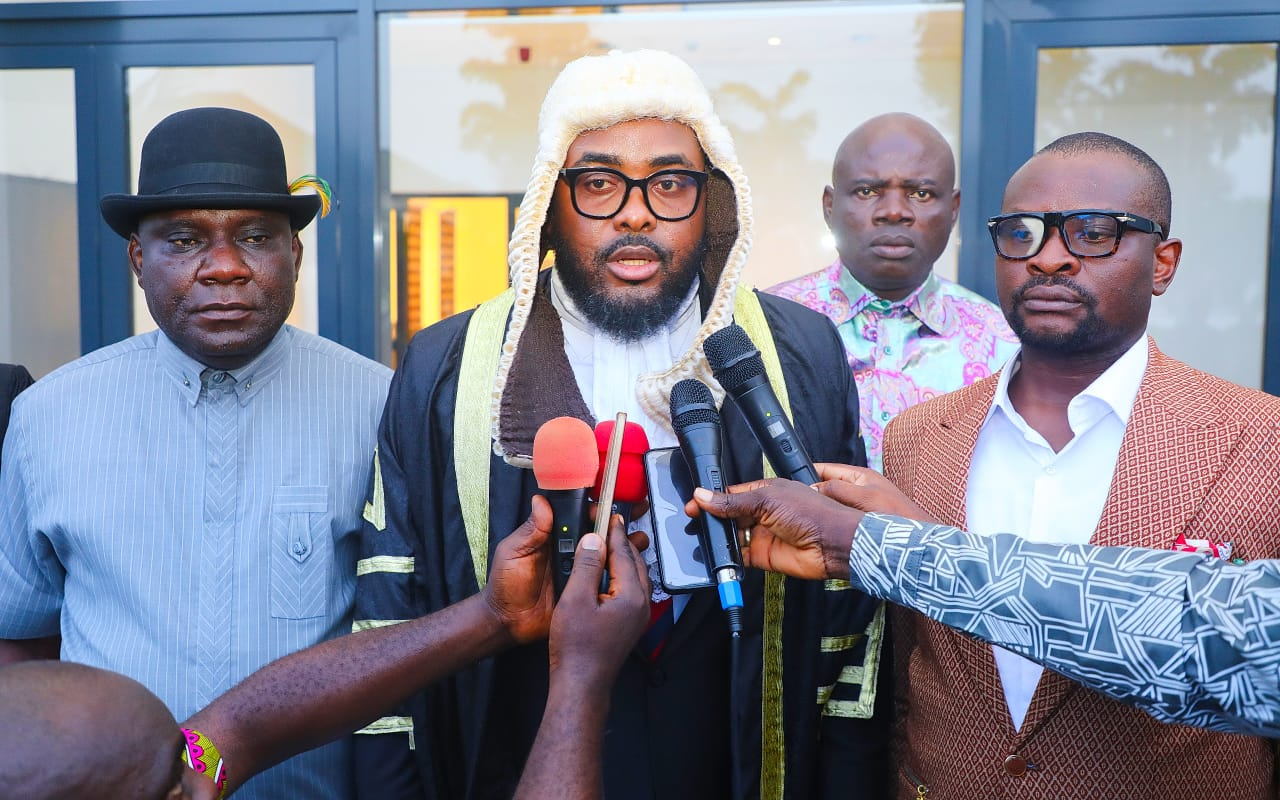
The member representing Bonny State Constituency, Hon. Victor Oko-Jumbo, has emerged as the new Speaker of the 10th Rivers State House of Assembly.
He was elected on Wednesday at 10am during plenary, in line with the Standing Order of the House.
In his acceptance speech, Rt. Hon. Victor Oko-Jumbo, thanked the members for electing him as the new Speaker sequel to the resignation of the former Speaker, Rt. Hon. Edison Ogerenye Ehie.
Speaking on the floor of the House, Oko-Jumbo said: “This is in line with Section 92(1) of the Constitution of the Federal Republic of Nigeria, 1999 (CFRN 1999) as Amended.
“You will agree with me that after the House last sat on the 13th of December, 2023, and adjourned sine dine, there has been an avalanche of legislative rascality perpetrated by the 25 former members of the 10th Rivers State House of Assembly, led by the former Speaker, Rt. Hon. Martin Chike Amaewhule.
“These former members, being fully aware of the provisions of Section 109(1)(g) of the CFRN 1999, defected from the Peoples Democratic Party (PDP) to the All Progressives Party (APC) on the 11th of December, 2023.
“Consequently, the Rt. Hon. Edison Ogerenye Ehie-led Assembly, on the 13th of December, 2023, wrote to the Independent National Electoral Commission (INEC), declaring the seats of the 25 lawmakers vacant in line with Section 109(1)(g) and (2) of the CFRN 1999.
“My distinguished colleagues, there are a plethora of cases pending in our courts further to the defection of the former lawmakers.”
Rt. Hon. Oko-Jumbo emphasised: “All laws, plenary sessions and actions taken by the illegal House members are hereby declared void and a nullity in the eyes of the law by virtue of the judgment of Lord Denning in the celebrated case of MacFoy v UAC (1961) 3 All ER 1169.
“Lord Denning held in that case that you cannot put something on nothing and expect it to stand. Particularly, Lord Denning stated: ‘If an act is void, then it is in law a nullity. It is not only bad, but incurably bad. There is no need for an order of court to set it aside.
“It is automatically null and void without more ado, though it is sometimes more convenient to have the court declare it to be so’.”
Rt. Hon. Oko-Jumbo stated further, that every proceeding which was founded on the activities of the former lawmakers had become ‘bad and incurably bad’.
“You cannot put something on nothing and expect it to stay there. It will collapse”, he added.
The new speaker called on the Executive arm, the Judiciary and the general public to disregard every law purportedly enacted by the illegal Assembly members because they all amount to nothing but an exercise in futility.
He said, “Furthermore, this House would want to most respectfully urge and call on His Excellency, the Governor of Rivers State, Sir Siminalayi Fubara, DSSRS, to desist forthwith from further dealings with the 25 former lawmakers, in whatever guise.
“Those members are merely floating and do not have any landing ground or anywhere to berth their ship since their defection to the All Progressives Congress on the 11th of December, 2023.
“This House is the legally and constitutionally recognised House of Assembly by virtue of the defection of the other members, and is ready to receive correspondences from and work with His Excellency, the Governor of Rivers State, Sir Siminalayi Fubara. Distinguished colleagues, let me thank you once again.
“I know I can count on your unalloyed and unwavering support as we work with His Excellency, Sir Siminalayi Fubara in moving our dear Rivers State forward in promoting the progress and welfare of the State.”
Speaking to newsmen after the 10am sitting of the House, the Speaker, Rt. Hon. Victor Oko-Jumbo, said he will stay true to his constitutional duties and work assiduously for the growth and development of Rivers people and the State.
“We will sit again, and communicate our proceedings to the public and make sure that we are doing what we ought to do to ensure there is transparency and clarity of leadership of the 10th Legislative Assembly.”
Also speaking, the newly elected Leader of the House, Hon. Sokari Goodboy Sokari said: “As the chairman of the business committee in the 10th Assembly, as you’ve heard our speaker say, we will work in line with set goals to achieve synergy with the Executive.
“But away from that, we want to further warn that if His Excellency, the Governor ever have any dealing with those former members, we, the original members of the 10th Assembly, who by the provisions of the Constitution, form the quorum to address legislative business of the day, will have no choice than to raise the gavel, which is to commence impeachment proceedings against him.”
He, therefore, urged the Governor of the State, Sir Siminalayi Fubara, to cooperate and work in tandem with the legitimate members of the 10th Assembly to ensure the delivery of good governance and quality dividends of democracy to Rivers people, who have bestowed their trust and mandate on them at this time.
Meanwhile, the new Speaker was led to the plenary with the original mace of the Rivers State House of Assembly by the Sergeant-at-Arms, David Wariboko, who managed the last sitting of the Amaewhule-led Assembly in the same position.



Governor of Rivers State, Sir Siminalayi Fubara, has reaffirmed the unwavering commitment of his administration to peace, unity, security, and inclusive development as Rivers State marked its 59th anniversary, last Wednesday.
In a goodwill message issued on Wednesday to commemorate the anniversary, Governor Fubara stated that despite the challenges faced over the years, the people of Rivers State have continued to demonstrate resilience, strength, and an enduring spirit of unity that has sustained the state since its creation.
The Governor noted that the strong bond of brotherhood among the various ethnic nationalities of the state, including the Ijaw, Ikwerre, Ogoni, Etche, Ekpeye, Andoni, Kalabari, and others, remains one of Rivers State’s greatest strengths and a critical foundation for peace, stability, and progress.
He further observed that Rivers State has remained a major driver of Nigeria’s economy for decades, not only because of its abundant oil and gas resources, but also because of the exceptional contributions of its people across diverse sectors including academia, jurisprudence, business, entertainment, public service, and sports.
Governor Fubara assured the people that his administration will continue to prioritize policies and programmes that promote peace, protect lives and property, and expand development across all parts of the state. He emphasized that governance must be people centered and impactful, with equal attention given to every Local Government Area of the state.
The Governor also paid tribute to the elders and founding leaders of the state for preserving the spirit of unity and coexistence over the years, while urging the youths to remain hopeful, responsible, and actively committed to building a greater Rivers State through innovation, hard work, and patriotism.
He equally acknowledged the invaluable role of women in strengthening families, communities, and society, describing them as indispensable partners in the continued growth and stability of the state.
Governor Fubara called on all Rivers people to use the occasion of the anniversary as a moment of reflection and renewed commitment to peaceful coexistence, mutual respect, dialogue, and collective progress, stressing that the unity and future of Rivers State must always rise above personal interests and political differences.
Rivers State was created on May 27, 1967, by General Yakubu Gowon.


The Rivers State Government has distributed science equipment and materials to all senior secondary schools across the state to support students during the ongoing West African Examinations Council exams and to strengthen practical learning.
Flagging off the distribution at the Rivers State Senior Secondary Schools Board premises in Port Harcourt, on Monday, the State Commissioner for Education, Dr. Peters Nwagor, said the move demonstrates Governor Siminalayi Fubara’s commitment to improving education standards in the State.
Nwagor said the materials were approved and provided by the state government specifically to boost the teaching and learning of science subjects, describing science education as the foundation for technological advancement, innovation, and national development.
“No society can compete globally without deliberate investment in science and technology,” the Commissioner stated.
He commended the governor for consistently prioritising the education sector by providing tools needed for effective teaching and hands-on learning.
The Commissioner directed principals to ensure that the equipment are used strictly for practical lessons in their schools, warning that any principal or administrator found diverting, hoarding, or selling the materials wil face disciplinary action under public service regulations.
Nwagor also warned against examination malpractice, saying any principal found aiding or encouraging malpractices will be decisively sanctioned.
“We must collectively restore the dignity and credibility of our educational system,” he said.
Also speaking, Chairman, Rivers State Senior Secondary Schools Board, Tony Egwurugwu, urged school heads to make judicious use of the materials for students’ benefit.
He thanked the State Government for providing the resources, and assured that monitoring mechanisms would be put in place to ensure the materials serve their intended purpose.
In his own remarks, a Board Member for Technical Education, Nwisabari Bani Samuel, expressed appreciation to the governor for prioritising education and acknowledged the Commissioner’s role in advancing education development in the State.
He said the distribution covers all senior secondary schools in the State and is intended to improve students’ performance in both internal and external science examinations.
Akujobi Amadi
-

 Rivers2 days ago
Police arrest 3 suspects over killing of driver in Rivers
-
Politics2 days ago
I DIDN’T PROMISE YOU TICKETS, AKPABIO TELLS APC SENATORS WHO FAILED PRIMARIES
-

 News2 days ago
FUBARA ASSURES NUT OF SECURITY OF SCHOOLS IN RIVERS
-

 News2 days ago
NDLEA Arrests Four Notorious Female Drug Dealers In Four States
-

 Sports2 days ago
Okpekpe Road Race Gets Mobility Solutions, Fan Engagement
-
Politics2 days ago
Court Dismisses Rivers PDP Members’ Suit Over LG Election Candidates
-

 News2 days ago
WORLD FOOD SAFETY DAY: VETERINARIANS TASK GOVT ON MODERN ABATTOIR IN RIVERS
-
Politics2 days ago
POST PRIMARIES: IKWERRE MONARCHS ADVOCATE ISSUES-BASED POLITICS IN RIVERS