
Nation
FG Vows To Apprehend Killers Of Soldiers

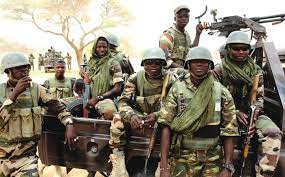
The Chief of Defence Staff, General Christopher Musa, has assured Nigerians that the mastermind of the gruesome killing of 17 military officers in Delta State will soon be apprehended and made to face the wrath of the law.
General Musa gave the assurance in Abuja, while addressing the Chairman, House Committee on Defence, Hon. Babajimi Benson and other Committee members.
The Chief of Defence Staff who applauded the Committee’s support, reiterated the Service’s resolve towards ending the insecurity ravaging the country.
He maintained that the military is doing everything possible to bring an end to the present security situations in the country, adding that the security challenges are a phase in the life of the country which will soon become a thing of the past.
While soliciting for the cooperation of all Nigerians, General Musa expressed grief over the way the military men who went to Delta for peace keeping were gruesomely murdered.
The Chief of Defence Staff, who affirmed that the Military is aware of the kingpin behind the killing in Delta Community, which occurred on Thursday, vowed that the mastermind of the killings will be apprehended soon.
He said: “The situation is an ongoing, it’s an ongoing operation but we won’t want to say much other than we already know the perpetrators. Already we have done it and they’ve run away. We have information where they’ve gone to hide, some people are giving them refuge, some people are giving them support.
“We just want to tell Nigerians that we are following up on every aspect of it. Those guys that committed this heinous crime will not go free, they will be brought to book. We know how to get them, we are going to go after them.
“We want to appeal to anybody who has anything to do with them to desist because even during the investigation we are able to find out that they are assisting them in one way or the other will be part of it. He’s not going to be set free. The days of impunity are over, we are going to do that.
“And to the larger society, Nigerians should be hopeful, the government is doing well and the Armed Forces is doing its best and all the security agencies are working to ensure that we restore peace and security in Nigeria.”
He also assured President Tinubu that the Armed Forces are not sleeping, adding that all the abducted students and others will be freed.
General Musa also maintained that the successful contribution of the Nigerian Army contributed immensely to the improvement in daily oil production.
Speaking earlier, Chairman, House Committee on Defence, Hon. Babajimi Benson who expressed confidence in the capacity of the Chief of Defence Staff to deliver on the Armed Forces mandates, however noted Nigerians are tired of excuses.
While urging the Military to do everything possible to bring to an end the current insecurities in the country, Hon. Benson said: “As you know, the National Assembly’s responsibility for oversight of the executive is an exclusive provision in Sections 88 and 89 of the 1999 Constitution (as amended) and in the Standing Orders & Rules of the House. This exercise is designed to promote good governance, accountability, and transparency as well as effective service delivery, particularly in the security sector, for Nigerians.
“We recognise this institution’s critical role in protecting our nation’s sovereignty, defending our borders, and promoting peace and stability both domestically and intern.



The Rivers State Commissioner for Education, Dr. Peters Nwagor, has commended the orderly conduct of the ongoing 2026 West African Senior School Certificate Examination in the state and urged schools to sustain the standard.
Dr. Nwagor gave the commendation on Tuesday during a monitoring tour of selected secondary schools in Port Harcourt and environs where the WAEC exam is ongoing.
The commissioner, who was accompanied by directors and monitors from the Ministry of Education, said he was impressed with the peaceful atmosphere at the centres visited.
“The students conducted themselves properly and wrote their papers under conducive conditions. Invigilators and supervisors also performed their duties professionally,” he stated.

Nwagor noted that the Rivers State Government had invested heavily to ensure the smooth and credible conduct of the examination across the state
He urged candidates to reciprocate government’s effort by shunning all forms of examination malpractice and focusing on their studies.
“Government has done so much to ensure successful examinations in our schools. Students should take advantage of it by remaining focused,” the commissioner said.
While no case of malpractice was recorded in the centres inspected, Dr. Nwagor warned that any principal, teacher, invigilator, or official caught aiding malpractice would face strict sanctions in line with regulations.
He also commended school administrators, teachers, WAEC officials, and security personnel for upholding the integrity of the process.
Centres visited included County Grammar School, Ikwerre/Etche; Government Comprehensive Secondary School, Borokiri; Government Secondary School, Borokiri; and Pabod Model Secondary School.

Rivers State University and the Otonti Nduka Foundation for Values Education jointly hosted a two-day National Conference on 8 and 9 May 2026 to examine the state of values in Nigeria.
The two days conference held at Rivers State University convocation arena brought together academics, policymakers, legal experts and education leaders under the theme _“Trends and Challenges in Upholding Values in Nigeria.”_
The gathering focused on policy gaps, curriculum reform, and the role of ethics in public service and education.
The event opened on Friday with remarks from Vice Chancellor Prof. Chief Isaac Zeb-Obipi, who stressed the need to address declining moral and civic values across Nigeria’s education and public sectors. A book of abstracts for the plenary sessions was also presented to participants.
Key speakers included former Attorney General Chief Dr Kanu Agabi, SAN; NERDC Executive Secretary Prof. Shehu Salisu; Prof. Hauwa Imam, FNAE, of the University of Abuja; former Rivers SUBEB Chairman Ven Dr Fyneface Akah, ; former NIMASA DG Dr Hon. Dakuku Adol-Peterside; and RSU Director of ICT Prof. Sunny Orike.
Discussions centered on integrating values education into schools, tertiary institutions and public institutions, alongside the impact of technology on moral development among young Nigerians. Panel and plenary sessions produced practical recommendations for curriculum and policy reform.
On Saturday, the foundation marked its centenary with the unveiling of the book _Otonti Nduka in History_, launched by Chief Engr. Grant Offor, FNSE. The Nigerian Academy of Education held a ceremonial procession led by its President Prof. Olu Jegede and the Ikwerre Professors Forum.
In a communiqué, participants called for stronger collaboration between government, civil society and academia to mainstream values education nationwide. They recommended reviewing teacher training curricula and expanding digital platforms to promote ethical civic engagement, with the foundation pledging to share the outcomes with education authorities for implementation.
Dignitaries present included Ogbakor Ikwerre Worldwide as Chief Host, Prof. Emeritus Chief T. Uzodimma Nwala, the Ikenga 1 of Mbaise and first philosophy student of Prof. Otonti Nduka, alongside scholars and community leaders.
Amadi Akujobi
-

 Rivers2 days ago
Police arrest 3 suspects over killing of driver in Rivers
-
Politics2 days ago
I DIDN’T PROMISE YOU TICKETS, AKPABIO TELLS APC SENATORS WHO FAILED PRIMARIES
-

 News2 days ago
FUBARA ASSURES NUT OF SECURITY OF SCHOOLS IN RIVERS
-

 News2 days ago
NDLEA Arrests Four Notorious Female Drug Dealers In Four States
-

 Sports2 days ago
Okpekpe Road Race Gets Mobility Solutions, Fan Engagement
-
Politics2 days ago
Court Dismisses Rivers PDP Members’ Suit Over LG Election Candidates
-

 News2 days ago
WORLD FOOD SAFETY DAY: VETERINARIANS TASK GOVT ON MODERN ABATTOIR IN RIVERS
-
Politics2 days ago
POST PRIMARIES: IKWERRE MONARCHS ADVOCATE ISSUES-BASED POLITICS IN RIVERS