
Opinion
Still On Unemployment In Nigeria

The unemployment rate in Nigeria is alarming. Like a phoenix, it keeps rising and a decline seems not to be feasible. The population is not only growing in a geometric proportion, tertiary institutions are yearly churning out graduates into an already saturated labour market. Worst still, most youths are without employable skills or self-empowerment capacities because of obsolete schools curricular that do not take into consideration the dynamics and realities of the time. Another major challenge is the overemphasis on paper or academic qualifications against skills acquisition and the dysfunctional National Policies on Education, especially as it relates to the 6-3-3-4 system of education in Nigeria.A Statistics released by the World of Statistics revealed that Nigeria is currently top on the list of countries with the highest rate of unemployment. According to the statistics, Nigeria led other nations of the world with 33.3 percent.
In a more recent report, multinational consulting firm, KPMG said that unemployment rate in Nigeria has increased to 37.7 and would further rise to 40.6 percent, “due to the continuing inflow of job seekers into the job market.” The multinational consulting firm further asserts that unemployment would continue to be a challenge due to the “slower-than-required economic growth, and the inability of the economy to absorb the 4.5 million entrants into the Nigerian job market every year. Such ominous disclosures by reputable global organisations and firms, is something to be sad about. While Nigeria with enormous human and natural resources is bedevilled by daunting rate of unemployment, Niger Republic- one of the world’s poorest countries that obtained independence in 1960, with Nigeria and presently crisis-riddled, is one of the three countries with the lowest unemployment rate in the world.
In fact, Niger Republic has 0.5 percent unemployment rate. The low unemployment in Niger Republic further heightened my disenchantment with the present and successive administrations in Nigeria. How did we get to this sad position? Till late eighties, jobs were available for youths according to their capacities. Some people were working and at the same time going to school. Vacation jobs were common for students to make brisk money while they wait for school to resume. Job opportunities were so available that people chose what job they would like to do. Underemployment was strange unlike today when people do work far below their intellectual and mental capacities, if they even find one to do. Since there is no alternative to choose from, and jobs are scarce, employers of Labour use the opportunity to subject people to casual and slave labour-taking the best of the time of the workers and giving them paltry amount that is not enough for their transport fares in a month.
This is an affront on the sensibility of Nigerians. Many people jostle for job opportunities meant for only a few persons. This ugly scenario is occasioned by the collapse of public and private industries and companies in Nigeria. Those who are supposedly stewards and trustees of the people’s commonwealth only loot to death public companies and monies, stash them in foreign banks and refuse to invest them in Nigeria. Virtually all companies that existed during the Regional Administrations are dead and buried. No effort by political leaders to revive them. Rather, their interest is to siphon money. It is also this inordinate ambition to amass wealth that has informed the decision of some State governors not to employ to fill existing vacancies in the public and civil sector even when it is crystal clear that the workforce is depleting due to retirement, death and resignation. This leaves few hands doing the job of many people.
Zonal or local government area offices of many Ministries, Departments and Agencies are dead. The younger generation does not know if Zonal offices actually existed, because if the building has not dilapidated, it is overtaken by forest. Meanwhile, several skilled and academically qualified youths are roaming the streets looking for job. The frustration of not finding any job has driven baser minds into crime and criminalities such as: illegal bunkering with the attendant hazards, prostitution, stealing, advance fee fraud, etc. The quest for education has dropped and the value system is compromised for lack of enlightened minds. Today, the derogatory slogan, “Education is scam” seem to hold sway as cultists and people with penchant for violence are idolised, dignified and venerated. Government at all levels should make effort to create jobs for the teeming unemployed population of Nigeria.
If Niger Republic reported to be one of the world’s poorest countries will have a 0.5 percent unemployment rate, it is indicting on Nigerian leaders to allow the country wallow in such unemployment rate and the dangers associated with it.Let our leaders do something significant and let them do it fast for the good of the country because, “An idle mind is the devil’s workshop” and “A hungry man is an angry man”.It is derogatory on Nigerian youths, to say they are lazy. It is an unpardonable error. When I heard immediate past President Muhammadu Buhari say, “Nigerian Youths are lazy”, I could not help but to ask the basis of his judgement. How did he come to such audacious conclusion, I rhetorically ask when the enabling economic environment is not created for them to operate? Was it because he and other politicians may have used the youths to pave their way into power?
If that was the case, it takes a strong man to rig election. When a person hires the services of another he or she admits that the person whose services are hired is better, and stronger. Nobody takes refuse under a weakling because the refuse seeker and refuse giver will inevitably be beaten. Resilience is the second nature of Nigerian youths. They are so resilient that sometimes I misconstrue it for docility. They have been tested and proven as diligent and hard working. Nigerian youths are enterprising, adventurous and asserting everywhere they went to in the world. In the international scene, mediocrity is alien to Nigerian youths. Majority of the youths are so humble that they do even menial work to make ends meet, their academic qualifications notwithstanding. Instead of ascribing such obnoxious and derogatory cliche to Nigerian youths, the Federal, State and Local Governments should consider how to harness the latent and innate potentials in the youths that comprised the highest population of Nigeria.
For maximum productivity, Government at all levels should give to them something to do.
After all, even with four comatose refineries that can not refine petroleum products, causing scarcity and high cost of petroleum products, Nigerian youths are doing what the Federal Government’ lacked the will to do. I say this because the youths are arrows that, if not directed at a target can misfire and shoot indiscriminately, not minding who will be victim. The Federal, State and Local Government Areas should be proactive in addressing the challenge of unemployment in Nigeria.
By: Igbiki Benibo



The events that unfolded in Abuja on Tuesday November 11, 2025 between the Minister of the Federal Capital Territory, Chief Nyesom Wike and a detachment of soldiers guarding a disputed property, led by Adams Yerima, a commissioned Naval Officer, may go down as one of the defining images of Nigeria’s democratic contradictions. It was not merely a quarrel over land. It was a confrontation between civil authority and the military legacy that still hovers over our national life.
Nyesom Wike, fiery and fearless as always, was seen on video exchanging words with a uniformed officer who refused to grant him passage to inspect a parcel of land alleged to have been illegally acquired. The minister’s voice rose, his temper flared, and the soldier, too, stood his ground, insisting on his own authority. Around them, aides, security men, and bystanders watched, stunned, as two embodiments of the Nigerian state clashed in the open.
The images spread fast, igniting debates across drawing rooms, beer parlours, and social media platforms. Some hailed Wike for standing up to military arrogance; others scolded him for perceived disrespect to the armed forces. Yet beneath the noise lies a deeper question about what sort of society we are building and whether power in Nigeria truly understands the limits of its own reach.
It is tragic that, more than two decades into civil rule, the relationship between the civilian arm of government and the military remains fragile and poorly understood. The presence of soldiers in a land dispute between private individuals and the city administration is, by all civic standards, an aberration. It recalls a dark era when might was right, and uniforms conferred immunity against accountability.
Wike’s anger, even if fiery, was rooted in a legitimate concern: that no individual, however connected or retired, should deploy the military to protect personal interests. That sentiment echoes the fundamental democratic creed that the law is supreme, not personalities. If his passion overshot decorum, it was perhaps a reflection of a nation weary of impunity.
On the other hand, the soldier in question is a symbol of another truth: that discipline, respect for order, and duty to hierarchy are ingrained in our armed forces. He may have been caught between conflicting instructions one from his superiors, another from a civilian minister exercising his lawful authority. The confusion points not to personal failure but to institutional dysfunction.
It is, therefore, simplistic to turn the incident into a morality play of good versus evil.
*********”**** What happened was an institutional embarrassment. Both men represented facets of the same failing system a polity still learning how to reconcile authority with civility, law with loyalty, and service with restraint.
In fairness, Wike has shown himself as a man of uncommon courage. Whether in Rivers State or at the FCTA, he does not shy away from confrontation. Yet courage without composure often feeds misunderstanding. A public officer must always be the cooler head, even when provoked, because the power of example outweighs the satisfaction of winning an argument.
Conversely, soldiers, too, must be reminded that their uniforms do not place them above civilian oversight. The military exists to defend the nation, not to enforce property claims or intimidate lawful authorities. Their participation in purely civil matters corrodes the image of the institution and erodes public trust.
One cannot overlook the irony: in a country where kidnappers roam highways and bandits sack villages, armed men are posted to guard contested land in the capital. It reflects misplaced priorities and distorted values. The Nigerian soldier, trained to defend sovereignty, should not be drawn into private or bureaucratic tussles.
Sycophancy remains the greatest ailment of our political culture. Many of those who now cheer one side or the other do so not out of conviction but out of convenience. Tomorrow they will switch allegiance. True patriotism lies not in defending personalities but in defending principles. A people enslaved by flattery cannot nurture a culture of justice.
The Nigerian elite must learn to submit to the same laws that govern the poor. When big men fence off public land and use connections to shield their interests, they mock the very constitution they swore to uphold. The FCT, as the mirror of national order, must not become a jungle where only the powerful can build.
The lesson for Wike himself is also clear: power is best exercised with calmness. The weight of his office demands more than bravery; it demands statesmanship. To lead is not merely to command, but to persuade — even those who resist your authority.
Equally, the lesson for the armed forces is that professionalism shines brightest in restraint. Obedience to illegal orders is not loyalty; it is complicity. The soldier who stands on the side of justice protects both his honour and the dignity of his uniform.
The Presidency, too, must see this episode as a wake-up call to clarify institutional boundaries. If soldiers can be drawn into civil enforcement without authorization, then our democracy remains at risk of subtle militarization. The constitution must speak louder than confusion.
The Nigerian public deserves better than spectacles of ego. We crave leaders who rise above emotion and officers who respect civilian supremacy. Our children must not inherit a nation where authority means shouting matches and intimidation in public glare.
Every democracy matures through such tests. What matters is whether we learn the right lessons. The British once had generals who defied parliament; the Americans once fought over states’ rights; Nigeria, too, must pass through her own growing pains but with humility, not hubris.
If the confrontation has stirred discomfort, then perhaps it has done the nation some good. It forces a conversation long overdue: Who truly owns the state — the citizen or the powerful? Can we build a Nigeria where institutions, not individuals, define our destiny?
As the dust settles, both the FCTA and the military hierarchy must conduct impartial investigations. The truth must be established — not to shame anyone, but to restore order. Where laws were broken, consequences must follow. Where misunderstandings occurred, apologies must be offered.
Let the rule of law triumph over the rule of impulse. Let civility triumph over confrontation. Let governance return to the path of dialogue and procedure.
Nigeria cannot continue to oscillate between civilian bravado and military arrogance. Both impulses spring from the same insecurity — the fear of losing control. True leadership lies in the ability to trust institutions to do their work without coercion.
Those who witnessed the clash saw a drama of two gladiators. One in starched khaki, one in well-cut suit. Both proud, both unyielding. But a nation cannot be built on stubbornness; it must be built on understanding. Power, when it meets power, should produce order, not chaos.
We must resist the temptation to glorify temper. Governance is not warfare; it is stewardship. The citizen watches, the world observes, and history records. How we handle moments like this will define our collective maturity.
The confrontation may have ended without violence, but it left deep questions in the national conscience. When men of authority quarrel in the open, institutions tremble. The people, once again, become spectators in a theatre of misplaced pride.
It is time for all who hold office — civilian or military — to remember that they serve under the same flag. That flag is neither khaki nor political colour; it is green-white-green, and it demands humility.
No victor, no vanquish only a lesson for a nation still learning to govern itself with dignity.
By; King Onunwor


-

 Politics2 days ago
Senate Receives Tinubu’s 2026-2028 MTEF/FSP For Approval
-

 News2 days ago
RSG Lists Key Areas of 2026 Budget
-
 News2 days ago
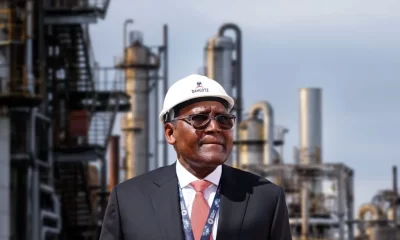
Dangote Unveils N100bn Education Fund For Nigerian Students
-

 News2 days ago
Tinubu Opens Bodo-Bonny Road …Fubara Expresses Gratitude
-
News2 days ago
Nigeria Tops Countries Ignoring Judgements -ECOWAS Court
-

 Featured1 day ago
Fubara Restates Commitment To Peace, Development …Commissions 10.7km Egbeda–Omerelu Road
-

 Sports2 days ago
New W.White Cup: GSS Elekahia Emerged Champions
-
News2 days ago
FG Launches Africa’s First Gas Trading Market, Licenses JEX