
Featured
Reps Drop Bill To Exempt Nigerians Schooling Abroad From NYSC

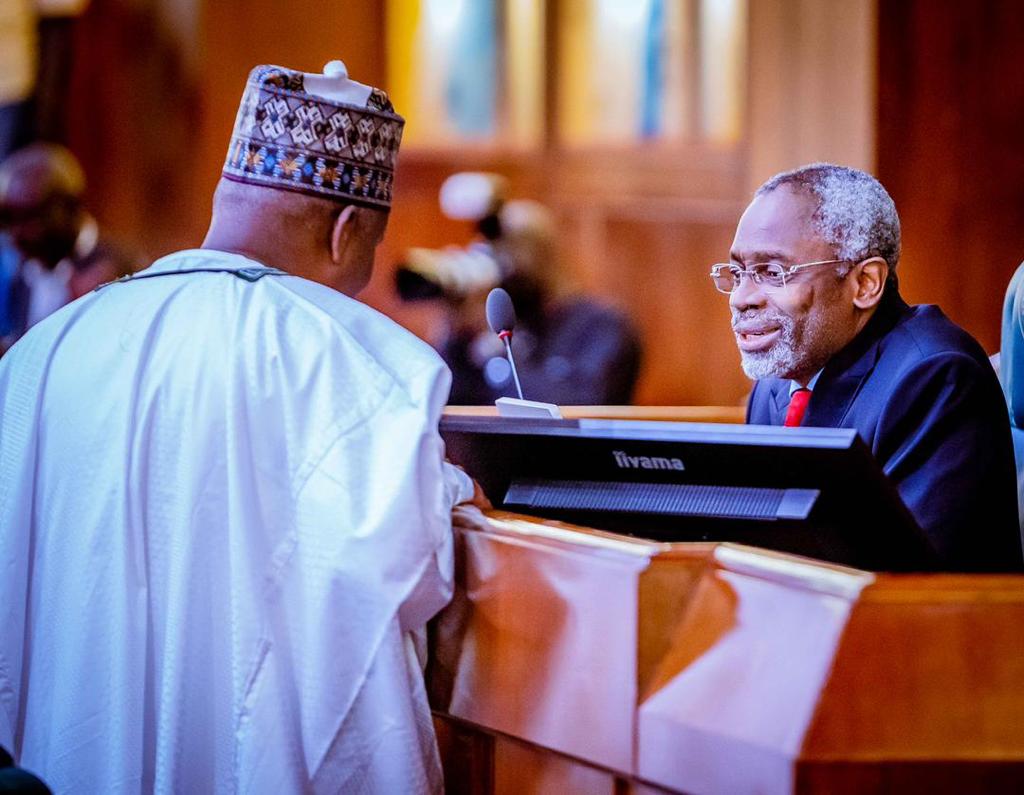
A bill seeking to amend the National Youth Service Corps (NYSC) Act and make provision for the issuance of the exemption certificate to foreign Nigerian students while reviewing the remuneration upwards was stepped down at the House of Representatives, yesterday.
Tilted “Bill for an Act to Amend the National Youth Service Corps Act, Cap. N84 Laws of the Federation of Nigeria, 2004 to Review Upward the Accommodation and Transport Allowances of Corps Members in line with Current realities; and for Related Matters (HBs.716, 1305, 1657, 1922, 1945 &1674), it was however a consolidated bill jointly sponsored by Hon Ben Igbakpa, Hon Eta Mbora, Hon Abbas Adigun, and three other lawmakers.
In his lead debate, Igbakpa, who was the only one present at the plenary to speak on the bill, said that with the changing times, the principal act should be amended to make it optional for Nigerians who schooled abroad.
Igbakpa, who referenced the case of former finance minister, Mrs KemiAdeosun, said it was not necessary to have subjected her to the rigours of obtaining the exemption certificate.
He also said that the monetary allowance of the serving corps members should be elevated to reflect that of graduates.
He said: “This amendment seeks to cure three different things because the law as it is today; because of the changing realities of time, anybody that had passed the university and is serving as a corps member automatically has acquired a degree and it is the belief that this amendment should reflect in their remuneration because the N30,000 given to them as it is today is a minimum wage threshold and in line with the present reality, it would not be fair if they are given something that befits a graduate, a Level 8 Officer in the public service.
“The third, as at the time the law was made, it was in such a way that we did not consider our children schooling abroad. Not long ago, a former minister of finance schooled abroad, was above thirty and came to Nigeria to help with the knowledge. But because of the stringent condition placed on the acquisition of the certificate of exception, there was something wrong at the end of the day. We lost that intelligence and expertise. When the NYSC law was created, Nigerians studying abroad were not considered. Nigerians schooling abroad should be issued a certificate of exemption.”
The bill, however, elicited several reactions from lawmakers with many opposing the exemption while favouring the upward review of the allowance.
In his contribution, the Deputy Speaker, Hon. IdrisWase, called for strict adherence to the provisions of the principal act.
“Those who schooled abroad should comply with the by-laws we have set in the country. In several countries, we have programs like this. In USA, you have to serve compulsorily in the army for a year. The purpose is integration and discipline”, he said.
Also speaking, Hon. Ahmed Jaha, agreed on the call to review the remuneration aspect of the Bill, however, disagreed with the exemption.
“Substantial part of graduates recognise the importance of NYSC because, by the time they go out, they will discover a lot of things. They have not been conversant with in their area. So, if you say it is optional, people may think it is not serious. They would make it optional and they would be reluctant to go but if you make it compulsory, definitely, everybody would go, and at least, discover something outside his domain”, he said.
Amid the debate, the lead sponsor, Igbakpa, opted to step it down for further consultation.
Ruling on the Bill, the Speaker, Hon Femi Gbajabiamila, advised the Rules and Business Committee to take a holistic look at the bill, and expunge the offensive parts to enable the sponsors to represent it before the House adjourns tomorrow for a two-week break to participate in the national elections.



Governor of Rivers State, Sir Siminalayi Fubara, has reaffirmed the unwavering commitment of his administration to peace, unity, security, and inclusive development as Rivers State marked its 59th anniversary, last Wednesday.
In a goodwill message issued on Wednesday to commemorate the anniversary, Governor Fubara stated that despite the challenges faced over the years, the people of Rivers State have continued to demonstrate resilience, strength, and an enduring spirit of unity that has sustained the state since its creation.
The Governor noted that the strong bond of brotherhood among the various ethnic nationalities of the state, including the Ijaw, Ikwerre, Ogoni, Etche, Ekpeye, Andoni, Kalabari, and others, remains one of Rivers State’s greatest strengths and a critical foundation for peace, stability, and progress.
He further observed that Rivers State has remained a major driver of Nigeria’s economy for decades, not only because of its abundant oil and gas resources, but also because of the exceptional contributions of its people across diverse sectors including academia, jurisprudence, business, entertainment, public service, and sports.
Governor Fubara assured the people that his administration will continue to prioritize policies and programmes that promote peace, protect lives and property, and expand development across all parts of the state. He emphasized that governance must be people centered and impactful, with equal attention given to every Local Government Area of the state.
The Governor also paid tribute to the elders and founding leaders of the state for preserving the spirit of unity and coexistence over the years, while urging the youths to remain hopeful, responsible, and actively committed to building a greater Rivers State through innovation, hard work, and patriotism.
He equally acknowledged the invaluable role of women in strengthening families, communities, and society, describing them as indispensable partners in the continued growth and stability of the state.
Governor Fubara called on all Rivers people to use the occasion of the anniversary as a moment of reflection and renewed commitment to peaceful coexistence, mutual respect, dialogue, and collective progress, stressing that the unity and future of Rivers State must always rise above personal interests and political differences.
Rivers State was created on May 27, 1967, by General Yakubu Gowon.


The Rivers State Government has distributed science equipment and materials to all senior secondary schools across the state to support students during the ongoing West African Examinations Council exams and to strengthen practical learning.
Flagging off the distribution at the Rivers State Senior Secondary Schools Board premises in Port Harcourt, on Monday, the State Commissioner for Education, Dr. Peters Nwagor, said the move demonstrates Governor Siminalayi Fubara’s commitment to improving education standards in the State.
Nwagor said the materials were approved and provided by the state government specifically to boost the teaching and learning of science subjects, describing science education as the foundation for technological advancement, innovation, and national development.
“No society can compete globally without deliberate investment in science and technology,” the Commissioner stated.
He commended the governor for consistently prioritising the education sector by providing tools needed for effective teaching and hands-on learning.
The Commissioner directed principals to ensure that the equipment are used strictly for practical lessons in their schools, warning that any principal or administrator found diverting, hoarding, or selling the materials wil face disciplinary action under public service regulations.
Nwagor also warned against examination malpractice, saying any principal found aiding or encouraging malpractices will be decisively sanctioned.
“We must collectively restore the dignity and credibility of our educational system,” he said.
Also speaking, Chairman, Rivers State Senior Secondary Schools Board, Tony Egwurugwu, urged school heads to make judicious use of the materials for students’ benefit.
He thanked the State Government for providing the resources, and assured that monitoring mechanisms would be put in place to ensure the materials serve their intended purpose.
In his own remarks, a Board Member for Technical Education, Nwisabari Bani Samuel, expressed appreciation to the governor for prioritising education and acknowledged the Commissioner’s role in advancing education development in the State.
He said the distribution covers all senior secondary schools in the State and is intended to improve students’ performance in both internal and external science examinations.
Akujobi Amadi
-

 Rivers2 days ago
Police arrest 3 suspects over killing of driver in Rivers
-
Politics2 days ago
I DIDN’T PROMISE YOU TICKETS, AKPABIO TELLS APC SENATORS WHO FAILED PRIMARIES
-

 News2 days ago
FUBARA ASSURES NUT OF SECURITY OF SCHOOLS IN RIVERS
-

 News2 days ago
NDLEA Arrests Four Notorious Female Drug Dealers In Four States
-

 Sports2 days ago
Okpekpe Road Race Gets Mobility Solutions, Fan Engagement
-
Politics2 days ago
Court Dismisses Rivers PDP Members’ Suit Over LG Election Candidates
-

 News2 days ago
WORLD FOOD SAFETY DAY: VETERINARIANS TASK GOVT ON MODERN ABATTOIR IN RIVERS
-
Politics2 days ago
POST PRIMARIES: IKWERRE MONARCHS ADVOCATE ISSUES-BASED POLITICS IN RIVERS