
Featured
Abolition Of Fees: Wike Releases Funding For Primary, Secondary Schools …Commissions First Set Of Rumuepirikom Internal Roads

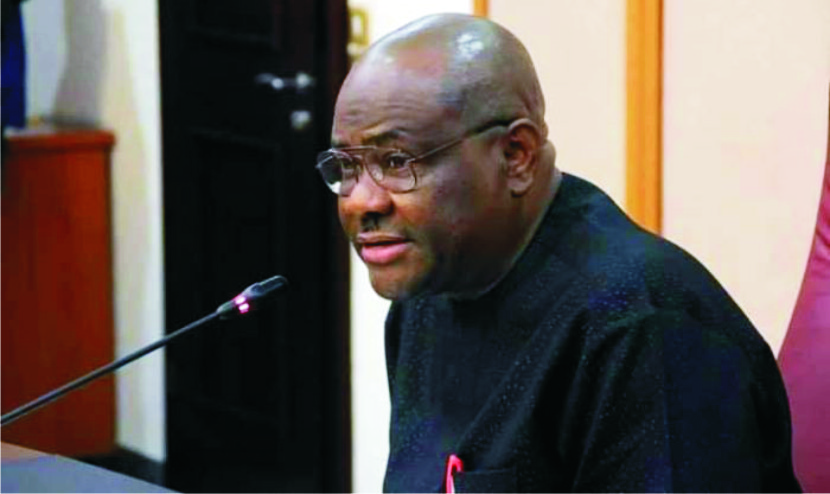
In line with his abolition of all forms of fees and levies in public primary, junior and senior secondary schools, Rivers State Governor, Chief Nyesom Wike has released funds for the running of the schools for the 2019/2020 academic session.
This is as the Rivers State Government has suspended the principal of Oginigba Community Secondary School, Oginigba, for the illegal collection of levies.
The funds released by the Rivers State governor would be used by the schools for registers, chalks, dusters, markers, notebooks, pens and other consumables.
In his remarks, Permanent Secretary, Rivers State Ministry of Education, Mr Adonye Dagogo Hart explained that the governor has also released funds for the supervision of schools for the entire 2019/2020 academic session.
The Rivers State governor also released six Hilux vans for school supervision.
The permanent secretary said that the suspension of the principal was to serve as a deterrent to other school administrators.
It would be recalled that on 24th June, 2019, Rivers State Governor, Chief Nyesom Wike announced the total abolition of all forms of fees and levies in public primary and secondary schools across the state.
The governor directed state-owned primary and secondary schools to stop collecting fees and levies from students and pupils with immediate effect.
Wike stated that henceforth the state government would be sending direct allocations to all primary and secondary schools management for their operations.
He spoke during a meeting with the heads of primary and secondary schools, Rivers State Senior Secondary Schools Board and Rivers State Universal Basic Education Board at the Government House, Port Harcourt.
He said: “From today, henceforth, no child either in primary and secondary schools should pay fees and levies in any school across the state.
“The monies you collect from these children are just used for your personal purposes. If I hear that any school head collects any fees or levies, be they examination, NECO or WAEC fees, that school head would be sanctioned.
“We shall not only dismiss the school head who collects fees or levies, we will prosecute the person involved.
“Government will work out grants that will be sent to the schools for their regular management and operations”.
Wike directed the state Ministry of Education, the Rivers State Senior Secondary Schools Board and the State Universal Basic Education Board to monitor all public schools across the state to ensure compliance.
The governor noted that his administration funds the salaries, allowances, examinations and equipment of all public schools.
He assured parents that his administration would remain committed to the provision of quality education, which is accessible to the less privileged.
“I have abolished all fees and levies and it will never happen again in our public primary and secondary schools. Nobody should collect fees and levies from the children of the less privileged”, he said.
Meanwhile, the Rivers State Governor, Chief Nyesom Wike has commissioned four roads completed as the first phase of Rumuepirikom internal roads in Obio/Akpor Local Government Area.
Shell Location Road, one of the four roads commissioned was renamed Engineer Lawrence Anele Amadi Road by the governor.
He spoke, yesterday, at the Engineer Lawrence Anele Amadi Road.
“We flagged off the construction of these roads in 2018. This is the first phase of the internal roads of this community.
“While I remain as governor, our community will get its share of projects. This ward is the backbone of PDP in our local government area. They gave us the highest votes during the elections”, he said.
Wike thanked the people of Rumuepirikom for cooperating with the contractors during the execution of the project.
He thanked the Rimuepirikom community for the warm reception accorded to his entourage over the construction of the internal roads.
In his remarks, Permanent Secretary, Ministry of Works, Dr Walter Ndu said the Rumuepirikom internal roads have a total length of nine kilometres with street lights and modern drainage.
He said that the Rivers State governor flagged off the construction of 11 roads, with four of such roads already completed, adding that the remaining roads would be completed by December.
The first set of roads delivered under the first phase of Rumuepirikom internal roads include: Engineer Lawrence Anele Amadi Road (former Shell Location Road), Ekani Street, Maxwell Street and Odoli Street.
He said before the construction of the roads by the Wike-led administration, the roads were not accessible due to their poor condition.
Also speaking, Chairman of Obio/Akpor Local Government Area, Hon Solomon Eke said that roads were of international standard, adding that the LGA was working with other agencies to improve security and environmental sanitation along the new roads.
Different women groups and the Owembe Cultural Troupe thrilled guests at the commissioning ceremony.



Governor of Rivers State, Sir Siminalayi Fubara, has reaffirmed the unwavering commitment of his administration to peace, unity, security, and inclusive development as Rivers State marked its 59th anniversary, last Wednesday.
In a goodwill message issued on Wednesday to commemorate the anniversary, Governor Fubara stated that despite the challenges faced over the years, the people of Rivers State have continued to demonstrate resilience, strength, and an enduring spirit of unity that has sustained the state since its creation.
The Governor noted that the strong bond of brotherhood among the various ethnic nationalities of the state, including the Ijaw, Ikwerre, Ogoni, Etche, Ekpeye, Andoni, Kalabari, and others, remains one of Rivers State’s greatest strengths and a critical foundation for peace, stability, and progress.
He further observed that Rivers State has remained a major driver of Nigeria’s economy for decades, not only because of its abundant oil and gas resources, but also because of the exceptional contributions of its people across diverse sectors including academia, jurisprudence, business, entertainment, public service, and sports.
Governor Fubara assured the people that his administration will continue to prioritize policies and programmes that promote peace, protect lives and property, and expand development across all parts of the state. He emphasized that governance must be people centered and impactful, with equal attention given to every Local Government Area of the state.
The Governor also paid tribute to the elders and founding leaders of the state for preserving the spirit of unity and coexistence over the years, while urging the youths to remain hopeful, responsible, and actively committed to building a greater Rivers State through innovation, hard work, and patriotism.
He equally acknowledged the invaluable role of women in strengthening families, communities, and society, describing them as indispensable partners in the continued growth and stability of the state.
Governor Fubara called on all Rivers people to use the occasion of the anniversary as a moment of reflection and renewed commitment to peaceful coexistence, mutual respect, dialogue, and collective progress, stressing that the unity and future of Rivers State must always rise above personal interests and political differences.
Rivers State was created on May 27, 1967, by General Yakubu Gowon.


The Rivers State Government has distributed science equipment and materials to all senior secondary schools across the state to support students during the ongoing West African Examinations Council exams and to strengthen practical learning.
Flagging off the distribution at the Rivers State Senior Secondary Schools Board premises in Port Harcourt, on Monday, the State Commissioner for Education, Dr. Peters Nwagor, said the move demonstrates Governor Siminalayi Fubara’s commitment to improving education standards in the State.
Nwagor said the materials were approved and provided by the state government specifically to boost the teaching and learning of science subjects, describing science education as the foundation for technological advancement, innovation, and national development.
“No society can compete globally without deliberate investment in science and technology,” the Commissioner stated.
He commended the governor for consistently prioritising the education sector by providing tools needed for effective teaching and hands-on learning.
The Commissioner directed principals to ensure that the equipment are used strictly for practical lessons in their schools, warning that any principal or administrator found diverting, hoarding, or selling the materials wil face disciplinary action under public service regulations.
Nwagor also warned against examination malpractice, saying any principal found aiding or encouraging malpractices will be decisively sanctioned.
“We must collectively restore the dignity and credibility of our educational system,” he said.
Also speaking, Chairman, Rivers State Senior Secondary Schools Board, Tony Egwurugwu, urged school heads to make judicious use of the materials for students’ benefit.
He thanked the State Government for providing the resources, and assured that monitoring mechanisms would be put in place to ensure the materials serve their intended purpose.
In his own remarks, a Board Member for Technical Education, Nwisabari Bani Samuel, expressed appreciation to the governor for prioritising education and acknowledged the Commissioner’s role in advancing education development in the State.
He said the distribution covers all senior secondary schools in the State and is intended to improve students’ performance in both internal and external science examinations.
Akujobi Amadi
-

 Rivers2 days ago
Police arrest 3 suspects over killing of driver in Rivers
-
Politics2 days ago
I DIDN’T PROMISE YOU TICKETS, AKPABIO TELLS APC SENATORS WHO FAILED PRIMARIES
-

 News2 days ago
FUBARA ASSURES NUT OF SECURITY OF SCHOOLS IN RIVERS
-

 News2 days ago
NDLEA Arrests Four Notorious Female Drug Dealers In Four States
-

 Sports2 days ago
Okpekpe Road Race Gets Mobility Solutions, Fan Engagement
-
Politics2 days ago
Court Dismisses Rivers PDP Members’ Suit Over LG Election Candidates
-

 News2 days ago
WORLD FOOD SAFETY DAY: VETERINARIANS TASK GOVT ON MODERN ABATTOIR IN RIVERS
-
Politics2 days ago
POST PRIMARIES: IKWERRE MONARCHS ADVOCATE ISSUES-BASED POLITICS IN RIVERS