
Featured
UK,Nigerians Condemn DSS Attack On NASS …Say It’s Coup Against Democracy …‘It Confirms Buhari’s Weakness’

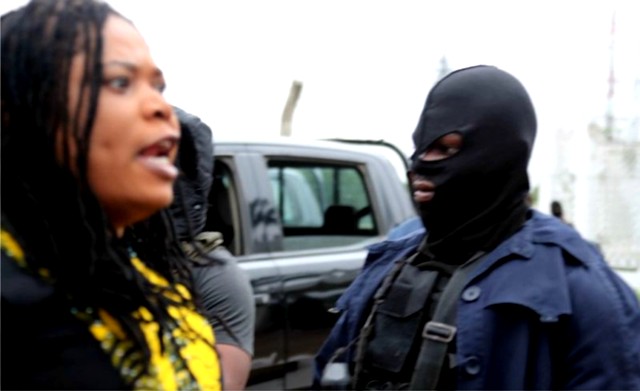
The British High Commission has reacted to yesterday’s siege at the National Assembly.
The European country stated that it would only accept a democratic process that recognises the rights of Nigerians to participate in election process.
“We are aware of media reports of a situation at the National Assembly this morning (Tuesday). We are closely monitoring the situation and other political developments in Nigeria.
“The United Kingdom supports a process whereby the people of Nigeria can exercise their democratic right to vote and be voted for.
“We favour a free, fair, credible and peaceful process and the independence of institutions, which allow for that,” spokesperson for the UK High Commission in Abuja, Joe Abuku, said in a statement.
Senator Ben Bruce had stated that “anti-democratic” agents would be reported to foreign countries.
He said this while condemning the invasion of the country’s legislative building by the Department of State Security (DSS).
The lawmaker vowed that he and his colleagues (pro-Saraki Senators), would report President Muhamadu Buhari, the DSS, Nigeria Police among others to the international community.
However, Ekiti State Governor, Mr. Ayodele Fayose has described yesterday’s invasion of the National Assembly(NASS) by armed security men as a coup against democracy as well as Nigeria and its people, saying those with history of collapsing democracy in the country must not be allowed to truncate it now.
The governor, who reacted to NASS invasion through his Special Assistant on Public Communications and New Media, Lere Olayinka, said Nigeria was obviously under the worse government in its history.
Operatives of the Department of State Service, DSS have just been withdrawn from laying siege at the National Assembly.
Fayose said events of late had proven the unprecedented desperation of President Muhammadu Buhari’s APC government, adding that “the sack of the Director General of DSS, Lawal Daura is only face-saving, having failed in their coup-de-tat to topple the leadership of the National Assembly.”
He said; “Today is a sad day for Nigeria. It is a sad day for democracy and it is a day that all Nigerians must begin ask what took us to this ignoble state as country and people. Nigerians should ask whether there would have been this APC government if the PDP government of Dr. Goodluck Jonathan had acted this way.
“I warned Nigerians not to elect President Muhammadu Buhari because he lacked the required democratic credentials to operate in a democratic society. Even when they started with the invasion of the Akwa-Ibom State government house and later the Ekiti State House of Assembly, some of those who should know then still pretended as if all was well.
“In Ekiti, the government house was invaded by armed security men, I was attacked, my deputy was attacked, and the will of the people was subverted. Yet, some people still never saw the danger being posed to our democracy.
“Today, we have all seen the results of our silence when this reign of tyranny started. They first sent our economy into recession and they have now plunged democracy into recession.
“Today is a sad commentary for democracy in Nigeria and it has gotten to a level that all well-meaning Nigerians and the international community must rise and wrestle the country from the hands of those who truncated democracy in 1983 and are threatening it now.”
Similarly, a group, the Nigeria Election Situation Room, has condemned yesterday’s invasion at the National Assembly by operatives of the Department of State Services, DSS. DSS takes over NASS
The group, in a statement, yesterday evening, condemned the invasion, saying it is a rape of democracy.
According to the statement, it said it “notes with serious concern the growing attack on constitutionalism in Nigeria and brazen acts of impunity by elected officials.
“In the last one month, a magistrate court was sacked, disobedience of court orders was justified by the Attorney General and there are growing cases of high handedness by security officials.
“These events point to a despotic democracy and a gradual decline of the Nigeria state to anarchy.
“The Nigeria Civil Society Situation Room (Situation Room) condemns as despicable and a serious threat to Nigeria’s Democracy, the actions of the Department of State Security (DSS), Nigeria Police and security forces, in barricading the gates of the National Assembly and preventing the functioning of an independent arm of government.
“It is our concern that today’s barricade of the National Assembly represents a series of undemocratic actions by the executive arm of government that poses major questions about Nigeria’s practice of democracy. This falls into a growing list of deliberate attempt to undermine the constitutional order by this government. We note with appreciation the decisive step taken by the Acting President to sack the DG DSS. While we commend this action, we see an urgent need for the Acting President Yemi Osibanjo to direct all security agencies in Nigeria to pull back and remain permanently out of the premises of the National Assembly.
Meanwhile, former Vice President Atiku Abubakar has commended the Acting President, Prof. Yemi Osinbajo for sacking the Director General of the Department of State Services (DSS), Mr Lawal Daura.
Abubakar made the commendation in a statement issued by his Media Aide, Paul Ibe, yesterday in Abuja.
The former vice president commended Osinbajo for listening to the clarion call of Nigerians and taking action to halt the “illegal and anti-democratic blockage’’ of the National Assembly by operatives of the DSS.
He said by sacking Daura, the acting president had given meaning to the cries of Nigerians that they would not tolerate such anti democratic actions.
“The former Vice President gives his utmost support to this action.’’
Abubakar called on all statesmen and political leaders to put aside partisanship and rally round the acting president during “these fragile times for our democracy.’’
He, however, called for an independent judicial panel of inquiry to investigate the incident at the national assembly.
This, according to him, is necessary to get to the root of the matter so that those responsible could be identified and punished.
“These are delicate times for Nigeria and all lovers of democracy and the rule of law must be extra watchful lest anti-democratic forces take advantage of all we have worked hard to build,” Abubakar said.
The Acting President had directed the termination of the appointment of the director-general with immediate effect.
The directive was contained in a statement issued by the acting President’s Senior Special Assistant on Media and Publicity, Mr Laolu Akande, in Abuja, yesterday.
Daura, who was summoned to the presidential villa by the acting president few minutes before his sack, was directed to hand over to the most senior officer of the DSS until further notice.
Also, the Peoples Democratic Party (PDP), caucus in the House of Representatives, yesterday, raised the alarm over alleged grand design by the Presidency to invade National Assembly to impose a new leadership in both legislative chambers.
This is even as the South-East Caucus in the House threatened to hold Senator Ali Ndume responsible for Senator Ike Ekweremadu’s travails in the hands of security operatives.
This was contained in a statement by Deputy Minority Leader, Chukwuka Onyema (PDP, Anambra) after a closed door meeting with his members.
Also, it was reliably gathered from a source privy to discussions in the meeting that the common position of most of the lawmakers was that they will vehemently oppose reopening of both chambers.
He said: “Definitely, we’ll not encourage the reconvening of the National Assembly as we are watching developments across Nigeria and whatever shape it takes we follow it to a logical conclusion.”
The South-East caucus of the House of Representatives, yesterday, warned that it would hold former Senate Leader, Senator Ali Ndume, and “his cohorts” responsible should any harm befall Ekweremadu.
The caucus, in a statement released in Abuja by its leader, Chukwuka Onyema, accused the senator of interfering in statutory and professional responsibility of Economic and Financial Crimes Commission (EFCC), saying his “rascally comments” as reported by a national daily on Monday had further unmasked the real issues and those behind Ekweremadu’s ordeal.
The caucus said: “We have closely watched events around the National Assembly, especially the ruthless attempts to emasculate the opposition and unseat the Senate leadership by all means possible.
“We have also followed the ongoing investigation by the EFCC of the allegations levelled against the Deputy Senate President, Senator Ike Ekweremadu. Despite our doubts, we have maintained our calm, hoping that the law would take its natural cause to vindicate the innocent.
“However, like every responsible and patriotic Nigerian, we have every reason to worry after reading the comments by the Senator Ali Ndume claiming that the EFCC is treating Ekweremadu with kid gloves and, therefore, canvassed Ekweremadu’s detention and indictment by the agency in spite of the obvious ill health of Senator Ekweremadu.
“Let me reiterate, the entire people of the South-East shall hold Senator Ali Ndume and his co travellers responsible if any harm befalls Senator Ike Ekweremadu.”
However, the Yoruba socio-political organization, Afenifere has said Senators on the platform of the All Progressives Congress, APC, should impeach Bukola Saraki as the Senate President.
In a short chat with newsmen, the National Publicity Secretary of Afenifere, Yinka Odumakin said APC lawmakers should impeach Saraki if they can get the required number of Senators needed.
Odumakin said this while reacting to the alleged move to impeach Saraki, following his defection from APC to the Peoples Democratic Party (PDP).
According to Odumakin, “If APC can form a quorum, they should impeach him, if they can get the number of Senators together, he should be impeached.
“The constitution made it very clear that you can only remove him by two-thirds majority of the house, so if they can rally that number, he should be removed.”
The Northern Leaders and Stakeholders Assembly (NLSA) has described as ‘destructive’ yesterday’s siege on National Assembly by operatives of the Department of Security Services (DSS).
Secretary, NLSA, Dr Umar Ardo, in a statement in Abuja, said the National Assembly incident constituted a huge threat to Nigeria’s democracy.
He urged the leadership of the National Assembly to as a matter of urgency reconvene and summon the leadership of the executive to explain the DSS’ action.
Ardo said that disciplinary actions should be applied where necessary as provided for by the constitution.
He said that the position of NLSA was that all Nigerians should protect the nation’s democracy.
Meanwhile, Acting President, Prof. Yemi Osinbajo, had in a swift reaction, sacked the Lawal Daura, the Director-General, DSS over the unathorised blockage on the National Assembly. Osinbajo directed him to hand over to the most senior director in the services.
The Igbo apex body, Ohanaeze Ndigbo described the blockade of the National Assembly by the State Security Service as a surprise and an impeachable offence in the constitution of the country.
In a statement issued in Abakaliki, the National Publicity Secretary of the group, Barr Uche Achi stated that: “Recent events in Nigeria, climaxing in the blockade and prevention of marked adversary Senators and House of Reps members from gaining access into the legislative building altogether, are not coming to us as surprises. Instead, they are sprouting in alarming crescendos in crystal vindication of our stand that only a restructured Nigeria can thrive henceforth.
“The foundations of Nigeria have been pulverized and until restructured will continue to nosedive irretrievably and I liken the situation to Ola Rotimi’s adage in The Gods Are Not To Blame, “Until the rotten tooth is pulled out the mouth must chew with caution.
“The National Assembly is the precinct of democracy and should never be visited by or with executive lawlessness wrapped in discernible hocus pocus.
“The event of today in particular is raw as it is a clueless brandishing from the executors. Nothing more can be an impeachable offence than this callous desecration of the National Assembly which is the symbol of democracy. To offer any reason(s) for this igneous and ignominious display is to merely dwell in whipping sentiments.
“It is obvious from the prevailing circumstances that neither the Police nor the DSS has been or can be queried because they are acting on “instructions from above” to the chagrin of helpless and horribly dumbfounded Nigerians.
“If Mr Daura, the DG, DSS is neither suspended nor sacked after today’s event so that Mr Idris, the IGP will take caution (or follow suit), l will resign to fate.”



Governor of Rivers State, Sir Siminalayi Fubara, has reaffirmed the unwavering commitment of his administration to peace, unity, security, and inclusive development as Rivers State marked its 59th anniversary, last Wednesday.
In a goodwill message issued on Wednesday to commemorate the anniversary, Governor Fubara stated that despite the challenges faced over the years, the people of Rivers State have continued to demonstrate resilience, strength, and an enduring spirit of unity that has sustained the state since its creation.
The Governor noted that the strong bond of brotherhood among the various ethnic nationalities of the state, including the Ijaw, Ikwerre, Ogoni, Etche, Ekpeye, Andoni, Kalabari, and others, remains one of Rivers State’s greatest strengths and a critical foundation for peace, stability, and progress.
He further observed that Rivers State has remained a major driver of Nigeria’s economy for decades, not only because of its abundant oil and gas resources, but also because of the exceptional contributions of its people across diverse sectors including academia, jurisprudence, business, entertainment, public service, and sports.
Governor Fubara assured the people that his administration will continue to prioritize policies and programmes that promote peace, protect lives and property, and expand development across all parts of the state. He emphasized that governance must be people centered and impactful, with equal attention given to every Local Government Area of the state.
The Governor also paid tribute to the elders and founding leaders of the state for preserving the spirit of unity and coexistence over the years, while urging the youths to remain hopeful, responsible, and actively committed to building a greater Rivers State through innovation, hard work, and patriotism.
He equally acknowledged the invaluable role of women in strengthening families, communities, and society, describing them as indispensable partners in the continued growth and stability of the state.
Governor Fubara called on all Rivers people to use the occasion of the anniversary as a moment of reflection and renewed commitment to peaceful coexistence, mutual respect, dialogue, and collective progress, stressing that the unity and future of Rivers State must always rise above personal interests and political differences.
Rivers State was created on May 27, 1967, by General Yakubu Gowon.


The Rivers State Government has distributed science equipment and materials to all senior secondary schools across the state to support students during the ongoing West African Examinations Council exams and to strengthen practical learning.
Flagging off the distribution at the Rivers State Senior Secondary Schools Board premises in Port Harcourt, on Monday, the State Commissioner for Education, Dr. Peters Nwagor, said the move demonstrates Governor Siminalayi Fubara’s commitment to improving education standards in the State.
Nwagor said the materials were approved and provided by the state government specifically to boost the teaching and learning of science subjects, describing science education as the foundation for technological advancement, innovation, and national development.
“No society can compete globally without deliberate investment in science and technology,” the Commissioner stated.
He commended the governor for consistently prioritising the education sector by providing tools needed for effective teaching and hands-on learning.
The Commissioner directed principals to ensure that the equipment are used strictly for practical lessons in their schools, warning that any principal or administrator found diverting, hoarding, or selling the materials wil face disciplinary action under public service regulations.
Nwagor also warned against examination malpractice, saying any principal found aiding or encouraging malpractices will be decisively sanctioned.
“We must collectively restore the dignity and credibility of our educational system,” he said.
Also speaking, Chairman, Rivers State Senior Secondary Schools Board, Tony Egwurugwu, urged school heads to make judicious use of the materials for students’ benefit.
He thanked the State Government for providing the resources, and assured that monitoring mechanisms would be put in place to ensure the materials serve their intended purpose.
In his own remarks, a Board Member for Technical Education, Nwisabari Bani Samuel, expressed appreciation to the governor for prioritising education and acknowledged the Commissioner’s role in advancing education development in the State.
He said the distribution covers all senior secondary schools in the State and is intended to improve students’ performance in both internal and external science examinations.
Akujobi Amadi
-

 Rivers2 days ago
Police arrest 3 suspects over killing of driver in Rivers
-
Politics2 days ago
I DIDN’T PROMISE YOU TICKETS, AKPABIO TELLS APC SENATORS WHO FAILED PRIMARIES
-

 News2 days ago
FUBARA ASSURES NUT OF SECURITY OF SCHOOLS IN RIVERS
-

 News2 days ago
NDLEA Arrests Four Notorious Female Drug Dealers In Four States
-

 Sports2 days ago
Okpekpe Road Race Gets Mobility Solutions, Fan Engagement
-
Politics2 days ago
Court Dismisses Rivers PDP Members’ Suit Over LG Election Candidates
-
Politics2 days ago
POST PRIMARIES: IKWERRE MONARCHS ADVOCATE ISSUES-BASED POLITICS IN RIVERS
-

 News2 days ago
WORLD FOOD SAFETY DAY: VETERINARIANS TASK GOVT ON MODERN ABATTOIR IN RIVERS