
Featured
Trip To Idi Amin’s Uganda …Of Attacks On Unfriendly Judges

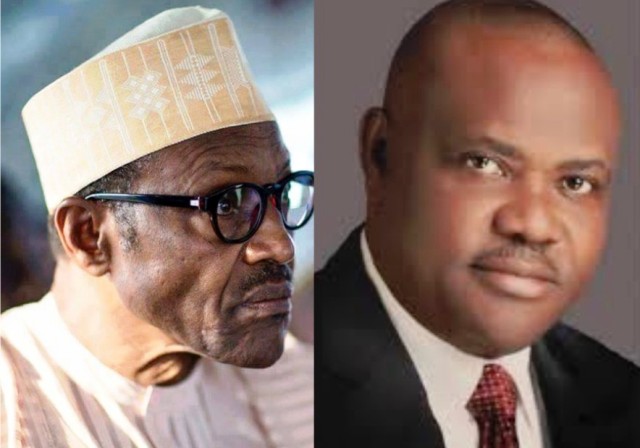
Last Saturday morning, Nigerians woke up to the news that a detachment of heavily armed men of the Directorate of State Services (DSS) and the Police attempted to abduct a Federal High Court Judge resident in Port Harcourt. And that in a bid to defend the embattled Judge, Rivers State Executive Governor, Nyesom Wike was manhandled by the assailants.
Many considered the news unbelievable, because judges belong to the third arm of government, the Judiciary which has its own code of conduct and ethics. Corrupt and undisciplined judges are a responsibility of the National Judicial Council (NJC) which reserves the right to investigate and punish such erring judges.
In performance of that duty, the NJC recently retired and sacked some judges and opened investigation into the background of Judges who gave conflicting judgements on same issues, with a view to ascertaining their level of compromise.
This is why it came to many as a huge shock that the DSS and the Police, all part of the executive arm could launch such affront on a sitting judge without recourse to the NJC for proper trial.
This kind of Gestapo-stuff attack, many thought ended with the Idi Amin’s Uganda and should not be repeated, especially in a democratic Nigeria. Many think this may be an unfriendly judge, who the powers that be want to teach a lesson, same lesson daily thought opposition politicians in the name of fighting corruption.
Among victims are Ekiti State Governor, Ayo Fayose, (PDP), Ex-Minister Godsday Orubebe, (PDP), former Chief Security Adivser (CSA), Col Sambo Dasuki (rtd) PDP, among several others. Interestingly, none of the former State governors who jumped ship to the All Progressives Congress (APC) from the PDP has been investigated, despite the many petitions against them.
What that translates to is that no matter how dark a governor’s sins may be, once we defects to the ruling APC his past is wiped clean. He is a new creature fit for eternal life. A life without probes and that of impunity.
Is this the democracy that ushered an opposition party in governance for the first time in the history of Nigeria? Or is it another Military rule, where perceived enemies are incarcerated at will by the powers that be?
Whither the civil society organizations? Whither the civil rights activists? Whither vocal Nigerians who badmouthed the former government to its grave?
On our last check, only the Nigerian Bar Association (NBA) has spoken against the arrest of two other judges after Saturday’s midnight invasion of their homes. The NBA declared a state of emergency in the Judiciary and asked President Muhammadu Buhari to order the immediate release of the affected judges or there would be consequences”.
Addressing newsmen alongside four former Presidents of the NBA, President Abubakar Mahmoud (SAN) said two Supreme Court Justices Iyang Okoro and Sylvester Ngwuta were “abducted”, with their families, adding that he had yet to have full details of other judges who could have been involved.
Mahmoud said NBA condemned what it termed the Gestapo-style operation of the DSS and announced the constitution of an emergency or crisis management team comprising past presidents to engage the government.
Mahmoud, according to the Vanguard said, it was not the responsibility of the DSS to arrest judges and described the DSS action as an unconstitutional means of intimidating the Judiciary and undermining its independence.
“I want to emphasise again that we are not under military rule and we cannot accept this unholy event and Gestapo-style operation”, Mahmoud warned.
According to him, “Any issues affecting the Judicial officers, there are established procedures of handling them and we demand that this constitutional process be obeyed”, and demanded the immediate release of the affected Judges.
“The release must be done immediately and without any conditions. Two, we demand that the Department of State Services (DSS) should limit itself to its statutory and constitutional responsibilities”, Mahmoud said, adding, “I’ll be meeting with the Chief Justice of Nigeria (CJN) tonight or tomorrow. There will be consequences should these demands are not met”.
But wait! Who ordered the arrest of the judges? Who tried and found them guilty? If they are yet to be tried, who would try them? The executive?
What are the consequences of this siege on an arm of government, as important as the Judiciary, believed to be the last hope of the common man?
An attack on the Judiciary is not merely an attack on Lawyers and Judges, it is indeed an attack against civilization, democracy and the rule of law. It is infact, a siege on the Nigerian people.
The immediate consequence of the action will be to intimidate incorrigible judges to join the bandwagon and do only the bidding of the ruling party, or be arrested and assaulted. The other is to use the clampdown to enlist friendly judges who would, at all times, offer favourable judgments to the power that be.
Otherwise, what is the rationale behind the attacks on judges? If the executive arm discovers an action it considers corrupt and wishes such Judge be punished there are laid out constitutional provisions and not assume the role of a judge in its own case.
The Buhari administration needs to be reminded for the umpteenth time that this is not a military rule where the Head of State is the maximum ruler, prosecutor and judge at the same time. The administration must therefore submit itself to the rule of law and invest on democratic growth, because the recent attack on judicial officers is not only undemocratic, it is unnecessary, vexatious and primitive.
First, it was the use of the Code of Conduct Bureau to effect leadership change in the Senate by trying Senate President Bukola Saraki before the Code of Conduct Tribunal (CCT), over questions bordering on party discipline but tied to false declaration of assets.
The protracted case at some point pitched the entire National Assembly against the Executive. Infact, it is not yet Uhuru, as both the Federal government and the Senate seem to find themselves in a marriage of convenience, with each waiting for when the other would strike first.
This makes the attack on the Judiciary one too many. Its marks of military adventurism and has no place in a democracy. Corruption is a crime which punishment is adequately provided for in our statute books. Therefore, any war against corruption must be fought according to the law and not transport Nigeria back into history, when, might was right.
Political might, it must be emphasized, belongs to the people and must not be used against its owners.
This is what the military siege against officers of the judicial arm translates into- an abuse of the people’s power. Such must be avoided, same way Governor Wike intervened in the foiled attempt to abduct another judge.
My Agony is against one of the most annoying fallacies of the kind of federalism Nigeria operates, and which makes the Governor, Chief Security Officer (CSO) of his State, while infact the power is exercised randomly and at will by many others, on the orders of a single individual, not the CSO. Methinks State Police remains the only answer to the trip back to military rule.
Soye Wilson Jamabo



Governor of Rivers State, Sir Siminalayi Fubara, has reaffirmed the unwavering commitment of his administration to peace, unity, security, and inclusive development as Rivers State marked its 59th anniversary, last Wednesday.
In a goodwill message issued on Wednesday to commemorate the anniversary, Governor Fubara stated that despite the challenges faced over the years, the people of Rivers State have continued to demonstrate resilience, strength, and an enduring spirit of unity that has sustained the state since its creation.
The Governor noted that the strong bond of brotherhood among the various ethnic nationalities of the state, including the Ijaw, Ikwerre, Ogoni, Etche, Ekpeye, Andoni, Kalabari, and others, remains one of Rivers State’s greatest strengths and a critical foundation for peace, stability, and progress.
He further observed that Rivers State has remained a major driver of Nigeria’s economy for decades, not only because of its abundant oil and gas resources, but also because of the exceptional contributions of its people across diverse sectors including academia, jurisprudence, business, entertainment, public service, and sports.
Governor Fubara assured the people that his administration will continue to prioritize policies and programmes that promote peace, protect lives and property, and expand development across all parts of the state. He emphasized that governance must be people centered and impactful, with equal attention given to every Local Government Area of the state.
The Governor also paid tribute to the elders and founding leaders of the state for preserving the spirit of unity and coexistence over the years, while urging the youths to remain hopeful, responsible, and actively committed to building a greater Rivers State through innovation, hard work, and patriotism.
He equally acknowledged the invaluable role of women in strengthening families, communities, and society, describing them as indispensable partners in the continued growth and stability of the state.
Governor Fubara called on all Rivers people to use the occasion of the anniversary as a moment of reflection and renewed commitment to peaceful coexistence, mutual respect, dialogue, and collective progress, stressing that the unity and future of Rivers State must always rise above personal interests and political differences.
Rivers State was created on May 27, 1967, by General Yakubu Gowon.


The Rivers State Government has distributed science equipment and materials to all senior secondary schools across the state to support students during the ongoing West African Examinations Council exams and to strengthen practical learning.
Flagging off the distribution at the Rivers State Senior Secondary Schools Board premises in Port Harcourt, on Monday, the State Commissioner for Education, Dr. Peters Nwagor, said the move demonstrates Governor Siminalayi Fubara’s commitment to improving education standards in the State.
Nwagor said the materials were approved and provided by the state government specifically to boost the teaching and learning of science subjects, describing science education as the foundation for technological advancement, innovation, and national development.
“No society can compete globally without deliberate investment in science and technology,” the Commissioner stated.
He commended the governor for consistently prioritising the education sector by providing tools needed for effective teaching and hands-on learning.
The Commissioner directed principals to ensure that the equipment are used strictly for practical lessons in their schools, warning that any principal or administrator found diverting, hoarding, or selling the materials wil face disciplinary action under public service regulations.
Nwagor also warned against examination malpractice, saying any principal found aiding or encouraging malpractices will be decisively sanctioned.
“We must collectively restore the dignity and credibility of our educational system,” he said.
Also speaking, Chairman, Rivers State Senior Secondary Schools Board, Tony Egwurugwu, urged school heads to make judicious use of the materials for students’ benefit.
He thanked the State Government for providing the resources, and assured that monitoring mechanisms would be put in place to ensure the materials serve their intended purpose.
In his own remarks, a Board Member for Technical Education, Nwisabari Bani Samuel, expressed appreciation to the governor for prioritising education and acknowledged the Commissioner’s role in advancing education development in the State.
He said the distribution covers all senior secondary schools in the State and is intended to improve students’ performance in both internal and external science examinations.
Akujobi Amadi
-
News4 days ago
Obuah’s Victory Excites Former Lawmaker as APC Primaries Conclude in Rivers West
-
News4 days ago
105 Nigerians Killed In S/Africa In Seven Years
-

 Niger Delta4 days ago
Royal Father Endorses PH Arsenal Community, Pledges To Support
-

 Sports4 days ago
Khana, Akpajo All-Stars Set For Friendly Match ” Morrow”
-
Business4 days ago
Dangote Refinery Ending Nigeria’s Dependence on Imported Fuel – EIU
-
Sports4 days ago
PH To Host 2026 NWFL Super Six
-
Business4 days ago
Commercial Aviation: Bayelsa Begins Operations As Pioneer Airline Launches Maiden Flight
-
Sports4 days ago
FG Approves Nationwide Stadium Overhaul