
Featured
Again, The Niger Delta Issue …A Call For Honest Dialogue

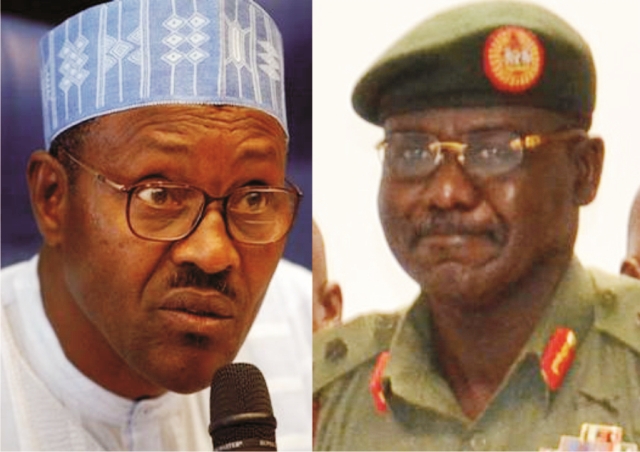
Rather than abate, from little known Niger Delta Avengers (NDA), the fresh insurgency in the oil rich Delta is giving birth to more and more groups. Although the leadership, profile and membership of such insurgent gangs still remain foggy, there are growing concerns that all may not be well in the area and by extension Nigeria.
When the NDA started its threats of attacking oil production facilities, it was dismissed with a wave of the hand until Agip and Chevron were hit in two separate attacks. Government’s immediate reaction was an order from the Commander-in-Chief, to the Military High Command to crush the militants.
That hurried reaction did not take into cognizance the currents and history of Niger Delta militancy, its threat to the economic profile of the country and how the Yar’Adua Presidency chose the amnesty option. It did not also consider the inherent danger such face-off, involving oil facilities and concomitant pollution would further endanger the environment and lives of the people. Also not put into proper perspective was the likelihood of civilian casualties, destruction of key public institutions and further aggravation of the crippling economic situation.
It was for all these that notable Nigerians called on the Federal Government to quickly consider and initiate dialogue, rather than use of force. They posited that such military posturing would rather than solve the impasse, aggravate it and return Nigeria back to the past when its oil production recorded its historical lowest.
Another option canvassed by many was a return to history, identify the wrongs associated with the forced amalgamation of 1914, and see how component parts of the ‘union’ today known as Nigeria would be made to have a sense of belonging and true nationhood. Appraising prevailing realities, influential Nigerians, like legal doyen, Prof. Nwabueze and former Vice President Atiku Abubakar, called for the restructuring of the Federation, in line with prevailing realities, as the present federal system being operated has failed to meet the yearnings and aspirations of the stakeholders.
Such a restructuring should make for stronger and economically more viable states as opposed to bigger centre, which negates true federalism. In such circumstance, each federating unit shall be encouraged to create its own resource base, develop and manage such resources and pay tax to the centre, as opposed to the present situation where all states depend on the oil from the Niger Delta for their survival and monthly rush to Abuja for hand-outs.
Those notable Nigerians insist that every state in the Federation has sufficient resources to develop and manage for growth. The problem is the laziness created by the oil which States now consider their meal ticket.
The strongest argument is that the central government is too large, expensive, over-reaching, inspiring and indeed greedy in the distribution of national resources. Its powers should be divested to reflect the true tenets of federalism.
Some of these arguments were captured during the last national conference which produced a report that many believed could address some of the agitations today creating insecurity in the land. Many have therefore called on the Buhari Presidency to look at the report with a view to implementing it.
But the body language of the President does not portray any iota of urgency. In fact, the Presidency has not as much as commented on the various issues raised by well-informed Nigerians.
It is perhaps that silence that has evoked the recent call by a new militant group, for a referendum, to determine the sovereignty of Nigerians. From insisting that major oil companies left the Niger Delta and calls for a revocation of the oil blocs allocated to prominent Northern elites, the militants are today calling for resource control. The militants now insist that the Niger Delta should be allowed to manage its resources, bear the consequences of the environment and pay taxes to the centre. Alternatively, a referendum be conducted to ascertain whether the Niger Delta still wishes to remain in the Nigerian Federation.
Unfortunately, rather than address the danger which this new line of debate holds, some Northern Senators have again raised the question: Where was the money used in developing oil in the Niger Delta sourced from? Their argument was that proceeds from agriculture and other resources from other lands together formed the capital to develop crude oil in the Niger Delta.
Really? How much? In those years of the groundnut pyramids, the regions enjoyed nearly 100 per cent derivation and resource control while the centre survived on taxes even from oil palm produced in the South East and South-South areas.
Besides, the Federal Government did not unilaterally develop crude oil. It was counterpart funding with major oil production multi-nationals who capitalised on the unholy marriage to short-change the Niger Delta. In those days, the argument of the Northern elite was that oil was a gift from God and belonged to no one in particular.
With such mindset, virtually every military regime, predominantly headed by Northerners turned natives of the oil bearing states into beggars while resources accruing from oil sales were used to develop major Northern cities.
The question still remains, how much was voted to develop crude oil? How much was the cost of building Abuja alone? How much profit has the central government made from its investment?
Everywhere in the world, ownership of land also determines ownership of resources there in. Nowhere in the world are land-owners, totally denied ownership of the treasures buried beneath. It is only in Nigeria where land belongs to the Niger Delta people but the oil buried there in, for all.
With civilisation and education, those mundane arguments can no longer hold water. Reality is that government must re-negotiate the terms of engagement with land-owners or investors may reconsider new investments in more conducive climes.
Silence on the part of the Federal Government is no longer healthy to the debate. Government must take a position and determine next line of action to douse the impending rift. From the stand point of the new militant groups, nothing short of resource control will bring peace. This means putting the entire area at risk in the event of arms confrontation or guided attacks on oil facilities.
The Buhari Presidency should take urgent steps at addressing the growing insurgency in the South-South, the increasing protestations, and sense of marginalisation in the South-East, the pressing sense of insecurity caused by rampaging herdsmen in the South-West and bring an end to Boko Harm in the North-East.
All these are battles that must be fought and won using the lean resources available to government. Allowing such funds to be depleted even further on account of ego, shame and pride, or a hurried resort to armed combat would indeed be injurious to the nation and its people.
This is why the Buhari Presidency must heed the advice of statesmen that the report of the last National Conference be revisited or outright restructuring be initiated. That is the wise thing to do.
While this is awaited, the militants should realise that the planned war is not against the same people whose interest it professes to champion. That each attack further degrades the environment and the ecosystem and by extension further threatens the people’s occupation of fishing and farming.
They must therefore embrace cease fire and allow dialogue so as to let the conversation flow freely. It should not be all about threats and violence, sometimes, maturity and commonsense should play their roles.
My Agony is that the comments of some Northern Senators could incite violence, rather than abate it, for true dialogue to take place. That’s how greed drives people to self-destruction.
Perhaps, they should be told, “strength and wisdom are not opposing values. They complement each other,” according to former US President Bill Clinton.
Soye Wilson Jamabo



Governor of Rivers State, Sir Siminalayi Fubara, has reaffirmed the unwavering commitment of his administration to peace, unity, security, and inclusive development as Rivers State marked its 59th anniversary, last Wednesday.
In a goodwill message issued on Wednesday to commemorate the anniversary, Governor Fubara stated that despite the challenges faced over the years, the people of Rivers State have continued to demonstrate resilience, strength, and an enduring spirit of unity that has sustained the state since its creation.
The Governor noted that the strong bond of brotherhood among the various ethnic nationalities of the state, including the Ijaw, Ikwerre, Ogoni, Etche, Ekpeye, Andoni, Kalabari, and others, remains one of Rivers State’s greatest strengths and a critical foundation for peace, stability, and progress.
He further observed that Rivers State has remained a major driver of Nigeria’s economy for decades, not only because of its abundant oil and gas resources, but also because of the exceptional contributions of its people across diverse sectors including academia, jurisprudence, business, entertainment, public service, and sports.
Governor Fubara assured the people that his administration will continue to prioritize policies and programmes that promote peace, protect lives and property, and expand development across all parts of the state. He emphasized that governance must be people centered and impactful, with equal attention given to every Local Government Area of the state.
The Governor also paid tribute to the elders and founding leaders of the state for preserving the spirit of unity and coexistence over the years, while urging the youths to remain hopeful, responsible, and actively committed to building a greater Rivers State through innovation, hard work, and patriotism.
He equally acknowledged the invaluable role of women in strengthening families, communities, and society, describing them as indispensable partners in the continued growth and stability of the state.
Governor Fubara called on all Rivers people to use the occasion of the anniversary as a moment of reflection and renewed commitment to peaceful coexistence, mutual respect, dialogue, and collective progress, stressing that the unity and future of Rivers State must always rise above personal interests and political differences.
Rivers State was created on May 27, 1967, by General Yakubu Gowon.


The Rivers State Government has distributed science equipment and materials to all senior secondary schools across the state to support students during the ongoing West African Examinations Council exams and to strengthen practical learning.
Flagging off the distribution at the Rivers State Senior Secondary Schools Board premises in Port Harcourt, on Monday, the State Commissioner for Education, Dr. Peters Nwagor, said the move demonstrates Governor Siminalayi Fubara’s commitment to improving education standards in the State.
Nwagor said the materials were approved and provided by the state government specifically to boost the teaching and learning of science subjects, describing science education as the foundation for technological advancement, innovation, and national development.
“No society can compete globally without deliberate investment in science and technology,” the Commissioner stated.
He commended the governor for consistently prioritising the education sector by providing tools needed for effective teaching and hands-on learning.
The Commissioner directed principals to ensure that the equipment are used strictly for practical lessons in their schools, warning that any principal or administrator found diverting, hoarding, or selling the materials wil face disciplinary action under public service regulations.
Nwagor also warned against examination malpractice, saying any principal found aiding or encouraging malpractices will be decisively sanctioned.
“We must collectively restore the dignity and credibility of our educational system,” he said.
Also speaking, Chairman, Rivers State Senior Secondary Schools Board, Tony Egwurugwu, urged school heads to make judicious use of the materials for students’ benefit.
He thanked the State Government for providing the resources, and assured that monitoring mechanisms would be put in place to ensure the materials serve their intended purpose.
In his own remarks, a Board Member for Technical Education, Nwisabari Bani Samuel, expressed appreciation to the governor for prioritising education and acknowledged the Commissioner’s role in advancing education development in the State.
He said the distribution covers all senior secondary schools in the State and is intended to improve students’ performance in both internal and external science examinations.
Akujobi Amadi
-

 Rivers2 days ago
Police arrest 3 suspects over killing of driver in Rivers
-
Politics2 days ago
I DIDN’T PROMISE YOU TICKETS, AKPABIO TELLS APC SENATORS WHO FAILED PRIMARIES
-

 News2 days ago
FUBARA ASSURES NUT OF SECURITY OF SCHOOLS IN RIVERS
-

 News2 days ago
NDLEA Arrests Four Notorious Female Drug Dealers In Four States
-

 Sports2 days ago
Okpekpe Road Race Gets Mobility Solutions, Fan Engagement
-
Politics2 days ago
Court Dismisses Rivers PDP Members’ Suit Over LG Election Candidates
-

 News2 days ago
WORLD FOOD SAFETY DAY: VETERINARIANS TASK GOVT ON MODERN ABATTOIR IN RIVERS
-
Politics2 days ago
POST PRIMARIES: IKWERRE MONARCHS ADVOCATE ISSUES-BASED POLITICS IN RIVERS