
Features
Reminiscences Of 9/11 Attacks

September 11 is like the millions of other days for all nations, except for the United States of America whose existence and super power myth was threatened 10 years ago on that day by an Islamic fundamentalist group called al-Qaeda. September 11, 2001 was a day of infamy never to be forgotten in the US and across the world. There was despair in the dust borne and depression across the United States.
The horrendous event of that day, which is christened 9/11 in America today, touched people around the globe and evoked reactions of anger, sorrow, incredulity, fear and mourning. It was not a tragedy of a single nation, or of a single person. The whole world was overwhelmed with sadness and shock, watching innocent souls perish in a mindless act of terrorism.
The Ground Zero of the decimated World Trade Centre (WTC) was a site of unbelievable destruction. Shortly after the attack, the WTC became a magnet, drawing people from around the world to share their grieves, disbelief and bewilderment. World leaders came. Ordinary people came; all writing their sentiments and names on an unadorned plywood barrier where the WTC had become twisted steel and ashes, as the US Department of State, Bureau of Educational and Cultural Affairs painted it.
As noted by many people, the September 11, 2001 bombing of the twin towers World Trade Centre, and America’s defence operation and security building, Pentagon was not just one of the most saddest events for America, it was a challenge on America’s super power myth.
Yesterday was the 10th anniversary of that mindless attack which left not fewer than 4,000 dead. Expectedly, the pains, agonies and nostalgia of the British attack was re-echoed all over the United States.
In what the US reportedly made the most security fitted national engagement, the American citizens rolled out drums, albeit in sober mood, to recall the hate and mass murder visited on America and its economy by the event of September 11, 2001. While they mourned the victims of the bloody attacks, they also celebrated the heroes who staked their lives to save their fellow country men and women at Ground Zero.
As a pre-event for this year’s anniversary of the 9/11, not fewer than 40 international television channels in US, have been running documentaries and programmes on the 9/11 holocaust, since August 28. Some of these stations such as CNN, Fox TV, History Channel, MSNBC, Science Channel, among others, gave accounts and revived the gory moment of the terrorist attacks in their programmes.
The holocaust masterminded by al-Qaeda at the behest of its kingpin, Osama bin Laden, who US at last tracked and killed in Pakistan on May 2, this year, was so chilling and nearing freezing point; just as the desperation and ingenuity put into use by 19 al-Qaeda agents who hijacked four passenger aircrafts, three of which struck and reduced the twin towers WTC in New York and the legendary Pentagon into a heap of rubble and masonry, was incredible.
From the computer stimulation of the flight track, the first plane had taken off from Boston for San Francisco. A few minutes after take-off, it did a detour to the left towards its targeted destination in New York, and in no time, rammed straight into the first tower of the tall structure building of the WTC. The second aircraft came a little after and struck the second tower.
Forty-five minutes later, the third passenger aircraft came and crashed into the Pentagon at Arlington, Virginia, the very heart of America’s defence operations and security hitherto thought to be invincible, and thus collapsed eight wings of the legendary structure.
In less than one hour, the four hijacked planes had hit three targeted destinations, with the fourth one crash-landed into an open field in Shanksville, the remote woods of the State of Pennsylvania. The speculation is that the fourth airline targeted either the White House or Capitol Hill before one of its hijackers, who was afraid of being overpowered by the passengers, reportedly urged the one piloting to roll over the plane and force it to crash.
For nearly 10 years after the attack, America’s strength to track down the 9/11 masterminds, especially Osama bin Laden was met with cynicisms and doubts. And for the period the hunt for bin Laden lasted, the myth woven around America as an invincible fortress and a country where all things are possible was at its lowest ebb.
In spite of the tough talk by the former US president, George W. Bush, under whose watch the September 11, 2001 event occurred, Osama bin Laden and his al Qaeda group was insurmountable.
On May 2, this year, however, America reaffirmed her timeless creed that out of many, she is one. She finally got her most hunted enemy, Osama.
Since the 2001US attacks, the security of the world, not just America alone, has been on the tenterhooks. Like a contagious disease, terrorism has been touching more nations. America’s bold reactions against the 9/11 assault and its unbridled fury of revenge against the terrorists, have since driven al-Qaeda and global terrorists out of the United States; and has therefore made them find sanctuary in other countries like Spain, Somalia, Sudan, Maghreb, Afghanistan, India, London and Nigeria.
On March 11, 2004, the al-Qaeda merchants unleashed terror on Spain where they bombed some trains that left about 200 people dead and almost 2000 injured. The same scenario was painted in London on July 7, 2005, when train bombing killed over 52 people in the centre of the city.
Mumbai, India’s largest city had its own share of the gory tale on November 28, 2008, when Pakistan Islamists painted the city red and crimson in 10 coordinated attacks that killed 164 people and wounded at least 308. The latest of this suicide epidemic was hosted by New Delhi, also in India last Wednesday, September 7.
Of all the countries that suicide bombings have found sanctuary in the last 10 years, Nigeria appears to be the most safe haven. Between October 1, 2010 and now, about seven major suicide bombing attacks have been unleashed on the nation.
The October 1, 2010 attacks said to have been perpetrated by al-Qaeda happened near the Eagle Square, Abuja, the venue of Nigeria’s 50th independence anniversary celebration, killing not fewer than 12 people. On December 24, 2010, another set of 38 Nigerians was killed and 74 injured in a series of bomb attacks in the central city of Jos and north-eastern Maiduguri; while the December 31, 2010 bomb blast at a beer garden of a military barracks in Abuja left four persons dead.
Suleija town, near Abuja had its own gory tale to tell on April 8, this year, when suicide bombers detonated a bomb at an electoral agency office, killing 11 and injuring 38 persons.
On May 29, this year which marked Nigeria’s Democracy Day and the swearing-in day of President Jonathan as newly elected president, Nigerians woke up to the rude shock of another bomb blasts in two places – one at an open air beer drinking spot in northern Bauchi and another one on the outskirts of Abuja. About 18 people lost their lives, while 31 were injured in the attacks. Meanwhile, on June 16, 2011, at least, two people including the suspected suicide bomber and a police officer were killed and seven people wounded during a bomb attack on the police headquarters in Abuja. The same day, four children lost their lives in a separate attack in the northern town of Damboa, near Maiduguri.
The latest of these suicide bomb attacks in Nigeria was recorded on August 26, when the terrorists attacked and decimated the United Nations (UN) office in Abuja, leaving 23 dead and many people injured.
All of these attacks, except the October 1, 2010, were said to have been perpetrated by a northern based Islamic fundamentalist group, called Boko Haram, who claims is fighting against Western education.
The spate of these terror attacks has begun to stretch the world’s economy. For instance, for the past 10 years, America has been battling with a weakened economy because of the costs of fighting the war against terrorism. The recent bitter debt ceiling debate between the US presidency and the US Republican dominated Congress lends credence to this.
In Nigeria too, several millions of naira have been deployed into fighting terrorism. But unlike the US which has succeeded in checking further attacks since the September 11, 2001 attacks, Nigeria is still confused as to how to route out this terror group or at least deplete its rank.
Boye Salau



It has been 25 years of impactful development of the Niger Delta region, facilitated by theNiger Delta Development Commission. NDDC. Without doubt, it has been a remarkable journey, marked by significant milestones and daunting challenges.
For the past week, the NDDC has been celebrating its achievements, beginning with a thanksgiving service in Akure, Ondo State, on July 6, drawing stakeholders and Niger Deltans to express gratitude to God for the Commission’s journey so far.
Taking off on the wings of the Oil Minerals Development Commission, OMPADEC, in 2000, the NDDC has grown into a symbol of federal presence in the oil-rich Niger Delta region.
The celebration moved from spiritual reflection and thanksgiving to strategic communication, with a World Press Conference held in Asaba, Delta State, on Monday, the 7th of July. There, members of the Fourth Estate across all media gathered in what was perhaps the most extensive media engagement of its kind. The NDDC Managing Director and Chief Executive Officer, Dr. Samuel Ogbuku, reaffirmed the Commission’s commitment to its motto of “making a difference.”
Dr. Ogbuku stated, “The President gave us a matching order during our inauguration to positively turn things around in the Niger Delta region.” That presidential directive, he noted, continues to guide the Board and Management as they pursue legacy projects across the region.
From electricity restoration in Ondo to road linkages in Bayelsa and Akwa Ibom, the NDDC’s impact was showcased in clear, tangible terms. “We commissioned the 45-km double-circuit 33KV feeder line from Omotosho Power Station to Okitipupa in Ondo State,” Dr. Ogbuku recalled, “bringing electricity back to 25 local governments after 15 years in darkness.” This was just one of several landmark interventions highlighted during the press briefing, underscoring the Commission’s renewed vigour under the current leadership.
The Managing Director spoke candidly about the setbacks caused by years of instability in leadership. “Frequent changes in management and boards have slowed our progress,” he admitted. “But today, we are targeting legacy projects. Our mandate is to complete those critical projects.” He emphasised that the Commission had transitioned from a transactional mindset to one of transformation, including the digitisation of procurement processes to ensure transparency and accountability.
Other top executives echoed similar sentiments. The Chairman of the Governing Board, Mr. Chiedu Ebie, stressed the importance of collaboration, particularly with the media, whom he described as “critical stakeholders” in advancing development. Alabo Boma Iyaye, the Executive Director of Finance and Administration, noted that the celebrations would run until Saturday, July 12, culminating in a gala night and plenary session in Port Harcourt.
Perhaps, the most significant message from the silver jubilee celebration is the renewed hope that the Niger Delta can finally experience holistic and sustainable development.
According to Ogbuku, “Through the initiative of the Board and Management, we have restructured the administrative architecture of the Commission to its 13 statutory Directorates, introduced robust Corporate Governance protocols… This formalised a value- driven institutional culture anchored on ethics and performance.”
As the weeklong celebrations continue across different states in the region, the NDDC appears determined not just to celebrate its past but to chart a bold course for the future.
The people of the Niger Delta are watching, hopeful that the next 25 years will be defined not by promises, but by lasting progress that transforms lives and communities, truly making a difference.
The celebration also featured a movie premiere titled “Making a Difference”, which traced the Commission’s journey and told stories of transformation in communities once plagued by underdevelopment. For many observers, the film served as both an emotional tribute and a powerful reminder of the NDDC’s role in shaping the destiny of the region.
The Governing Board and management of the NDDC have again proven to Nigerians, particularly the people of the oil-bearing Niger Delta region, that history does matter. They have also shown clearly that extraordinary personalities can upturn calculations and permutations. The above assertion was evidenced by the torrents of praises, accolades, and commendations poured on the Commission and its management and board by critical stakeholders during its week-long 25th anniversary celebration.
Beginning with Ondo State, one of the NDDC mandate states, Ondo Governor, Lucky Aiyedatiwa, hailed the management of the NDDC for the peace and development currently prevailing in the Niger Delta region. He said the Commission, under the current management and board, has succeeded in bridging developmental gaps in the region, noting that NDDC’s emphasis on partnerships and collaboration aimed at driving sustainable development across the Niger Delta has ushered in unprecedented progress.
Aiyedatiwa, who spoke at the Thanksgiving Service of the NDDC held at St Thomas’s Anglican Church, Akure, the Ondo State capital, stressed that the commission has undoubtedly lived up to its established mandate, commending the Board and Management for their exemplary leadership and commitment.
The Governor hailed the commission’s commitment and dedication to project conception, implementation, and completion, noting that the NDDC has established a culture of delivery and the region would no longer witness abandonment of projects as was the case in the past.
He said, “As we celebrate the Silver Jubilee of the NDDC, we must acknowledge the progress we have made and also recognise that there is still much work to be done as the Niger Delta region continues to face significant development challenges and we must work together to address these issues. “I urge the NDDC to continue to improve on its activities, ensuring that projects are tailored to the needs of the communities we serve. Let us work together to unlock the potential of our region, promote economic growth and enhance the lives of our people. We are partners in progress, unity and development.”
From Ondo State to Asaba, the Delta State capital, it was the same rain of praises. The Asaba monarch, the Asagba of Asaba, Obi Epiphany Azinge, on his part, was full of praises for the NDDC for its achievements in the past 25 years.
Obi Azinge spoke when Ebie led a delegation of the Commission’s Board and Management to pay a courtesy visit to him in his palace in Asaba, the Delta State capital. The Royal Father commended the NDDC for its intervention in several sectors across the Niger Delta region.
He expressed delight with the foreign postgraduate scholarship programme, which had helped many youths from the Niger Delta upgrade their knowledge.
He also acknowledged the contributions of the NDDC Chairman, whom he said had served the Delta State Government in different capacities. He noted that Ebie served meritoriously as Delta State Commissioner for Basic and Secondary Education and later, Secretary to the State Government. The monarch thanked the NDDC for selecting Asaba as the venue for some of the activities marking its 25th anniversary, such as a press conference and the movie premiere.
Earlier, the NDDC Board Chairman congratulated Asagba on his ascension to the throne of his forefathers, saying he was eminently qualified for the position. Ebie expressed optimism that the Asagba’s reign would bring good tidings to Asaba, which serves as both a Kingdom and the capital of Delta State.
He stated that the NDDC had come of age and was now a big brother to the new development agencies in Nigeria’s geo-political zones. Ebie disclosed that as part of the silver jubilee celebration, the Commission was going around the nine States of the Niger Delta.
The NDDC Chief Executive Officer pledged that the NDDC’s commitment to adhering strictly to the President’s directive to the Commission to complete all ongoing projects in the region, including roads, bridges, schools, and healthcare facilities. He disclosed that the Commission was engaging all stakeholders to ensure harmony and cooperation in the task of developing the hitherto neglected Niger Delta region.
He noted that, ”It is not only by our efforts; it is the collaborative efforts from all the stakeholders who believe the time has come when there should be stability in the NDDC and that stability is a challenge to us to ensure that we deliver development to the people of the Niger Delta region.”
Ifeatu Agbu
Agbu wrote in from Port Harcourt.
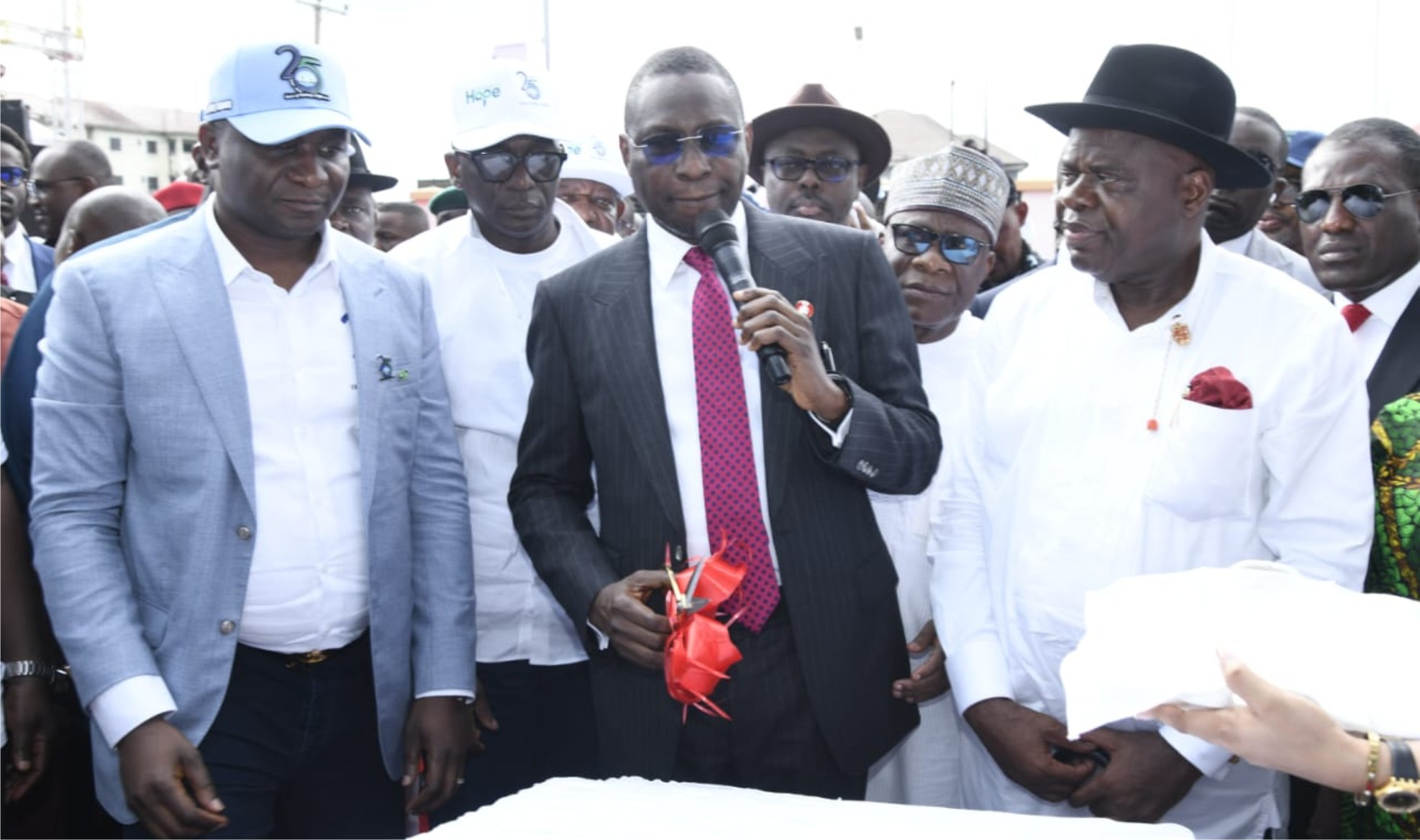
The mandate of the Niger Delta Development Commission, NDDC, is to facilitate the rapid and sustainable development of the Niger Delta region, while that of the Economic and Financial Crimes Commission, EFCC, is to investigates financial crimes and put corrupt practices in check.
Given their different roles, the idea of an alliance between the two organisations may seem far-fetched. However, with the NDDC Managing Director, Dr Samuel Ogbuku, and the EFCC Executive Chairman, Mr. Olanikpekun Olukoyede, it is not just an idea; it is a reality.
The unique collaboration between the NDDC and the EFCC has given rise to the Renewed Hope Multi-Purpose Training Centre, unveiled on Tuesday at Otuokpoti Community in Ogbia Local Government Area, Bayelsa State.
According to the NDDC Managing Director, the vast training complex was executed with funds recovered on behalf of the Commission by the EFCC.
Ogbuku explained that the Bayelsa training centre was funded through the money recovered by the EFCC and executed under a signed performance bond, ensuring transparency and impact. He noted that the facility represented one of several such centres being constructed in Delta and Rivers States. He said: “We have similar facilities currently under construction in Odi, Bayelsa State, while the ones in Delta State are being built in Patani and Ozorro and another two in Rivers State.”
He observed that the Multi-Purpose Training Centre, which was completed in record time, was a partnership between the EFCC and the NDDC, as the anti-crime agency had recovered the funds that facilitated the project’s execution.
Ogbuku observed that the facility, which could accommodate 1,000 persons, represented a significant step toward empowering local communities through skills development and inclusive growth.
The training centre’s components, which include a school, hospital, cafeteria, police post, and recreational centre, are all designed to support training, healthcare, and emergency accommodation within a single integrated complex.
Speaking at the inauguration ceremony, the EFCC Chairman assured the NDDC of the release of more recovered funds in the coming weeks.
Olukoyede described the NDDC as a “renewed and transformed government agency.” He assured that the EFCC would do everything to recover all outstanding statutory contributions due to the NDDC from oil companies.
He noted: “We have made several recoveries on behalf of the NDDC, and we will not relent in this direction. We are encouraged by the fact that the NDDC is making the Renewed Hope Agenda of the Federal Government a reality in the Niger Delta region.”
Olukoyede commended the NDDC for its institutional and policy reforms, declaring that the people of the Niger Delta will have every reason to celebrate the current leadership of the Commission. He described the NDDC as a beacon of good governance under President Bola Ahmed Tinubu.
He noted: “The Niger Delta is the goose that lays the golden egg and should not be denied the benefits of that golden egg. On our part at the EFCC, we must do everything within our power to ensure that the three per cent statutory contribution due to the NDDC is recovered and handed over to the Commission. We are going to continue supporting you.”
He said further: “Under this President, NDDC is working; good governance is being delivered. It is my delight to be part of this transformational agenda. The Renewed Hope Agenda is no longer a slogan—it is a reality. For the first time, people are identifying with what NDDC is doing.”
Olukoyede commended the NDDC, saying the Commission has refined its processes to uphold the principles of probity. This aligns with the agency’s head’s emphasis on upholding transparency and accountability in the country’s affairs.
The Chairman of the anti-crime agency confessed that his perspective on the NDDC was turned around in 2024, when the NDDC management, led by Ogbuku, paid him a courtesy visit at the EFCC’s headquarters in Abuja.
Olukoyede stated that he was impressed by the Commission’s “Rewind to Rebirth” initiative.
He declared: “The five minutes of interaction with the MD left me with a different perception of NDDC. Maybe, we will begin to see an NDDC that is a symbol of pride, accountability, transparency and able to deliver on its mandate.
“From his presentation, you can see that he is ready to bring a change, and that is the exact thing that we stand for in EFCC.”
Assuring that the EFCC would continue to assist the NDDC to achieve its mandate, he said: “We have been working with you to make recoveries; we will continue to do more.
“The collaboration is something we need to take to the next level, and with what you have put on the table I think we are ready to work with you to strengthen your systems and processes and to take the NDDC to the next level.”
In his remarks, the Minister of Niger Delta Development, Engr. Abubakar Momoh, praised the NDDC Board and Management for their unity of purpose and commitment to service delivery, stating that the level of harmony and stability within the Commission is unprecedented.
He declared: “What we are witnessing here today has never happened in the history of the NDDC. Since I assumed office as Minister, I have not been called upon to settle any crisis within the Commission. This is a testament to the teamwork between the Board and Management.”
Also speaking, the Chairman of the NDDC Governing Board, Mr. Chiedu Ebie, emphasised the human capital development focus of the two projects commissioned, noting that reforming the NDDC is an ongoing but rewarding process.
He stated: “We are moving from transaction to transformation. We are doing our best to improve not just the reputation of the NDDC, but everything that concerns the Commission. Today is about promoting and celebrating human capacity.”
Without a doubt, the Niger Delta region is confronted with ecological and environmental challenges that should, perforce, attract significant funds from the Federal Government and the oil companies operating in the region.
Sadly, this has not been so, thus limiting the capacity of the NDDC to fulfill its mandate of driving the development process and transforming the Niger Delta region into one that is “economically prosperous, socially stable, ecologically regenerative and politically peaceful.”
It is rather unfortunate that, despite the spirited efforts by successive boards and managements of the NDDC to meet the expectations of the people, their efforts have not been matched with commensurate funding.
The issue of inadequate funding is resurfacing again. Indeed, it is an inconvenient truth that will remain on the front burner until it is fully addressed.
That explains why the NDDC Managing Director highlighted the issue during interactive sessions that the Commission’s Board and Management held with the relevant Committees of the National Assembly in Abuja last year.
Ogbuku told the House of Representatives Committee on NDDC, chaired by Hon. Ibori-Suenu Erhiatake, that the Commission is owed over N2 trillion, arising from withheld funds and underpayments by both the government and the oil companies. He blamed this on non-compliance with the Act establishing the Commission.
Given the enormous impact of their activities on the environment, the oil companies are expected to be at the forefront in the critical task of urgently developing the oil basin that has suffered so much neglect in the past. It is, in fact, in their interest to develop the communities where they operate to guarantee peace, which is very necessary for them to continue with their work.
Thankfully, both the Senate and the House of Representatives promised to assist the NDDC in recovering its outstanding funds. In their various interactions with the NDDC leadership, the lawmakers expressed concern about the disregard for existing laws governing the Commission’s funding.
The Chairman of the Senate Committee on NDDC, Senator Asuquo Ekpenyong, expressed displeasure over the disregard for the law by the International Oil Companies (IOCs) and promised to call them to order.
The Senate Committee Chairman stated that proper funding would help NDDC to adequately address the sustainable development of the Niger Delta region, noting that the challenge of developing the region was enormous and that all relevant contributors to the NDDC must play their roles diligently.
Senator Ekpenyong said that in discharging its oversight functions, his committee will ensure that every contributor to NDDC pays what they owe the Commission, “because we cannot afford to toy with the development of that very important region. We owe it to the country to make sure that we improve the living conditions of the people of the region.”
It is reassuring to note that both chambers of the National Assembly are concerned about the pressing funding challenges facing the NDDC and are taking steps to address the situation.
The lawmakers understand that we have a responsibility to adequately fuel the vehicle chosen to drive the development process in the Niger Delta region.
In 2023, the House of Representatives unveiled plans to investigate the activities of International Oil Companies (IOCs) operating in the Niger Delta region, as well as the recovery of over $4 billion allegedly owed to the NDDC.
The resolution was passed sequel to the adoption of a motion sponsored by Hon. Donald Kimikanboh Ojogo, who frowned at the flagrant breach of the NDDC Act, 2000, which was established in response to heightened agitations and violent yearnings for special intervention in the oil-producing states.
He said: “The House is aware that the indebtedness of the IOCs to the NDDC had culminated in the drive by the Economic and Financial Crimes Commission (EFCC) to commence the debt recovery process.
By Ifeatu Agbu
-

 Rivers1 day ago
Police arrest 3 suspects over killing of driver in Rivers
-
Politics1 day ago
I DIDN’T PROMISE YOU TICKETS, AKPABIO TELLS APC SENATORS WHO FAILED PRIMARIES
-

 News2 days ago
FUBARA ASSURES NUT OF SECURITY OF SCHOOLS IN RIVERS
-

 News2 days ago
NDLEA Arrests Four Notorious Female Drug Dealers In Four States
-

 News2 days ago
WORLD FOOD SAFETY DAY: VETERINARIANS TASK GOVT ON MODERN ABATTOIR IN RIVERS
-

 News2 days ago
RSG ADVOCATES IMPLEMENTATION OF SUMMIT RESOLUTIONS FOR N’DELTA DEV
-
Politics1 day ago
Court Dismisses Rivers PDP Members’ Suit Over LG Election Candidates
-

 Sports1 day ago
Okpekpe Road Race Gets Mobility Solutions, Fan Engagement