Opinion
Effects Of Smuggling Of Petrolum Products In Nigeria
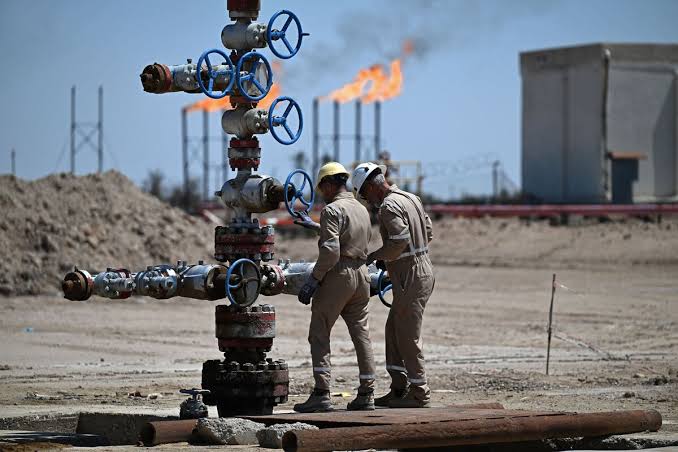
Of late, Nigerian Customs Services have been fighting the act of smuggling taking place at the Nigeria’s borders with the neighbouring countries. Smuggling of petroleum products and other goods out of Nigeria is a threat to local consumption of any product produced locally. Smuggling has done more harm than good to Nigerians and Nigeria as a country. The rate at which petroleum products are smuggled out of Nigeria is alarming. Smugglers always re-strategise to beat the customs officers on duty and have their ways through the borders. Yes, it was revealed few years ago, that the borders of Nigeria with other countries are so porous, that smugglers have easy escape routes to other countries. Today, petroleum products are not sufficient to sustain the internal needs of most Nigerians. If smuggling be allowed to continue without check, it will lead to severe economic crisis.
Smuggling is a serious menace to the economic development of Nigeria. It is a name synonymous with petroleum products. Nigeria, being a major player in oil industry in the world, is seriously facing uncontrollable smuggling activities by smugglers. Inspite of the efforts of the Customs and the Immigration Services at working hard to curtail the excesses of smugglers, corruption in the oil sector seems to have provided a thriving ground for smuggling activities to remain unabated. Few weeks ago, Nigerian Customs apprehended smugglers with over two thousand Jerry cans loaded with petrol in Nasarawa State. The product was confiscated and taken to a filling station where it was sold at a cheaper rate of five hundred naira, per litre. Some time it is difficult for seizure of smuggled products to take place because of corruption.
Smugglers are strategists who can maneuver through the borders, not minding the penalty of the offence. Activities of smugglers lead to high cost of commodities in the markets. It gives room to quick gains, thereby giving room for skyrocketed price of smuggled goods. Again, the activities of smugglers lead to scarcity of products that should be available in the country. The land and water border towns are where smugglers move the products to other countries. Sometimes high level compromise frustrates the combat against smuggling of products. The network of smugglers is so sophisticated to burst. Some of them are highly connected to those in authority, thereby making the war against smuggling a fruitless one. Smuggling activities are undermining even circulation of some locally produced goods in Nigeria.
According to AI overview, smuggling of petroleum products can have significant negative effects including: substantial loss of government revenue from taxes, depletion of natural resources, destabilisation of activities, fuel shortages in the exporting country, environmental damage due to improper storage and transportation, and potential for price distortions in receiving markets due to influx of cheap smuggled fuel. Indeed, weak border control is another problem of poor border security and inadequate monitoring systems can facilitate smuggling activities. And another factor that promotes smuggling is price disparities. When there is a large price difference between a country producing petroleum and neighbouring countries, it stimulates smuggling.
Other social impacts; funding criminal activities; profits from petroleum smuggling often fund organised crime networks and terrorist activities. Corruption is not left out. Smuggling often involves collusion with corrupt officials undermining public trust in institutions. It is also dangerous to the environment. For instance, smuggled petroleum products are often stored and transported in substandard conditions, increasing the risk of spills and leaks, causing environmental contamination. Illegal pipeline tapping is another dangerous trend; in some cases, smuggling can involve tapping into oil pipelines, which can lead to significant environmental damage.Indeed, governments lose significant income from taxes on legally sold petroleum products when they are smuggled out. Again, smuggling can disrupt the normal supply and demand dynamics of the petroleum market, leading to price fluctuations and shortages.
It undermines fuel subsidy programme. When a country like Nigeria subsidises fuel, smuggling can exacerbate the issue by allowing people to buy subsidised fuel at a low price and sell it at a higher price in other countries Hence, there is need for the governments to combat and eradicate smuggling in the petroleum sector. Strengthening border controls; increasing border controls implementing advanced monitoring technologies and improving customs procedures can help deter smuggling. Thus, there is need for price harmonisation. Reducing price discrepancies between countries can lessen the incentive for smuggling. International co-operation is crucial to combat cross-border smuggling operations. Smuggling of petroleum products is a threat to the economic development of the citizens and Nigeria. Therefore, say no to smuggling of petroleum products in Nigeria.
Ogwuonuonu writes from Port Harcourt.
By: Frank Enewaji Ogwuonuonu

Opinion
Empowering Youth Through Agriculture
Quote:”While job seeking youths should continuously acquire skills and explore opportunities within their immediate environment as well as in the global space through the use of digital platforms, government, corporate/ multinational organizations or the organised private sector should generate skills and provide the enabling environment for skills acquisition, through adequate funding and resettlement packages that will provide sustainable economic life for beneficiaries”.
The Governor of Rivers State, Sir Siminalayi Fubara, recently urged youths in the Rivers State to take advantage of the vast opportunities available to become employers of labour and contribute meaningfully to the growth and development of the State. Governor Fubara noted that global trends increasingly favour entrepreneurship and innovation, and said that youths in Rivers State must not be left behind in harnessing these opportunities. The Governor, represented by the Secretary to the State Government, Dr Benibo Anabraba, made this known while declaring open the 2026 Job Fair organised by the Rivers State Government in partnership with the Nigeria Employers’ Consultative Association (NECA) in Port Harcourt. The Governor acknowledged the responsibility of government to create jobs for its teeming youth population but noted that it is unrealistic to absorb all job seekers into the civil service.
“As a government, we recognise our duty to provide employment opportunities for our teeming youths. However, we also understand that not all youths can be accommodated within the civil service. This underscores the need to encourage entrepreneurship across diverse sectors and to partner with other stakeholders, including the youths themselves, so they can transition from being job seekers to employers of labour,” he said. It is necessary to State that Governor Fubara has not only stated the obvious but was committed to drive youth entrepreneurship towards their self-reliance and the economic development of the State It is not news that developed economies of the world are skilled driven economies. The private sector also remains the highest employer of labour in private sector driven or capitalist economy though it is also the responsibility of government to create job opportunities for the teeming unemployed youth population in Nigeria which has the highest youth unemployed population in the subSahara Africa.
The lack of job opportunities, caused partly by the Federal Government’s apathy to job creation, the lack of adequate supervision of job opportunities economic programmes, lack of employable skills by many youths in the country have conspired to heighten the attendant challenges of unemployment. The challenges which include, “Japa” syndrome (travelling abroad for greener pastures), that characterises the labour market and poses threat to the nation’s critical sector, especially the health and medical sector; astronomical increase in the crime rate and a loss of interest in education. While job seeking youths should continuously acquire skills and explore opportunities within their immediate environment as well as in the global space through the use of digital platforms, government, corporate/ multinational organizations or the organised private sector should generate skills and provide the enabling environment for skills acquisition, through adequate funding and resettlement packages that will provide sustainable economic life for beneficiaries.
While commending the Rivers State Government led by the People First Governor, Sir Siminilayi Fubara for initiating “various training and capacity-building programmes in areas such as ICT and artificial intelligence, oil and gas, maritime, and the blue economy, among others”, it is note-worthy that the labour market is dynamic and shaped by industry-specific demands, technological advancements, management practices and other emerging factors. So another sector the Federal, State and Local Governments should encourage youths to explore and harness the abounding potentials, in my considered view, is Agriculture. Agriculture remains a veritable solution to hunger, inflation, and food Insecurity that ravages the country. No doubt, the Nigeria’s arable landmass is grossly under-utilised and under-exploited.
In recent times, Nigerians have voiced their concerns about the persistent challenges of hunger, inflation, and the general increase in prices of goods and commodities. These issues not only affect the livelihoods of individuals and families but also pose significant threats to food security and economic stability in the country. The United Nations estimated that more than 25 million people in Nigeria could face food insecurity this year—a 47% increase from the 17 million people already at risk of going hungry, mainly due to ongoing insecurity, protracted conflicts, and rising food prices. An estimated two million children under five are likely to be pushed into acute malnutrition. (Reliefweb ,2023). In response, Nigeria declared a state of emergency on food insecurity, recognizing the urgent need to tackle food shortages, stabilize rising prices, and protect farmers facing violence from armed groups. However, without addressing the insecurity challenges, farmers will continue to struggle to feed their families and boost food production.
In addition, parts of northwest and northeast Nigeria have experienced changes in rainfall patterns making less water available for crop production. These climate change events have resulted in droughts and land degradations; presenting challenges for local communities and leading to significant impact on food security. In light of these daunting challenges, it is imperative to address the intricate interplay between insecurity and agricultural productivity. Nigeria can work toward ensuring food security, reducing poverty, and fostering sustainable economic growth in its vital agricultural sector. In this article, I suggest solutions that could enhance agricultural production and ensure that every state scales its agricultural production to a level where it can cater to 60% of the population.
This is feasible and achievable if government at all levels are intentional driving the development of the agricultural sector which was the major economic mainstay of the Country before the crude oil was struck in commercial quantity and consequently became the nation’s monolithic revenue source. Government should revive the moribund Graduate Farmers Scheme and the Rivers State School-to-Land agricultural programmes to operate concurrently with other skills acquisition and development programmes. There should be a consideration for investment in mechanized farming and arable land allocation. State and local governments should play a pivotal role in promoting mechanized farming and providing arable land for farming in communities. Additionally, allocating arable land enables small holder farmers to expand their operations and contribute to food security at the grassroots level.
Nigeria can unlock the potential of its agricultural sector to address the pressing needs of its population and achieve sustainable development. Policymakers and stakeholders must heed Akande’s recommendations and take decisive action to ensure a food-secure future for all Nigerians.
By: Igbiki Benibo
Opinion
Of Protests And Need For Dialogue
Quote:“.Across Abuja, Anambra, and Lagos, a common thread emerges: a disconnect between authority and empathy. Government actions may follow policy logic, but citizens respond from lived experience, fear, and frustration. When these realities collide without dialogue, the streets become the arena of engagement”
It was a turbulent week in the country, highlighting the widening gap between government intentions and public perception. From Abuja to Anambra and Lagos, citizens poured into the streets not just over specific grievances but in frustration with governance that often appears heavy-handed, confrontational, or insufficiently humane. While authorities may genuinely act in the public interest, their methods sometimes aggravate tensions rather than resolve them.
In Abuja, the strike by workers of the Federal Capital Territory Administration (FCTA) and the Federal Capital Development Authority (FCDA) under the Joint Union Action Committee (JUAC) brought the capital to a near standstill. Their demands included five months’ unpaid wages, hazard and rural allowances, promotion arrears, welfare packages, pension and National Housing Fund remittances, and training and career progression concerns. These are core labour issues that directly affect workers’ dignity and livelihoods. Efforts to dialogue with the FCT Minister reportedly failed. Even after a court ordered the strike to end, workers persisted, underscoring the depth of discontent. Threats and sanctions only hardened positions.
The FCT crisis shows that industrial peace cannot be enforced through coercion. Dialogue is not weakness; it is recognition that governance is about people. Meeting labour leaders, listening attentively, clarifying grey areas, and agreeing on timelines could restore trust. Honesty and negotiation are far more effective than threats.
In Anambra, protests by Onitsha Main Market traders followed the government’s closure of the market over continued observance of a Monday sit-at-home, linked to separatist agitation. Governor Chukwuma Soludo described compliance as economic sabotage, insisting Anambra cannot operate as a “four-day-a-week economy.” While the governor’s concern is understandable, threats to revoke ownership, seize, or demolish the market risk escalating tensions. Many traders comply out of fear, not ideology. Markets are social ecosystems of families, apprentices, and informal networks; heavy-handed enforcement may worsen resistance. A better approach combines persuasion, dialogue with market leaders, credible security assurances, and gradual confidence-building. Coordinated political engagement with federal authorities could also reduce regional tensions.
In Lagos, protests erupted over demolition of homes in low-income waterfront communities such as Makoko, Owode Onirin, and Oworonshoki. The state defended these actions as necessary for safety, environmental protection, and urban renewal. While objectives are legitimate, demolitions drew criticism for lack of notice, compensation, and humane resettlement. Urban development without regard for human consequences risks appearing elitist and anti-poor. Where demolitions are unavoidable, transparent engagement, fair compensation, and realistic relocation must precede action to maintain public trust and social stability.
Across Abuja, Anambra, and Lagos, a common thread emerges: a disconnect between authority and empathy. Government actions may follow policy logic, but citizens respond from lived experience, fear, and frustration. When these realities collide without dialogue, the streets become the arena of engagement.
Democracy cannot thrive on decrees, threats, or bulldozers alone. Leaders must listen as much as they command, persuade as much as they enforce. Minister Wike should see labour leaders as partners, Governor Soludo must balance firmness with sensitivity, and Lagos authorities should align urban renewal with compassion and justice. Protests are signals of communication failure. Dialogue, caution, and a human face in governance are not optional—they are necessities. Police and security agencies must respect peaceful protest as a constitutional right.
By: Calista Ezeaku
Opinion
Empowering Youth Through Agriculture
-
News11 hours agoNLC Threatens Nationwide Protest Over Electoral Act Amendment
-
Maritime9 hours agoCustoms Hands Over Seized Cannabis Worths N4.7bn To NDLEA
-
Maritime10 hours agoOver 6,223 Seafarers Abandoned In 2025 – Says ITF
-
News11 hours agoTinubu Embarks On Two-Day State Visit To UK, March 18
-
Politics8 hours agoI DEFECTED OUT OF CONVICTION …NO ONE COULD’VE IMPEACHED MY LATE DEPUTY ~ DIRI
-
Politics8 hours agoWe’ve Not Recognized Any PDP Faction — INEC
-
Environment6 hours agoRivers State Government Suspend Fire Service Collection Levies
-
Sports7 hours agoArsenal Women End Man City’s Invincibility