
Featured
N13.08trn Budget: 2nd Recession To Hit Economy Before Dec Ends -Buhari …N’Delta Amnesty Programme Gets N65bn

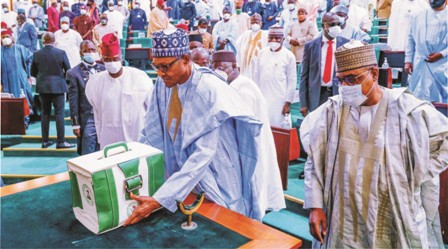
President Muhammadu Buhari, yesterday, predicted further hardship for Nigeria as he said the nation may face another recession before the end of the year, if serious and effective measures are not taken to ensure the nation’s financial security.
Buhari raised the alarm in his budget speech during the presentation of N13.08trillion budget for the 2021 fiscal year to a joint session of the National Assembly,.
He, however, vowed to pursue his administration’s goal of lifting 100million Nigerians out of poverty, even as he disclosed that the government has released N2.1trillion for capital projects in the 2020 budget.
President said about N3.85trillion has been earmarked for capital projects in the 2021 fiscal year, while the non-debt recurrent expenditure for next year would gulp N5.65trillion.
He said this was N1.15trillion higher than what was budget for capital in 2020.
The 2021 budget also has N100billion earmarked for Constituency projects of the lawmakers of both Chambers of the National Assembly, just as N128billion has been slated for statutory transfer to the National Assembly for payment of salaries and allowances next year.
This would, therefore, form part of the proposed N484.49billion transfers to other budget stakeholders.
A study of the 2021 budget breakdown as submitted by the President, indicated that the Ministery of Defense received the lion share of N840.56billion, followed by Ministry of Education, which received N545.10billion, while the Ministry of Health received N380.21billion in the 2021 Appropriation Bill.
According to the President, in line with the proposed borrowing plans to sustain the economy, the 2021 budget would operate at a deficit of N5.2trillion, just as N4.28trilion would be borrowed to finance the budget deficit.
The parameters and fiscal assumptions underpinning the 2021 appropriation, included: Benchmark oil price of $40 per barrel; daily oil production estimate of 1.86 million barrels (inclusive of Condensates of 300,000 to 400,000 barrels per day).
Exchange rate of N379 per $1; Gross Domestic Product growth projected at 3.0 per cent and inflation closing at 11.95 per cent.
The President said to maintain the peace in the Niger Delta region for economic and social activities to thrive, the provision of N65billion for the Presidential Amnesty Programme has been retained in the 2021 Budget.
“In addition, the sum of N63.51billion has been appropriated for the Niger Delta Development Commission (NDDC) and N24.27billion has been provided for the capital projects of the Ministry of Niger Delta Affairs. These allocations should further support the development of the region by facilitating the completion of important ongoing projects, such as the East-West Road”, he said
According to him, “Based on the foregoing fiscal assumptions and parameters, total federally distributable revenue is estimated at N8.433trillion in 2021. Total revenue available to fund the 2021 Federal Budget is estimated at N7.886trillion. This includes Grants and Aid of N354.85billion as well as the revenues of 60 Government-Owned Enterprises.
“Oil revenue is projected at N2.01trillion. Non-oil revenue is estimated at N1.49trillion. As you will observe, the format of the 2021 Appropriation Bill has been modified to include budgeted revenues, no matter how small, for each MDA, to focus on internal revenue generation. Accordingly, I implore you to pay as much attention to the revenue side as you do to the expenditure side.
“An aggregate expenditure of N13.08trillion is proposed for the Federal Government in 2021. This includes N1.35trillion spending by Government-Owned Enterprises and Grants and Aid funded expenditures of N354.85billion.
“For 2021, the proposed N13.08trillion expenditure comprises: Non-debt Recurrent Costs of N5.65trillion; Personnel Costs of N3.76trillion; Pensions, Gratuities and Retirees’ Benefits of N501.19billion; Overheads of N625.50billion; Debt Service of N3.124trillion; Statutory Transfers of N484.49billion; and Sinking Fund of N220billion (to retire certain maturing bonds).
“The 2021 Budget deficit (inclusive of Government Owned Enterprises and project-tied loans), is projected at N5.20trillion. This represents 3.64 percent of estimated GDP, slightly above the 3 percent threshold set by the Fiscal Responsibility Act, 2007. It is, however, to be noted that we still face the existential challenge of Coronavirus pandemic and its aftermath; I believe that this provides a justification to exceed the threshold as provided for by this law.
“The deficit will be financed mainly by new borrowings totalling N4.28trillion, N205.15billion from Privatization Proceeds and N709.69billion in draw-downs on multilateral and bilateral loans secured for specific projects and programmes.”
The sum of N484.49billion was provided in the budget proposal for Statutory Transfers representing an increase of N56.46billion (or 13 per cent) over the revised 2020 provision.
It includes: Niger Delta Development Commission (N63.51billion); North East Development Commission (N29.70billion); National Judicial Council (N110.00billion); Universal Basic Education Commission (N70.05billion); Independent National Electoral Commission (N40.00billion); National Assembly (N128.00billion); Public Complaints Commission (N5.20billion); Human Rights Commission (N3.00billion); and Basic Health Care Provision Fund (N35.03billion).
In the recurrent expenditures, the budget has N227.02billion for the Ministry of Interior; N441.39billion for the Ministry of Police Affairs; N545.10billion for Ministry of Education; N840.56billion for Ministry of Defence; and N380.21billion for Ministry of Health.
On debt servicing, Buhari said the Federal Government was committed to meeting its debt service obligations.
The budget provided N3.12trillion for this in 2021, representing an increase of N445.57billion from N2.68trillion in 2020.
He said a total of N2.183trillion has been set aside to service domestic debts, while N940.89billion has been provided for foreign debt service, just as N220billion is provided for transfers to the Sinking Fund to pay off maturing bonds issued to local contractors and creditors.
Speaking on overhead costs, the President said total overhead costs of MDAs and government owned enterprises are projected to rise to N625.50billion in 2021, mainly due to the inclusion of the overheads of an additional 50 government owned enterprises.
He added that overhead provisions have also been made for newly created agencies, urging MDAs to adhere to extant expenditure controls as a measure to keep a tab on running costs.
While indicating that an aggregate sum of N3.85trillion is expected to be available for capital projects in 2021, he gave the details as: N1.80trillion for MDAs’ capital expenditure; N745billion for Capital Supplementation; N355billion for Grants and Aid-funded projects; N20billion for the Family Homes Fund; N25billion for the Nigeria Youth Investment fund; N336billion for 60 Government Owned Enterprises; N247billion for capital component of Statutory Transfers; and N710billion for projects funded by Multilateral and Bilateral loans.
He said Capital expenditure in 2021 remains focused on the completion of as many ongoing projects as possible, rather than the commencement of new ones, adding “We have also made efforts to ensure equity in the distribution of projects and programmes in the proposed budget. I will be providing the National Assembly a list of some of the most critical projects which we must work collectively to ensure they receive adequate funding.
Highlights of the 2021 budget include: Power: N198billion (inclusive of N150billion for the Power Sector Recovery Plan); Works and Housing: N404billion; Transportation: N256billion; Defence: N121billion; Agriculture and Rural Development: N110billion; Water Resources: N153billion; Industry, Trade and Investment: N51billion; Education: N127billion; Universal Basic Education Commission: N70billion; Health: N132billion; Zonal Intervention Projects: N100billion; and Niger Delta Development Commission: N64billion.
According to the President, the sum of N420billion was also budgeted to sustain the Social Investment Programme, N20billion has also been set aside for the Family Homes Fund, Social Housing Programme. N75billion Survival Fund Programme to support and protect businesses from potential vulnerabilities. N100billion to households and small businesses; N100billion to the healthcare and pharmaceutical industry; and N1trillion to large agricultural and manufacturing businesses.
By: Nneka Amaechi-Nnadi, Abuja














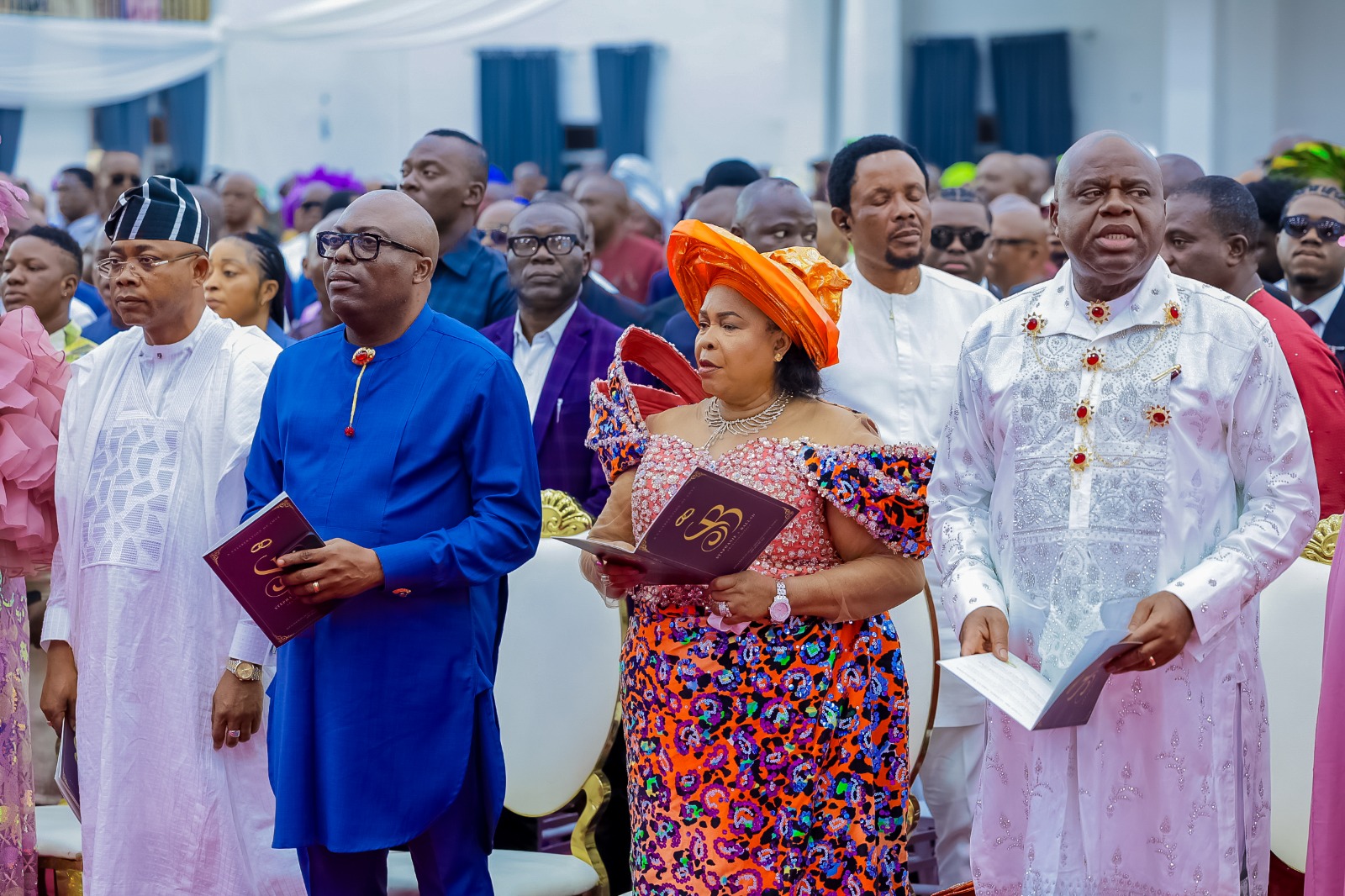
Rivers State, Sir Siminalayi Fubara, has assured members of the National Youth Service Corps (NYSC) of his administration’s commitment to supporting and strengthening the scheme in the State.
Fubara gave the assurance last Friday at the NYSC permanent orientation camp, Nonwa-Gbam, Tai Local Government Area in the State, during the swearing-in ceremony of 2026 Batch B Stream II orientation course.
Represented by the Permanent Secretary, Cabinet Bureau, Office of the Secretary to the State Government, Dr. Promise Oguzie, the governor said the State Government would remain intentional in providing the necessary support to improve the NYSC scheme and enhance the experiences of corps members deployed to the state.
He charged the corps members to be role models and quality nation-builders in their service to the good people of Rivers State in particular, and Nigeria at large.
“I charge you to be exemplary, dedicated and committed in all you do. Take full advantage of all the camp programmes and activities to enrich yourselves”, he said.
In his welcome address, the State Coordinator of NYSC in Rivers State, Mr. Moses Oleghe, urged corps members to see their deployment to Rivers State as a “veritable opportunity to make meaningful contribution to the growth of the State in particular and Nigeria at large.”
He further charged them to serve with all sense of “integrity, discipline, and the fear of God, especially when they will be engaged as INEC ad-hoc staff that will conduct the 2027 general elections.”
A total of 3,584 corps members composed of 1,421 males and 2,163 females were sworn in by the Chief Judge of Rivers State, who was represented by Justice Godspower Aguma.

Governor of Rivers State, Sir Siminalayi Fubara, says Nigeria needs God-fearing leaders for the nation to move in the right direction and make meaningful progress.
The Governor stated this yesterday when he received in audience, the World President of the Seventh Day Adventist Church, Pastor Erton Kohler; his wife, Andriene Marques Kohler; daughter Mariana Marques Kohler and a retinue of ministers of the church at Government House, Port Harcourt.
Fubara who hailed the Seventh Day Adventist Church for its contributions to education and the grooming of future leaders in Nigeria, expressed delight that the Church had over the years, been investing in education at various levels and currently runs two universities in the country.
He commended the church for not only using its institutions to spread the gospel of Christianity but to groom future leaders for the country.
According to him, religion should not be just about defending one’s faith, but also making meaningful impact on the lives of the people.
He said that by floating these educational institutions, the church has demonstrated capacity to support Nigeria in the task of producing not only educated people but a breed of God-fearing leaders.
“Our country is where it is today because we lack the fear of God. If you have the fear of God, there should be a limit to what you can do because you understand the supremacy of God. But when God is not in your equation, you’ll go beyond the line and that is what has brought us to where we are today.
“So, I feel very happy that you are contributing to the development of our future leaders in this country. We need the right people being in the right place; prepared properly with good minds; that is what we need, not just in Nigeria but round the whole world.,” he said.
Governor Fubara further observed that the absence of God-fearing people in high places to take the right decisions that could impact positively on the society, has also given rise to other problems such as social inequality, poverty, corruption and criminality. According to him, Nigeria needs a system where the average parent could afford quality education for their children and a guarantee that upon graduation, the average child will have the capacity to compete favourably with anybody, anywhere in the world.
“If we have a situation where the little money that you’re being paid as wage can also afford you quality healthcare and after working at least for 15-20 years, you have a roof over your head, tell me why you should be involved in any kind of crime? At that point, you’ll feel secured and this attitude of insecurity about the future that leads to all the social vices we have today won’t be there,” he said.
Governor Fubara expressed appreciation to the delegation for the visit and for their prayers for Rivers State, assuring them of his continued support for their programmes in the state.
Leader of the delegation and World President of the Seventh Day Adventist Church, Pastor Erton Kohler said he was in Nigeria for a special conference of the church during which thousands of the church’s ministers will be undergoing an empowerment programme to further equip them for the task of herding their flocks and serving the society.
He expressed gratitude to the Governor for the warm reception accorded his entourage, saying the memory of the visit will linger in his mind for a lifetime.
Kohler disclosed that the Church has over twenty -four million (24,000,000) members and more than 182,000 places of worship, spread across 212 countries of the world.

The Rivers State House of Assembly has approved the 2026–2028 Medium Term Expenditure Framework (MTEF) submitted by Governor Siminalayi Fubara.
This reaffirms the lawmakers’ commitment to enacting laws and taking legislative actions geared towards the overall development of the State.
The Assembly gave the approval during its Second Legislative Sitting of the Fourth Session held last Friday.
Speaking on the MTEF document during plenary, the House Speaker, Rt. Hon. Martin Amaewhule, noted that by the provision of Section 10(1)(b) of the Rivers State Fiscal Responsibility Law No. 8 of 2010, the MTEF ought to have been laid before the House in September 2025.
Amaewhule explained that traditionally, the document is expected to be presented four months before the commencement of the next financial year and immediately after the expiration of every three-year fiscal cycle.
He, however, stated that in the interest of the State and its people, the House considered it necessary to deliberate on the document, describing it as a precursor to the 2026 Budget Estimates.
The Speaker expressed concern that the year had already progressed significantly before the presentation of the framework.
During deliberations on the document, members examined the assumptions and projections contained in the MTEF and observed that strict adherence to the outlined fiscal parameters would ultimately serve the interest of Rivers people.
The lawmakers maintained that effective implementation of the framework would promote prudent financial management and enhance developmental planning across the State.
Following the debate and positive consideration by members, the Speaker put the question to the House and members voted overwhelmingly in support of the approval of the MTEF.
Meanwhile, during the same sitting last Friday, the House also received a petition from the Chairman of Obio/Akpor Local Government Council, Dr. Gift Worlu.
The petition was presented by the member representing Obio/Akpor Constituency II, Hon. Emilia Amadi.
According to the petition, concerns were raised over an imminent security breach, threats to lives, destruction of property and alleged forceful takeover of property by some lawless persons within parts of the Local Government Area.
Presenting the petition before the House, Hon. Amadi appealed to the lawmakers to revisit the matter and take necessary steps aimed at safeguarding lives and property in the affected communities.
The House is expected to further deliberate on the petition and consider measures to address the concerns raised in order to sustain peace and security in the area.
King Onunwor
-

 News4 days ago
RSG Targets Nine Million Residents in Mosquito Net Distribution Campaign
-

 Oil & Energy4 days ago
Aiyedatiwa Signs New Electricity Bill
-

 Oil & Energy4 days ago
NLNG Commissions Research And Innovation Centre In RSU
-

 Maritime4 days ago
Marine Minister Commends President Tinubu On NPERA Bill Assent
-

 News4 days ago
KenPoly Holds Eight Convocations, August 29
-

 News4 days ago
RSG Begins Another Phase of Projects Commissioning Today
-

 News4 days ago
RMAFC Completes Revenue Sharing Review, Proposes New Pay
-

 Maritime4 days ago
NAGAFF Petitions IGP Over Alleged Maritime Police Harassment