
Featured
Bestiality Of Power: The Moorish Tragedy (3)


The Moors, also called Moricos, were a race of Arab origin who lived in North-West Africa, with some of them invading and settling in Spain between the 8th century AD and 1492, the peak of their tragedy. Those of them who remained in Spain were subjected to stiff persecution and conditions such as being forced to be Christians, forbidden to speak or write Arabic, own any book written in Arabic and non-observance of their traditional ceremonies or festivals. Like the Jews, the Moors suffered severe tragedies and persecutions, but strangely they always grew prosperous through hard work, wherever they settled.
The issue of the travails and tragedies of the Moors over many centuries was raised at an International Conference, with a suggestion that the “Arab spring” and global terrorism associated with Islamic militancy have something to do with centuries-old root-causes. No doubt, the Moslem World has sad stories to tell about global oppression and persecution especially during the Dark Ages. The Christian World had actually referred to the founder of Islam as a false prophet, with available historical records of horrors and tragedies arising from persecution. The Punic Wars, destruction of Carthage and the Crusades serve as examples of hostilities.
No matter the origin and places of settlement of the Moors, they were resilient, hardworking and a shrewd race, capable of turning abilities into assets. They were people who could suffer severe pains, tortures and agonies in silence. They were Moslems and the Spanish Inquisition was their source of torment but the rich ones among them paid bribes to officials of the Inquisition to escape from the tortures which heretics were subjected to, so that they would recant and accept the Christian faith.
Historical records tell us that in 1563, Guerrero, Archbishop of Granada “had visited Pope Pius IV whom he told that his flock in Granada called themselves Christians but were such in name only. “The King of Spain Philip was begged to “Children between the ages of three and fifteen being taken from their parents to be brought up in the Christian Faith.” The Moors prepared to fight for their freedom and on 23rd December 1568, there was a revolt which was crushed in a bestial manner.
The King of Spain sent his half-half-brother Don John to command the army which dealt most cruelly with the Moors. History records say “men were massacred by the thousands, and the women and children captured that they might be sold as slaves”. The battle of Galera was bestial, bloody and callous, with Don John ordering that “not a living soul in Galera should be spared”. We are told that “for this gallant exploit, the Pope hailed Don John as the Champion of Christendom!”
The suffering of the Moors who could not be massacred became too much for the conscience of Don John to bear, that arrangements were made to relocate them in different places, with families forcefully separated. Like the Jews, the Moors who were allowed to settle here and there soon began to prosper, to the envy of their tormentors. Obviously, the hatred of the Moors was based more on their prosperity and resilience than on differences in their religions.
Like the Waldenese in France, the Moors, despite flogging and tortures, held on to their convictions but merely pretended to accept Christianity. In the various new settlements, complaints brought against them were that they never went to war, pretended to be Christians but were devoted solely to their work. The persistent persecution and plight of the Moors were such that some of them became bandits and mercenaries. An example of such mercenary was Shakespeare’s Othello, the Moor of Venice. Similarly, the role of his personal assistant lago (his Ancient) depicts the degree of contempt the Moors were held in Europe.
There was a time when Spain was dominated by great Islamic scholars until about 1608 when Philip III put forward some schemes for ridding Spain of the troublesome Moors and create an all-Catholic Spain. Despite their travails, tortures and the anguish of splitting families, the Moors did not become heartbroken, even though many left Spain as destitutes. Expulsion of the Moors was a state policy which lasted for centuries, with attendant acts of bestiality. When Philip III introduced alcabala, a tax levied on sales and purchase like modern day Value-Added-Tax (VAT), the prime targets were the Jews and the Moors.
The Archbishop of Ribera was eager that the Moors should be expelled from Spain, since it was impossible to kill them all. Those who were clamouring for the extinction of the Moors did what they could in their own private ways to cook up complaints and bear false witnesses against the Moors, including charges of conversing in Arabic in their privacies.
Apart from the battle of Galera where the most atrocious bestiality and destructions were committed, other centres of butchery and massacre of the Moors included Granada and Valencia. In the district of Aragon, some of the Moors were allowed to continue with their industrious lives because of the level of prosperity which they created for the Spaniards. Even though six percent of the Moors were allowed to remain, those sent to Balary for deportation to various places were given most callous and bestial treatment. Many died.
Any Nigerian reading this true historical summary of the fate of the Moors in Spain would wonder what the motive of bringing up this matter could be, and may even doubt the veracity of the facts stated here. Some international conferences where studies in the bestiality of power feature as themes use such opportunities as a mirror for understanding current global events. Would any reader dismiss the axiom that history repeats itself from era to era, and that those who cannot learn the lessons of history are doomed to repeat historical calamities!
For example, global terrorism associated with Islamic militarism, including Boko Haran etc, may have more explanations than what is commonly known. Is it not believable that the “bread” we cast upon the sea can return to us after many forgotten seasons? Whether the proverbial bread returns in the form of cake or unpleasant plague, the truth is that majority of humans can be described as grossly myopic. The Organisation of Islamic Conference (OIC) has records that are quite scary.
Bright Amirize















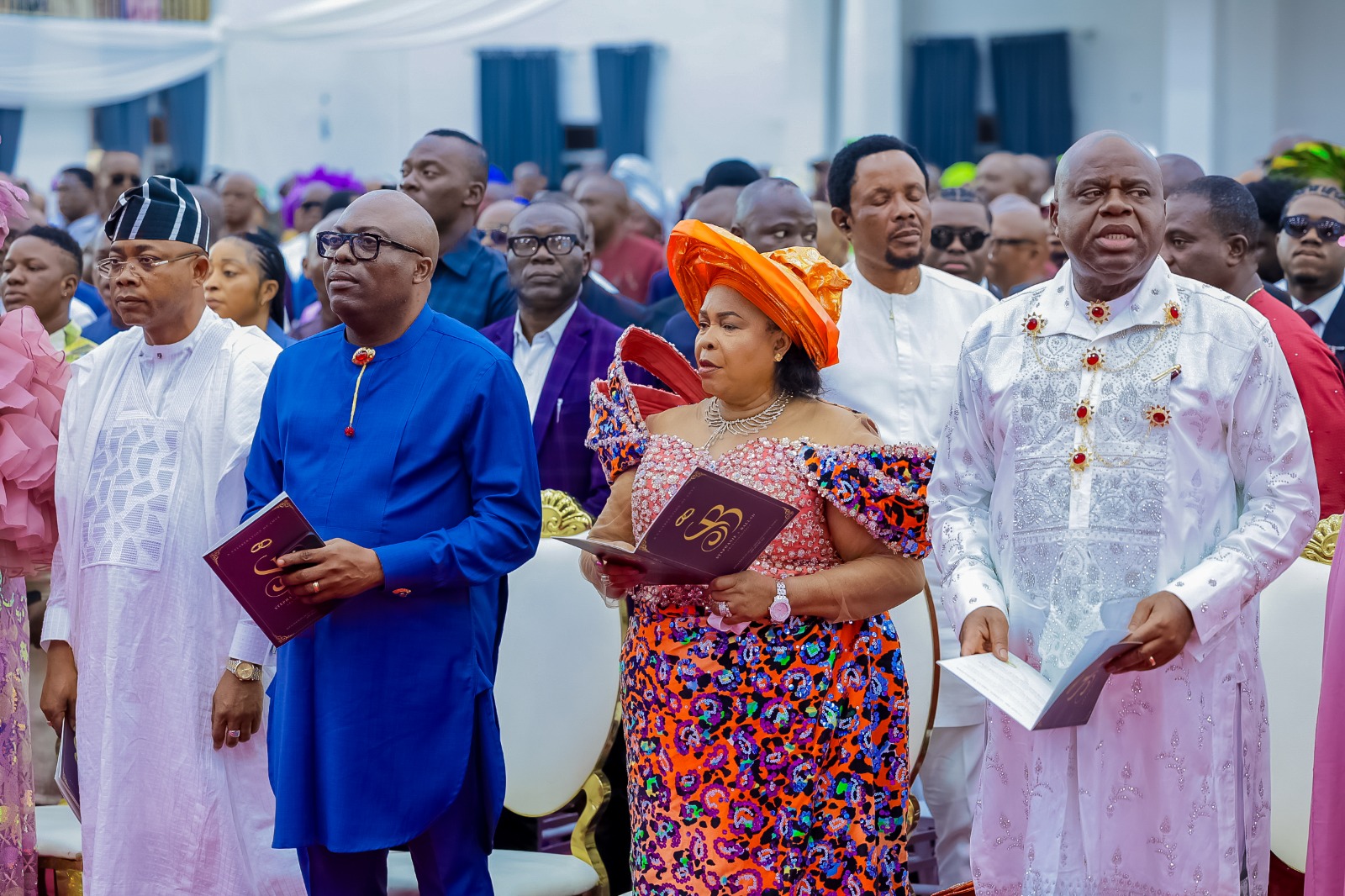
Rivers State, Sir Siminalayi Fubara, has assured members of the National Youth Service Corps (NYSC) of his administration’s commitment to supporting and strengthening the scheme in the State.
Fubara gave the assurance last Friday at the NYSC permanent orientation camp, Nonwa-Gbam, Tai Local Government Area in the State, during the swearing-in ceremony of 2026 Batch B Stream II orientation course.
Represented by the Permanent Secretary, Cabinet Bureau, Office of the Secretary to the State Government, Dr. Promise Oguzie, the governor said the State Government would remain intentional in providing the necessary support to improve the NYSC scheme and enhance the experiences of corps members deployed to the state.
He charged the corps members to be role models and quality nation-builders in their service to the good people of Rivers State in particular, and Nigeria at large.
“I charge you to be exemplary, dedicated and committed in all you do. Take full advantage of all the camp programmes and activities to enrich yourselves”, he said.
In his welcome address, the State Coordinator of NYSC in Rivers State, Mr. Moses Oleghe, urged corps members to see their deployment to Rivers State as a “veritable opportunity to make meaningful contribution to the growth of the State in particular and Nigeria at large.”
He further charged them to serve with all sense of “integrity, discipline, and the fear of God, especially when they will be engaged as INEC ad-hoc staff that will conduct the 2027 general elections.”
A total of 3,584 corps members composed of 1,421 males and 2,163 females were sworn in by the Chief Judge of Rivers State, who was represented by Justice Godspower Aguma.

Governor of Rivers State, Sir Siminalayi Fubara, says Nigeria needs God-fearing leaders for the nation to move in the right direction and make meaningful progress.
The Governor stated this yesterday when he received in audience, the World President of the Seventh Day Adventist Church, Pastor Erton Kohler; his wife, Andriene Marques Kohler; daughter Mariana Marques Kohler and a retinue of ministers of the church at Government House, Port Harcourt.
Fubara who hailed the Seventh Day Adventist Church for its contributions to education and the grooming of future leaders in Nigeria, expressed delight that the Church had over the years, been investing in education at various levels and currently runs two universities in the country.
He commended the church for not only using its institutions to spread the gospel of Christianity but to groom future leaders for the country.
According to him, religion should not be just about defending one’s faith, but also making meaningful impact on the lives of the people.
He said that by floating these educational institutions, the church has demonstrated capacity to support Nigeria in the task of producing not only educated people but a breed of God-fearing leaders.
“Our country is where it is today because we lack the fear of God. If you have the fear of God, there should be a limit to what you can do because you understand the supremacy of God. But when God is not in your equation, you’ll go beyond the line and that is what has brought us to where we are today.
“So, I feel very happy that you are contributing to the development of our future leaders in this country. We need the right people being in the right place; prepared properly with good minds; that is what we need, not just in Nigeria but round the whole world.,” he said.
Governor Fubara further observed that the absence of God-fearing people in high places to take the right decisions that could impact positively on the society, has also given rise to other problems such as social inequality, poverty, corruption and criminality. According to him, Nigeria needs a system where the average parent could afford quality education for their children and a guarantee that upon graduation, the average child will have the capacity to compete favourably with anybody, anywhere in the world.
“If we have a situation where the little money that you’re being paid as wage can also afford you quality healthcare and after working at least for 15-20 years, you have a roof over your head, tell me why you should be involved in any kind of crime? At that point, you’ll feel secured and this attitude of insecurity about the future that leads to all the social vices we have today won’t be there,” he said.
Governor Fubara expressed appreciation to the delegation for the visit and for their prayers for Rivers State, assuring them of his continued support for their programmes in the state.
Leader of the delegation and World President of the Seventh Day Adventist Church, Pastor Erton Kohler said he was in Nigeria for a special conference of the church during which thousands of the church’s ministers will be undergoing an empowerment programme to further equip them for the task of herding their flocks and serving the society.
He expressed gratitude to the Governor for the warm reception accorded his entourage, saying the memory of the visit will linger in his mind for a lifetime.
Kohler disclosed that the Church has over twenty -four million (24,000,000) members and more than 182,000 places of worship, spread across 212 countries of the world.

The Rivers State House of Assembly has approved the 2026–2028 Medium Term Expenditure Framework (MTEF) submitted by Governor Siminalayi Fubara.
This reaffirms the lawmakers’ commitment to enacting laws and taking legislative actions geared towards the overall development of the State.
The Assembly gave the approval during its Second Legislative Sitting of the Fourth Session held last Friday.
Speaking on the MTEF document during plenary, the House Speaker, Rt. Hon. Martin Amaewhule, noted that by the provision of Section 10(1)(b) of the Rivers State Fiscal Responsibility Law No. 8 of 2010, the MTEF ought to have been laid before the House in September 2025.
Amaewhule explained that traditionally, the document is expected to be presented four months before the commencement of the next financial year and immediately after the expiration of every three-year fiscal cycle.
He, however, stated that in the interest of the State and its people, the House considered it necessary to deliberate on the document, describing it as a precursor to the 2026 Budget Estimates.
The Speaker expressed concern that the year had already progressed significantly before the presentation of the framework.
During deliberations on the document, members examined the assumptions and projections contained in the MTEF and observed that strict adherence to the outlined fiscal parameters would ultimately serve the interest of Rivers people.
The lawmakers maintained that effective implementation of the framework would promote prudent financial management and enhance developmental planning across the State.
Following the debate and positive consideration by members, the Speaker put the question to the House and members voted overwhelmingly in support of the approval of the MTEF.
Meanwhile, during the same sitting last Friday, the House also received a petition from the Chairman of Obio/Akpor Local Government Council, Dr. Gift Worlu.
The petition was presented by the member representing Obio/Akpor Constituency II, Hon. Emilia Amadi.
According to the petition, concerns were raised over an imminent security breach, threats to lives, destruction of property and alleged forceful takeover of property by some lawless persons within parts of the Local Government Area.
Presenting the petition before the House, Hon. Amadi appealed to the lawmakers to revisit the matter and take necessary steps aimed at safeguarding lives and property in the affected communities.
The House is expected to further deliberate on the petition and consider measures to address the concerns raised in order to sustain peace and security in the area.
King Onunwor
-

 News2 days ago
RSG Targets Nine Million Residents in Mosquito Net Distribution Campaign
-

 Oil & Energy2 days ago
Aiyedatiwa Signs New Electricity Bill
-

 Maritime2 days ago
Marine Minister Commends President Tinubu On NPERA Bill Assent
-

 Oil & Energy2 days ago
NLNG Commissions Research And Innovation Centre In RSU
-

 News2 days ago
KenPoly Holds Eight Convocations, August 29
-

 News2 days ago
RSG Begins Another Phase of Projects Commissioning Today
-

 News2 days ago
RMAFC Completes Revenue Sharing Review, Proposes New Pay
-

 Maritime2 days ago
NAGAFF Petitions IGP Over Alleged Maritime Police Harassment