
News
2018 Budget: Senate Moves To Expose Buhari …President Lacks Capacity To Implement Budget -PDP …Says APC Bent On Stifling Opposition

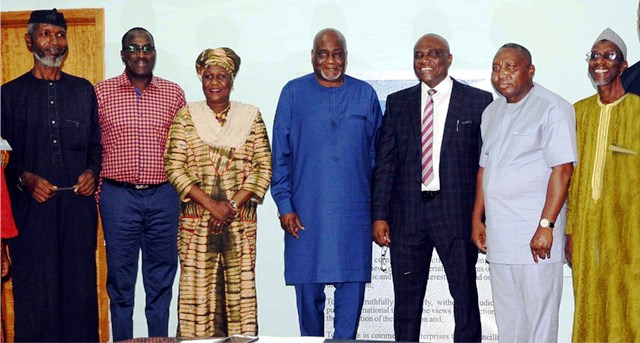
The Senate has disclosed that it has delegated its Chairman, Committee on Appropriation, Senator Danjuma Goje to hold a media briefing to clarify concerns raised by President Muhammadu Buhari on the 2018 Budget.
The red chamber of the National Assembly assured that Goje would make revelations about contentious areas.
Chairman, Committee on Media and Publicity, Senator Aliyu Abdullahi, in a statement, yesterday, confirmed that the Senate was in agreement with the statement issued by the House of Representatives, in response to the issues raised by Buhari on the budget.
He said, “The leadership of both chambers have directed the chairmen of our committees on appropriations to provide item by item, detailed explanations on all points raised by the President for the benefit of members of the public.
“It should, however, be noted that the action of the National Assembly while working on the budget was informed by the provision of the Constitution on the need for inclusion, balance and the fact that the first responsibility of government is the security and welfare of all citizens,” he said.
Buhari had in his speech said, “the logic behind the Constitutional direction that budgets should be proposed by the Executive is that, it is the Executive that knows and defines its policies and projects.
“Unfortunately, that has not been given much regard in what has been sent to me. The National Assembly made cuts amounting to N347billion in the allocations to 4,700 projects submitted to them for consideration and introduced 6,403 projects of their own amounting to N578 billion.
“Many of the projects cut are critical and may be difficult, if not impossible, to implement with the reduced allocation.
“Some of the new projects inserted by the National Assembly have not been properly conceptualized, designed and costed, and will, therefore, be difficult to execute.
“Such examples of projects from which cuts were made are as follows: The provisions for some nationally/regionally strategic infrastructure projects such as counterpart funding for the Mambilla Power Plant, Second Niger Bridge/ancillary roads, the East-West Road, Bonny-Bodo Road, Lagos-Ibadan Expressway and Itakpe-Ajaokuta Rail Project were cut by an aggregate of N11.5billion.”
“Similarly, provisions for some ongoing critical infrastructure projects in the FCT, Abuja especially major arterial roads and the mass transit rail project, were cut by a total of N7.5billion.
“The provision for Rehabilitation and Additional Security Measures for the United Nations Building by the FCT, Abuja was cut by N3.9billion from N4billion to N100million.
“The above will make it impossible for the Federal Government of Nigeria to fulfill its commitment to the United Nations on this project.
“The provisions for various Strategic Interventions in the health sector such as the upgrade of some tertiary health institutions, transport and storage of vaccines through the cold chain supply system, provision of anti-retroviral drugs for persons on treatment, establishment of chemotherapy centres and procurement of dialysis consumables were cut by an aggregate amount of N7.45billion.
“The provision for security infrastructure in the 104 unity schools across the country were cut by N3billion at a time when securing our students against acts of terrorism ought to be a major concern of government.
“The provision for the Federal Government’s National Housing Programme was cut by N8.7billion.
“At a time when we are working with labour to address compensation-related issues, a total of N5billion was cut from the provisions for Pension Redemption Fund and Public Service Wage Adjustment.”
Similarly, the Ekiti State Governor, Mr. Ayodele Fayose has stated that President Muhammadu Buhari should be ashamed that he signed the 2018 budget in June, instead of blaming the National Assembly for performing its constitutional duties.
This was as he wondered that, “The previous budgets that he agreed with the National Assembly, what did he do with them? Where are the impacts of 2016 and 2017 budgets?”
The governor described those presenting the President as the only one who is right and knowledgeable about national issues, as his greatest enemies.
He said; “In the mindset of President Buhari and his men, all Nigerians are wrong except him. That is the reason he feigned ignorance to the fact that the law did not say that the legislative arm of government must pass the budget as presented by the executive.”
In a statement issued in Ado Ekiti, yesterday, by his Special Assistant on Public Communications and New Media, Lere Olayinka, Fayose said, “President Buhari has become what can be termed as blame specialist who will always blame his failure on other people.
“As a military Head of State, he blamed former President Shehu Shagari’s government. Since he assumed office, he has been blaming his predecessor. And now that he can’t get ordinary budget passed by the National Assembly for over six months, he is blaming the legislative arm. When is he going to be man enough to stop his blame game?”
The governor reminded the President of the 2016 ruling of Justice Gabriel Kolawole of the Federal High Court, Abuja in which he declared that the National Assembly has the power to add, reduce, and review the budget, pointing out that the judge said categorically that the National Assembly can increase, or review upward, budget estimates laid before it by the executive.
“Trying to use the National Assembly as scapegoat for his failure is a disservice to the principle of separation of powers, checks and balances,” he said.
While calling on the President to govern the country and stop blaming others for his inadequacies, Fayose asked; “The budgets that the National passed in 2016 and 2017, what did he do with them? What impact did the budgets make on the lives of Nigerians?
“Why can’t the President just go ahead and implement what the National Assembly appropriated and present supplementary budget later instead of trying to label the legislative arm as the reasons for his government’s failure?”
The governor said Nigerians were tired of President Buhari’s repetitive speeches and unfulfilled promises, adding that, “The masses want the president to create jobs and make life more abundant for them.
“As at today, everything is wrong with Nigeria under President Buhari. The country is not secured as armed bandits and killer herdsmen have taken over everywhere. Nigerians are no longer free to move even within a state not to talk of from one state to another.
“Therefore, he should stop the blame game and get serious with governance so that Nigerians can at least attach one major achievement to his tenure as President.”
However, Chairman, Senate Committee on the Federal Capital Territory (FCT), Senator Dino Melaye, APC, Kogi West, yesterday, took a swipe at President Muhammadu Buhari, saying that he should stop playing to the gallery and milking the naivety of the masses on the issue.
Melaye, in his reaction to President Buhari’ s lamentation and outright displeasure on the 2018 Appropriation bill before he finally signed it into law, said that the President should halt what he described as his chicanery and smear campaign of the National Assembly.
In a statement, yesterday, which he made available to Journalists, Senator Melaye who noted that the National Assembly is not a department of the Presidency, said, “I notice that President Muhammadu Buhari is trying to whip up sentiments against the National Assembly again by alleging that the 2018 budget was padded.
“What the President is authorised to do constitutionally is to present the National Assembly with a bill. A bill is a work in progress and not the finished work. The reason the Constitution directs the Bill to be submitted to the National Assembly is that it expects the National Assembly to vet it and make inputs into such a Bill before passing it as the Appropriation Act.
“The National Assembly is not just expected to rubber stamp whatever Bill the President presents. If this was the norm then there would have been no need for the Constitution to direct that the Bill be submitted to the National Assembly in the first place.
“Mr. President should therefore refrain from playing to the gallery and milking the naivety of the masses on the issue.
“In any event, he reserves the prerogative of refusing to append his signature to the Bill passed if it meets with his displeasure. He is also free to return the Bill to the N/A unsigned with a note indicating his areas of disaffection.
“Therefore Mr. President should halt his chicanery and smear campaign of the National Assembly.
“I also ask, in the last three years of this administration: What has been the percentage of implementation of capital budget?
“The powers and authority of the National Assembly cannot be eroded by the presidency. The National Assembly is not a department of the Presidency.”
Meanwhile,the Peoples Democratic Party (PDP) has said President Muhammadu Buhari’s submission that the 2018 budget would be difficult to implement “is a clear admission that he lacks the capacity and competence to run a development-oriented economy as desired by Nigerians.”
The party, in a statement signed by its National Publicity Secretary, Mr. Kola Ologbondiyan, in Abuja, said the President’s action was an indication that “the economy is in very bad hands.”
He said, “President Buhari, in picking holes on items that would directly impact on economic productivity, infrastructural advancement, rural development as well as those that would provide urgent palliatives to the plight of Nigerians, shows his aversion to developmental economy as well as insensitivity to the welfare of our citizens.
“In fact, President Buhari, in his comments on the budget has further de-marketed our economy before international investors, thereby worsening our woes as a nation.
“How on earth can a President, if indeed he loves the people, quarrel over budgetary items seeking to cushion the biting effect of the economic recession, particularly for the poor, who are the direct victims of the harsh policies of his incompetent administration?
“Furthermore, President Buhari’s resort to blaming the National Assembly for his inability to exert himself as a leader and ensure smooth implementation of the budget, further shows that he cares little about the actual needs of the people, having holed himself up in the comfort, security and pleasures of the Presidential Villa.”
Ologbodiyan urged the National Assembly to ensure strict implementation of the 2018 budget.
President Buhari had last Wednesday lamented that the 2018 Appropriation Bill which he signed into law would be difficult, if not impossible, to implement because of the alterations members of the National Assembly effected on the document he submitted to them on November 7, 2017.
Also, the Peoples Democratic Party, PDP, National Working Committee, NWC, yesterday alleged that the President Muhammadu Buhari-led Federal Government has commenced “desperate clampdown” on perceived opposition leaders.
PDP said the safety of its members was no longer guaranteed.
In a statement issued by its spokesperson, Kola Ologbondiyan, the party insisted that Nigeria has “fallen into perilous time” under Buhari’s government.
The statement recalled that the party had earlier alerted the nation and the international community that the “enemies of our democratic process and adversaries of our unity and harmonious living as a nation have commenced a desperate clampdown on opposition leaders”.
“Today, our dear nation, Nigeria, has finally fallen into a perilous time! There are fears and trepidation everywhere. The safety, personal freedom and well-being of Nigerians, particularly, opposition members are no longer guaranteed.
“The All Progressives Congress (APC), having realized that they stand no chance in the 2019 general elections, are now deploying all wicked machinations to cause confusion, heighten political tension, hounding and arresting of opposition leaders, making spurious allegations and attacking influential Nigerians, including former heads of state, all to instill fear on the polity.
“Having failed in their corruption smear campaign against the PDP and many notable Nigerians, the APC and the Presidency cabal have now devised a devious machination to rope in, frame up, implicate and ultimately incarcerate marked opposition leaders and other dissenting voices over fabricated security charges.
“Part of this design, as already exposed by the Special Adviser to President Buhari, Mr. Femi Adesina, on Arise TV, is to link such opposition leaders and dissenting voices with the widespread killings in various parts of the country, while forgetting that President Buhari had earlier blamed the attacks on invaders from Late Muammar Gaddafi’s Libya, while his Director General of State Security Services (DG SSS) blamed it on herdsmen from neighbouring countries.”
Similarly,the Peoples Democratic Party (PDP) for the umpteenth time has accused President Muhammadu Buhari and the All Progressives Congress (APC) of deliberate moves to stifle opposition ahead of the 2019 general elections.
The party also said it has uncovered fresh plot by government to pick up opposition figures on phoney charges all in a bid to boost its chances at the polls.
Addressing a world press conference, yesterday, National Publicity Secretary of the party, Kola Ologbondiyan also alleged that a former Head of State was also on the radar of the Buhari Presidency for daring to criticise the leadership style of the first citizen.
“The APC, having realized that they stand no chance in the 2019 general elections, are now deploying all wicked machinations to cause confusion, heighten political tension, hounding and arresting of opposition leaders, making spurious allegations and attacking influential Nigerians, including former heads of state, all to instil fear in the polity.
“Having failed in their corruption smear campaign against the PDP and many notable Nigerians, the APC and the Presidency cabal have now devised a devious machination to rope in, frame up, implicate and ultimately incarcerate marked opposition leaders and other dissenting voices over fabricated security charges,” said the publicity scribe.
The party also noted that “part of the design, as already exposed by the Special Adviser to President Buhari, Mr. Femi Adesina, on Arise TV, is to link such opposition leaders and dissenting voices with the widespread killings in various parts of the country, while forgetting that President Buhari had earlier blamed the attacks on invaders from Late Muammar Gaddafi’s Libya, while his Director General of State Security Services (DG, SSS) blamed it on herdsmen from neighbouring countries.
“The wicked clampdown has started. Only yesterday, we were made aware of the arrest and detention of former Benue State governor, Hon. Gabriel Suswam, who has been kept incommunicado without access to his lawyers, while the Federal Government is not forthcoming with the details of the reasons behind the arrest and detention,” he said, adding “his arrest and detention is intended to put him out of circulation, so that he will not take part in the mega meetings of our party planned for the North-Central states.”
Ologbondiyan added that Nigerians were already aware of the alarm raised by former President Olusegun Obasanjo of alleged plots by the Buhari administration to frame, arrest and detain him indefinitely on trumped up charges, ostensibly following his criticisms and open rejection of the administration for its failures and misrule.
He added: “The world is also aware of the numerous alleged plots by the APC and its Federal Government to frame up and humiliate Senate President, Dr Bukola Saraki, Deputy Senate President, Chief Ike Ekweremadu, Senators Dino Melaye and Shehu Sani, as well as Rivers State Governor, Chief Nyesom Wike and his Ekiti State counterpart, Governor Ayo Fayose.
“Also, there are concerns about the safety of former Chief of Army Staff and former defence minister, Gen. Theophilus Yakubu Danjuma (rtd), following the fear expressed by Governor Wike that Gen. Danjuma’s life might be in danger after his comments in March, this year, on possible complicity of the state in the killings in Taraba State,” he said, stressing that “Only Wednesday, an explosive device was discovered at the Ebonyi state PDP secretariat, either planted to blow up our secretariat and kill our members or to set up our leaders,” Ologbondiyan further stated.
He called on Nigerians to remain resolute and charged President Buhari to ensure that the 2019 general elections pass the credibility test.



The Socio-Economic Rights and Accountability Project (SERAP) has sued the Federal Government at the ECOWAS Community Court of Justice over alleged diversion, irregular expenditure and failure to account for N78.8bn allocated to cash-transfer and social-protection programmes.
SERAP, in a statement released by its Deputy Director, Kolawole Oluwadare, yesterday, said the allegations involved the Ministry of Humanitarian Affairs and Poverty Reduction, the National Cash Transfer Office and the National Social Safety Nets Coordinating Office.
The allegations were documented in the Auditor-General of the Federation’s 2024 Annual Report, published on August 7, 2026.
According to the report, the findings covered various periods between January 2023 and December 31, 2024.
In the suit, marked ECW/CCJ/APP/42/26 and filed last week, SERAP is seeking a declaration that the government’s failure to account for the funds violates Nigeria’s international human rights obligations.
The organisation is also asking the court to order the government to provide a comprehensive account of the questioned funds, investigate the alleged irregularities, recover any money improperly spent or diverted where established, and strengthen financial oversight of social-protection programmes.
SERAP argued that the alleged financial irregularities could undermine the rights of vulnerable Nigerians to social security and an adequate standard of living, including access to food, clothing and housing.
The statement party read, “The funds were intended to benefit over 3.2 million households across 35 states, whose access to financial assistance has been affected by the allegations made by the Auditor-General.”
The suit, filed by SERAP’s lawyers, Kolawole Oluwadare and Kehinde Oyewumi, stated that the government’s failure to investigate the allegations and recover any improperly spent funds violated its obligations to protect vulnerable households.
“The failure to investigate the N78.8 billion cash-transfer scandal, account for the questioned funds and recover any unlawfully spent amounts violates Nigeria’s obligations to protect the human rights of vulnerable households,” the suit partly read.
The organisation said it instituted the case to protect affected households and ensure accountability for public funds allocated for their benefit.
“SERAP brings this public-interest case to protect the interests of affected households and ensure accountability for public funds allocated for their benefit,” it stated.
The organisation maintained that cash-transfer programmes could help address extreme poverty and enable vulnerable people to meet their basic needs, but argued that the government had a duty to ensure the funds were properly managed.
“The right to social security cannot be effectively realised merely by establishing a formal cash-transfer programme where the State fails to maintain reasonable systems for identifying beneficiaries, maintaining records, reconciling disbursements, monitoring expenditure, investigating irregularities and remedying losses,” the statement further stated.
According to SERAP, the Auditor-General questioned approximately N33.751bn reportedly transferred to more than 3.2 million households across 35 states in 2023, noting that adequate records to verify the payments and reconcile beneficiary records were not provided.
The report also identified N36.744bn in payments allegedly made without prepayment audits, N4.616bn in unsupported expenditures, N350.182m for enrolment, N89.511m for store purchases and N17.422m in diesel advances.
SERAP said the suit was brought under Article 9(4) of the ECOWAS Court Protocol to protect affected households and ensure accountability for public funds intended for social protection.
“The issue is whether the government has discharged its obligations under applicable human-rights treaties to safeguard resources allocated for social protection, investigate documented financial irregularities, provide effective remedies and ensure that those resources are applied for their intended purposes,” it stated.
The organisation also cited the constitutional responsibility of the Auditor-General to audit and report on the public accounts of the Federation and the offices and agencies of the Federal Government, describing the findings in the annual report as important official records of public expenditure.
It relied on Articles 1 and 2 of the African Charter on Human and Peoples’ Rights, arguing that the government had obligations to give effect to protected rights and ensure that failures in administering social-protection programmes did not result in discriminatory exclusion or unequal access to benefits.
“The Nigerian government has the obligation to take effective measures to prevent and address corruption and related misuse of public resources. The government has failed to take appropriate measures in response to the allegations made by the Auditor-General”, the statement added.
SERAP said it had previously urged President Bola Tinubu and relevant authorities to account for the questioned funds, publish audit records, investigate irregular expenditures, recover any funds unlawfully spent or diverted and take appropriate action against those responsible.
Following the publication of the Auditor-General’s report, the organisation issued a public statement and sent a letter dated September 5, 2026, requesting action on the findings. It also sought payment and beneficiary records, verification documents and an explanation for the missing REMITA records.
“The deadline given to the government to address the Auditor-General’s findings had elapsed without adequate action,” it stated.
The organisation further cited Articles 1 and 21 of the African Charter, alongside Article 9 of the United Nations Convention against Corruption, as requiring effective measures to protect rights and resources, promote transparent public financial management, investigate irregularities and recover public funds where losses or improper expenditure were established.
SERAP also relied on the works of legal scholar Kolawole Olaniyan, including Corruption and Human Rights Law in Africa, published by Hart Publishing in 2014, and Ownership of Proceeds of Corruption in International Law, published by Oxford University Press in 2023. It said the publications provided persuasive academic authority on corruption’s effects on human rights, public resources, accountability and international legal remedies.
“SERAP accordingly submits that the Auditor-General’s findings cannot be treated merely as administrative irregularities where public funds allocated for social protection may have been lost, improperly spent or left unaccounted for, and the government fails to take effective corrective action,” the statement added.
SERAP is asking the court to direct the government to conduct an independent, prompt and effective investigation into the identified irregularities, recover public funds improperly spent, diverted or lost where established, and take appropriate legal or administrative action against those found responsible, in accordance with due process.
It also wants the government to strengthen financial accountability, beneficiary verification, auditing, reconciliation and oversight mechanisms to prevent a recurrence of the alleged irregularities and ensure that eligible vulnerable households receive their intended benefits.
The organisation is further seeking an order restraining the government from administering or disbursing cash-transfer and social-protection funds without adequate accountability and oversight mechanisms, as well as appropriate remedies for any established adverse effects on beneficiaries’ protected rights.
No date has, however, been fixed for the hearing of the suit.
The Federal Government has released N38.93bn to 166 public tertiary institutions nationwide under the Needs Assessment Revitalisation Fund to address infrastructure deficits and improve teaching and learning facilities.
The intervention covers 79 universities, 46 polytechnics and 41 colleges of education, with universities receiving the largest share of the allocation.
The Federal Ministry of Finance disclosed this in a statement issued on Sunday by its Head of Media, Efe Ovuakporie, explaining that the funds would support approved projects in beneficiary institutions.
The statement read, “The Federal Government has disbursed N38.93bn to 166 public tertiary institutions nationwide under the Needs Assessment Revitalisation Fund.”
According to the ministry, the university component accounts for N28.5bn, while N5.8bn has been allocated to polytechnics and N4.7bn to colleges of education.
According to the ministry, the university component accounts for N28.5bn, while N5.8bn has been allocated to polytechnics and N4.7bn to colleges of education.
An analysis of the allocations by PUNCH Online showed that universities would receive approximately 73.2 per cent of the announced N38.93bn intervention, making them the largest beneficiaries.
Polytechnics would account for about 14.9 per cent, while colleges of education would receive approximately 12.1 per cent.
The ministry explained that the intervention was intended to address longstanding infrastructure challenges in public tertiary institutions and support the implementation of agreements reached between the Federal Government and the Academic Staff Union of Universities.
It stated, “The intervention forms part of the Federal Government’s efforts to address the needs of public universities and support the implementation of agreed measures under the Memorandum of Understanding between the Federal Government and the Academic Staff Union of Universities.”
The Needs Assessment Revitalisation Fund is designed to support improvements in institutional infrastructure and other identified needs, particularly in public universities, where inadequate facilities have remained a recurring concern in negotiations between the government and academic unions.
The ministry said the latest disbursement would enable beneficiary institutions to begin new projects or continue previously approved interventions aimed at improving their operational capacity.
“The funds are expected to enable beneficiary institutions to commence or advance approved projects addressing critical infrastructure and other identified institutional needs, with the overall objective of strengthening the quality of tertiary education in Nigeria,” it added.
The government also emphasised the need for coordination among the Federal Ministry of Finance, Federal Ministry of Education and beneficiary institutions to ensure that the released funds produced measurable improvements.
It noted that effective collaboration would be necessary to translate the financial intervention into improved infrastructure, institutional capacity and learning conditions.
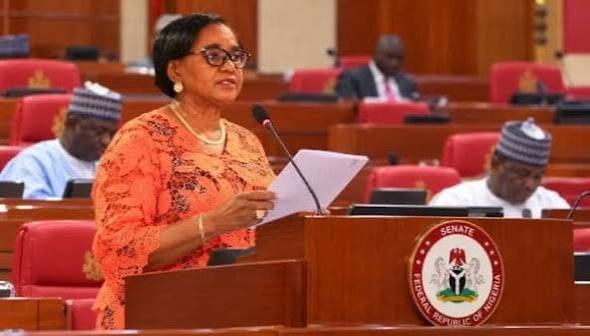
The bill to approve the establishment of the Federal University of Agriculture, Emughan, Abua-Odual Local Government Area of Rivers State has passed third reading.
The Bill, titled “A Bill for an Act to Amend the Federal Universities of Agriculture Act, Cap. F22, Laws of the Federation of Nigeria, 2024” was sponsored by Senator Ipalibo Harry Banigo representing Rivers West Senatorial District.
The bill seeks to amend the existing Federal Universities of Agriculture Act to provide for the establishment of the proposed institution in Emughan community in Rivers State.
The passage of the bill by the Senate marks a significant legislative milestone towards the establishment of the proposed university.
When established, the institution is expected to expand access to higher education, promote agricultural research and innovation, develop skilled manpower, and contribute to the economic growth of Rivers State and Nigeria at large.
According to a statement made available to The Tide, the bill, having passed the Third Reading in the Senate, will now proceed to the House of Representatives for concurrence as part of the legislative process towards its enactment into law.
The bill underscores Senator Banigo’s commitment to advancing educational opportunities and strengthening agricultural development in Rivers State.
By: Kevin Nengia
-
 Education1 day ago
FCE Yola Graduates 3,555 Teachers , Seeks Upgrade to University
-

 Sports1 day ago
Nigerian Trio Target Titles At PFL Africa Finals
-

 Niger Delta1 day ago
Diri Restates Stance On Lagos-Calabar Coastal Highway
-

 Niger Delta1 day ago
C’River, NUJ Pay Tribute To Late Guardian Editor
-

 News1 day ago
NDLEA Recovers Tons Of Illicit Drug Consignments In Nine States
-

 Opinion1 day ago
Checking Voter Apathy In Nigeria’s Electoral Process
-
 Politics1 day ago
2027: DICKSON’S EX-ALLY VOWS TO WORK AGAINST NDC INTEREST IN BAYELSA
-
 Politics1 day ago
2027: GROUP PLEDGES 40,000 SUPPORTERS FOR COALITION CANDIDATES IN RIVERS