
Business
Australian Govt Seeks Greater Economic Ties With Nigeria

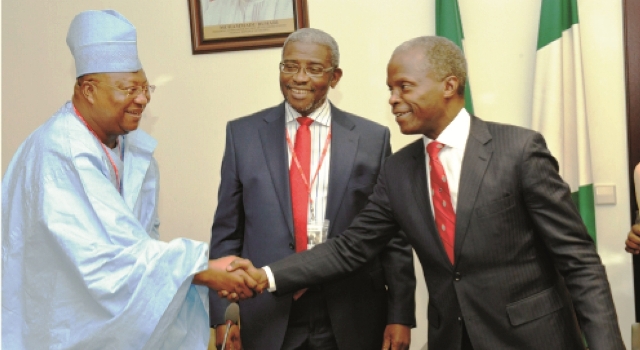
The Assistant Secretary, Department of Foreign Affairs and Trade of Australia (African Branch), Mr. Matthew Neuhaus has expressed the desire of the Australian government to strengthen the economic relations between Australia and Nigeria.
Neuhaus said this in Abuja while answering questions from State House correspondents after his visit to Vice President Yemi Osinbajo.
The Australian official said the economic diversification programme of the President Muhammadu Buhari administration was gratifying.
He said his team discussed the new initiatives of the Buhari administration aimed at doing business with ease in Nigeria.
“We were talking about areas of cooperation between Nigeria and Australia.
“These have been very long standing including cooperation in the United Nations and internationally, including through trade.
“We see a new opportunity for further developments in the solid minerals sector which Australia is very active in across the whole of Africa.
“But so far there is not much development yet in Nigeria.
“We discussed some of these and some of the new initiatives of the Buhari government to make doing business easier in Nigeria.’’
Neuhaus said trade between Nigeria and Australia was fair.
“We still have engagements with Africa primarily one of trade relations, economic investments and on very equal terms and we have been very active in some other African countries.
“It is time that we have similar level of activity in Nigeria,’’ he added
He acknowledged the infrastructure challenges in the country and expressed satisfaction with the steps being taken by the Buhari administration to address them.
He said he was delighted to be back in Nigeria having been the High Commissioner in Nigeria a few years ago.
“It is very nice being back here and meeting with the vice president and engaging the new Nigerian government.’’
Also, the Australian High Commissioner in Nigeria, Mr Paul Lehmann, said the two countries had huge mutually beneficial trade and investment opportunities to exploit.
“We are both outward looking, strong trade nations with good track records in looking to take advantages of their natural resources.
“We would like to move that even further but also try to look at areas where we can diversify the trade and investment relationship beyond natural resources.
“We are looking at where there could be links between industries, the education and services sector.
“We think there is a great potential and we are building up a very strong base for two countries looking to diversify their economies and build their economies into the 21st century.
“We think is an enormous call for development.’’



Business
Jonathan, Diri, Others Laud Firm’s Milestone in Bayelsa …Says Project Will Drive Industrialisation, Create Jobs



-

 News2 days ago
RSG Targets Nine Million Residents in Mosquito Net Distribution Campaign
-

 Oil & Energy2 days ago
Aiyedatiwa Signs New Electricity Bill
-

 Maritime2 days ago
Marine Minister Commends President Tinubu On NPERA Bill Assent
-

 Oil & Energy2 days ago
NLNG Commissions Research And Innovation Centre In RSU
-

 News2 days ago
KenPoly Holds Eight Convocations, August 29
-

 News2 days ago
RSG Begins Another Phase of Projects Commissioning Today
-

 News2 days ago
RMAFC Completes Revenue Sharing Review, Proposes New Pay
-

 Maritime2 days ago
NAGAFF Petitions IGP Over Alleged Maritime Police Harassment