
Nation
THE STATES


Gov. Samuel Ortom Of Benue State (left), welcoming the Primate, Anglican Communion of Nigeria, Most Rev. Nicholas Ukoh, during the visit of Bishops of the communion to the Governor in Makurdi, recently
Adamawa
The Chairman of All Progressives Congress (APC) in
Adamawa, Alhaji Yamusa Shuaibu, said the governor may appoint more than 20 commissioners into the state executive council.
Shuaibu who spoke in an interview with newsmen in Yola, said the action was to give a sense of belonging to every constituency in the state.
Shuaibu who did not give the total number of nominees in the list, said 10 slots were reserved for technocrats.
He explained that the decision to have technocrats in the cabinet was in line with the recommendations of the State Transition Committee.
“The list consisted of 10 technocrats; there are some ministries that need to be handled by the technocrats, if we are to progress,” Shuaibu said.
Bauchi
Bauchi State Government has distributed 72 motor
cycles and assorted improved seedlings to Agricultural Extension Officers and Internally Displaced Persons (IDPs), in order to boost food production in the state.
Dr Illiyasu Gital, Programme Manager, Bauchi State Agricultural Development Programme (BSADP), made this known on Sunday in Bauchi in an interview with newsmen in Bauchi.
Gital explained that 50 of the motorcycles were purchased by the state government, while the Federal Government donated 22.
He further explained that the motorcycles donated by the Federal Government were allocated to the sub-zonal offices, to be used by extension officers.
Ekiti
The Vice Chancellor, Federal University, Oye-Ekiti, Ekiti,
Prof. Isaac Asuzu, said contractors handling projects for the new universities were largely responsible for the slow pace of development of the institutions.
Asuzu stated this in Oye-Ekiti when a team of journalists monitoring the Tertiary Education Trust Fund (TETFund) projects in tertiary institutions visited the university.
He said contractors handling various projects have been delaying giving one excuse or the other in spite of the huge sums that were being released by TETFund.
The VC expressed the determination of the new universities to develop fast and meet up with their counterparts as well as attain global standards.
FCT
An Abuja Federal High Court has granted bail to former
Adamawa Governor, Murtala Nyako, his son, Sen. Abdulazeez Nyako, and two others, charged with N40 billion fraud by EFCC.
The accused were arraigned by the anti-graft agency on Wednesday and remanded in its custody, pending the hearing of their bail application filed by their counsel, Mr Kanu Agabi (SAN).
The trial judge, Justice Evoh Chukwu, while delivering ruling after hearing arguments from defence counsel Agabi and EFCC counsel, Mr Rotimi Jacob (SAN), granted the four accused bail in the sum of N350 million each.
Chukwu also ordered that each accused person must provide two sureties or alternatively, one surety who must be a director in any Federal Government establishment.
Jigawa
The Nigeria Security and Civil Defence Corps (NSCDC),
Jigawa Command, has said it had arrested a syndicate that specialised in stealing goats in Birnin-Kudu Local Government Area, Jigawa.
The Commandant of corps, Malam Muhammad Gidado, told newsmen in Dutse that seven members of the syndicate were arrested at their hideout in Rumbun Wuya, near Birnin-kudu.
Gidado said the suspects were arrested for stealing a goat belonging to Malam Kanku Wuroji of Rumbun Wuya village.
He said the suspects confessed to be members of a gang that had been terrorising members of the community.
Kaduna
The Anglican Bishop of Wusasa Diocese in Zaria,
Kaduna State, Rt. Rev. Ali Buba-Lamido, has advocated death penalty for corrupt public office holders.
He made the call at the Sixth Synod of the Wusasa Diocese of the Anglican Communion, held in Zaria, Kaduna State.
According to him, the death penalty option is the only way to put public officers in Nigeria in check.
Buba-Lamido said the call became imperative in view of the fact that corruption could kill more people than a conventional weapon.
“If our leaders know that they would be prosecuted if found corrupt they would be on their toes to avoid corrupt practices,” he said
Lagos
The Federal Government is collaborating with the UN
Special Envoy on Global Education to ensure security in all schools in the country.
The Permanent Secretary, Federal Ministry of Education, Dr MacJohn Nwaobiala, disclosed this in an address he delivered at the annual Speech and Prize -Giving Day ceremony of King’s College Lagos.
The permanent secretary, who was the special guest of honour at the event, said the collaboration was aimed at providing a pragmatic response to the protection of schools.
He added that it was also to prevent future attacks in schools across the country.
According to him, the initiative is equally in a bid to ensure uninterrupted education for the Nigerian-child.
Niger
The Niger Government has declared curfew in Paiko
Local Government Area of the state following a violent clash between Hausa and Gwari youths that left one person dead.
This is contained in a statement signed on Saturday by Dr Ibraheem Dooba, Chief Press Secretary to the state Governor, Alhaji Abubakar Bello.
The statement urged the citizens to be law abiding, eschew violence and demonstrate the abiding peace for which the state was known for.
Our correspondent learnt that aside the one person that was confirmed dead, many people were injured as cars and buildings were also destroyed.
Ogun
A university lecturer, Dr Dapo Odukoya, has urged the
new Independent National Electoral Commission (INEC) acting Chairperson, Mrs Amina Zakari, to emulate and sustain Prof. Attahiru Jega’s legacy.
Odukoya, a senior lecturer at the Department of Political Science, Tai Solarin University of Education (TASUED), Ijebu-Ode, made the call in an interview with newsmen in Ijebu-Ode last Sunday.
He said Jega had not only raised the bar for INEC in the preparation and conduct of elections in the country, but also served with integrity and sincerity of purpose.
He added that “Jega’s INEC must be scored high for political neutrality and integrity.
Plateau
A Jos-based Senior Advocate of Nigeria (SAN), Mr
Garba Pwul, has urged federal and state governments to step up efforts in curbing insecurity in the country.
He made the call in an interview with newsmen in Jos.
He said government needed to do more in checking the increasing number of attacks on innocent Nigerians by insurgents.
The legal luminary was reacting to Sunday’s planting of bomb in ECWA Church in Tudun Wada, near Federal Secretariat, Jos, by unknown persons.
Pwul condemned the action in strong terms.
He said “even though the problem has been rooted over time and no one expects a miracle to happen overnight or expects a sudden seizure of violence and insecurity, there should be proactive and stringent measures toward tackling the menace.
Taraba
The Deputy Controller in charge of Jalingo Prison in
Taraba State, Mr John Ali, has appealed to Governor Darius Ishaku, to assist in the relocation of the prison.
Ali said there was need to move the prison to a more spacious and conducive environment within the state capital.
The deputy controller, who made the call when he addressed newsmen in Jalingo, said the present location of the prison had been swallowed up by urbanisation.
He expressed regrets that there were residential structures surrounding the prison which was built about 99 years ago.
He said relocation of the prison to a spacious environment would enable its management to embark on better rehabilitation and reformation programmes for the inmates.
Ali noted that due to the constraint of space, the prison which ideally had capacity for 250 inmates, was currently housing over 600 inmates.
Yobe
Yobe Emergency Management Agency has disbursed
N61.8 million to 87 traders who lost their properties to insurgency and fire outbreaks.
The Executive Secretary of the agency, Alhaji Musa Isa, while disbursing the money in Damaturu, said 87 persons affected by fire disasters and insurgency attacks in 2014 and early this year benefited from the assistance.
He said the assistance was intended to provide succour to victims of the disaster to re-engage in their trades.
Musa advised other victims and Internally Displaced Persons (IDPs) to be wary of fraudsters selling forms purportedly issued by SEMA for similar assistance.
Alhaji Muhammadu Kalli, chairman, Damaturu Local Government Council, advised beneficiaries to invest wisely into their businesses.



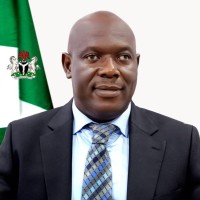
The Hydrocarbon Pollution Remediation Project (HYPREP) has commemorated the 15th anniversary of the release of the United Nations Environment Programme (UNEP) Environmental Assessment Report on Ogoniland, reaffirming its commitment to restoring the environment and improving the livelihoods of affected communities.
In a statement signed by the Project Coordinator, Prof Nenibarini Zabbey, to commemorate the anniversary, HYPREP described the anniversary as a significant milestone in Nigeria’s environmental restoration efforts, noting that the project has made remarkable progress in implementing the recommendations of the landmark UNEP report released on August 4, 2011.
The UNEP report had revealed extensive oil pollution across Ogoniland, severe environmental degradation, and serious public health risks resulting from decades of petroleum operations. It also recommended an initial $1 billion fund to commence the cleanup of the affected communities.
According to HYPREP, the Federal Government formally launched the Ogoni clean-up in 2016, while the Project Coordination Office was established in 2017 to drive the implementation of UNEP’s recommendations.
Zabbey said the current administration has continued to prioritise the project under the Renewed Hope Agenda.
Providing an update on the cleanup, the Project Coordinator disclosed that 30 of the 65 contaminated sites identified by UNEP have been fully remediated, while work is ongoing at several medium- and high-risk locations. It also stated that more than 1.5 million mangrove seedlings have been planted as part of what it described as the world’s largest restoration of oil-degraded mangroves, with over 1,000 hectares of shoreline already rehabilitated.
Zabbey further revealed that 49 Ogoni communities have been connected to potable water schemes through multiple water projects and booster stations aimed at providing safe drinking water across the region.
In the health sector, he said the 100-bed Ogoni Specialist Hospital in Kpite and the 43-bed Cottage Hospital in Buan are nearing completion, adding that several existing health facilities have been upgraded with modern medical equipment, while five ambulances have been donated to improve emergency healthcare services. The Project Coordinator also disclosed that a three-year human health biomonitoring study is being conducted in collaboration with the World Health Organization’s International Agency for Research on Cancer (IARC).
On economic empowerment, Zabbey stated that the Project has created more than 8,000 direct jobs and trained thousands of Ogoni youths and women in various vocational and technical skills, including software development, cybersecurity, aviation, commercial diving, seafaring, mechatronics, and creative arts. The project also reported awarding scholarships to more than 1,000 students, providing grants to small businesses, and supporting persons living with special needs through skills acquisition programmes.
The statement further highlighted ongoing legacy projects, including the Ogoni Power Project and the Centre of Excellence for Environmental Restoration, which it said is about 96 per cent complete. HYPREP also welcomed the recent designation of the Ogoni Wetland as a Ramsar Site of International Importance and pledged to continue promoting biodiversity conservation and sustainable management of the ecosystem.
Marking the anniversary, Zabbey said the progress achieved over the past 15 years demonstrates the collective commitment of government, development partners, stakeholders, and local communities to restoring Ogoniland. He called for renewed collaboration to sustain the cleanup effort, promote environmental sustainability, and support the long-term development of the region. 3
-

 News2 days ago
RSG Targets Nine Million Residents in Mosquito Net Distribution Campaign
-

 Oil & Energy2 days ago
Aiyedatiwa Signs New Electricity Bill
-

 Maritime2 days ago
Marine Minister Commends President Tinubu On NPERA Bill Assent
-

 Oil & Energy2 days ago
NLNG Commissions Research And Innovation Centre In RSU
-

 News2 days ago
KenPoly Holds Eight Convocations, August 29
-

 News2 days ago
RMAFC Completes Revenue Sharing Review, Proposes New Pay
-

 News2 days ago
RSG Begins Another Phase of Projects Commissioning Today
-

 Maritime2 days ago
NAGAFF Petitions IGP Over Alleged Maritime Police Harassment