
Business
Stakeholders Decry Proposed Increase In Electricity Tariff

Some stakeholders in the power sector on Saturday decried the proposal by the Nigerian Electricity Regulatory Commission (NERC) to increase electricity tariff by December 1.
They spoke in separate interviews with The Tide source in Lagos.
NERC, had on November 20, said that consumers would pay more for electricity from December 1 when the new price of gas for generating power would take effect.
Mr Mohammed Bello, NERC Vice Chairman, said that the price of gas, inflation, foreign exchange rate and power generation capacity were some of the factors considered before proposing the tariff review.
The President, National Association of Electricity Consumers of Nigeria (NAECN), Alhaji Ganiyu Makanjuola, said that government should first address the fundamental issues of infrastructure, generation capacity and transmission.
He said that the association and electricity consumers were totally against the proposed tariff increase.
According to him, it is wrong for NERC to have concluded plans to increase electricity tariff without first addressing the epileptic power situation in the country.
Makanjuola said that several complaints by consumers and the non-availability of prepaid metres should be tackled first by NERC before proposing tariff increase.
“NERC should have first addressed the power situation by improving capacity before deciding to increase tariff.
“We are really concerned about the proposed tariff increase; consumers cannot just continue to pay for what they do not consume.
“Power should be made available first before NERC can think of tariff increase. We are concerned because any increase in tariff should match increased power supply,’’ he said.
Makanjuola said the proposed tariff increase “is a mockery of the Federal Government’s avowed commitment to the welfare of the people”.
The immediate past president, Nigerian Institution of Electrical Electronics Engineers (NIEEE), Mr Adekunle Makinde, said that the upward review of electricity tariff might witness another round of protest by consumers across the country.
“Now that the government is compelling consumers to pay more, it may result in another round of protests.
“Consumers are already protesting against poor power supply in every area of Lagos and other parts of the country.
“So, why do you have to increase tariff when the supply is not regular.
“We are still in darkness and they want to make us pay more. It is really a shame.
“If their argument is that it is part of reforming the power sector, then they should have first made the power available before asking the people to pay more.’’
Mr Chinedu Okoronkwo, the National President, Independent Petroleum Marketers Association of Nigeria (IPMAN), said that this was not the best time for government to hike the tariff.
Okoronkwo said that instead of increasing electricity tariff, investors in the power sector should do more to ensure that consumers enjoyed the benefit of the privatisation exercise.
The IPMAN chief said that the decision to hike tariff “is a case of putting the cart before the horse”.
He said that the investors should invest more in infrastructure upgrade to improve power generation and distribution capacity.
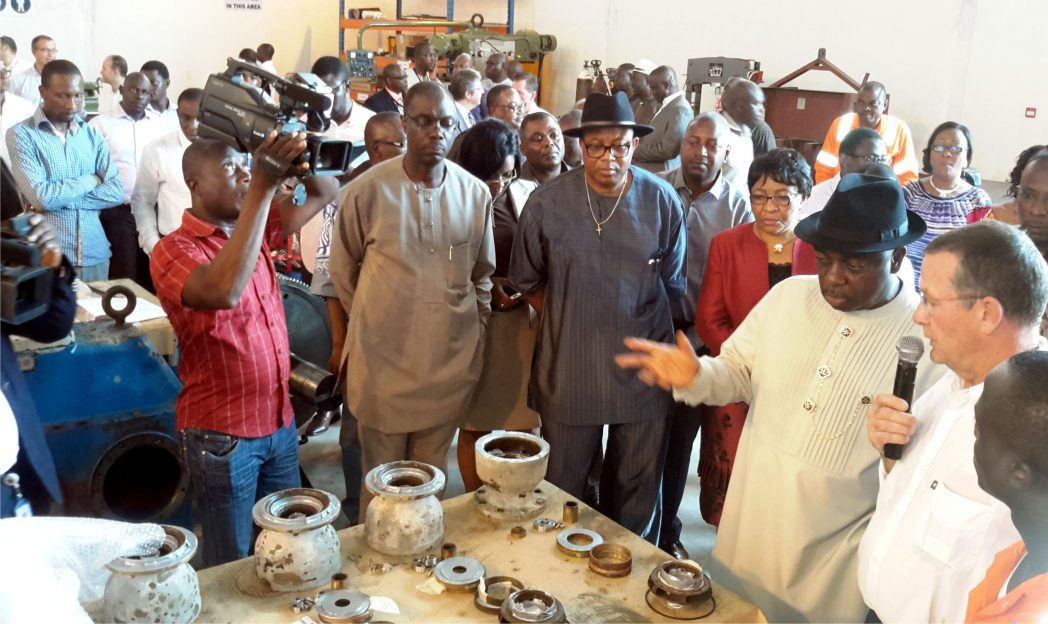
Executive Secretary, NCDMB, Ernest Nwakpa (3rd right) and other dignitaries being conducted round facilities at the Benkline rotating equipment workshop by Eurofiliales rep, Thierry Bunel-Gourdy (with mic) recently.



Business
Jonathan, Diri, Others Laud Firm’s Milestone in Bayelsa …Says Project Will Drive Industrialisation, Create Jobs



-

 News3 days ago
RSG Targets Nine Million Residents in Mosquito Net Distribution Campaign
-

 Oil & Energy3 days ago
Aiyedatiwa Signs New Electricity Bill
-

 Oil & Energy3 days ago
NLNG Commissions Research And Innovation Centre In RSU
-

 Maritime3 days ago
Marine Minister Commends President Tinubu On NPERA Bill Assent
-

 News3 days ago
KenPoly Holds Eight Convocations, August 29
-

 News3 days ago
RSG Begins Another Phase of Projects Commissioning Today
-

 News3 days ago
RMAFC Completes Revenue Sharing Review, Proposes New Pay
-

 Maritime3 days ago
NAGAFF Petitions IGP Over Alleged Maritime Police Harassment