
Business
Promote Locally Produced Meters, Firm Urges DISCOs

An indigenous meter manufacturer, Mr Kola Balogun, on Saturday advised electricity distribution companies to promote local content in the power sector.
Balogun, the Chairman, MOMAS Meter Manufacturing Company in Lagos, gave the advice in an interview with newsmen in Lagos.
He said that new investors in the sector should patronise the indigenous meters manufacturers for them to grow instead of importing meters when the local manufacturers had all it entailed.
“Nigeria has reached a stage where it is not supposed to be importing electricity meters. In our company alone, we have a production capacity of one million meters in a month,” he said.
According to him, the electricity distribution companies should promote local content as there are huge business opportunities in the sector.
“Government should not allow power sector investors to import meters when there is capable standardised local companies that can do that.
“ Importation should be the last option when there is proof that local manufacturers cannot meet the demands’’.
Balogun said that the local meter manufacturing companies had the capacity to produce and deliver over 10,000 pre-paid meters daily.
“We can meet up with the proposals submitted by the core investors in the DISCOS to install about 6.52 million new meters over the course of five years.
“This means that about one million will be produced and installed yearly.
“The metering gap in the market is very huge as about 50 per cent of consumers are without meters.
“Consumer metering is a major challenge to the viability of DISCOS.
“Presently, there is still a very high prevalence of estimated billing for revenue collection which is estimated to be as high as 50 per cent in some DISCOS,” he said.
Balogun said that customers’ restiveness had been heightened by high estimated bills in spite of the poor state of electricity supply from the national grid.
He urged NERC to compel the new managements of all the electricity distribution companies to patronise local meter manufacturers in the spirit of local content initiative.
Balogun also urged the distribution companies to ensure that their customers were metered to curb the practice of estimated billings.
According to him, the revolution in telecommunications can be sustained in Nigeria through indigenous innovations.
“The story of poor patronage is still the same in meter manufacturing where foreign firms are better patronised and recognised by government agencies.
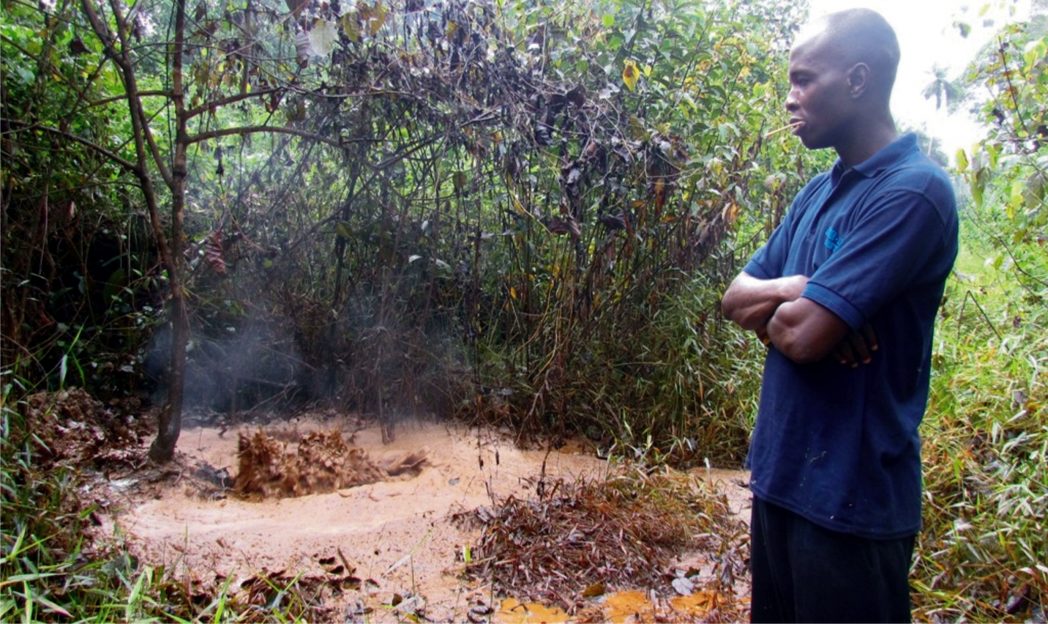
A youth leader in Kalaba Community, Mr Samuel Oburo, at the oil spill site within an oil field in Kalaba Community, Yenagoa Local Government Area of Bayelsa State recently.



Business
Jonathan, Diri, Others Laud Firm’s Milestone in Bayelsa …Says Project Will Drive Industrialisation, Create Jobs



-

 News2 days ago
RSG Targets Nine Million Residents in Mosquito Net Distribution Campaign
-

 Oil & Energy2 days ago
Aiyedatiwa Signs New Electricity Bill
-

 Oil & Energy2 days ago
NLNG Commissions Research And Innovation Centre In RSU
-

 Maritime2 days ago
Marine Minister Commends President Tinubu On NPERA Bill Assent
-

 News2 days ago
KenPoly Holds Eight Convocations, August 29
-

 News2 days ago
RSG Begins Another Phase of Projects Commissioning Today
-

 News2 days ago
RMAFC Completes Revenue Sharing Review, Proposes New Pay
-

 Maritime2 days ago
NAGAFF Petitions IGP Over Alleged Maritime Police Harassment