
News
Tinubu Nominates Ex-INEC Chair Yakubu, Fani-Kayode, Omokri, 29 Others As Ambassadors

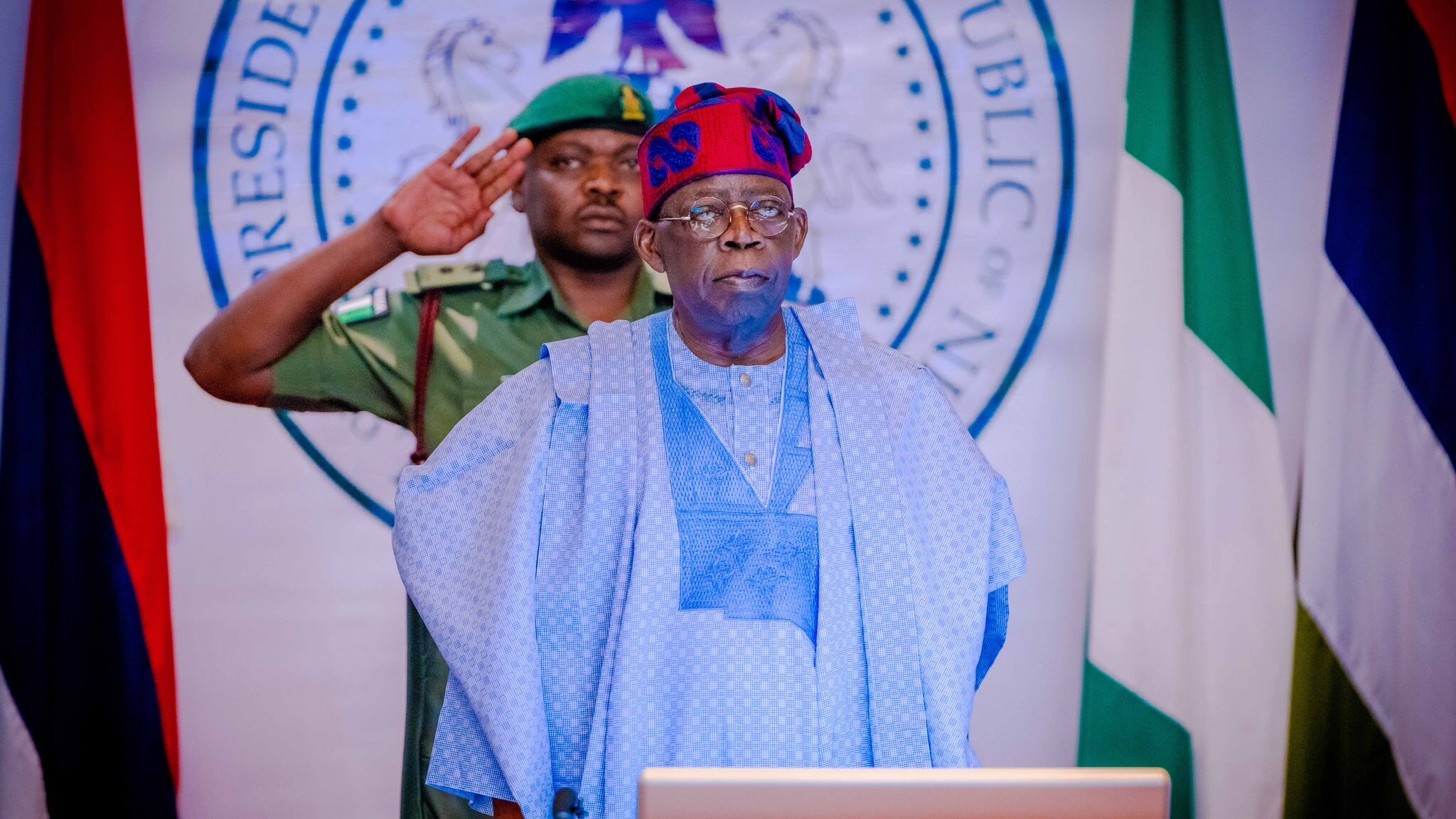
President Bola Tinubu has sent the names of 32 ambassadorial nominees to the Senate for confirmation, days after he sent the first batch of three names.
Among them are the immediate past chairman of the Independent National Electoral Commission, Mahmud Yakubu, an aide to former President Goodluck Jonathan, Reno Omokri (Delta), and former Enugu State Governor, Ifeanyi Ugwuanyi, among others.
“In two separate letters to the Senate President, Godswill Akpabio, President Tinubu asked the Senate to consider and confirm expeditiously 15 nominees as career ambassadors and 17 nominees as non-career ambassadors,” read a statement on Saturday by the Special Adviser to the President on Information and Strategy, Bayo Onanuga.
In the statement titled, ‘Tinubu nominates 32 additional ambassadors,’ Onanuga noted, “There are four women on the career ambassadors’ list and six women on the non-career ambassadors’ list.”
“Among the non-career ambassador designates are Ogbonnaya Kalu from Abia, a former presidential aide, Reno Omokri (Delta), former chairman of the Independent National Electoral Commission (INEC), Mahmud Yakubu, former Ekiti first lady, Erelu Adebayo, and former Enugu governor, Ifeanyi Ugwuanyi.
“Others are Tasiu Musa Maigari, the former speaker of the Katsina House of Assembly, Yakubu N. Gambo, a former Commissioner in Plateau State and former Deputy Executive Secretary of the Universal Basic Education Commission.
“Professor Nora Ladi Daduut, a former senator from Plateau; Otunba Femi Pedro, a former Deputy Governor of Lagos State; Femi Fani-Kayode, a former aviation minister from Osun State; and Nkechi Ufochukwu from Anambra State are on the nomination list,” the statement read.
Also on the list are former First Lady of Oyo, Fatima Florence Ajimobi, former Lagos Commissioner, Lola Akande, former Adamawa Senator, Grace Bent, former governor of Abia, Victor Okezie Ikpeazu, Senator Jimoh Ibrahim, businessman, lawyer and Senator from Ondo State, and the former ambassador of Nigeria to the Holy See, Ambassador Paul Oga Adikwu from Benue State.
Among the nominees for career ambassador and high commissioner-designates are: Enebechi Monica Okwuchukwu (Abia), Yakubu Nyaku Danladi (Taraba), Miamuna Ibrahim Besto (Adamawa), Musa Musa Abubakar (Kebbi), Syndoph Paebi Endoni (Bayelsa), Chima Geoffrey Lioma David (Ebonyi) and Mopelola Adeola-Ibrahim (Ogun).
The other nominees are Abimbola Samuel Reuben (Ondo), Yvonne Ehinosen Odumah(Edo), Hamza Mohammed Salau (Niger), Ambassador Shehu Barde (Katsina), Ambassador Ahmed Mohammed Monguno (Borno), Ambassador Muhammad Saidu Dahiru (Kaduna), Ambassador Olatunji Ahmed Sulu Gambari (Kwara) and Ambassador Wahab Adekola Akande (Osun).
“The new nominees are expected to be posted to countries with which Nigeria maintains excellent and strategic bilateral relations, such as China, India, South Korea, Canada, Mexico, the United Arab Emirates, Qatar, South Africa, Kenya, and to Permanent Missions such as the United Nations, UNESCO, and the African Union.
“All the nominees will know their diplomatic assignments after their confirmation by the Senate,” it read.
Last week, Tinubu sent three ambassadorial nominees for screening and confirmation.
The nominees were Ambassador Ayodele Oke (Oyo), Ambassador Amin Mohammed Dalhatu (Jigawa), and Retired Colonel Lateef Kayode Are (Ogun).
All three are in the pot for posting to the UK, USA, or France after their confirmation.
“More nominees for ambassadorial positions will be announced soon,” Onanuga revealed.


Rivers State Governor, Siminalayi Fubara, has urged youths in the state to take advantage of the vast opportunities available to become employers of labour and contribute meaningfully to growth and development.
Fubara said global trends increasingly favour entrepreneurship and innovation, stressing that youths in Rivers State must not be left behind in harnessing such opportunities.
Represented by the Secretary to the State Government, Dr Benibo Anabraba, the governor stated this while declaring open the 2026 Job Fair organised by the Rivers State Government in partnership with the Nigeria Employers’ Consultative Association in Port Harcourt, yesterday.
Speaking on the theme, “Addressing Youth Employability for Prosperity,” the governor acknowledged the responsibility of government to create jobs for its teeming youth population but noted that it was unrealistic to absorb all job seekers into the civil service.
“As a government, we recognise our duty to provide employment opportunities for our teeming youths. However, we also understand that not all youths can be accommodated within the civil service.
“This underscores the need to encourage entrepreneurship across diverse sectors and to partner with other stakeholders, including the youths themselves, so they can transition from being job seekers to employers of labour,” he said.
Fubara further urged participants to continually sharpen their skills and explore opportunities within their immediate environment and the global space through digital platforms.
He reaffirmed his administration’s commitment to sustaining peace and providing an enabling environment for youths to develop their potential and thrive.
In a goodwill message, the Commissioner for Employment Generation and Economic Empowerment, Dr Chisom Gbali, said the job fair was designed to equip youths with contemporary skills, innovation and mentorship needed to transform them from unemployable to resourceful individuals.
Gbali disclosed that the ministry had rolled out various training and capacity-building programmes in areas such as ICT and artificial intelligence, oil and gas, maritime, and the blue economy.
Delivering the keynote address, the Head of the Department of Human Resources Management, Rivers State University, Dr Chris Biriowu, advised participants to remain informed about evolving sources of employability.
He said the labour market was dynamic and shaped by industry-specific demands, technological advancement, management practices and other emerging factors.

Rivers State Deputy Governor, Professor Ngozi Odu, has poured accolades on late Amayanabo of Opobo, HRM Dandeson Douglas Jaja V, saying his footprints went beyond the State.
Speaking during a condolence visit to the wife of the late king, Prof. Odu said the late monarch contributed meaningfully beyond the shores of Rivers State.
“He contributed not only to Opobo, not only to Rivers State, but to Nigeria as a nation. We all know the various positions he held until his passing. For us as a Commission, we are really going to miss him greatly, especially at this time when his guidance was most needed,” she stressed.
She described the late king as a distinguished traditional ruler whose life and service contributed immensely to the development of Rivers State and Nigeria at large.
The deputy governor, who also serves as Chairman of the Rivers State Boundary Commission, noted that until his demise, King Jaja was an Ex-Officio member of the Commission, representing Rivers South East Senatorial District.
According to her, the late monarch actively participated in several meetings of the Commission and played an important advisory role.
“He actually participated with us in a couple of meetings. It was with great shock that we received the news of his passing. We saw daddy as someone who was very strong, healthy and athletic,” Prof. Odu said.
Prof. Odu explained that the Commission relied heavily on the wisdom of traditional rulers like the late monarch to ensure that its responsibilities were carried out properly and conscientiously.
She assured the family of the Commission’s continued support, saying they will remain close to the family throughout the burial arrangements and beyond.
Addressing the widow, Queen Prudence Dandeson Douglas Jaja, Prof. Odu said the visit was to commiserate with her and encourage her during the period of mourning.
“Please accept our condolences. Please be strong and put your hope in God. The God who watches over widows will never abandon you,” the deputy governor prayed.
“We cannot question God. What has happened has happened. All we can do is to pull ourselves together. That is why we are here to pray that the Holy Spirit will strengthen you, that God will turn your sadness into joy and clothe you with a garment of beauty,” she added.
Responding, Queen Jaja described her late husband as a gentle, humble man who was deeply committed to the progress of Rivers State, and Nigeria at large.
She expressed gratitude to the deputy governor and other members of the Boundary Commission for identifying with the family in their moment of grief.
“We are praying that his soul will rest in perfect peace. I thank you very much for coming to console me at this trying moment. Seeing you here has given me comfort. God bless each and every one of you,” she said.
She also offered prayers for the delegation, wishing them a long life and good health.
Highlight of the visit was the presentation Letter of Condolence from the Rivers State Boundary Commission to Queen Jaja.
Kevin Nengia
The Nigerian Electricity Regulatory Commission (NERC) has raised the alarm over the rising cases of electricity-related accidents and deaths in the power sector, linking most of the fatalities to human error arising from poor technical skills and inadequate training.
NERC issued the warning yesterday, at a one-day stakeholders’ engagement with the Nigerian Electricity Supply Industry on enhancing vocational training delivery for the power sector, organised by the National Power Training Institute of Nigeria.
The event, themed “Building skilled manpower for a sustainable power sector,” was organised by NAPTIN in collaboration with Explicit Communications Limited and funded by the French Development Agency and the European Union.
Electricity-related deaths have remained a persistent problem in Nigeria’s power sector, with incidents involving fallen distribution lines, illegal connections, poorly executed installations and unsafe maintenance practices frequently reported across the country.
Data from industry operators and safety agencies show that technicians, linemen and members of the public are often electrocuted during repairs, meter installations or as a result of exposed cables and weak safety enforcement.
According to NERC’s safety performance reports, 112 Nigerians lost their lives in electricity-related incidents in 2024, slightly lower than the 115 deaths recorded in 2023 but still alarmingly high. Injuries stood at 95 for the same period, underscoring persistent hazards in the industry.
In 2025, 149 electricity personnel were killed or injured in electricity-related incidents across Nigeria’s power sector between the first and third quarters, prompting regulatory investigations and calls for stronger safety oversight.
Speaking on behalf of the Commission, Joseph John said that massive investments in power infrastructure would amount to wasted resources if they were not matched with deliberate development of skilled manpower to operate and maintain them.
He said, “You can invest in infrastructure, but if there is no corresponding development of skills and manpower to manage that investment and ensure efficiency, then the investment will be a waste. The Commission is always in support. We are committed to do whatever is required to ensure that NAPTIN delivers on its mandate.”
John stressed that while the Commission remained focused on expanding generation capacity and stabilising the electricity system, human capacity remained the backbone of a reliable power supply.
“We are very mindful, as regulators in the industry, that we have a mandate to ensure that adequate electricity is provided to the citizens. In doing this, we strive to ensure that we grow our generation capacity and to ensure that we have stability in the system. But none of this can be done without the requisite and oversight of human capacity,” he added.
He noted that one of the major challenges facing the industry, particularly in closing Nigeria’s wide metering gap, was the shortage of skilled technicians.
“We know the issues, challenges that we have in the industry. In terms of scaling up and trying to close the metering gap, we have a bigger challenge, which has to do with manpower. In the trajectory, we are expecting that a lot of meters will be coming into the country, but these meters cannot be installed, but they must install themselves. We expect a lot of meters to come into the country, but meters will not install themselves. People have to do it. That is where the skills gap becomes critical,” he said.
According to him, poorly trained operators and maintenance personnel were a major cause of electricity accidents across the value chain.
“We have a lot of electricity accidents in the industry. Most of these accidents are attributed to human errors and poor judgment. When operators are not well skilled, accidents follow, and many of these accidents are fatal. They lead to deaths,” John warned.
He assured stakeholders of the Commission’s commitment to supporting NAPTIN to ensure that the right technical skills were developed to reduce accidents and improve sector efficiency, nothing that, “We need appropriate training to close these gaps.”
Earlier in his address, the Director-General of NAPTIN, Ahmed Nagode, said the engagement was aimed at rebuilding the link between training and the real workforce needs of the electricity industry.
He explained that the institute had undergone significant institutional renewal in recent years, including strengthening its infrastructure, expanding its training portfolio and aligning its programmes with industry realities.
He, however, noted that reforms without proper communication were often misunderstood or undervalued, praising Explicit Communications Limited for helping the institute articulate its evolving mandate to regulators, operators, policymakers and development partners.
The NAPTIN boss also acknowledged the European Union and the French Development Agency for funding capacity-building initiatives under the Enhanced Electricity and Trade Agreement for the Nigerian power sector, saying the support had strengthened training delivery and stakeholder engagement.
He noted, “Today is not just about programs or presentations. It is about renewing the connection between NAPTIN and the industry stakeholders, between training and real workforce needs, and between vision and execution. Over the past few years, and particularly in recent months, NAPTIN has been undergoing significant institutional renewal.
“By strengthening its infrastructure, expanding its trading portfolio, deepening its research and consultancy offerings, and aligning more closely with industry realities. However, we are all aware of an important truth. Transformation that is not clearly communicated is often unseen, misunderstood or undervalued. Progress without visibility can easily be mistaken for stagnation. This is why I must with genuine appreciation acknowledge the outstanding work of Explicit Communications Limited, our consultants, and our communication and visibility consultant. Over the past 14 months, Explicit has played a truly strategic role in helping NAPTIN find its voice clearly, confidently, and consistently.”
Also speaking, the Chief Human Resources Officer of the Abuja Electricity Distribution Company, Adeniyi Adejola, commended NAPTIN for its growing role in technical training across the distribution segment.
According to him, about 40 per cent of AEDC’s skilled technical training in 2025 was delivered by NAPTIN, contributing significantly to workforce development within the company.
Adejola explained that recent structural reforms within the distribution companies, including the creation of state-based subsidiaries, were aimed at improving operational efficiency and decentralising electricity distribution.
He added that stronger partnerships with NAPTIN would be critical to achieving the Federal Government’s goals of improved electricity supply, job creation and economic growth under the Renewed Hope Agenda.
At the event, representatives of the Nigerian Independent System Operator, the Infrastructure Concession Regulatory Commission, the Licensed Electricity Contractors Association of Nigeria, the Standards Organisation of Nigeria and the National Board for Technical Education acknowledged the critical role of the National Power Training Institute of Nigeria in bridging the widening skills gap in the power sector.
The stakeholders said sustained technical training and certification were essential to improving safety, efficiency and reliability across the electricity value chain, noting that NAPTIN’s programmes had become increasingly central to building a competent workforce capable of supporting sector reforms and infrastructure expansion.
-
 News2 days ago
Nigeria Has Woken Up From Slumber Under Tinubu – Shettima
-

 News2 days ago
Oji Clears Air On Appointment Of 15 Special Advisers By Fubara
-

 Featured2 days ago
Rivers: Impeachment Moves Against Fubara, Deputy Hits Rock …As CJ Declines Setting Up Panel
-
News2 days ago
Nigeria To Begin Exporting Urea In 2028 -NMDPRA
-
City Crime2 days ago
Health Commissioner Extols Fubara’s Commitment To Community Healthcare Delivery
-
Niger Delta2 days ago
Tinubu, Leading Nigeria To Sustainable Future – Okowa … Lauds Oborevwori Over Uromi Junction Flyover Construction
-
News2 days ago
US – Nigeria Security Engagement Translating Into Tangible Operational Gains – NSA
-

 News2 days ago
EFCC Indicts Banks, Fintechs In N162bn Scams