
Oil & Energy
Increased Oil Bunkering: WIPM Seeks Security Agency’s Intervention

The Warri Indigenous Peoples Movement (WIPM) has urged security agencies to crack down on the high-level oil bunkering activities in the Niger Delta region.
The President – General, WIPM, Hon Kingsley Tenumah, made the call at a Press Conference, in Abuja, last Thursday.
called on the Economic and Financial Crimes Commission (EFCC) to expand its investigations beyond refinery turnaround expenditures to include the role of some security agencies in allowing illegal bunkering to persist.
Describing the illegal siphoning of crude oil from Nigeria as a major threat to national revenue and regional stability, the movement said shiploads of Nigerian crude oil continue to leave the country illegally on a daily basis.
He called on the Economic and Financial Crimes Commission (EFCC) to expand its investigations beyond refinery turnaround expenditures to include the role of some security agencies in allowing illegal bunkering to persist.
Tenumah clarified that the Itsekiri ethnic nationality is not involved in any protest or campaign calling for the removal of the Group Chief Executive Officer of the Nigerian National Petroleum Company Limited (NNPCL), Bayo Ojulari.
He said the focus should be on those operating on the high seas, not just small-scale jerry-can bunkering.
In his words, “We want the authorities to go after the high-level oil bunkering in the Niger Delta region, the ones operating on the high seas, not just the small-scale jerry-can bunkering. Shiploads of illegal Nigerian crude oil are being taken out of this country on a daily basis.
“We live in the Niger Delta, and it should be known that the region comprises over 30 major ethnic nationalities. One tribe cannot lord it over the rest of us. That is why we are distancing ourselves from any call to remove Engineer Bayo Ojulari.
“We want the EFCC to expand its investigation beyond the funds spent on refinery turnaround maintenance. They must also probe how the military allows this bunkering to escape with our oil every day. All this blackmail is simply to pressure Ojulari into opening the pipelines again so they can resume looting our oil.”
Stressing the contribution of the Itsekiri ethnic nationality, which he said produces over 33 per cent of Nigeria’s oil revenue, Tenumah stressed the need for fair treatment in the allocation of jobs, contracts, and benefits from oil production.
Also speaking, the General Secretary, WIPM, Comrade Monoyo Edon, noted that concerns about past decisions or policies of the NNPCL should be addressed through proper oversight and due process.
According to him, any calls for investigations or reviews should be made responsibly and through the appropriate institutions of government.
“We encourage dialogue rather than confrontation and urge all parties to seek solutions that will promote transparency, accountability, and sustainable development in the oil sector. We note that leadership positions in the oil and gas sector often face scrutiny and pressure. It is important that such scrutiny is fair and focused on policy rather than personalities or ethnic affiliations,” he said.
Chief Priest of the Omadino Community in Warri South Local Government Area, Roland Oti-Yomere, maintained that illegal bunkering is the real fight.
Oti- Yomere said “what we are focused on today is the rampant illegal bunkering taking place in the creeks. The Managing Director is aware of it and is determined to put an end to it. That is the real fight. We will support him fully to ensure that those involved are brought to justice.
“We are also calling on the authorities to rise to their responsibilities and take firm action. We stand in support of the Presidency and its ongoing reforms. We believe that once these reforms take root, everyone will get their fair share.
“That is why some people are fighting against it. Finally, we appeal that surveillance contracts be shared among ethnic nationalities based on their actual production levels”.


Continue Reading
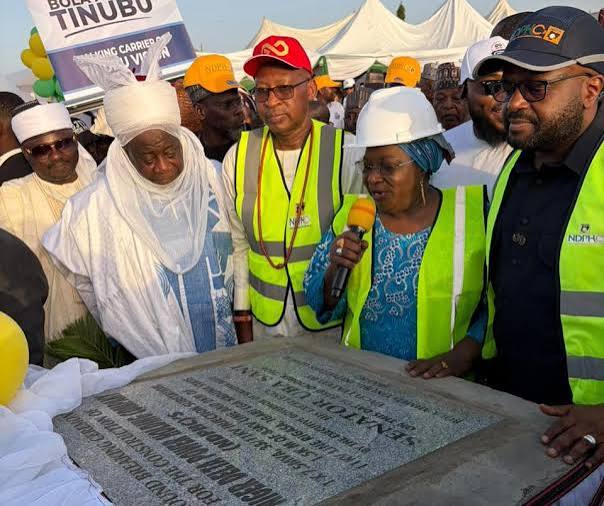
The Niger Delta Power Holding Company Limited (NDPHC) has commenced a major electricity project aimed at ending a 15-year blackout in Rigasa community, Igabi Local Government Area of Kaduna State.
The General Manager, Corporate Communication and External Relations, NDPHC, Nazo Agim, made this known in a statement, in Abuja, at the weekend.
Agim said that the project, facilitated by the Bola Ahmed Tinubu Ideological Group (BAT-IG), comprises a two-kilometre 11kV line, a 1.5-kilometre 33kV line and a 7.5MVA, 33/11kV injection substation.Access Services
According to him, the project is designed to strengthen electricity distribution and improve power supply to residents and businesses in the community.
He said that the Rigasa project underscored NDPHC’s commitment to extending critical electricity infrastructure beyond generation to bridge distribution gaps.
He also said that the project would stimulate socioeconomic development and improve the quality of life in underserved communities across Nigeria.
Agim disclosed that a groundbreaking ceremony was performed earlier on Friday, by the Kaduna state Deputy Governor, Dr. Hadiza Balarabe, who represented Governor Uba Sani.
According to him, Balarabe, while speaking during the ceremony commended NDPHC for the intervention, describing it as a life-saving initiative that would address the community’s longstanding electricity challenges.
The NDPHC Managing Director, Jennifer Adighije, reaffirmed the company’s commitment to addressing the community’s electricity challenges.
Represented by the Executive Director, Networks, Babayo Bello, Adighije also reiterated NDPHC’s commitment to supporting President Bola Tinubu’s vision of improving electricity supply across the country.
She said that although NDPHC’s primary mandate was power generation, the company’s interventions also extended to transmission and distribution infrastructure to address critical gaps and expand electricity access.
According to her, the Rigasa project represents a worthwhile investment that will ease residents’ hardship and demonstrate the impact of targeted infrastructure development in underserved communities.Access Services
NDPHC Executive Director, Strategy and Commercial, Patrick Obahiagbon, commended the Kaduna state government and the community for their cooperation and support for the project.
The District Head of Rigasa, Mohammed Idris, also commended NDPHC’s management for its commitment to expanding electricity access in the community.
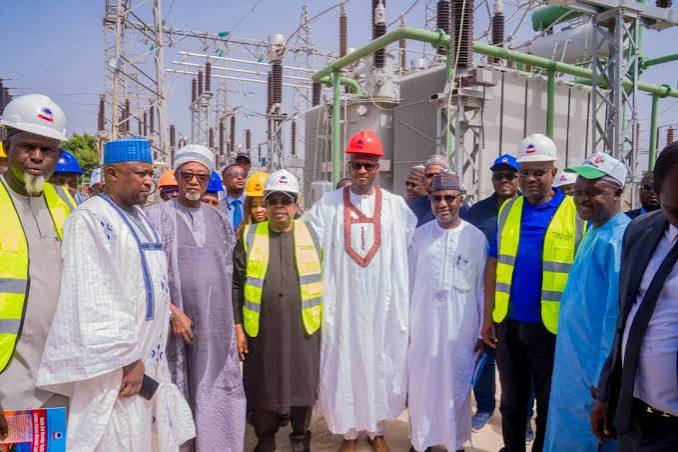
As the federal government intensifies efforts to strengthen Nigeria’s power infrastructure, it has commissioned 640 megawatts (MW) of electricity transmission capacity to the national grid with an additional six transmission substations in Kano and Katsina states, respectively.
The projects comprise four substations at Walalambe, Kumbotso, Dakata and Dan-Agundi in Kano State, which collectively add 544MW of transmission capacity, and two 60 megavolt amperes (MVA) substations in Kankia Local Government Area of Katsina State, contributing another 96MW.
The additional capacity is expected to improve the transmission network’s ability to evacuate and deliver available electricity to distribution companies and consumers in the two states.
The Ministry of Power announced the developments in a statement issued at the weekend.
According to the statement, the additional capacity is expected to improve the transmission network’s ability to evacuate and deliver available electricity to distribution companies and consumers in the two states.
The projects, however, increase transmission capacity rather than electricity generation, implying that their impact on supply would depend partly on the availability of power from generating plants and the capacity of downstream distribution networks.
Speaking at the commissioning of the Kankia substation, the Minister of Power, Joseph Tegbe, said the projects reflected President Bola Tinubu’s commitment to improving the country’s electricity infrastructure.
“Mr. President’s Renewed Hope Agenda recognizes that economic ambition requires dependable infrastructure,” Tegbe said.
He added that investments in electricity infrastructure would strengthen the foundations for business expansion, employment and economic growth.
The Kankia substations comprise two 60 MVA, 132/33 kilovolt (kV) facilities designed to strengthen the transmission network serving Katsina State and neighbouring areas.
Tegbe said the infrastructure would improve the network’s ability to distribute available electricity, supporting commercial activities and household welfare.
He also urged residents to protect the facilities against vandalism and other activities that could disrupt electricity infrastructure, asking them to report suspicious activities to TCN or security agencies.
Katsina State Governor, Dikko Umaru Radda, described the project as a significant investment in the state’s electricity infrastructure.
Radda stated that improved electricity supply could support industrial development, economic growth and public service delivery.
He further commended the President, the Federal Ministry of Power and TCN for completing the project.
It would be noted that the latest projects come amid a broader government’s drive to address bottlenecks in Nigeria’s electricity transmission network, which has constrained the amount of electricity that can be delivered to distribution companies and end users.
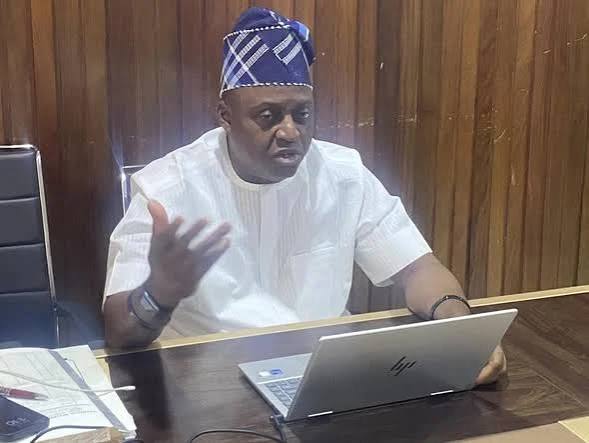
The National Board for Technology Incubation (NBTI) has unveiled an investment and development-finance pipeline exceeding $600 million, alongside a proposed solar energy programme targeting one million micro and small businesses across Nigeria.
The Director-General, NBTI, Dr Kazeem Raji, disclosed this while presenting the outcomes of the 2026 NextGen Innovation Challenge at a World Press Conference, Abuja.
Raji said the investment pipeline comprised a proposed $500m solar energy programme for universities and polytechnics, which would be developed in partnership with Gigawatt Global, and a $100m financing opportunity linked to the Tinubu Light Initiative under a memorandum of understanding with Financial Innovation for Impact, UK, also known as Cambridge Investors.
He, however, clarified that the funds had not been fully secured or disbursed, stressing that their realisation would depend on due diligence, financing arrangements, contractual commitments, regulatory approvals and implementation requirements.
“These figures represent proposed investment and financing opportunities and should not be interpreted as $600m already received, disbursed or fully deployed in Nigeria,” he said.
According to Raji, the initiative was designed to connect Nigerian innovators with international investors, business leaders and development partners to accelerate the commercialisation of indigenous technologies.
He said the challenge attracted 298 Nigerian innovators from all 36 states and the Federal Capital Territory, up from 105 participants in 2025.
The innovations showcased covered artificial intelligence, robotics, agriculture, healthcare, education, renewable energy, telecommunications, digital technology, enterprise software, 3D printing and advanced manufacturing.
“Our message is straightforward: Nigeria’s innovators deserve visibility, our enterprises deserve opportunities to grow, and our technologies deserve pathways to the marketplace,” Raji said.
He added that NBTI’s priority was to move beyond showcasing ideas to helping innovators develop commercially viable products, establish sustainable businesses and create jobs.
The proposed Tinubu Light Initiative is expected to support one million micro and small businesses through access to solar energy solutions, with a proposed target of training and deploying 10,000 field marketers and creating 50,000 direct youth employment opportunities.
The initiative also targets N30bn in blended financing for its first phase and estimates annual economic benefits of about N12bn, subject to its underlying assumptions and implementation outcomes.
Raji said the programme was conceived to address the energy challenges facing small businesses, including high operating costs associated with unreliable electricity and dependence on petrol and diesel generators.
Tailors, barbers, hairdressers, pharmacies, food vendors, neighbourhood retailers, printing businesses and digital-service providers, he stated, are among the potential beneficiaries.
He said the initiative also envisaged opportunities to promote business formalisation and financial inclusion, particularly among informal enterprises, where appropriate arrangements could be established.
However, the NBTI director-general acknowledged that the programme’s success would depend on sound financing, transparent beneficiary selection, reliable equipment, maintenance arrangements and measurable delivery.
“Our vision is to make clean-energy access an enabler of enterprise development, not merely an infrastructure intervention,” he said.
-

 Sports4 days ago
Nigerian Trio Target Titles At PFL Africa Finals
-
 Education4 days ago
FCE Yola Graduates 3,555 Teachers , Seeks Upgrade to University
-
 Niger Delta4 days ago
Diri Restates Stance On Lagos-Calabar Coastal Highway
-

 Niger Delta4 days ago
C’River, NUJ Pay Tribute To Late Guardian Editor
-
 News4 days ago
NDLEA Recovers Tons Of Illicit Drug Consignments In Nine States
-
 Opinion4 days ago
Checking Voter Apathy In Nigeria’s Electoral Process
-
 Politics4 days ago
2027: DICKSON’S EX-ALLY VOWS TO WORK AGAINST NDC INTEREST IN BAYELSA
-

 Politics4 days ago
2027: GROUP PLEDGES 40,000 SUPPORTERS FOR COALITION CANDIDATES IN RIVERS