Connect with us

Oil & Energy

Stakeholders Laud PINL For Oil Pipeline Safety 

Published

on

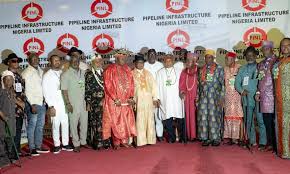
Oil and Gas Stakeholders in the Niger Delta have expressed delight over the improved oil output from the region, attributing it to the activities of the Pipeline Infrastructure Nigeria Limited (PINL), the contracting firm providing security to the Trans Niger Pipeline (TNP).
The stakeholders, including the Nigeria National Petroleum Company Limited (NNPCL), insisted that the pipeline infrastructure in the region has been adequately covered thereby meeting up its target since the inception of the PINL.
Speaking at the One-Day Interactive Forum of Oil and Gas Host communities, organised in appraisal of PINL’s operations on the Trans Niger Pipeline, held in PortHarcourt, Thursday, the Director, Energy Security, Office of the National Security Adviser, Ojukaye Flag-Amachree, lauded the PINL, saying the company was operating in line with the mandate given to it by the Federal Government through the Office of the National Security Adviser .
Represented by Young Harry Amachree, Flag-Amachree said, “I want to personally appreciate PINL for the work they are doing. It was a mandate that was given to them by the President to secure the pipelines, and with your collaboration, what we are seeing today is impressive.
“This is a meeting of appraisal and I have listened to everyone and everyone is towing the same line with my thought and I want to say PINL, thank you for a job well done”.
Noting the economic implications of pipeline safety, Flag-Amachree said all hands must be on deck to drive the economy forward.
He said, “when the treasury of the nation drops, it affects Nigerians and so when it comes to securing the pipelines, everyone of us must put our hands together to achieve our common goal.
“We have prosecuted more than 100 suspects as of today and some serving prison terms.
“The teams are working 24 hours to make sure that those involved in this illegal activity are dealt with according to the law. So, I’m giving you the assurance that whatever information you have about these vandals, please don’t hesitate to call our attention to apprehend them.”
On his part, the Head, Field Operations, Eastern Corridor, Project Monitoring Office, NNPCL, Engr. Akponine Omojevwe, commended PINL for its efforts which has led to improved output on the Trans Niger Pipeline.
Omojevwe said, “we want to appreciate you,  the PINL, because from what we have observed, a lot has really changed. If we look at the tender receipts of 2 years ago, there are lots of improvement, so we can say that you have done well and we appreciate you”.
While calling for more efforts by the PINL, Omojevwe said, “so, from our side, we are saying that for PINL to do very well, it depends on you also. It must be a collaborative effort. Everybody is involved so long as this surveillance is involved”.
Also speaking, the President, Movement for the Emancipation of Izon Ethnic Nationality, Dr. Kennedy West, expressed gratitude for surveillance activities of the PINL.
“I want to thank PINL for bringing people from 215 communities within the Trans Niger Pipeline to discuss on what used to be wrong and I want to say, PINL you are getting it right.
“Not only that you have our thumps up, but we are using this medium to reiterate a vote of confidence on Pipeline Infrastructure Nigeria Limited. We are not just saying that but we are using this medium to also call on NNPCL to do an upward review of the contract based on current realities so that there will be financial boom within the communities”, West stated.
Earlier in his remarks, the Community Relations Consultant, PINL, Dr. Akpos Mezeh, said the essence of the engagement was to appraise the company’s activities in the Communities for the years and seek ways of improvement.
According to him, PINL’s mandate to protect the Trans Niger Pipeline has been achieved through engagements with the host communities calling for a united front against pipeline vandalism.
Reeling the activities of the company, Mezeh said, “We have carried out social investments based on needs assessment done mitigating the socio-economic drivers of oil theft while promoting sustainable empowerments of our communities.
“We have also ensured that we restore the environment hitherto destroyed by incessant crude oil theft with the associated hazards.
“Also, we have achieved near-zero infractions on the Trans Niger Pipeline and, of course, that is giving us increased crude oil production and has boosted investors’ confidence in our economy with the attendant revenue increase.

By: Lady Godknows Ogbulu

Continue Reading

Oil & Energy

Take Concrete Action To Boost Oil Production, FG Tells IOCs

Published

on

The Federal Government has called on urged International Oil Companies (IOCs) operating in Nigeria to take concrete steps to ramp up crude oil production, following the country’s ambitious target of reaching 2.5 million barrels per day by 2027.

Speaking at the close of a panel session at the just concluded 2026 Nigerian International Energy Summit, the Minister of State for Petroleum Resources (Oil), Senator Heineken Lokpobiri, said the government had created an enabling environment for oil companies to operate effectively.

Lokpobiri stressed that the performance of the petroleum industry is fundamentally tied to the success of upstream operators, noting that the Nigerian economy remains largely dependent on foreign exchange earnings from the sector.

According to him, “I have always maintained that the success of the oil and gas industry is largely dependent on the success of the upstream. From upstream to midstream and downstream, everything is connected. If we do not produce crude oil, there will be nothing to refine and nothing to distribute. Therefore, the success of the petroleum sector begins with the success of the upstream.

“I am also happy with the team I have had the privilege to work with, a community of committed professionals. From the government’s standpoint, it is important to state clearly that there is no discrimination between indigenous producers and other operators.

“You are all companies operating in the same Nigerian space, under the same law. The Petroleum Industry Act (PIA) does not differentiate between local and foreign companies. While you may operate at different scales, you are governed by the same regulations. Our expectation, therefore, is that we will continue to work together, collaborate, and strengthen the upstream sector for the benefit of all Nigerians.”

The minister pledged the federal government’s continued efforts to sustain its support for the industry through reforms, tax incentives and regulatory adjustments aimed at unlocking the sector’s full potential.

“We have provided extensive incentives to unlock the sector’s potential through reforms, tax reliefs and regulatory changes. The question now is: what will you do in return? The government has given a lot.

Now is the time for industry players to reciprocate by investing, producing and delivering results,” he said.

Lokpobiri added that Nigeria’s success in the upstream sector would have positive spillover effects across Africa, while failure would negatively impact the continent’s midstream and downstream segments.

“We have talked enough. This is the time to take concrete actions that will deliver measurable results and transform this industry,” he stated.

It would be noted that Nigeria’s daily average oil production stood at about 1.6 million barrels per day in 2025, a significant shortfall from the budget benchmark of 2.06 million barrels per day.

Continue Reading

Oil & Energy

Host Comm.Development: NUPRC Commits To Enforce PIA 2021 

Published

on

The Chief Executive of the Nigeria Upstream Petroleum Regulatory Commission (NUPRC), Mrs. Oritsemeyiwa Eyesan, has restated the commission’s commitment to ensuring oil companies comply with the Petroleum Industry Act (PIA) 2021 to promote sustainable development in host communities.
Eyesan made the remark at a Sensitization Programme in Owerri, Imo State, explained that the PIA 2021 mandates oil companies to contribute 3% of their annual operating costs to Host Communities Development Trusts (HCDTs) for community development projects.
Represented by Atama Daniel, Eyeso said “The funds will be used for education, healthcare, infrastructure, and economic empowerment”.
Eyesan assured that the commission would facilitate a smooth implementation process and ensure compliance by oil companies.
She, however, urged oil-producing communities to protect oil facilities in their areas as well as stop all illegal oil exploration activities within their communities.
The chief executive also disclosed that NUPRC has established Alternative Dispute Resolution Centres to resolve disputes between oil companies and host communities.
Earlier, the National President, HOSTCOM, Dr. Benjamin Tamarenebi, advised the host communities to always embark on sustainable development projects rather than frivolous projects.
He warned traditional rulers against bidding for contracts for execution of projects approved for their communities in line with the provisions of the Petroleum Industry Act.”
Tamarenebi noted that monarchs, as heads of Host Communities Board of Trustees, have the responsibility of supervising the awarding and execution of projects approved for the communities and ensuring accountability, adding that awarding contracts to themselves will lead to compromise.
He disclosed that funds disbursed to the communities are now higher than before and urged the communities to take good advantage of it.
“They can build schools and other sustainable projects and think of something that will always be a more economical variable in the community; if this is done there would be economic activities and development. In order not to waste the funds, manpower, train your children with the funds, give them scholarships instead of buying vehicles or renting apartments in the city”, he said.
In his remarks, the Deputy Executive Director, Environmental Defenders Network (EDEN), Johnson Abiye, urged regulators to ensure smooth implementation of the Petroleum Industry Act as it relates to the oil producing communities.
Abiye noted that many communities that were supposed to be part of HOSTCOM were omitted and called for the situation to be redressed.
Continue Reading

Oil & Energy

PETROAN Cautions On Risks Of P’Harcourt Refinery Shutdown 

Published

on

The Petroleum Products Retail Outlets Owners Association (PETROAN) has expressed fears of rust, corrosion, abandonment, lack of lubrication, and eventual destruction of installed equipment at the PortHarcourt Refinery due to continued Shutdown.
PETROAN said it would also result in rendering the entire revamp effort futile if urgent action is not taken.
The Public Relations Officer and Spokesperson of the Association, Dr. Joseph Obele, in a statement, noted that over $1.5 billion of public funds were reportedly expended on the rehabilitation of the Port Harcourt Refinery, which was reopened in November 2024 and shut down again in May 2025 due to alleged financial losses.
Speaking on the sidelines of the recent remarks credited to the Group Chief Executive Officer of NNPC Limited, Engr. Bayo Ojulari, in which he described the re-operationalisation of the Port Harcourt Refinery and Petrochemical Company as a ‘waste of resources’ and admitted that NNPC lacks the capacity to operate refineries profitably, Obele expressed disappointment, describing the statement as troubling, demoralising, and deeply disturbing, and raising  fundamental questions about institutional responsibility, governance, and the stewardship of public resources.
With the huge funds already spent on the rehabilitation process, Obele stated
therefore, that for the GCEO of NNPC to  dismiss the entire exercise as a waste of resources, without clear attribution of responsibility, performance audits, or accountability measures, is unacceptable to Nigerians.
“If NNPC truly lacks the capacity to run refineries profitably, as admitted by its own GCEO, then Nigerians deserve to know who advised the investment, who supervised the rehabilitation, who certified the restart, and who benefited from the contracts and operations.
“Public institutions cannot casually dismiss a multi-billion-dollar national asset as a mistake without consequences”, he said.
The PETROAN spokesperson also faulted the narrative by Ojulari that Nigerians should be “thankful” solely because of the success of the Dangote Refinery.
While acknowledging the strategic importance and commendable achievement of the privately owned refinery, he stressed that private investments cannot replace the constitutional and economic obligation of government to efficiently manage public assets.
“Dangote Refinery is a private investment driven by profit and efficiency. NNPC, on the other hand, holds national assets in trust for Nigerians. One cannot be used as an excuse for the failure of the other,” Dr. Obele emphasized.

The energy expert further warned that repeated public admissions of incompetence by NNPC leadership risk eroding investor confidence, weakening Nigeria’s energy security framework, and undermining years of policy efforts aimed at domestic refining, price stability, and job creation.

He described as most worrisome the assertion that there is no urgency to restart the Port Harcourt Refinery because the Dangote Refinery is currently meeting Nigeria’s petroleum needs.

“Such a statement is annoying, unacceptable, and indicative of leadership that is not  solution-centric,” he said.

The PETROAN National PRO reiterated that Nigeria cannot continue to normalise waste, institutional failure, and retrospective justification of poor decisions stressing that admitting failure is only meaningful when followed by accountability, reforms, and a clear, credible plan to prevent recurrence.

By: Lady Godknows Ogbulu
Continue Reading

Trending